The 6R140, Ford's TorqShift-6 behind the 6.7L Power Stroke and the 6.2L gas V8 in 2011-and-up Super Duty trucks, locks its torque converter clutch (TCC) in most gears above idle speed to kill slip and cut heat. When that lockup is clean, you never notice it. When it is not, you get a shudder at a specific speed, a slip code, or a truck that will not hold lockup at all. The confusing part is that the same complaint can come from three different places: the converter's own clutch, the TCC solenoid, or worn valve body bores that have nothing to do with the converter. Sources are listed at the bottom.
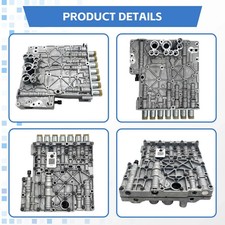
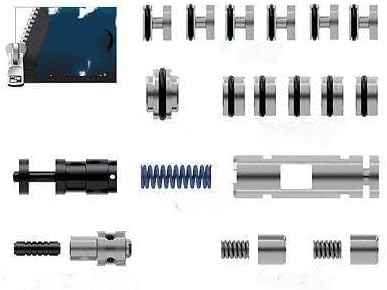
What TCC lockup codes actually mean
The three codes people search for are generic SAE definitions, carried by every OBD-II manufacturer including Ford:
- P0741, TCC system stuck off. The module commands lockup and sees the converter not apply, or apply too slowly, or slip past the allowed limit.
- P0742, TCC system stuck on. The converter will not release when commanded to. This one is the nasty one, because a converter that stays locked at idle or a stop acts like a stuck manual clutch and can stall the engine or lurch the truck.
- P0743, TCC solenoid circuit electrical. This is the coil, the internal harness, the case connector, or the module driver, not the hydraulics. Start here with a resistance check before you touch the valve body.
None of these codes tell you which of the three failure points caused it. That takes a scan tool and, usually, a vacuum gauge.
The captive-clutch design and why it fails
Transmission Digest's writeup on the 6R140 converter describes a design-specific weak point: the friction plate sits captive between two steel plates, and those steel plates carry leaf-style springs pop-riveted to their outer tangs. Over time and heat cycles those leaf springs snap off the rivets, or the rivets themselves pull loose from the steel plate. The debris that results can chew up the friction material and damage the converter further, which is exactly the kind of failure that looks like "the converter is just bad" on a scan tool, because that is functionally what has happened.
That is a real mechanical failure mode, and when you find leaf-spring debris in the pan or the converter housing, replacing the converter is the correct call. The problem is that a lot of 6R140 TCC complaints get pinned on the converter by default, without ever checking whether the converter is actually the thing at fault.
The valve body bores that get blamed on a bad converter
A Gears Magazine case study, published in the ATRA technical magazine, is the clearest documented example of this. A 6R140 came into a shop after being rebuilt three times by another shop, with over a month of total downtime. Every time, the previous shop blamed the torque converter. The truck would run fine for a week or two, then start to shudder and set a slip code again.
On the test drive, the author logged slip speed and watched it fluctuate about 200 rpm during the shudder. Before pulling the unit, they checked the basics and found them normal: line pressure command on the scan tool ran about 0.9-1.1 amps at idle and dropped to 0.2 amps or lower on a stall test, with measured line pressure of 92 psi at idle, 218 psi on the stall test, and 140 psi at highway speed. All in range. On teardown, the input shaft Teflon rings, bushings, stator support clearance, and the stator-to-pump flatness all checked out fine too. No stuck valves, no broken springs, no warped valve body.
The actual cause only showed up with a vacuum test on the TCC hydraulic valves. The TCC charge limit valve and TCC charge control valve both tested within spec, but the TCC apply regulator valve held only 13 inHg, well under the minimum the author was checking against. That worn bore was leaking off the signal that should have held the converter clutch fully applied, which is exactly what produces an intermittent shudder and slip code that comes and goes, and exactly what three converter swaps in a row never touched. The fix was reaming the bore and installing an oversized valve, re-testing vacuum to confirm the repair, and a long test drive with no further comebacks over the following months.
The lesson is specific: on a 6R140 with a TCC shudder or slip code and no debris in the pan, vacuum-test the TCC valve bores before you order another converter.
| Item | 6R140 detail | Source |
|---|---|---|
| Converter clutch design | Captive friction plate between steel plates with riveted leaf springs; springs or rivets can fail and shed debris | Transmission Digest |
| Case-study slip reading | About 200 rpm slip during a reported shudder event | Gears Magazine (ATRA) |
| TCC apply regulator valve, found worn | Vacuum-tested at 13 inHg, below minimum spec | Gears Magazine (ATRA) |
| TCC solenoid (NL, band 5) | Sonnax 126425-NLV, OE BC3Z-7G383V; same part also used at 1-2-3-4, 2-6 and 1-R positions depending on calibration band | Sonnax |
| Fluid | Motorcraft MERCON LV only; MERCON ULV is for the later 10R140, not this unit | Ford Customer Service Division |
How to tell the three failure points apart
- Pull codes and freeze frame first. A P0743 points you straight at the solenoid circuit: wiring, case connector, coil resistance. Don't open the pan yet.
- Confirm the TCC is even allowed to lock up. The module will not command lockup outside the right transmission temperature window, with a stored TCC code already set, with the brake switch on, or with certain other engine faults active. If the scan tool shows TCC enable as "no," find out why before you chase a hardware problem that may not exist.
- Log slip on a road test. Compare engine RPM to turbine or input shaft RPM with the converter commanded locked. Near-zero slip is the target; Sonnax's general guidance for this family of converters is to also watch commanded TCC amperage against converter (apply) pressure on the scan tool, since more commanded amperage should mean more apply and lower converter pressure. That method was written for the ZF6-based 6R60/6R80, not the 6R140 specifically, but the slip-versus-commanded-duty logic is the same control strategy family.
- If slip is real and codes point at the hydraulics, not the circuit, pull the pan. Debris in the pan or on the magnet means look at the converter and clutch material. A clean pan with no stuck valves, like the Gears Magazine case, means vacuum-test the TCC charge limit, charge control, and apply regulator valve bores before you condemn the converter again.
- Check the solenoid band number against the valve body tag before replacing it. The TCC position on the 6R140 uses a normally low solenoid, and Sonnax's own replacement part carries identification band number 5 and a direct warning that the band number must match the original or shift calibration problems will result, since this same physical solenoid design also fills the 1-2-3-4, 2-6, and 1-R positions under different calibration bands.
Fluid matters more than people think
The 6R140 takes Motorcraft MERCON LV, sold under part numbers XT-10-QLVC (1 qt), XT-10-5Q3LV (5 qt), and XT-10-DLV (55 gal drum). It does not take MERCON ULV, which Ford reserves for the 10R140 that replaced the 6R140 in 2020-and-up Super Duty trucks. The two fluids have different viscosity targets, and a TCC apply circuit that depends on precise signal pressure timing will not apply or release cleanly on the wrong fluid, even with perfectly good hardware. If a TCC shudder shows up right after a fluid service, confirm what actually went in the pan before you do anything else.
Repair path by what you found
- Debris confirmed in the converter or pan: replace the converter. The captive-clutch leaf-spring failure is a real, documented pattern on this unit.
- Clean pan, bad vacuum test on a TCC valve bore: ream the bore and install the correct oversized valve kit rather than replacing the converter again. This is the fix that ended three failed attempts in the Gears Magazine case.
- P0743 or a failed circuit check: replace the solenoid, matching the band number exactly, and reset the adaptive tables afterward.
- Everything tests fine but lockup is inconsistent: check the fluid type and condition before replacing any hard part.
Need parts for this job?
Our 6R140 parts page carries the TCC solenoid, the Sonnax valve body zip kit, full solenoid sets, and MERCON LV service kits. Checkout is on site.
6R140 shift solenoid kit, 2011-up
Covers erratic line pressure and converter lockup complaints when more than one solenoid on the body has drifted, not just the TCC position. Sold by our sister store, CoreTransmissionParts.
Shop the part for this fix →FAQ
What do 6R140 TCC codes P0741, P0742 and P0743 mean?
P0741 is TCC system stuck off: the module commands lockup and sees the converter not applying, or slipping too much. P0742 is TCC system stuck on: the converter stays locked when it should release, which usually stalls the engine or bucks at a stop. P0743 is a TCC solenoid circuit electrical fault, meaning the problem is in the wiring, connector or coil rather than the hydraulics. Confirm the exact Ford definition for your model year before condemning parts.
Why does my 6R140 shudder only when the torque converter locks up?
A shudder right at lockup, and only there, points at the converter clutch itself slipping under load rather than a shift-quality problem. On the 6R140 that is commonly either the captive friction plate breaking down the leaf springs riveted to its steel plates, per Transmission Digest, or a worn TCC apply-side valve bore in the valve body that will not hold the clutch fully applied, per a documented Gears Magazine teardown.
Is TCC slip on a 6R140 always a bad torque converter?
No. A Gears Magazine case followed a 6R140 that had been rebuilt three times for repeat TCC shudder, with every rebuild blaming the converter. The actual cause was a worn TCC apply regulator valve bore in the valve body, found with a vacuum test at 13 inHg against a higher factory minimum. Reaming the bore and installing an oversized valve fixed it for good. Always vacuum-test the TCC valve bores before replacing a converter a second time.
What fluid does the 6R140 use, and does the wrong fluid affect TCC lockup?
The 6R140 runs Motorcraft MERCON LV, not MERCON ULV, which is reserved for the later 10R140. MERCON LV comes in Motorcraft part numbers XT-10-QLVC, XT-10-5Q3LV and XT-10-DLV. Using the wrong viscosity fluid changes how fast the TCC solenoid's signal pressure builds and releases, which can show up as a harsh, delayed or inconsistent lockup even with good hardware.
How do I tell a bad 6R140 TCC solenoid from worn valve body bores?
Start with the solenoid circuit and the band number stamped on it, since a normally low solenoid with the wrong band will misbehave even when electrically good. If the circuit and band check out, the next step is a vacuum test on the TCC charge limit, charge control and apply regulator valve bores, the same test a documented Gears Magazine repeat-failure case used to find a worn apply regulator valve that three prior converter replacements never fixed.
Related guides
- 6R140 Slipping Causes and Fix
- 6R140 Shift Solenoid Symptoms and Replacement
- 6R140 Pressure Control (EPC) Solenoid Symptoms
- 6R140 Valve Body Wear and Fix
- 6R140 Overheating Prevention
Sources
- Transmission Digest, "The 6R140 Torque Converter: Common Fault Codes and How to Rebuild." Backs the captive-clutch design, the friction plate between two steel plates with riveted leaf springs, and that failure of those springs or rivets sheds debris that damages the converter further. transmissiondigest.com
- Gears Magazine (ATRA), "Back on the Bench: 6R140 Repeat TCC Failure," April 2020. Backs the repeat-failure case study: three prior converter replacements, roughly 200 rpm slip, the 92/218/140 psi line pressure readings, the clean teardown findings, the TCC apply regulator valve vacuum-testing at 13 inHg below spec, and the reaming repair. gearsmagazine.com
- Sonnax, Solenoid (NL) 126425-NLV product page. Backs the OE part number BC3Z-7G383V, the TCC/1-2-3-4/2-6/1-R shared solenoid positions, the normally low band 5 identification, and the warning that replacement band number must match the original. sonnax.com
- Sonnax, "Six Ways From Sunday: Diagnosing ZF6/Ford 6R60/80 TC-Related Drivability Concerns." Backs the general method of comparing engine RPM to turbine/input RPM for slip, and watching commanded TCC amperage against converter apply pressure; written for the related 6R60/6R80 ZF6 family, applied here as a general method, not a 6R140-specific spec. sonnax.com
- Ford Customer Service Division, FCSD Chemicals and Lubricants, MERCON LV Automatic Transmission Fluid product page. Backs the Motorcraft MERCON LV part numbers XT-10-QLVC, XT-10-5Q3LV and XT-10-DLV, and that MERCON ULV is a separate, non-interchangeable fluid. fcsdchemicalsandlubricants.com