"It won't go into overdrive" is one of the vaguer complaints a 6R140 comes in with, and it covers three very different trucks. One is sitting in 4th at 60 mph with no codes because the driver bumped the gear limit on the shifter. One is refusing upshifts because the module has lost a speed signal and does not trust the ratio. And one has a cracked 4-5-6 drum and is never going to hold top gear again. The work is sorting out which truck you have before anything comes out of the pan.
This is how I work a Super Duty TorqShift that will not get into 5th or 6th, with the clutch logic, the scan tool checks and the hard-part failures that actually cause it.

What "overdrive" means on a 6R140
Per Ford Component Sales' 6R140 specification sheet, the ratios are 3.974, 2.318, 1.516, 1.149, 0.858 (5th) and 0.674 (6th), with 3.128 reverse. Fifth and sixth are the two overdrive ratios; 4th at 1.149 is not quite direct drive, so a truck "stuck in 4th" is still running the engine faster than the driveshaft. The same sheet lists five clutch packs in a Lepelletier layout, a 935 ft-lb engine torque rating, Mercon LV at roughly 4 gallons, a 250°F continuous rating, and PCM control on gas trucks versus a separate TCM on diesels.
The clutch application chart is what makes this diagnosis quick. From the TorqShift 6 technical overview published by Vehicle Service Pros:
| Clutch | Applied in | Solenoid | Solenoid type |
|---|---|---|---|
| Forward | 1st–4th | SSA | Normally low |
| Direct | 3rd, 5th, reverse | SSB | Normally high |
| Intermediate | 2nd, 6th | SSC | Normally low |
| Low/reverse | 1st (manual low), reverse | SSD | Normally low |
| Overdrive | 4th, 5th, 6th | SSE | Normally high |
Read it this way. 5th = direct + overdrive. 6th = intermediate + overdrive. The 4-5 shift releases the forward clutch and applies the direct; the 5-6 shift releases the direct and applies the intermediate. The overdrive clutch stays on from 4th through 6th. That gives you the first split in the diagnosis:
- No 4th, 5th or 6th (or all three slip): the common element is the overdrive 4-5-6 clutch, its SSE solenoid, its feed circuit or the drum it lives in.
- 4th is solid, but no 5th: the overdrive clutch is working. Look at the direct clutch apply, the SSB solenoid, and anything that stops the module from commanding the 4-5.
- 5th is solid, but no 6th: both the overdrive and direct clutches are working. Look at the intermediate 2-6 clutch and SSC, and whether 2nd gear is also soft.
- Commanded gear never changes on the scan tool: it is not a hydraulic problem yet. The module is choosing not to shift.
Step 1: Commanded gear versus actual gear
Before you think about clutches, put a scan tool on it and road test with these on screen: commanded gear, actual or calculated gear ratio, turbine shaft speed, intermediate shaft speed, output shaft speed, transmission fluid temperature, and any gear-limit or range-select status the tool exposes. Divide turbine speed by output speed yourself if the tool does not show ratio.
If the module never commands 5th, you are chasing a reason to inhibit, not a failed clutch. If it commands 5th, the ratio starts toward 0.858 and then falls back, or it never leaves 1.149, the command is going out and the hardware is not following through.
The no-fault reasons first
Super Duty trucks with this unit use SelectShift with Progressive Range Select: tapping the button on the column lever while in Drive lowers the highest gear the transmission is allowed to use, and the cluster shows the limit. A driver who knocks it down to 4 while towing and forgets it has a truck that "will not shift into overdrive" with nothing wrong. Check the cluster display first and have the customer show you how they drive it.
Tow/haul does not lock out overdrive. The TorqShift overview is explicit that tow/haul still provides all six speeds, just at higher shift points. With 0.674 in 6th and a diesel's rear gear, a loaded truck in tow/haul may simply not reach 6th at the speed the customer is watching. Road test empty, out of tow/haul, at a steady 55–65 mph before you condemn anything.
Codes that explain the refusal
Pull every code, not just transmission codes. Generic SAE codes you will see on this complaint are gear ratio faults — P0734 (gear 4 incorrect ratio), P0735 (gear 5), P0729 (gear 6) — plus speed sensor and solenoid circuit codes. A ratio code in 4th, 5th and 6th together is a strong pointer at the overdrive clutch. A ratio code in 5th only, with 3rd also marginal, points at the direct clutch that 3rd and 5th share.
Speed sensor faults matter here more than people expect. The module confirms every shift by watching turbine speed fall toward the new ratio. Sonnax's Jim Dial puts it plainly in his 6R80/6R140 timing article: the PCM is looking for an rpm drop on the turbine speed sensor within a split second of the solenoid command. If turbine or output speed drops out, the module cannot confirm the shift and will hold a lower gear or abort the upshift.
Step 2: Rule out the electrical failsafe (it is the opposite complaint)
It helps to know what this unit does when it loses electrical control entirely. Per the TorqShift 6 overview, the default is 5th and reverse only, with the converter clutch unlocked and line pressure at maximum. That is why the SSB (direct) and SSE (overdrive) solenoids are normally high: with no current, both apply, and direct plus overdrive is 5th.
So a truck that is truly in limp mode takes off in 5th, feels gutless from a stop and flares on every attempted shift. That is not a "no overdrive" truck. If your customer's complaint is that it stays in low gears and never gets up to cruise, the module is still in control and is choosing lower gears, or a clutch is failing to hold. Confirm with the scan tool and move on.
What you can do electrically is measure the solenoids. The overview gives 4.8–5.4 ohms for all of them. Check SSE, SSB and SSC through the case connector, then wiggle the harness while you watch resistance.
The internal harness
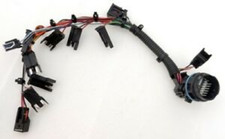
GEARS Magazine's "Revisiting the 6R140" calls out splices in the internal harness assembly that fail and lose continuity intermittently, and notes they can be repaired with solder and oil-resistant shrink wrap. That harness carries the speed sensors and solenoids, so an intermittent splice can drop turbine speed long enough for the module to refuse upshifts and set a code that does not reproduce in the bay. If the complaint is intermittent and heat related, the harness is a real suspect.
6R140 Shift Solenoid Kit, 2011 and Up
A complete set of shift solenoids for the Super Duty 6R140. The right move when SSE, SSB or SSC is out of range or has drifted out of its band. Match band numbers or reprogram the ID codes.
View the solenoid kit →Also browse the full 6R140 parts collection.
Step 3: Fluid level and temperature
Low fluid shows up first in the gears that need the most apply oil, and a starving pump will not fill the overdrive clutch fast enough for the module to see the ratio change in time. Transmission Digest's write-up on an intermittent-neutral 6R140 gives the check procedure: warm the unit to 196–216°F on the scan tool before reading the level, and refill quantities of 7.8 L (8.2 qt) for a pan drop, 9.7 L (10.2 qt) with the valve body out, and 15.3 L (16.2 qt) after a full teardown, Mercon LV only. That same article traced a loss of drive on inclines to a filter snout seal with no resistance, so inspect the filter seal whenever the pan is down.
Watch temperature too. GEARS lists 195–230°F as normal operating range and describes a pump stator sleeve that can partially turn and block converter charge oil to the cooler, which overheats the unit. Ford's own continuous rating is 250°F. A 6R140 that runs hot all the time burns clutches, and the overdrive pack, which carries torque in 4th, 5th and 6th, sees more hours than most.
Step 4: Solenoid banding and adaptives
If the shifts are commanded, the circuit checks good, and 5th or 6th feels like it tries and then backs out, look at solenoid calibration. Sonnax's 6R140 solenoid strategy article explains that these solenoids are sorted into band numbers 1 through 5 by flow, that normally high solenoids have a black snout and normally low solenoids a brown snout, and that the valve body carries a 13-digit strategy number and an 8-digit ID that the module needs. Dropping in whatever band number is on the shelf can cause flares or harsh shifts.
Dial's timing article adds the 5-6 detail: the 6R140 has a latch valve in the clutch apply circuit, tied to solenoid output, that slows the valve slightly during the 5-6 upshift. When a solenoid has drifted from, say, band 3 to band 5, the module's picture of that circuit is wrong, adaptives will not settle after repeated upshifts and downshifts, and you get flared or aborted top-gear shifts. After any solenoid or valve body work, enter the correct ID codes, clear adaptives and drive a full relearn.
Valve body debris is the other piece. GEARS notes that contamination sticks the 1-2-3-4 control valve, producing neutral at stops or a harsh forced 5-4 and 6-4 downshift. A body that is sticking one valve is rarely clean everywhere else, so a top-gear complaint with a history of harsh coast-downs earns a bench teardown.
Step 5: The hard-part failures
When 4th, 5th and 6th all slip or will not engage, with good pressure, good solenoids and clean codes apart from ratio faults, the overdrive clutch or the parts that carry it have failed. Two structural failures are documented on this unit:
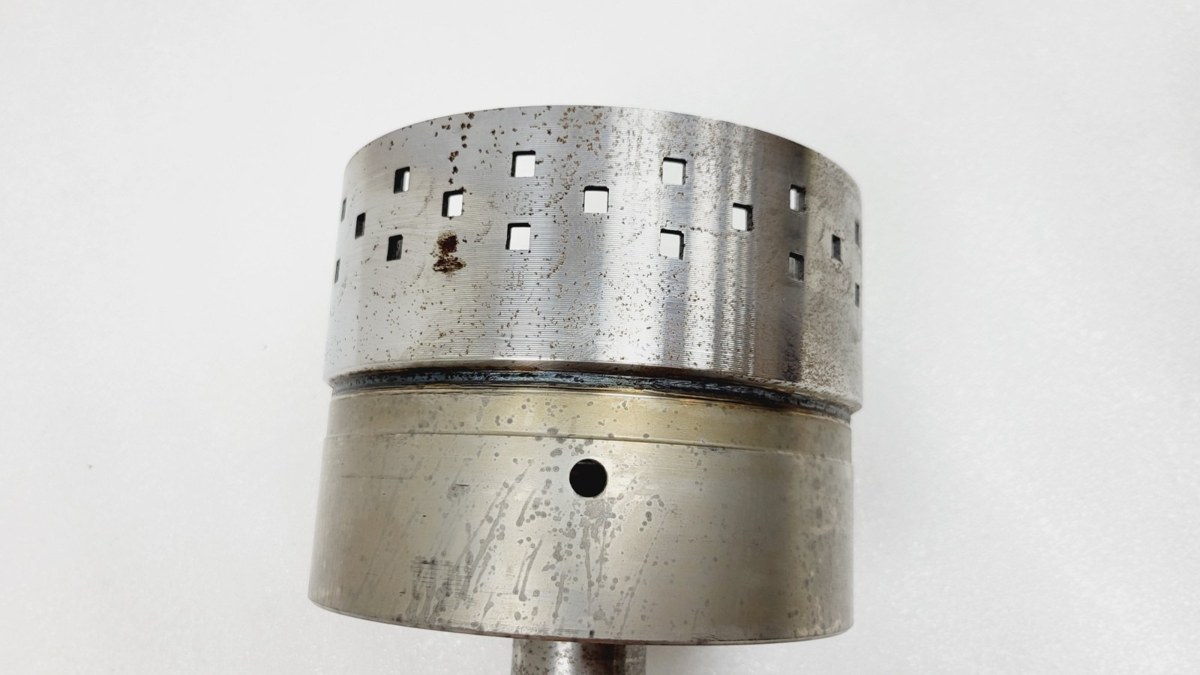
- The input shaft to 4-5-6 drum weld. GEARS reports the input shaft is spin-welded to the 4-5-6 drum and that the weld can separate completely. A cracked weld that has not let go yet shows up as slip or intermittent engagement in the overdrive gears.
- Cracks in the overdrive housing. Transmission Digest lists cracks or breakage of the weld in the 4-5-6 overdrive clutch housing, along with cracks in the forward drum and damaged sealing rings, as common 6R140 failure items. A cracked housing leaks apply oil, and the pack burns.
The overdrive pack carries torque in three of the six forward gears, including the ones a highway truck spends most of its life in. On teardown, air check the overdrive circuit, check the drum and weld closely under a light, inspect the sealing rings and their journals, and look at the piston seals. Burnt overdrive frictions are the result of something; find the leak or the crack that caused them before you put new frictions in.
The repair
A cracked drum or weld means a new drum, not a welded repair. The frictions, steels and seals come from a complete overhaul kit, and the solenoids should be replaced with correctly banded units rather than reused. If the valve body showed debris or sticking, service it while it is out. Use the seal ring sizing tools on the new rings; a ring that has not been sized back down will get cut on assembly and you are back where you started.
Keeping top gear working
- Mercon LV only, level checked at 196–216°F.
- Keep it under 250°F. Towing trucks that live near that number need shorter service intervals and a cooler system that actually flows.
- New filter and seal every service.
- Never reuse solenoids on a rebuild, and always load the ID codes.
- Teach the customer about the range-select limit so it does not come back as a comeback.
FAQ
Why won't my 6R140 shift into 5th or 6th?
Start with the scan tool. If the module never commands 5th, look for a gear limit set with Progressive Range Select, speed sensor faults or stored codes. If it commands the shift and the ratio will not follow, the overdrive 4-5-6 clutch, the direct or intermediate clutch, or their solenoids are not holding.
Does tow/haul mode lock out overdrive on a 6R140?
No. Tow/haul still uses all six gears on the 6R140; it only raises the shift points. A loaded truck in tow/haul may not reach 6th until a higher road speed, so road test empty and out of tow/haul before diagnosing a fault.
Which clutch controls overdrive on a 6R140?
The overdrive clutch, also called the 4-5-6 clutch, is applied in 4th, 5th and 6th and is controlled by the normally high SSE solenoid. Fifth adds the direct clutch and 6th adds the intermediate clutch. If 4th, 5th and 6th all fail together, the overdrive clutch circuit or its drum is the common element.
Is a 6R140 stuck in one gear the same as no overdrive?
No. When the 6R140 loses electrical control it defaults to 5th and reverse with the converter unlocked and maximum line pressure, so a truck in true limp mode is actually in an overdrive gear. A truck that stays in the low gears and will not reach cruise is still under module control or has a clutch that will not hold.
Fixing a 6R140 that won't hold overdrive?
Solenoid kits, internal harnesses, input drums, overhaul kits, valve bodies, filter kits and Mercon LV service kits, shipped from the USA.
Shop 6R140 parts →Sources
- Ford Component Sales, LLC — “Ford 6R140: 6-Speed Automatic Transmission Technical Specifications” (OEM spec sheet). Backs the 3.974 / 2.318 / 1.516 / 1.149 / 0.858 / 0.674 forward and 3.128 reverse ratios, five clutch packs in a Lepelletier layout, 935 ft-lb torque rating, Mercon LV, 4-gallon capacity, 250°F continuous rating, and PCM (gas) versus TCM (diesel) control. fordcomponentsalesllc.com
- Vehicle Service Pros — “Introducing Ford’s TorqShift 6 Transmission.” Backs the clutch application chart (forward 1-4, direct 3-5-R, intermediate 2-6, low/reverse, overdrive 4-5-6), the SSA-SSE solenoid map with normally high/low types, 4.8–5.4 ohm solenoid resistance, the 5th-and-reverse failsafe with TCC unlocked and maximum line pressure, and tow/haul keeping all six speeds with higher shift points. vehicleservicepros.com
- GEARS Magazine (ATRA) — “Problems and Fixes: Revisiting the 6R140 Transmission.” Backs the input shaft spin-welded to the 4-5-6 drum and the weld separating, internal harness splice failures and the solder/shrink-wrap repair, 1-2-3-4 control valve sticking from debris causing harsh 5-4 and 6-4 downshifts, the 195–230°F normal range, and the pump stator sleeve turning and blocking converter charge oil to the cooler. gearsmagazine.com
- Transmission Digest — “Ford 6R140: Repairing the elusive intermittent neutral condition.” Backs cracks or broken welds in the 4-5-6 overdrive clutch housing as a common failure, forward drum cracks and damaged sealing rings, the failed filter seal case, the 196–216°F level check, and the 7.8 / 9.7 / 15.3 L (8.2 / 10.2 / 16.2 qt) Mercon LV fill quantities. transmissiondigest.com
- Sonnax — “Troubleshooting Ford 6R80 & 6R140 Timing-Related Shift Issues,” Jim Dial. Backs the PCM looking for a turbine speed rpm drop within a split second of solenoid command, the 6R140 latch valve in the clutch apply circuit that slows the 5-6 upshift, solenoids drifting out of their band, and adaptives failing to settle. sonnax.com
- Sonnax — “6R140 Transmission Solenoid Strategy Code: Don’t Break Up the Band.” Backs solenoid band numbers 1 through 5 by flow, black snout on normally high and brown snout on normally low solenoids, the 13-digit strategy number and 8-digit ID on the valve body, and mismatched bands causing flares or harsh shifts. sonnax.com
Shop 6R140 solenoid kits, internal harnesses, input drums, overhaul kits and valve bodies — shipped fast from the USA.
Shop 6R140 parts →Shop the 6R140 solenoid kit →