A 6T40 or 6T45 that will not move in Drive or Reverse is a different animal from the usual "no reverse" or "flares into 3rd" calls on this unit. The engine revs fine, the shifter clicks through the gears, and the car just sits there, or creeps so weakly it might as well not move at all. On a Cruze, Malibu, Sonic, Equinox, Terrain or Verano this almost never means a single clutch let go. It means the transmission is not building the hydraulic pressure that every clutch in the box depends on.
GM has a dedicated bulletin for exactly this complaint, and it tells you to do something most shops skip: check line pressure before you touch the TEHCM or the valve body. Here is the diagnostic order I use, the GM bulletin behind it, the test that actually proves a dead pump, and the two failures that get confused with this one and send techs chasing the wrong part.

Step 1: Make Sure It Is the Transmission, Not the Engine
GM's Preliminary Information bulletin PI0324F, "No Forward, No Reverse, No Crank, Engine Cranks But Will Not Start," covers 2011-2014 Buick LaCrosse, Regal, Verano and Encore, Chevrolet Malibu, Cruze, Equinox, Captiva Sport, Orlando, Sonic and Trax, and GMC Terrain, all equipped with the 6T30, 6T40, 6T45 or 6T50. The complaint list is broader than most techs expect: vehicle will not move or engage, engine cranks but will not start, no crank with a clicking sound, a fluid leak, harsh shifts, or slipping and missing gears in more than one gear.
Before you condemn anything in the transmission, GM's bulletin says to rule out a seized engine first. Look for external block damage, coolant or oil leaks, or evidence of overheating, and pull the spark plugs to check for fluid in the cylinders from hydro-lock. Only once the engine itself is cleared does the bulletin move on to the transmission.
Step 2: Line Pressure Before the TEHCM or Valve Body
This is the instruction that saves a comeback. PI0324F states plainly: perform a transmission line pressure check as detailed in GM's service information, and do not replace the TEHCM (the control solenoid valve assembly) or the valve body assembly before doing it. No or low line pressure, the bulletin says, may indicate a damaged transmission fluid pump, and a $400-plus TEHCM swap does nothing for a dead pump.
While you have the scan tool connected, note which DTCs are present. GM lists P0776, P0796, P2714 and P2723 as common on this complaint, sometimes alongside a U-code communication fault, and often with no warning lights at all or just a service-engine-soon, battery charge, or reduced power light. GM also flags that these vehicles are frequently low-mileage, often under 10,000 miles, which points toward an early pump defect rather than normal wear-out.
Step 3: Confirm a Dead Pump With GM's Own Test
If line pressure reads zero or next to nothing, and the engine turns over fine on its own, the next step is not a guess. PI0324F describes the actual confirmation test: remove the transmission from the vehicle, but leave the torque converter bolted to the flywheel and slide the transmission off the converter during removal rather than unbolting the converter first. With the transmission off, try to rotate the engine. If it now spins freely, the fluid pump assembly was binding the drivetrain and gets replaced. GM also notes that a seized pump or engine can blow the 250-amp fuse F6UD in the battery fuse block as a side effect, which is worth checking before you assume a separate electrical fault.
This is also where a lot of comebacks start. Reusing the old filter and pan gasket on a transmission that just ate a pump, or skipping a fluid and filter service on reassembly, means debris the failing pump already shed goes right back into the new pump's feed circuit.
Step 4: When Pressure Is Low But Not Zero, Look at the Valve Body
Not every low-pressure 6T40 has a fully dead pump. Jason Larochelle, a Sonnax product support representative, writes in Transmission Digest's GM 6T40 Pump Identification Guide that the third-generation pump, introduced in 2015 with a redesigned remote-axis, variable vane-type layout, added a unique lube-on-demand valve. Below 87 psi the valve stays closed and lube flow runs through a single orifice in the separator plate; above 87 psi it opens a second orifice to double cooler flow during TCC apply. The valve is heavily side-loaded, and Sonnax has pulled used examples that tested at 0 in-Hg vacuum, meaning the bore is worn through. A worn lube-on-demand bore directs converter feed pressure straight to the exhaust circuit instead of where it belongs, which shows up as converter apply problems, overheating, reduced line pressure and poor lube/cooler flow, not necessarily a full no-move.
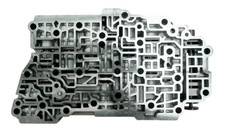
On first- and second-generation units (2008 through the 2015 model-year changeover), Sonnax's remanufactured valve body listing for the Gen 1 6T30/6T40/6T45/6T50 ties worn valve body bores to no 4th, 5th or 6th gear, harsh or flared shifts, burnt clutches, TCC apply concerns, P0741 and P0742, delayed engagement, downshift clunks and low converter and lube flow. That symptom set overlaps enough with a weak pump that the valve body has to be on the inspection list whenever the line pressure test comes back low instead of flat zero.
Step 5: Do Not Confuse This With the Sonic Turbine Shaft Recall
One failure gets mistaken for a no-move complaint on these cars and it is worth ruling out by VIN. NHTSA campaign 14V315000 (GM's own number 14234) covers 2012 Chevrolet Sonic models built March 1 to June 29, 2012, equipped with the 6-speed automatic and 1.8L four-cylinder, where the transmission turbine shaft may fracture. GM's consequence statement is specific: a fracture while in 1st or 2nd gear prevents the transmission from upshifting into 3rd through 6th, which limits road speed, while a fracture in a higher gear causes the car to coast until it slows enough to downshift. Neither of those is a total loss of movement in every gear, which is why it is a distinct failure from the pump and valve body problems above, not a substitute diagnosis for them. If you have a 2012 Sonic in this window, check the VIN against the recall before you do anything else, since the fix is a free turbine shaft replacement.
Fluid, Capacity and What to Check First
Before any of the above, confirm the basics did not get missed. GM's 2026 TechLink transmission capacities chart lists the 6T40 (RPO MNH, as used in the Trax) at a 4.0-6.0 liter (4.2-6.3 quart) fluid change capacity on DEXRON VI. A low fluid level or the wrong fluid will not always show as a code, and it can produce the same low-pressure symptoms as the early stages of a pump or valve body failure. Pull the level, check the condition and color, and look at the pan magnet for metal before you start removing the transmission for a pump test.
| Reading | Most likely cause | Next step |
|---|---|---|
| Zero or near-zero line pressure, engine won't rotate freely | Pump seized against drivetrain | Remove transmission, check engine rotation per PI0324F, replace pump |
| Zero or near-zero line pressure, engine rotates fine | Damaged pump assembly, not seized | Replace pump, service filter and pan gasket |
| Low but present, unstable, converter/overheating issues | Lube-on-demand valve wear (Gen 3) or worn valve body (Gen 1/2) | Vacuum test lube-on-demand valve or inspect/replace valve body |
| 2012 Sonic, upshift stops or car coasts, not a full no-move | Turbine shaft fracture | Check VIN against NHTSA 14V315000 |
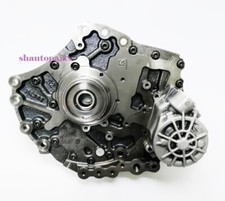
6T40 oil pump assembly at Core Transmission Parts
This is the part GM's own bulletin points to once the line pressure test and rotation check confirm a damaged pump. Core Transmission Parts carries the low-nozzle 6T40 pump assembly for 2008-up units.
View the 6T40 pump assembly at Core Transmission Parts →6T40 and 6T45 pumps, filter and gasket kits, and valve bodies — shipped fast from the USA.
Shop 6T40 parts →Related guides
- 6T40 No Reverse: Diagnosis and Fix
- GM 6T40 / 6T45 Wave Plate Failure: Why P0776 Is Not Just a Solenoid
- 6T40 Slipping: Causes and Fix
- 6T40 Limp Mode Causes and Fix
- 6T40 Common Problems and Fixes
FAQ
What does it mean when a 6T40 will not move in any gear?
No movement in forward or reverse almost always means the transmission is not building line pressure at all, not that one clutch failed. GM's bulletin PI0324F treats this as a pump problem first: before replacing the TEHCM or valve body, perform a line pressure check, because a damaged fluid pump producing no or low pressure is the documented cause on 6T30/6T40/6T45/6T50 units.
What codes show up with a 6T40 no-movement complaint?
GM's PI0324F lists P0776, P0796, P2714 and P2723 as DTCs that may be present, along with U-code communication faults in some cases. Many of these vehicles also show no warning lights at all, or only a service engine soon, battery or reduced power light, so do not rule out a pump problem just because the dash looks normal.
Is a 6T40 no-movement problem always the pump?
No. GM's own bulletin starts by ruling out a seized engine first, and separately, Sonnax documents a Gen 3 lube-on-demand valve bore that wears and bleeds off converter feed and line pressure without fully killing it. A full dead pump produces zero or near-zero line pressure and usually no movement at all; a worn lube-on-demand valve or valve body tends to produce weak, unstable pressure with harsh or flared shifts rather than a complete no-move.
Can a damaged 6T40 pump actually stop the engine from turning over?
Yes, and GM's PI0324F spells out the test for it. If the engine will not rotate or only moves slightly and there is no sign of a seized engine, GM's procedure is to remove the transmission, leave the torque converter bolted to the flywheel, and check whether the engine now rotates freely. If it does, the fluid pump assembly was binding the drivetrain and needs to be replaced.
Is the Chevrolet Sonic turbine shaft recall the same thing as a no-movement complaint?
No, and mixing them up sends a diagnosis down the wrong path. NHTSA campaign 14V315000 covers a fractured transmission turbine shaft on 2012 Chevrolet Sonic models built March 1 to June 29, 2012. GM's own description says a fracture in 1st or 2nd gear prevents upshifting past 2nd, and a fracture in a higher gear causes the car to coast, not a complete loss of movement in every gear.
Sources
- General Motors — Preliminary Information PI0324F, "No Forward, No Reverse, No Crank, Engine Cranks But Will Not Start," December 2013 (via NHTSA). Backs the applications, the full complaint list, the DTCs P0776/P0796/P2714/P2723, the low-mileage pattern, the instruction to rule out a seized engine and check line pressure before replacing the TEHCM or valve body, and the pump-removal confirmation test. static.nhtsa.gov (PDF)
- NHTSA — Recall Campaign 14V315000 (GM number 14234), 2012 Chevrolet Sonic. Backs the transmission turbine shaft fracture defect, the build-date window, and the distinct consequence (upshift limitation or coasting rather than total no-movement). api.nhtsa.gov
- Transmission Digest — "GM 6T40 Pump Identification Guide" by Jason Larochelle, Sonnax TASC Force, July 2021. Backs the three pump generations, the Gen 3 remote-axis variable vane-type redesign, the lube-on-demand valve's 87 psi threshold and dual-orifice function, the bore wear and 0 in-Hg vacuum test finding, and the resulting converter apply and line pressure symptoms. transmissiondigest.com
- Sonnax — GM6T40-1 Remanufactured Valve Body product page. Backs the Gen 1 6T30/6T40/6T45/6T50 symptom list: no 4th/5th/6th gear, harsh and flare shifts, burnt clutches, TCC apply concerns, P0741/P0742, delayed engagement, downshift clunks and low converter/lube flow. sonnax.com
- General Motors — GM TechLink, "2026 Transmission Capacities & Fluids" chart (U.S. and Canada). Backs the 6T40 (RPO MNH) DEXRON VI fluid type and 4.0-6.0 liter / 4.2-6.3 quart fluid change capacity. gm-techlink.com (PDF)