"My 6T70 is leaking" isn't a diagnosis, it's a symptom with four likely addresses. Before anyone pulls a cover or pulls a transmission on a 2007-and-up Equinox, Malibu, Acadia, Traverse, or Impala, it's worth knowing which of those four spots actually matches the wet spot on the driveway, because two of them have GM bulletins with specific part numbers attached, one of them is a known weak point in remanufactured converters, and one of them is just ordinary wear that doesn't need a bulletin at all.
This isn't a guess-and-replace list. Every leak point below is backed by a GM bulletin or a recognized transmission trade source, and every source is listed at the bottom.
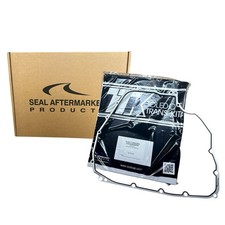


Spot 1: the torque converter fluid seal
GM's own TechLink bulletin #20-NA-023 covers 2019 XTS, Impala, and Acadia models equipped with the 6T70, 6T75, or 6T80 (RPO MHM, M7U, M7W, M7V), reporting fluid leaking from the front of the transmission, at or around the torque converter fluid seal. GM's stated cause isn't a design flaw in the seal itself, it's installation: the seal "may not have been installed correctly during assembly," and may have been damaged or worn excessively because of that.
The fix, per the bulletin, is to inspect the seal for leaks or damage and replace it if needed, using the DT 23129 universal seal remover and DT 49861 seal installer (or a GE 6125-1B slide hammer with adapter as an alternative). The bulletin specifically warns to support the back side of the torque converter housing during installation and to stop pressing once the seal is seated, since continued pressure can damage the housing casting itself. The torque converter only gets replaced if a pressure test shows an actual leak or there's turbine hub damage; a damaged seal alone doesn't condemn the converter.
Spot 2: a weak pilot weld on remanufactured converters
This one shows up after a converter's already been replaced, not on the original factory unit. Sonnax's tech note on 6T70/75 converter-pilot issues, echoed in Transmission Digest's rebuild-trade coverage, says most converters arriving at remanufacturing facilities for this family have had vibration and/or leak complaints, traced to the weld that attaches the pilot to the converter cover. That weld point is described plainly as a weak spot in the unit's construction, going back to when the 6T70/75 first appeared in the 2007 GMC Acadia and Pontiac G6.
The practical complication: a cracked or broken pilot usually travels with a cracked flex plate, and that crack is easy to miss. A thin shim, about 0.035 to 0.040 inch, is permanently attached at the mounting-bolt area and can hide the crack until the plate fails in two. Critically, a flex plate can't be adequately inspected from the transmission side at all — it has to come off and get checked from the engine side. If a reman converter is leaking or buzzing, that flex plate inspection isn't optional.
Spot 3: the AWD intermediate shaft seal (transfer case / PTU)
On AWD models — 2007-2010 GMC Acadia and Saturn Outlook, 2008-2010 Buick Enclave, 2009-2010 Chevrolet Traverse, 2008-2009 Chevrolet Equinox Sport, 2010 Chevrolet Equinox and GMC Terrain, 2008-2009 Pontiac Torrent GXP and Saturn Vue, plus 2007-2009 Suzuki XL-7 — a GM technical service bulletin addresses red fluid showing up at the transfer case weep hole farthest from the transmission, on the passenger side. These models use the 6T45/70/75 AWD/PTU automatic (RPO MHC/MH4/MH6) paired with a Getrag 760 or 790 transfer case.
GM's stated cause is the front-wheel-drive intermediate (inner) shaft seal failing to hold fluid in cold conditions when there's runout between the intermediate shaft and the input shaft. The fix is a new-design seal, but which one matters: first-design seal P/N 19180998 and second-design seal P/N 19206322 are not interchangeable, and the bulletin is explicit that the second-design seal is not compatible with a first-design transfer case — installing it anyway creates a new leak from interference with the input shaft. The correct part depends on a VIN breakpoint that differs by model: 8J217964 for Acadia/Enclave/Outlook/Traverse, 86075818 for Equinox/Terrain/Torrent/Vue, and 86115983 for the Suzuki XL-7. Installation uses the DT-48078 inner drive shaft seal installer with a J8092 driver handle, seating the seal 2.8 mm (0.11 in.) from the end of the input shaft.
A related GM tech tip adds an important diagnostic warning: don't replace the transfer case's left-hand input shaft seal unless fluid dye confirms the leak is actually coming from that weep hole. A nearby O-ring or a different seal can produce a similar wet spot, and swapping the wrong seal wastes a tear-down without fixing anything.
Spot 4: the case, covers and small seals (there is no pan)
An earlier version of this guide called the fourth spot "the pan gasket." That was wrong, and it is worth correcting plainly: the 6T70/6T75 does not have a bottom pan. Fluid drains through a plug, the filter is internal, and the cover on the side of the case is the valve body cover. GM's own "Automatic Transmission Fluid Leaks" checklist for this unit is the list to work from instead [6]:
- Valve body cover: a damaged or warped cover, a damaged cover gasket, loose cover bolts or studs, a damaged or misinstalled wire connector hole seal, a worn fluid level indicator seal, and plugged vent holes in the fluid level indicator.
- Case cover: porosity or damage on the sealing surface, a damaged case cover gasket, loose cover bolts, a loose input speed sensor bolt or damaged ISS seal, and leaking case cover bore plugs.
- Case: porosity on sealing surfaces, loose cooler line bolts or damaged cooler line seals, a damaged manual shift shaft seal, worn axle seals or slingers, and a loose pressure test plug or fluid level plug.
- Converter housing: the converter fluid seal (Spot 1), the converter housing seal, loose converter and differential housing bolts, and the axle seal on that side.
GM's leak procedure also flags overfill and pressure: before replacing a gasket, check that fluid level or pressure is not too high and that vent or drain-back holes are not plugged [7]. For porosity in a non-pressurized area of the case, GM's repair is epoxy: clean and air dry the area, cover it fully, let it cure three hours before reassembly, then repeat the leak test [7].
| Spec | Value |
|---|---|
| Fluid type | DEXRON-VI (GM service-fill spec) |
| Total/dry transaxle capacity | 9.0 L / 9.5 qt |
| Torque converter seal bulletin | GM TechLink #20-NA-023 (2019 XTS/Impala/Acadia, RPO MHM/M7U/M7W/M7V) |
| AWD intermediate shaft seal, first design | P/N 19180998 |
| AWD intermediate shaft seal, second design | P/N 19206322 (not compatible with first-design transfer case) |
| Seal seating depth (intermediate shaft seal) | 2.8 mm (0.11 in.) from end of input shaft |
Diagnosing which spot it actually is
- Clean it first, then drive it the way GM says. GM warns against brake cleaner or other reactive solvents, which damage gaskets and seals; use a rag. Do not just idle it, since that does not actuate the transmission systems, and stay off the freeway, which splatters fluid. Drive 15-20 minutes in city traffic to operating temperature, park over clean cardboard, and look [7]. A dry unit that shows fresh wetness only at the front bell-housing area points to the converter seal (Spot 1) or the pilot weld on a reman unit (Spot 2), not the side covers or the transfer case.
- Use powder or dye when the source is not obvious. GM lists an aerosol leak tracing powder method and a dye and black light method (drive about 24 km / 15 mi to temperature). Trace the leak back to the source and fix the cause: a new gasket will not seal a bent flange [7].
- Use fluid dye on AWD models before touching the transfer case. GM's own guidance is explicit: confirm the leak is actually coming from the weep hole farthest from the transmission before replacing the left-hand input shaft seal. A leak elsewhere on the transfer case housing is a different repair.
- If a converter was recently replaced, and the leak or a vibration shows up afterward, check the pilot-to-cover weld and pull the flex plate for inspection from the engine side before assuming the new converter itself is bad.
- Check the VIN before ordering an intermediate shaft seal. The correct design depends on the vehicle's VIN breakpoint, and the wrong one creates a new leak instead of fixing the old one.
Need parts for this job?
Our 6T70 parts page has the magnetic drain plug, sealing ring tooling, overhaul gasket and seal kits, valve bodies, and full rebuild kits for when a leak has already let debris or air into the system. Checkout is on site.
FAQ
Where does a 6T70 actually leak from most often?
Four spots account for nearly every real 6T70/6T75 leak complaint: the torque converter fluid seal at the front of the case (GM bulletin 20-NA-023), a weak pilot-to-cover weld on remanufactured torque converters, the front-wheel-drive intermediate shaft seal on AWD/PTU models, and ordinary wear at the case and cover seals GM lists for this unit (valve body cover gasket, case cover gasket, ISS seal, manual shaft seal, cooler line seals and axle seals). The first three have documented GM or industry bulletins behind them; the last group is routine wear-and-tear. The 6T70 has no bottom pan, so there is no pan gasket to leak.
How do I tell a torque converter seal leak from a transfer case leak on an AWD 6T70?
Location matters. A torque converter fluid seal leak shows up at the front of the transmission case, around the bell housing where the converter meets the engine. The intermediate shaft seal leak that GM's AWD/PTU bulletin covers shows up at the transfer case weep hole on the passenger side, farthest from the transmission. GM's own tech tip warns not to replace the transfer case's left-hand input shaft seal unless fluid dye confirms the leak is actually coming from that weep hole, since a nearby O-ring or seal can mimic the same wet spot.
Why would a reman torque converter leak when the original didn't?
Sonnax and Transmission Digest both flag the pilot-to-cover weld on 6T70/6T75 converters as a weak point. Most converters arriving at remanufacturing facilities already show vibration or leak complaints traced to that weld. A cracked or broken pilot often means a cracked flex plate too, and that crack can hide under the shim at the mounting-bolt area until the plate fails outright, so a leaking reman converter is worth inspecting at the pilot weld and the flex plate, not just the converter seal.
Is it safe to just replace the intermediate shaft seal on an AWD 6T70 without checking anything else?
No. GM's bulletin ties the correct replacement seal to the vehicle's VIN breakpoint, because a second-design seal (P/N 19206322) is not compatible with a first-design transfer case and will create a new leak if installed in the wrong one. The bulletin lists separate breakpoints for Acadia/Enclave/Outlook/Traverse, for Equinox/Terrain/Torrent/Vue, and for the Suzuki XL-7, so the correct part depends on both the model and the VIN, not just the seal design year.
Related guides
- 6T70 Common Problems and Fixes
- 6T70 Overheating Prevention
- 6T70 Valve Body Symptoms
- 6T70 Rebuild Cost
- GM 6T70/6T75 Service Guide
Sources
- General Motors, TechLink Bulletin #20-NA-023, "Torque Converter Fluid Seal Leak," 2019 XTS, Impala, and Acadia with 6T70/6T75/6T80 (RPO MHM, M7U, M7W, M7V). Backs the leak location, the "not installed correctly during assembly" root cause, and the seal remover/installer tool numbers (DT 23129, DT 49861). gm-techlink.com
- General Motors Technical Service Bulletin, "Leaky GM Transmission Seal" (6T45/70/75 AWD/PTU, RPO MHC/MH4/MH6, Getrag 760/790 transfer case), reproduced by Vehicle Service Pros, August 2012. Backs the affected model list, the weep-hole leak location, the two seal part numbers (19180998 / 19206322), the VIN breakpoints, and the DT-48078 installer/seating depth. vehicleservicepros.com
- Sonnax, "6T70/75 Converter-Pilot Issues," Technical Resources. Backs the pilot-to-cover weld as a documented weak point in 6T70/75 converters seen at remanufacturing facilities. sonnax.com
- Transmission Digest, "6T70/75 Converter-Pilot Issues," Torque Converter Tech Tip, by Ed Lee. Backs the vibration/leak complaint pattern, the flex-plate cracking tied to the pilot weld, the hidden shim at the mounting-bolt area, and the requirement to inspect the flex plate from the engine side. transmissiondigest.com
- Saab WIS Online (mirrored GM Workshop Information System content), "Transmission General Specifications," 2011 9-4X, Automatic Transmission 6T70/6T75. Backs the 9.0 L (9.5 qt) total transaxle fluid capacity and DEXRON VI fluid type for the shared GM 6T70/6T75 transaxle. saabwisonline.com
- General Motors service information, 6T70/6T75, "Automatic Transmission Fluid Leaks" (2011 application, published on SAAB WIS Online). Backs the leak-point checklist by component: valve body cover, case cover, case and converter housing seals, gaskets, plugs and bolts. saabwisonline.com
- General Motors service information, 6T70/6T75, "Fluid Leak Diagnosis" and "Case Porosity Repair" (2011 application, published on SAAB WIS Online). Backs the no-brake-cleaner warning, the 15-20 minute city drive, the powder and dye/black light methods, the overfill and plugged-vent checks before gasket replacement, and the 3-hour epoxy porosity repair. leak diagnosis · porosity repair