A harsh shift on a 6T70 or 6T75 is a different problem from a slip, and it gets misdiagnosed more often. The customer says "it slams into second" or "it bangs going into drive," the shop flashes the TCM, and the car comes back a week later doing the same thing. Sometimes the flash was the right fix. Sometimes the transmission just needed to finish learning. And sometimes there is debris in the valve body or a leak between two clutch circuits that no calibration will ever cover up.
This guide sorts those cases in the order they cost you money: the free checks first, the adapt and software fixes second, and the hardware causes last. The bulletin numbers, procedures and valve body kit numbers come from GM service bulletins filed with NHTSA, ATRA's 6T70 seminar, Sonnax and Transmission Digest, all listed at the end.

Start by naming the shift
"Harsh" by itself tells you nothing on a clutch-to-clutch transmission. Every shift on the 6T70 releases one clutch while applying another, and the TCM times that overlap with pressure control solenoids. When the timing is off, one of two things happens: the oncoming clutch applies too hard, or the offgoing clutch lets go too late and both hold for an instant. The second one is a tie-up, and the driver feels it as a bump or a brief bind rather than a quick firm shift. Write down exactly which shift does it, whether it happens hot or cold, on light or heavy throttle, and on upshifts, downshifts or garage engagement. That information decides which of the sections below you go to.
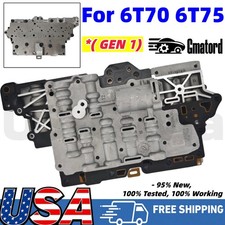
Two background facts matter. First, the TCM on this unit is internal to the transaxle; ATRA points out that any time the transaxle is replaced, the TCM has to be programmed. Second, the 6T70/6T75 received a major controls update for 2013. ATRA calls the units without it Gen. I and the units with it Gen. II, and because of parts supply, applications with RPO codes other than M7W, M7U, M7V or M7X did not get the update until 2014 production. Valve body parts, calibrations and repair kits split along that line, so confirm which one you have before ordering anything.
Check 1: fluid level at the right temperature
Low fluid usually causes slips and flares, but an overfilled or aerated unit can make clutch fill times erratic, and the TCM's adapts chase those errors. ATRA's product-issues seminar gives the procedure: level surface, parking brake applied, run the selector through the ranges, idle for one minute, and read the dipstick with transmission fluid temperature (TFT) between 180 and 200 degrees F on the scan tool. If the fluid was just changed, ATRA says to reset the transmission oil life monitor and drive in 2nd to bring it up to temperature. Use DEXRON-VI; it is the fluid GM lists in its own 6T70 valve body bulletin. While the level plug is out, look at what comes with the fluid. Metal in the drain changes the whole diagnosis, as you will see below.
Check 2: has it actually learned?
A large share of harsh-shift complaints on low-mileage or freshly repaired 6T70s are adapts that never finished. GM's PI bulletin PIP5363B covers 2015-2017 Enclave, Traverse and Acadia with a harsh 1-2 shift, mostly on light throttle, with no codes, and in rare cases a harsh 2-3 as well. GM says the shift adaptive time may not have learned and gives a drive procedure to learn the 2-6 clutch adapts:
- Select M5 so the transmission is held in 5th gear.
- Drive at 38 mph or above with TFT above 30 degrees C (86 degrees F).
- Hold a steady throttle for about 5 miles on flat, level ground. Cruise control helps.
- Stop and try some light-throttle 1-2 shifts. Drive another 5 miles if needed.
- If a second learn drive is needed, let the TEHCM power down before trying again.
GM's instruction if nothing changes is to follow the normal diagnosis for a harsh shift, which is where the rest of this article picks up. The reason the drive has to be in 5th is spelled out in ATRA's seminar: on Gen. II units the TCM runs clutch pressure (CP) learn only during steady driving in 3rd, 5th and 6th. The 4-5-6 clutch is learned in 3rd, the 1-2-3-4 and 2-6 clutches in 5th, and the 3-5-R clutch in 6th. When the TCM sees a rough road, it aborts CP learn until the road smooths out. A customer who drives short, stop-and-go trips on broken pavement may never give it the chance.
After any internal repair, valve body replacement or TCM programming, ATRA says to run Service Fast Learn Adapts with a scan tool, then shut the engine off, let the TCM power down (you will lose scan tool communication), and restart to complete it. Skipping that step is one of the most common causes of a harsh shift complaint that shows up right after a rebuild.
Check 3: is there a calibration for it?
GM has released TCM software for several 6T70 shift-quality complaints, so check the VIN for open bulletins before you go inside. One example is service update 12244 for the 2013 Cadillac XTS with the 6T70 (M7U/M7W): a TCM reprogram for harsh 2-3 or 4-5 upshifts, a harsh Reverse to Drive shift, coast-down shift bumps, harsh tap shifts and other hard shift responses. The bulletin also notes that after programming the transmission keeps learning over the next several key cycles, and that the adapts operate at transmission oil temperatures above 40 degrees C (104 degrees F). That line is worth repeating to the customer: a cold-morning test drive right after a flash is not a fair test.
If the vehicle has the latest calibration, has completed its learn, and still shifts hard, the cause is mechanical or hydraulic.
Check 4: put a gauge on line pressure
Before you tear into the valve body, rule out line pressure that is simply too high. GM's harsh garage shift chart for the 6T70/6T75 starts with the engine: if the engine controller reports that engine torque is inaccurate, the transmission commands high line pressure on purpose, so clear engine codes first. The same chart calls for line pressure at idle below 800 kPa (about 116 psi).
GM's line pressure check uses a gauge in the line pressure test port and the scan tool's Line PC solenoid output control, which only works in Park or Neutral below 1500 RPM and steps pressure in roughly 200 kPa (29 psi) increments. Run the sweep at least three times and compare to GM's solenoid valve pressure chart: 345-900 kPa (50-130 psi) with 0 kPa requested, 1100-1310 kPa (160-190 psi) at 400 kPa requested, and 1860-2070 kPa (270-300 psi) at 800 kPa and above. Pressure pinned high that does not follow commands points at the line PC solenoid or a stuck regulator; note that P0961 and P0963 both make the TCM command maximum line pressure and freeze adapts, which by itself makes every shift harsh. Our 6T70 pressure control (EPC) solenoid guide covers that test in detail. Reinstall the test plug at 12 N·m (106 lb-in).
Harsh shifts with shudder, flare or slide-bump: the valve body
GM bulletin 18-NA-358 is the one to know. It covers a long list of 6T70, 6T75 and 6T80 vehicles, including 2014-2019 Acadia, 2014-2017 Enclave and Equinox, 2014-2016 SRX, and XTS, Impala, Malibu, LaCrosse, Regal, Terrain and Traverse models. The complaints are a severe launch shudder in 1st, shudder in 4th, or a shudder during the 2-3 upshift or 3-2 downshift, often along with flare, slide/bump, slip or harsh shift. GM's stated cause is debris in the upper and/or lower valve bodies, or valves that are scratched or scored and do not move properly.
The bulletin's diagnostic notes are useful on any 6T70:
- Rule out an engine misfire or driveability problem first.
- Watch TCC slip when the converter clutch is applied during the event, so you do not chase a TCC shudder into the valve body.
- The launch shudder can be duplicated by power braking in 1st, but GM limits that to 5 seconds or less to avoid damaging the 1-2-3-4 clutch.
- GM states that TEHCM replacement has not been an effective repair for this concern, and says not to replace it unless the problem has been isolated to something else.
- The fix is replacing both the upper and lower valve body at the same time. The bulletin lists upper body 24281084, lower body 24257450 and body kit 24264343.
- The 2020 version adds: inspect the input and output speed sensors for collected debris, a sign of internal component failure. If the sensors are clean but valves or bores are scratched, check for a final drive bearing failure.
That last point is the one people skip. Scored valves have to be scored by something. If you put a new valve body on a unit that is still shedding bearing material, the new one gets scored too.
Worn bores that cause harsh shifts
Debris is not the only way the valve body goes bad. Sonnax's vacuum test guides list the 6T70 bores that wear and the symptoms each one produces. The ones that list harsh shifts:
- Clutch boost / latch valve bores (Gen. I, Sonnax 144740-23 at three locations): harsh shifts, slips and flares, delayed engagement, burnt clutches and slide shifts. On Gen. II Sonnax lists an oversized clutch boost valve, 124740-56, for the same symptoms.
- Isolator valve (124740-03K, Gen. I and Gen. II): harsh shifts and general shift concerns.
- Actuator feed accumulator piston (Gen. I 124740-73K, Gen. II 124740-76K): harsh shifts, soft shifts, and on Gen. I, solenoid performance codes.
- 3-5-R clutch regulator valve (Gen. I kits 124740-21K and 124740-26K): bind-up, flares and reverse slip.
The actuator feed accumulator is worth a closer look because it explains why a single worn part can make shifts harsh in some gears and soft in others: it steadies the feed that every pressure control solenoid regulates from. If that feed swings, clutch pressure swings with it. Vacuum test these bores on the bench before a used or remanufactured valve body goes back in; a bore that fails the test will bring the complaint right back.
A bind on the 2-3, 3-4 or 4-5 shift: look between the clutches
If the complaint is a brief tie-up rather than a hard hit, suspect a leak between the 3-5-R and 4-5-6 circuits. Those two clutches trade places on several shifts, so fluid crossing from one to the other keeps the offgoing clutch partly applied.
ATRA's product-issues seminar describes a bind on the 3-4 or 4-3 shift, with P0797 possible, caused by a worn ring groove on the case cover hub sleeve that leaks between the 3-5-R and 4-5-6 clutch circuits. Remove the hub from the rear case cover, inspect the rings and grooves, and measure between the edge of the groove and the ring with a feeler gauge. Maximum clearance is 0.007 inch; past that, ATRA says to replace the case cover.
Transmission Digest's Wayne Colonna documented a related case on a 2012 Acadia: harsh 2-3 and 4-5 shifts with a brief bind-up and no codes. A relearn, a flash, a fluid service and an OE valve body with TEHCM had all been tried. The cause was the compensator blow-off ball bore in the end cover, damaged from the outside in a front-end collision, so the ball could not seat. That ball is part of the compensator feed circuit for the 3-5-R and 4-5-6 clutches, and the fix was a new end cover. Colonna also warns against cleaning this end cover in a water-based parts washer during an overhaul, since leftover debris can keep the ball from seating. His check after service: spray penetrating oil into the spring pocket and do a low-volume air test; a faint fluttering sound means the blow-off ball is working. When a harsh 2-3 or 4-5 survives a valve body swap, look at the end cover, and look at the outside of the case for crash damage.
Order of attack
- Name the shift and the conditions: which gear change, hot or cold, throttle position.
- Set fluid level at 180-200 degrees F TFT with DEXRON-VI, and check the drain for metal.
- Check for open TCM calibration bulletins on the VIN.
- Let it learn: run the PIP5363B drive in M5 for a harsh 1-2, and run Service Fast Learn Adapts after any repair or programming.
- Shudder, flare or slide-bump along with the harsh shift: bulletin 18-NA-358, both valve bodies, and inspect the speed sensors and final drive bearing for the debris source.
- Vacuum test the clutch boost, isolator and actuator feed accumulator bores.
- A bind on 2-3, 3-4 or 4-5: measure the hub sleeve ring grooves (0.007 inch max) and inspect the end cover blow-off ball.
6T70 end cover gasket, 2007-2025
Pulling the end cover to inspect the compensator blow-off ball or hub sleeve rings means a new gasket going back on. This TransTec gasket fits the 6T70 end cover.
View at Core Transmission Parts →Browse 6T70 parts at Core Transmission Parts →
Need parts for this job?
6T70/6T75 valve bodies, shift kits, solenoids and master rebuild kits, shipped from the USA. Confirm Gen. I or Gen. II by year and RPO before you order.
Shop 6T70 parts →FAQ
Why does my 6T70 shift hard from 1st to 2nd?
On 2015-2017 Enclave, Traverse and Acadia, GM's PIP5363B says a harsh light-throttle 1-2 with no codes is often 2-6 clutch adapts that have not learned. GM's fix is a drive in M5 at 38 mph or above for about 5 miles on level ground with fluid above 86 degrees F. If that does not help, check for a TCM calibration and then the valve body.
Will a TCM reflash fix 6T70 harsh shifting?
Sometimes. GM has released calibrations for specific complaints, such as service update 12244 for harsh 2-3, 4-5 and Reverse to Drive shifts on the 2013 XTS. After any flash, run Service Fast Learn Adapts and allow several drive cycles, since the adapts only work above 104 degrees F fluid temperature.
Can a bad valve body cause harsh shifts on a 6T70?
Yes. GM bulletin 18-NA-358 ties harsh shifts, flares, slide-bump and shudder to debris in the valve bodies or scored valves, and calls for replacing both upper and lower valve bodies. Sonnax also lists worn clutch boost, isolator and actuator feed accumulator bores as causes of harsh shifts.
What causes a bind on the 3-4 or 2-3 shift in a 6T70?
A leak between the 3-5-R and 4-5-6 clutch circuits keeps the offgoing clutch partly applied. ATRA traces a 3-4 or 4-3 bind to worn case cover hub sleeve ring grooves, with 0.007 inch as the maximum ring clearance. Transmission Digest documented harsh 2-3 and 4-5 bind-ups from a damaged compensator blow-off ball bore in the end cover.
Should I replace the TEHCM for a 6T70 harsh shift?
Not as a first step. In bulletin 18-NA-358, GM states that TEHCM replacement has not been an effective repair for the harsh shift and shudder concern, and tells technicians not to replace it unless the problem has been isolated to it.
Sources
- ATRA — "6T70 Product Issues and Updates," Steve Garrett. Backs the internal TCM programming requirement, the Service Fast Learn Adapts procedure and power-down step, the hot fluid check at 180-200 degrees F TFT, the 3-4/4-3 bind and P0797 from a worn case cover hub sleeve ring groove (0.007 in maximum clearance), the 2013 Gen. I / Gen. II controls update by RPO, and the Gen. II CP learn gear enablement with rough-road abort. atracom.blob.core.windows.net (PDF)
- General Motors — PI Bulletin PIP5363B, "6T70/75 Transmission Assembly With Harsh 1-2 Shift With No DTCs" (via NHTSA). Backs the 2015-2017 Enclave, Traverse and Acadia harsh light-throttle 1-2 shift, unlearned shift adaptive time, and the M5 drive learn (38 mph or above, TFT above 30 C / 86 F, about 5 miles, TEHCM power-down before a second attempt). static.nhtsa.gov (PDF)
- General Motors — Service Update Bulletin 12244, "Shift Flare, Harsh Reverse to Drive Shift, Delayed 5-3 Downshift" (via NHTSA). Backs the 2013 XTS 6T70 TCM reprogram for harsh 2-3 and 4-5 upshifts, harsh Reverse to Drive, coast-down bumps and harsh tap shifts, and the note that adapts operate above 40 C (104 F). static.nhtsa.gov (PDF)
- General Motors — Service Bulletin 18-NA-358, "Shudder, 2-3 Upshift or 3-2 Downshift Concern" (October 2020 version, via NHTSA). Backs the covered 6T70/6T75/6T80 vehicles, the harsh shift, flare, slide/bump and shudder symptoms, debris or scored valves as the cause, the 5-second power-brake limit, TEHCM replacement not being effective, upper and lower valve body replacement with part numbers 24281084, 24257450 and 24264343, DEXRON VI fluid, and the speed sensor debris and final drive bearing inspection. static.nhtsa.gov (PDF)
- Sonnax — "GM 6T70, 6T75 (Gen. 1) Vacuum Test Guide" and "GM 6T70/75/80 (Gen. 2) Vacuum Test Guide." Backs the clutch boost/latch valve (144740-23; Gen. 2 124740-56), isolator valve (124740-03K), actuator feed accumulator piston (124740-73K and 124740-76K) and 3-5-R clutch regulator valve (124740-21K, 124740-26K) kits and their harsh shift, bind-up and flare symptoms. sonnax.com (Gen. 1) • sonnax.com (Gen. 2)
- Transmission Digest — "GM 6T70, Ford 6F50 Shift Complaints," Wayne Colonna. Backs the 2012 Acadia harsh 2-3 and 4-5 shifts with bind-up and no codes, the damaged compensator blow-off ball bore in the end cover, the compensator feed circuit's role in 3-5-R and 4-5-6 apply and release, the water-based parts washer warning, and the penetrating oil and low-volume air test. transmissiondigest.com
- GM service information (Saab 9-4X, Automatic Transmission 6T70/6T75) — Harsh Garage Shift; Line Pressure Check; Solenoid Valve Pressure chart. Backs the engine-torque-inaccurate high line pressure note, the below-800 kPa idle line pressure check, the gauge and scan tool sweep procedure (Park/Neutral, below 1500 RPM, 200 kPa steps, three sweeps), the requested vs actual pressure values, and the 12 N·m test plug torque. Harsh garage shift · Line pressure check · Pressure chart
- GM service information (6T70/6T75) — DTC P0961-P0963, Line Pressure Control Solenoid. Backs the maximum line pressure and frozen adaptive functions commanded when P0961 or P0963 sets. saabwisonline.com