A slipping 722.6 in an E-Class almost never starts as a car that will not move. It starts as a W210 E320 that flares a little on the 2-3 shift when it is hot, or a W211 that sets a gear ratio code once a week and runs fine after a key cycle. Sometimes it needs a transmission. Often the slip has a smaller cause, and the job is finding it before you spend the customer's money. This is the order we work an E-Class slip on the bench, with the factory and ATSG numbers that back each step.
Which E-Class Cars Have This Transmission
ATSG's 722.6 manual lists the W210 E-Class (chassis code 210) behind nearly every engine Mercedes sold in it in the US: E300 Diesel and E300 Turbo Diesel, E320 sedan and wagon in both rear drive and 4MATIC, E420, E430 in rear drive and 4MATIC, and the E55 AMG. The early W211 cars carried the same five-speed until the seven-speed 722.9 replaced it engine by engine. Before you diagnose anything, read the designation on the left side of the case. ATSG explains why that matters for a slip complaint specifically: the 722.6 was built with four different planetary gear ratios and different clutch capacities to suit 4, 6, 8 and 12 cylinder engines, and "should an incorrect transmission or rear axle ratio be installed into the vehicle, the computer system will observe this as a slipping transmission and produce gear ratio error codes."
Plenty of E-Class cars have had a junkyard swap. If the history says "used transmission," confirm the match first; our 722.6 identification guide walks through the plate.
What the TCM Calls a Slip
The 722.6 does not measure pressure. It measures speed. The TCM reads input speed from the N2 and N3 Hall-effect sensors on the conductor plate, compares it to output speed, and calculates a ratio. When that ratio does not match the gear it commanded, it sets a code. ATSG's code tables give you the vocabulary:
- P0730 incorrect gear ratio
- P0731 through P0735 gear ratio error in 1st through 5th gear
- P0740 torque converter clutch malfunction. On the Mercedes side, ATSG lists code 53 as "Torque Converter Clutch Slipping," reported as P0740
The gear number in the code is the first clue. Record every ratio code before you clear anything, then road test with a scan tool: log engine speed, input (turbine) speed and output speed together. A healthy gear holds the calculated ratio flat under a full-throttle pull. A slipping pack shows the ratio drifting above target as load comes in, and it usually gets worse as the fluid heats. If engine speed and turbine speed separate while the gear ratio stays flat, the slip is in the converter clutch, not in a gear pack.
One more thing the scan tool will mislead you on. ATSG describes the shift pressure control (SPC) solenoid as regulating "the clamping force needed to prevent a clutch from slipping," and the modulating pressure control (MPC) solenoid as the line pressure control. Both live on the conductor plate. An electrical fault in either circuit can produce a slip that looks exactly like worn friction material, so clear the solenoid circuits at the 13-pin connector, as covered in our E-Class common problems guide, before you pull the transmission.
Level and Fluid: Check It the Factory Way
Low fluid is still the cheapest slip there is, and on an E-Class it is easy to get wrong. There is no conventional dipstick. Daimler's WIS procedure AR27.00-P-0100AC has you break the plate off locking pin 93a, push the pin out of cap 93, and read the level with the long service dipstick. The car must be level on its wheels. Range A on the stick is the cold reading at about 25 C (77 F). Range B is the hot reading, and the procedure states that a precise check is only possible at a transmission oil temperature above 80 C (180 F).
The step most people skip is how you confirm that temperature. WIS says to connect the scan tool and check transmission oil temperature in gear range R or D with the service brake applied. Read it in Park and you can be looking at the wrong number entirely. The same document warns twice that "insufficient and excessive quantities of oil can result in malfunctions and transmission damage." An E-Class that is a liter low will flare on hard turns and hard stops long before it sets a code.
The fluid has to be right too. Mercedes-Benz USA Star Bulletin S-B-00.40/89d allows only fluid meeting operating fluid sheet 236.14 in the 722.6, MB part number A001 989 68 03 10, which is the red ATF 134. The bulletin also says 236.14, 236.15 and 236.16 oils must never be mixed and calls for separate filling units for each. Dark, burnt-smelling fluid with friction material in it means the packs are already cooked.
Narrow the Slip to One Element
The 722.6 uses three driving clutches (K1, K2, K3), three brake clutches (B1, B2, B3) and two freewheels (F1, F2). Each gear uses a specific combination, so the gears that slip and the gears that hold tell you which element is losing. These are the drive-state elements from ATSG's application chart:
| Gear (S mode) | Elements holding under power |
|---|---|
| 1st | B2, F1, F2 |
| 2nd | K1, B2, F2 |
| 3rd | K1, K2, B2 |
| 4th | K1, K2, K3 |
| 5th | B1, K2, K3 |
| Reverse (S) | B1, B3, F1 |
| Reverse (W) | K1, K3, B3 |
Find the element common to every gear that slips and missing from every gear that holds:
- Slips in 1st, 2nd and 3rd, solid in 4th and 5th: B2.
- Slips in 2nd, 3rd and 4th: K1.
- Slips in 3rd, 4th and 5th: K2.
- Slips in 4th and 5th and in W-mode reverse: K3.
- Slips in 5th and S-mode reverse: B1.
- Reverse slips in both S and W, forward gears fine: B3, the only element both reverse ratios share.
- Slips in 1st and 2nd under power, solid from 3rd up: F2.
ATSG notes W mode starts in 2nd and uses a different reverse ratio, so a reverse slip that changes with the S/W switch splits B1 from K1/K3 without dropping the pan.
The F2 Sprag: A Known Slip Part
If the pattern points at 1st and 2nd, do not assume a friction pack. ATSG's rebuild section is blunt about the F2 freewheel: it "was upgraded from 14 elements to 20 elements," Mercedes part number 220 270 01 31, and "the 14 element sprag is known to slip, which create gear ratio error codes." ATSG's instruction is to not reuse the 14-element sprag.
If you are in the unit for an F2 slip, count the elements before you order parts, and install the 20-element piece with the large foot edge of each element facing the outer race, as ATSG shows.
The 2-3 Shift Is Where It Usually Starts
On a high-mileage E-Class with clean codes, correct fluid and a slip or flare that only shows up on the 2-3 upshift, the valve body is the first place to look. The 722.6 shifts clutch to clutch, so the timing between the off-going and on-coming element is everything. Sonnax explains the 2-3 overlap control valve's job: controlled by modulated pressure and shift valve pressure, it gradually reduces pressure to the disengaging K3 clutch during a 2-3 upshift. When its bore wears, the disengaging clutch pressure cannot exhaust properly and the shift timing is upset. Sonnax lists 2-3 flare, 2-3 bump, harsh 2-3 shifts and slipping gears as the symptoms, and its oversized valve kit (68942-27K) requires reconditioning the bore first.
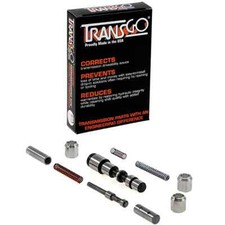
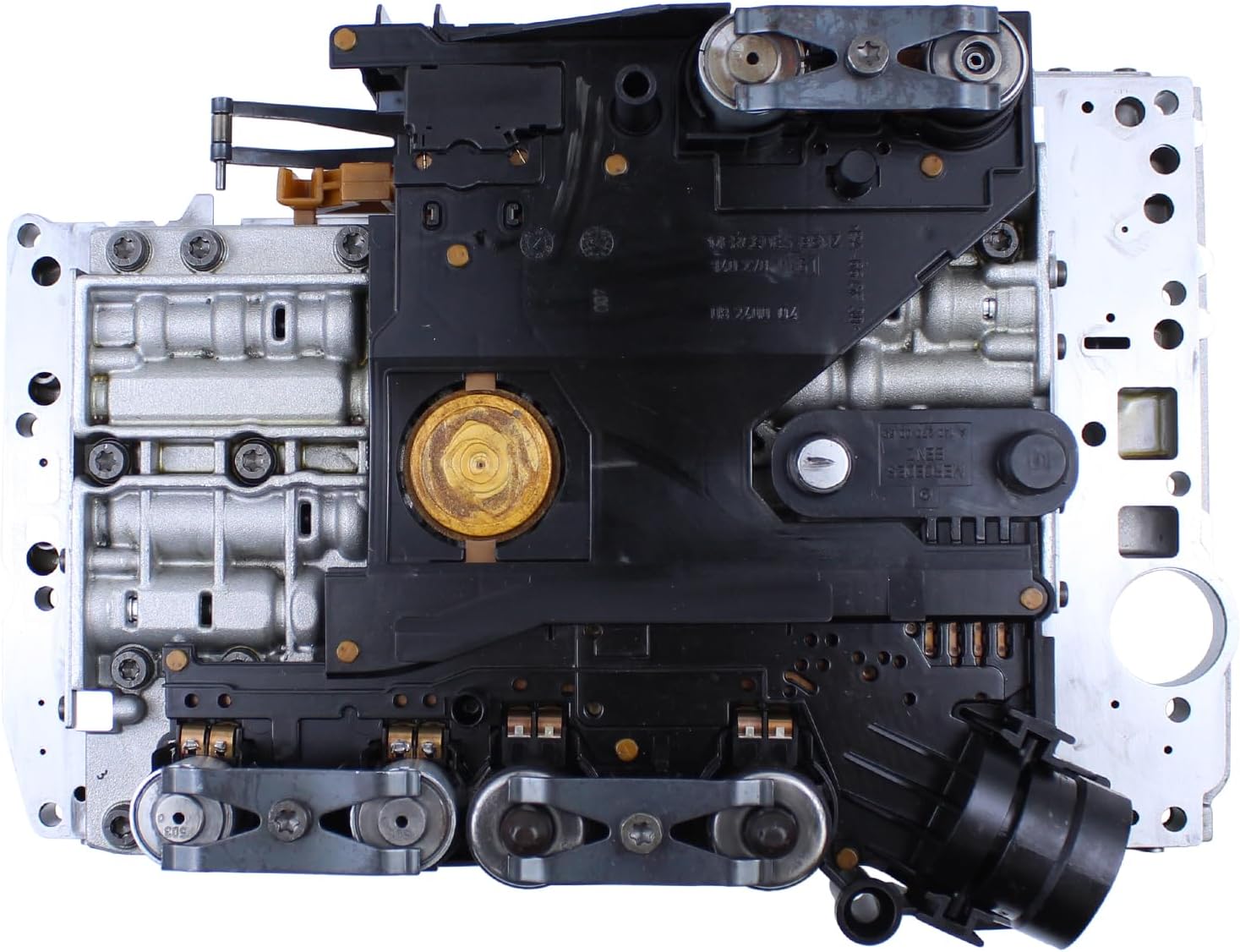
TransGo's notes on its SK 722.6-A kit point at the other common valve body causes. A slow pressure rise curve from wear at the pressure regulator valve bore causes 2-3 flare. Worn overlap regulator valve bushings cause flare on upshifts or downshifts. The 2-3 shift pressure regulator spring and the control pressure regulator valve spring are both prone to breaking. Each can feel like a slipping clutch, and none needs a transmission. Confirm with a bench vacuum test. Our 722.6 valve body symptoms post covers the rest of the valve train.
Converter Clutch Slip Is Its Own Problem
An E-Class that feels like it is slipping at steady highway speed, with engine rpm drifting up and down a little while road speed stays the same, is often a converter clutch complaint, not a gear complaint. ATSG treats it that way: the TCC solenoid is a pulse-width modulated solenoid that ramps converter clutch apply pressure through the TCC control valve, and converter clutch slip has its own code (53 / P0740). Some slip is part of the design at light load, so a few rpm of difference is normal. Steady, growing slip with the clutch commanded on is not.
TransGo ties two valve body wear points to this complaint. Its SK 722.6-A kit is listed for TCC slip or shudder and for codes 053, P0740 and P0741, and TransGo notes that lube pressure regulator valve wear causes a loss of lubrication pressure and a loss of torque converter apply pressure. A converter that has slipped for a long time usually needs replacing along with the valve body work. Our 722.6 torque converter shudder guide covers the shudder side of the same circuit.
Fluid Exchange Numbers From WIS
When the fluid is merely old rather than burnt, a full exchange is the first repair. A pan drop alone leaves most of the fluid behind; WIS procedure AR27.55-P-0100A notes that about 2.5 liters will still be in the pan when you remove it, and the converter and cooler hold more. The factory flush works through the cooler return line:
- Drain at operating temperature (80 C), drop the pan and fit a new filter and pan gasket. Pan bolts are 8 Nm. The drain screw is 20 Nm (22 Nm on the 722.649).
- Disconnect the right cooler line at the transmission, connect it to a 1.5 meter hose and run the hose into a 10 liter bucket with a scale.
- Fill the transmission with 5 liters. With an assistant, start the engine and stop it as soon as 3 liters are in the bucket.
- Pour in 3 liters and repeat the drain twice. WIS budgets 14 liters for the whole procedure.
- Reconnect the line. On W210 and W211 cars the cooler line banjo bolt or union nut is tightened in two stages, 5 Nm then 90 degrees. The line-to-engine-oil-pan bolt is 11 Nm.
- Set the level hot per AR27.00-P-0100AC and fit a new locking pin to the filler cap.
After the exchange, clear codes and road test with the scan tool logging the same speeds as before. If the ratio still drifts in the same gears, the slip is mechanical and you go back to the element chart.
The Repair Path, Cheapest First
- Confirm the transmission matches the car. Ratio codes on a swapped unit may be a mismatch, not a slip.
- Set the level hot with the right fluid. 236.14 only, temperature read in D or R.
- Clear the electrical side. Solenoid and sensor circuits at the 13-pin connector, a dry connector, a sound conductor plate.
- Full fluid exchange if the fluid is old but not burnt, then re-test.
- Valve body repair for a 2-3 flare or TCC slip with clean fluid: overlap valve and regulator bore work, broken springs, or a replacement valve body.
- Overhaul when the element chart points at one pack and the fluid shows burnt friction. Replace the F2 sprag with the 20-element part while you are in it, and use the correct friction plates for the variant, since clutch counts differ by engine.
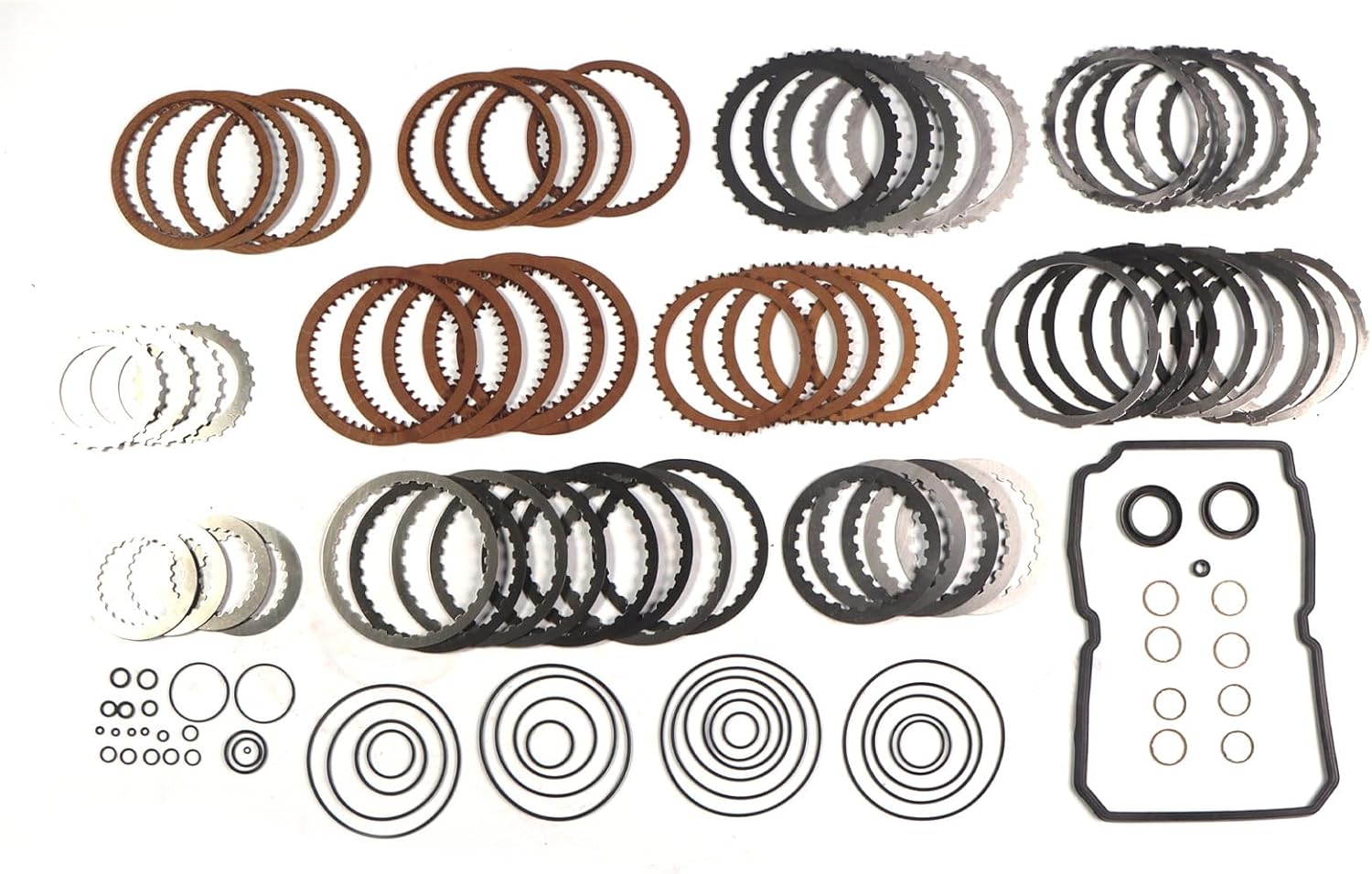
722.6 Master Transmission Rebuild Kit (1996-up)
For an E-Class where the element chart points at a burnt pack: CoreTransmissionParts carries the 722.6 master rebuild kit with the gaskets, seals and frictions for the overhaul.
View the rebuild kit →Shop 722.6 parts →
Frequently Asked Questions
Why is my Mercedes E-Class 722.6 slipping?
The common causes are low or wrong fluid, a worn clutch or brake pack, a slipping F2 sprag, valve body bore wear that lets pressure leak away during the 2-3 shift, and converter clutch slip. Which gears slip tells you which element is at fault, because each gear uses a specific set of clutches, brakes and sprags.
Can a fluid change fix a slipping 722.6?
Only if the slip is caused by low, wrong or degraded fluid and the friction material is still intact. If the drained fluid is dark, smells burnt or carries friction material, the packs are already damaged and a fluid change will not bring them back. Set the level hot, above 80 C, with the selector in D or R when you read temperature.
What codes does a slipping 722.6 set?
Per ATSG, the TCM reports P0730 for an incorrect gear ratio and P0731 through P0735 for a ratio error in 1st through 5th gear. Converter clutch slip is Mercedes code 53, reported as P0740. The gear number in the ratio code points you at the elements used in that gear.
Will the wrong used transmission make an E-Class look like it is slipping?
Yes. ATSG notes the 722.6 was built with different planetary ratios and clutch capacities for different engines, and an incorrect transmission or rear axle ratio is seen by the computer as a slipping transmission and produces gear ratio error codes. Match the designation on the left side of the case to the car before you condemn the clutches.
Sources
- ATSG, "Mercedes, Jaguar, Daimler/Chrysler 722.6 5 Speed" technical manual, 2009. Backs the W210 E-Class applications, the four planetary ratios and wrong-ratio slip codes, the element application chart, the S/W modes, the SPC/MPC/TCC solenoid functions, code 53 / P0740, P0730-P0735, and the 14-to-20 element F2 sprag upgrade (220 270 01 31). w124performance.com (PDF)
- Sonnax, "Oversized 2-3 Overlap Control Valve Kit" (68942-27K), Mercedes 722.6. Backs the 2-3 overlap valve's role in releasing K3, the bore wear mechanism, the 2-3 flare/bump/harsh/slipping symptoms, and the bore reconditioning requirement. sonnax.com
- TransGo, SK 722.6-A Shift Kit valve body repair kit technical notes. Backs the pressure regulator bore wear and slow pressure rise (2-3 flare), worn overlap regulator bushings, broken 2-3 shift pressure and control pressure regulator springs, lube regulator wear and lost converter apply pressure, and codes 053, P0740, P0741. transgo.com
- Daimler AG WIS AR27.00-P-0100AC, "Check oil level in automatic transmission and correct if necessary," Transmission 722.6. Backs the cap and locking pin, ranges A (25 C) and B (80 C), the level-vehicle requirement, the scan-tool temperature check in R or D, and the under/over-fill warning. mbclub.ru (PDF)
- Daimler AG WIS AR27.55-P-0100A, "Flush out automatic transmission and torque converter," Transmission 722.6. Backs the 2.5 L left in the pan, the cooler-line flush steps (5 L fill, 3 L drain, three cycles, 14 L total), pan bolt 8 Nm, drain screw 20/22 Nm, and the 5 Nm + 90 degree cooler line torque on types 210 and 211. w124performance.com (PDF)
- Mercedes-Benz USA Star Bulletin S-B-00.40/89d, "Operating Fluid Specification Changes for Automatic Transmission," November 6, 2013 (NHTSA-hosted). Backs the 236.14-only requirement for the 722.6, part number A001 989 68 03 10, red ATF 134, and the never-mix rule. static.nhtsa.gov (PDF)
Forum reports on W210 and W211 slip complaints informed the field notes above but are not counted as sources.
Shop overhaul kits, valve bodies and solenoids for the E-Class 722.6, on our own secure checkout.
Shop 722.6 parts →