Somebody drops a core on your bench, or a customer reads you numbers off a sticker over the phone, and you need to know what you are actually holding before you order a single part. The 722.6 is one of the worst transmissions in the business for this, because the same basic architecture ships under at least two badges, three or four torque ratings, and seven different valve body castings, and none of those differences are visible from across the shop.
This is the identification pass I run before I quote a rebuild or order a reman part: name, origin, casting, converter, fluid. Skip any one of them and there is a real chance the box that shows up does not fit.

The short version
722.6 is the Mercedes-Benz factory designation for an electronically controlled five-speed automatic. Per Transmission Digest, it went into production for the 1996 model year and was still being supplied years later, fitted across Mercedes, Porsche and Jaguar vehicles. The same architecture also runs in a range of Chrysler products, where the badge changes to NAG1, short for the German term for new automatic gearbox, first version. Same basic transmission, different name, and enough internal variation between builders that you cannot treat a 722.6 core and a NAG1 core as automatically identical.
Decode the name: W5A580, W5A380, W5A330, W5J400
On the U.S. side, the NAG1 family carries four designations: W5A580, W5A380, W5A330 and W5J400. Per Transmission Digest, the pattern is literal: the last three digits of each W5A number are the transmission's maximum rated input torque in Newton-meters. A W5A580 is rated at 580 Nm, a W5A380 at 380 Nm. The W5A330 is the odd one out on gearing, running the widest ratio spread in the group, while the W5A580 and W5A380 share a common ratio set.
That naming convention alone is useful on the phone before a core ever shows up. If a customer reads you "W5A580" off a tag, you already know the torque rating and that it shares gearing with the W5A380. If they read "W5A330," you know to expect a different ratio spread before you look at anything else.
Mercedes-built or Chrysler-built? Check the tag before the casting
This is the fastest identification step and the one people skip. Per Transmission Digest's 722.6 identification note, the case tag tells you who built the unit: a pin stamp only on the driver side, or a pin stamp combined with a bar-code tag, means the transmission was manufactured in Germany. A bar-code tag with no pin stamp means Chrysler built it.
That split also decides what fluid goes in. The same source is specific about it: the Sprinter, Crossfire and Mercedes-badged units require a specific fluid because of calibration differences, while other Chrysler applications run ATF+4. Guess wrong based on the name on the car instead of the tag on the case, and you can put the wrong fluid spec into a unit that was built by the other company.
Read the valve body casting number before you order a reman
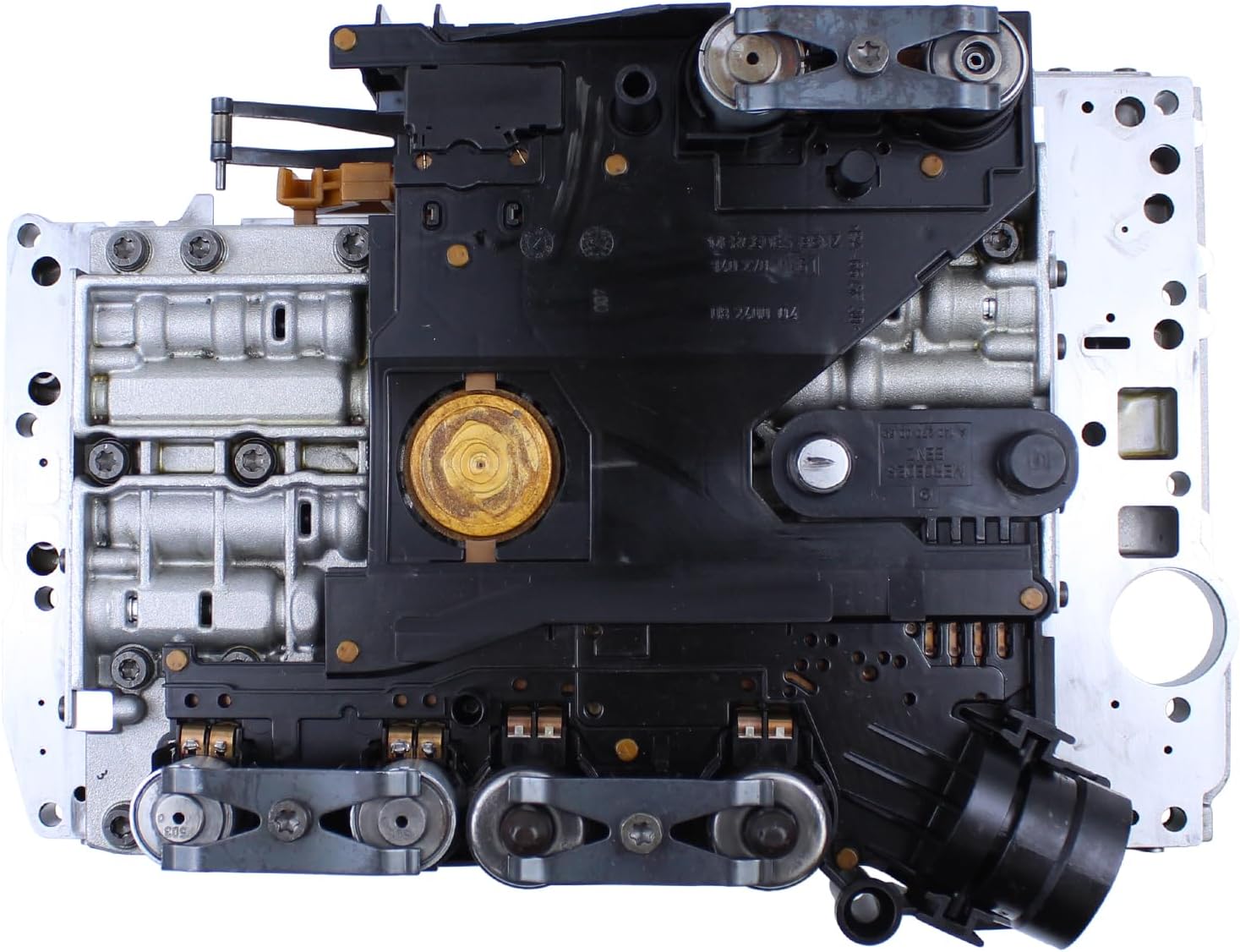
Sonnax puts a number on how bad this gets: the 722.6 can have up to seven different valve body options. The casting number is stamped on the valve body itself, in the top row near the linkage, and that is what determines fit, not the car it came out of.
The catalog of remanufactured valve bodies breaks down by casting: Mercedes units carry casting numbers 0206, 0406, 0506 and 0606, plus a fifth Mercedes casting marked 0006. Jaguar units carry their own casting, also marked 0006. Chrysler covers its applications with a single casting. Seven numbers, five builders of record, and one trap: the Mercedes 0006 casting and the Jaguar 0006 casting carry the identical stamped number but are documented as different, non-interchangeable valve bodies. If you order off the casting number alone without confirming which builder it came from, a correct-looking number can still hand you the wrong part.
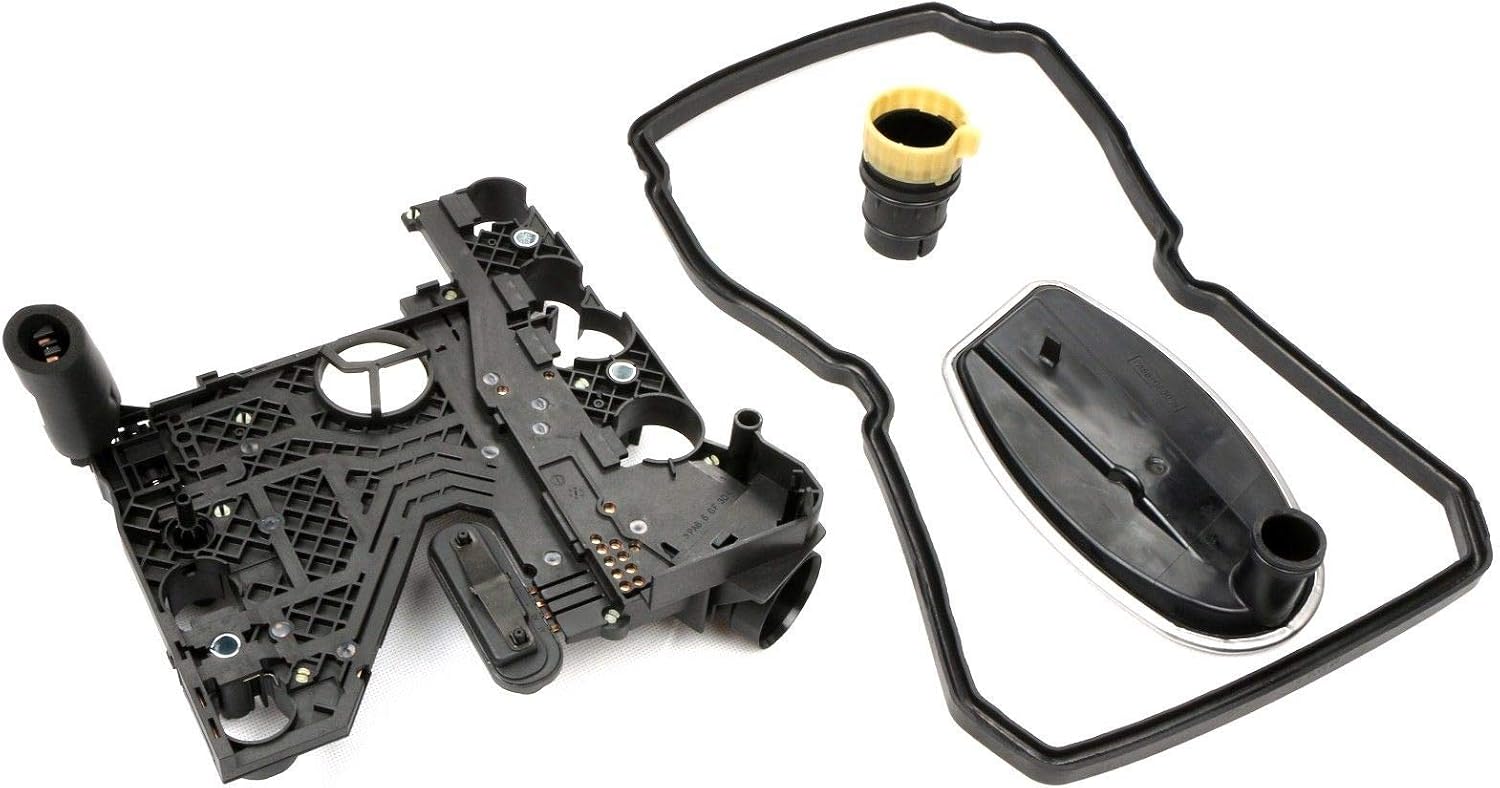
Conductor plates, valve bodies, solenoid kits, master rebuild kits, filters and the correct ATF for the 722.6 five-speed, once you've confirmed what you're actually holding.
Shop 722 parts →Identify the converter by bolt circle and pilot, not by eye
Mercedes has used the 722.6 across different engines that visually similar converters do not actually fit. Per Transmission Digest's converter identification article, Mercedes-pattern converters come in three bolt circle sizes: 9 inch, 9-1/4 inch and 10-3/4 inch. Nearly every Chrysler-pattern converter, apart from the 3.0L diesel application, shares one standardized 10-3/8 inch bolt circle. Two converters can match pilot and bolt circle and still differ in overall diameter by close to an inch, and the pilot itself runs about .040 inch smaller on Chrysler-pattern converters than on Mercedes-pattern converters, even when a Mercedes-built converter is wearing a Chrysler part number.
Visual ID helps once you know which pattern you are looking at. Chrysler-built converters wear a white bar-code tag with the part number, and the same part number is dot-peened into the impeller as ten digits: the first three digits plus two letters match the last five digits of the printed part number, and the first four dot-peened digits are the build date. On Mercedes-built converters used in Chrysler applications, look for an external Chrysler part number stamped onto what is otherwise a Mercedes-pattern piece; the article names the Sprinter (2002-2006, 2.7L-2.9L diesel, part No. 5104567AA), the non-turbo Crossfire 3.2L (part No. 5098047AA) and the turbo Crossfire 3.2L (part No. 5137842AA) as documented examples. The article also flags a 2007 running change: converter 5137631AA became 4752580AB and moved from a two-stage to a single-stage clutch apply, which you can spot on the tag because the newer part shows only one Newton-meter damper rating instead of two.
Pan, fill tube and fluid: the other half of the ID
The 722.6 was built as a sealed-for-life unit. Per febi's technical documentation, there is no factory dipstick; the fill tube has a cap secured by a locking pin that has to be removed, and the pin has to be replaced after the level is checked. That alone tells you whether a transmission in front of you has ever been serviced correctly, since a missing or clearly disturbed locking pin means somebody has already been in there.
Early 722.6 pans run a specific look that doubles as a fluid-spec identifier. Per the W220 technical reference documenting the factory workshop procedure, the early non-bevelled pan has round indentations and a black overflow pipe, and it pairs with ATF meeting the 236.12 or 236.13 specification, measured at 35 degrees C. Later pan and fluid generations moved on from there as Mercedes revised the spec, which is exactly why matching the pan style to the correct fluid matters more than guessing by model year. The fill procedure itself calls for roughly 5 liters before the engine is started, then cycling the selector through the gears with the engine running and checking level with a dipstick at both a cold reference point near 25 degrees C and a warm reference point near 80 degrees C.
A five-minute checklist before you order anything
- Read the case tag first. Pin stamp alone, or pin stamp plus bar-code, means Germany. Bar-code alone means Chrysler.
- Write down the full W5A or W5J number off the tag, not just "722.6." The last three digits are the torque rating, and that is what a parts counter will ask for.
- Pull the valve body casting number from the top row near the linkage before ordering a reman. A matching number is not proof of a matching part if you have not confirmed which builder cast it.
- Measure the converter rather than eyeballing it. Bolt circle first, then pilot diameter, then overall diameter. A Mercedes-pattern and Chrysler-pattern converter can look like siblings and still not interchange.
- Check the pan style and locking pin before you add fluid. The pan tells you which ATF spec the unit was built around, and a disturbed locking pin tells you whether it has already been opened.
FAQ
Is NAG1 the same transmission as the Mercedes 722.6?
Yes. NAG1 (from the German for new automatic gearbox, first version) is the Chrysler-side name for the same 722.6 architecture Mercedes-Benz uses. Per Transmission Digest, the 722.6 went into production for the 1996 model year and is found in Mercedes, Porsche and Jaguar vehicles, plus a range of Chrysler products where the badge changes to NAG1. The internal hardware family is shared; the badge, the conductor plate casting, and the fluid fill are not always shared.
How do I tell a Mercedes-built 722.6 from a Chrysler-built NAG1?
Check the tag on the case per the Transmission Digest identification note: a pin stamp only on the driver side, or a pin stamp combined with a bar-code tag, means the unit was manufactured in Germany. A bar-code tag with no pin stamp means Chrysler built it. The same split carries into the torque converter: Chrysler-built converters carry a white bar-code tag and a 10-digit part number dot-peened into the impeller, while Mercedes-built converters used in Chrysler applications like the Sprinter and Crossfire are identified by an external Chrysler part number stamped onto an otherwise Mercedes-pattern piece.
What do the W5A580, W5A380 and W5A330 numbers mean?
They are all U.S. NAG1 designations for the same 722.6 family. Per Transmission Digest, the last three digits of each W5A number give the transmission's maximum rated input torque in Newton-meters, so a W5A580 is rated at 580 Nm and a W5A330 at 330 Nm. The W5A330 runs the widest gear ratio spread of the group; the W5A580 and W5A380 share the same ratio set. A fourth U.S. designation, the W5J400, rounds out the NAG1 family.
Why does the valve body casting number matter if the transmission bolts up the same?
Because the castings are not interchangeable even when the number looks identical. Sonnax documents up to seven different 722.6 valve body options, cataloged by casting number read off the top row near the linkage: Mercedes castings 0206, 0406, 0506 and 0606, a fifth Mercedes casting 0006, a Jaguar casting also marked 0006, and one Chrysler casting. The Mercedes 0006 and Jaguar 0006 share the same casting number stamped into the aluminum but are documented as different valve bodies, so the casting number alone is not enough; you have to know which builder cast it.
How do I identify the correct torque converter for a 722.6?
Measure before you order. Per Transmission Digest's converter identification article, Mercedes-pattern converters come in three bolt circle sizes, 9 inch, 9-1/4 inch and 10-3/4 inch, while nearly all Chrysler-pattern converters (apart from the 3.0L diesel) share a single 10-3/8 inch bolt circle. Overall diameter can differ by close to an inch between two converters with matching pilots and bolt circles, and the pilot itself runs about .040 inch smaller on Chrysler-pattern pieces than on Mercedes-pattern pieces. A bolt circle and pilot measurement catches a mismatch before it goes in the car.
Related guides
- 722.6 vs 722.9: Differences, Interchange and Which Is Stronger
- Mercedes 722.6 Conductor Plate Failure: Limp Mode, Codes, and the Fix
- 722.6 Fluid Type and Capacity
- 722.6 Common Problems and Fixes
- 722.6 Rebuild Cost
722.6 solenoid kit → or browse all solenoids
Sources
- Transmission Digest — Mio Cundl, "Mercedes 722.6, Daimler W5, Porsche W5, Jaguar 722.6," June 1, 2009. Backs the 1996 model year production start; the Mercedes/Porsche/Jaguar and Chrysler/NAG1 application split; the U.S. NAG1 designations W5A580, W5A380, W5A330 and W5J400 with the last three digits as maximum input torque in Newton-meters and the W5A330 having the widest ratio; the pin stamp versus bar-code tag origin identification; and the fluid split between Sprinter/Crossfire/Mercedes units and other Chrysler applications on ATF+4. transmissiondigest.com
- Transmission Digest — "Identifying the 722.6 Converters," September 27, 2006. Backs the three Mercedes-pattern bolt circle sizes (9 in., 9-1/4 in., 10-3/4 in.) versus the single 10-3/8 in. Chrysler-pattern bolt circle; the near-1-inch diameter variance and .040 in. pilot difference between patterns; the Chrysler bar-code tag and ten-digit dot-peened impeller numbering; the Sprinter (5104567AA), Crossfire non-turbo (5098047AA) and Crossfire turbo (5137842AA) part numbers; and the 2007 running change from part 5137631AA to 4752580AB and the two-stage to single-stage clutch apply change. sonnax.com
- Sonnax — "Mercedes 722.6 Valve Body Layout," December 12, 2014. Backs the statement that the 722.6 can have up to seven different valve body options; the casting number location on the top row of the valve body near the linkage; the Mercedes casting numbers 0206, 0406, 0506, 0606 and 0006, the Jaguar 0006 casting, and the single Chrysler casting; and the note that the Mercedes 0006 and Jaguar 0006 castings share a number but are not the same valve body. sonnax.com
- W220 Technical Wiki — "WIS 27.00 Transmission - General." A community-maintained reference compiling Mercedes-Benz Workshop Information System procedures; used here to back the early non-bevelled pan with round indentations and black overflow pipe pairing with ATF 236.12/236.13 measured at 35 degrees C, and the fill procedure calling for roughly 5 liters before start-up with cold (near 25 degrees C) and warm (near 80 degrees C) dipstick check points. Not a primary authoritative source; cited for procedural detail only. w220.wiki
- febi bilstein — "Tips for Checking the Oil Level in 5-Speed Automatic Transmissions (722.6) from Mercedes-Benz." Parts-maker technical blog; used here to back the sealed-for-life design with no factory dipstick, the tamper-proof locking pin on the fill tube cap, and the requirement to replace the pin after checking the level. blog.febi.com