A Mercedes-Benz 722.9 (the seven-speed 7G-Tronic, NAG2 platform) that takes a beat to respond after the selector moves to D or R is one of the more common complaints techs see on this transmission, and it is also one of the easiest to misdiagnose. The instinct is to jump straight to a conductor plate or a full valve body, since those get blamed for most 722.9 weirdness. But a delayed engagement is really just a hydraulic fill event taking longer than it should, and there are several distinct, documented reasons that can happen, some of which cost nothing but a drive cycle to fix. This guide walks through them in the order a tech should actually check them.
Diagnostics
722.9 Delayed Engagement: Causes and Fix
Recommended 722.9 parts
In stock, ships same day from the USA. Secure checkout.

What "Delayed Engagement" Actually Means Hydraulically
Every one of the 722.9's gears, forward or reverse, is built the same basic way: a solenoid directs pressurized fluid into a clutch or brake pack, the piston strokes, the pack clamps, and torque starts transferring through the planetary gearset. That fill-and-clamp sequence normally happens in a fraction of a second, fast enough that a healthy transmission feels instantaneous when you move the selector. A delay you can actually perceive, whether it is a half-second hesitation or a multi-second pause with the engine revving slightly before the car moves, means something is slowing that fill down: lower line pressure than spec, a solenoid that is not stroking fully, a valve bore that is leaking pressure internally, friction material that has drifted off its calibrated grip point, or fluid that cannot do its job. None of those are guesses; all four are documented 722.9 failure modes with separate fixes, and the diagnosis is mostly a matter of ruling them out in the right order.
Cause 1: Solenoid O-Ring Wear and Valve Body Bore Wear
Gears Magazine's ATRA-sourced field rundown of 722.9 problems identifies solenoid wear as the most common cause the author's shop ran into: O-rings on the tips of the solenoids deteriorate, start leaking fluid, and the solenoid stops properly stroking its valve. When a solenoid cannot fully stroke, the clutch pack it feeds gets a slower, less complete fill, which is exactly what a driver experiences as a pause before engagement rather than an instant one. The same article documents wear at the working pressure regulator bore specifically, which drops overall line pressure consistency and compounds the problem across every gear change, not just the one you happen to be making. Because this wear is progressive, delayed engagement from a solenoid or bore problem usually starts intermittent and worsens gradually, often showing up first in cold starts before it becomes a constant complaint at any temperature.
Cause 2: B2 Disk Pack Friction Drift (the Documented TSB Fix)
Mercedes-Benz's own XENTRY TIPS bulletin LI27.50-P-049281 covers a closely related complaint: harsh engagement when changing gear range from P to D on 722.9 transmissions. The stated cause is friction coefficient fluctuations possible in the B2 disk packs, and the remedy is not a parts replacement at all, it is a relearn. The transmission control unit has to be retaught the N-D and N-R engagement sequences: starting from a cold engine, shift five times N-R, then five times N-D while warming the transmission to 40 degrees C and exceeding 30 mph at least once, then repeat the same five-and-five sequence again while warming to 70 degrees C and exceeding 30 mph again, holding each selector position for at least 5 seconds throughout. A harsh bump and a sluggish pause are two different symptoms of the same underlying fact, the control unit's learned apply pressure and timing for that clutch pack no longer matches the actual friction material, so this relearn is worth running on a delayed-engagement complaint even though the bulletin's title describes the opposite feel. It costs a drive cycle and nothing else, which makes it the logical first step once fluid condition has been confirmed.
Cause 3: Pump Bushing or Converter-Hub Wear Dragging Down Line Pressure
Transmission Digest has documented the 722.9's original pump bushing, which rides against the torque converter hub, seizing and spinning on high-mileage units, and the failure was common enough on this transmission specifically that Mercedes-Benz switched to a caged bearing design for the pump. A pump that has lost its seal at the hub does not typically fail all at once; it bleeds off line pressure gradually, and because every gear's fill depends on that same pressure, a slow pump wear pattern shows up first as a hesitation on engagement before it progresses toward weak or absent movement. This is worth separating from a second, distinct 722.9 bulletin: LI27.20-P-055758 covers torque converter lockup clutch bearing-bushing wear that stores fault code FC 2783 (friction power of the lockup clutch too high) or FC 0741 (lockup clutch actuation not possible), with poor acceleration as a possible symptom. That complaint is about the TCC slipping or failing to apply during driving, not the initial shift into gear, so the two failures look similar on paper but call for different fixes. Pulling stored codes before assuming either one is the fast way to tell them apart.
Cause 4: Wrong, Low, or Degraded ATF
Fluid condition changes how quickly and how firmly every clutch pack can apply, and it is the cheapest thing on this list to rule out. Mercedes-Benz Star Bulletin S-B-00.40/89d sets a hard production break for 722.9 fluid specification at transmission component serial number 23834526, built June 21, 2010: red ATF134 meeting the 236.14 specification before that point, and blue FE-ATF134 meeting the 236.15 specification after it for most applications, with the bulletin explicit that the two fluids must never be mixed and require separate filling equipment. A 722.9 running the wrong color fluid, or fluid that is simply old and oxidized, has friction characteristics the control unit was never calibrated around, which slows and softens the exact fill event that produces a clean engagement. A filter and fluid service with the correct spec, confirmed against the production date in the bulletin, should be done before anything else on this list, both because it is inexpensive and because a bad result rules out the one cause that does not require further diagnosis.
How to Work This Diagnosis in Order
- Check fluid first. Confirm level, look for oxidation or a burnt smell, and verify the color and part number against production date per S-B-00.40/89d.
- Pull stored fault codes. FC 2783 or FC 0741 point at the torque converter lockup clutch per LI27.20-P-055758, a different failure than a straight engagement delay; solenoid or speed-sensor codes point at the conductor plate or valve body electrically.
- If fluid and codes are clean, run the N-D/N-R relearn sequence from LI27.50-P-049281 before replacing anything; it is the documented fix for B2 pack friction drift.
- If the relearn does not shorten the delay, pull the valve body and inspect solenoid tip O-rings and the working pressure regulator bore per Gears Magazine's documented 722.9 failure points.
- If pressure is low across the board on a line-pressure test, inspect the pump bushing-to-hub fit for wear per the documented 722.9 failure pattern.
- Track whether the delay is worsening or intermittent. A steadily lengthening pause points at progressive wear in the valve body or pump; a delay that comes and goes with temperature often clears with the relearn alone.
FAQ
Why does my 722.9 pause before it engages Drive or Reverse?
Every gear on the 722.9 is built by filling a clutch or brake pack with pressurized fluid and clamping it against the planetary gearset. Before that clamp can transmit power, the hydraulic circuit has to fill the piston cavity and build pressure, and that fill time is normally so short you never notice it. A delay becomes noticeable when something slows that fill down: a solenoid that is not stroking fully, a valve body bore that has worn enough to leak pressure past where it should seal, friction material in the clutch pack that has drifted off its calibrated grip point, or fluid that is low, degraded, or the wrong specification. The longer the pause and the more it is paired with a clunk when drive finally takes, the further along the underlying wear usually is.
Can the Mercedes TSB for harsh P-to-D engagement fix a delay instead of a bump?
It is worth trying before any parts are ordered, because the two complaints share the same root cause. Mercedes-Benz bulletin LI27.50-P-049281 addresses harsh engagement from P to D on 722.9 transmissions, attributing it to friction coefficient fluctuations in the B2 disk pack, and the remedy is purely a relearn: a structured sequence of N-R and N-D shifts performed cold, then again at 40 degrees C, then again at 70 degrees C, each time exceeding 30 mph before the next stage. That relearn recalibrates how the transmission control unit times and fills the B2 pack, which is the same apply event behind a sluggish engagement, not just a harsh one. If the fluid is correct and the hydraulics are otherwise healthy, this costs nothing but a drive cycle and is the documented first step.
Does a worn torque converter bushing cause delayed engagement on a 722.9?
It can, through the same mechanism as any other line-pressure loss: a worn pump bushing or converter-hub fit lets fluid bypass internally, which lowers the pressure available to fill every clutch and brake pack, including whichever one builds the gear you just selected. Transmission Digest has documented 722.9 pump bushings seizing to the converter hub and spinning, which is part of why Mercedes-Benz moved to a caged bearing design. A separate and distinct 722.9 bulletin, LI27.20-P-055758, covers torque converter lockup clutch bearing-bushing wear that stores fault codes FC 2783 or FC 0741 and can show up as poor acceleration; that complaint is about the lockup clutch during driving, not the initial shift into gear, so pulling codes is the fastest way to tell which failure you actually have before assuming either one.
Will changing the transmission fluid fix delayed engagement on a 722.9?
It fixes the problem when the fluid itself is the cause, and it is cheap enough that it should happen before anything else is replaced. Mercedes-Benz Star Bulletin S-B-00.40/89d sets a hard production break for 722.9 fluid specification: red ATF134 (236.14 spec) before transmission component serial number 23834526, built June 21, 2010, and blue FE-ATF134 (236.15 spec) after it for most applications, with the two never to be mixed. Fluid that is the wrong spec, low, or oxidized changes clutch-pack friction behavior and can slow the pressure buildup behind an engagement, producing exactly this symptom. If a filter and fluid service with the correct spec does not resolve it, the cause is mechanical or electronic rather than fluid-related.
At what point does delayed engagement mean the solenoids or valve body need replacing?
When the relearn procedure and a correct-spec fluid service do not shorten the pause, and especially when the delay is getting longer or starting to show up with a flare or clunk when the gear finally takes. Gears Magazine (ATRA) documents that the most common 722.9 valve body failure is O-ring deterioration on the solenoid tips, which lets fluid leak past instead of fully stroking the valve, along with wear at the working pressure regulator bore. Both faults make the hydraulic fill to the clutch pack slower and less consistent, which reads to the driver as a growing hesitation before the car moves. At that stage a solenoid kit or valve body replacement, not another relearn, is what actually restores a crisp engagement.
Found the real cause of your 722.9 engagement delay?
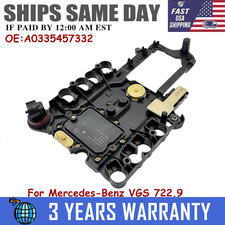
Solenoid kits, valve bodies, and filter kits with the ATF fill adapter, shipped fast from the USA.
Shop 722.9 parts →Need the exact solenoid kit for this fix?
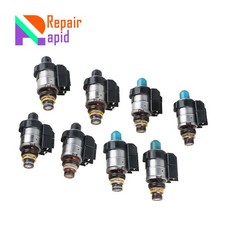
CoreTransmissionParts stocks a 722.9 shift solenoid kit that addresses the O-ring and stroke wear covered in the valve body section above.
Shop the 722.9 solenoid kit at CTP →Sources
- Mercedes-Benz AG — XENTRY TIPS LI27.50-P-049281, "Harsh engagement when changing gear range from P to D," Version 8, September 22, 2020, for vehicles with transmission 722.9 (archived via NHTSA). Backs the B2 disk pack friction coefficient cause and the full N-D/N-R relearn remedy procedure. static.nhtsa.gov
- Daimler AG — XENTRY TIPS LI27.20-P-055758, "Friction power of torque converter lockup clutch is too high (FC 2783) or actuation of torque converter lockup clutch not possible (FC 0741)," Version 10, April 7, 2015, for 722.9 (7G-TRONIC PLUS) production months 04/2011-12/2013 (archived via NHTSA). Backs the torque converter bearing-bushing wear cause, the associated fault codes, and the poor-acceleration symptom used to distinguish it from a straight engagement delay. static.nhtsa.gov
- Mercedes-Benz USA, LLC — Star Bulletin S-B-00.40/89d, "Operating Fluid Specification Changes for Automatic Transmission," November 6, 2013 (revision d), for Transmission 722.6, 722.9, 724.2, or 725.0 (archived via NHTSA). Backs the June 21, 2010 production break, the red 236.14 vs. blue 236.15 fluid specifications and part numbers, and the never-mix requirement. static.nhtsa.gov
- Gears Magazine (ATRA) — "Common Mercedes 722.9 Problems," Back on the Bench, September 2018. Backs the solenoid O-ring deterioration and working pressure regulator bore wear covered in the valve body section. gearsmagazine.com
- Transmission Digest — Tech/Talk, "Mercedes 722.9 failure," November 2014 issue. Backs the documented pump bushing-to-converter-hub spin-out pattern and the factory switch to a caged bearing pump design. transmissiondigest.com
Need parts for this job?
Shop 722.9 solenoid kits, valve bodies, and filter kits — shipped fast from the USA.
Shop 722.9 parts →