Most techs hear "8L90 cooler line" and reach straight for a replacement line, expecting a crimp leak or a cracked quick-connect. GM's own paperwork says that is usually the wrong diagnosis. Bulletin 22-NA-182 covers harsh shift, shudder, surge, stall, neutral/flare and overheating complaints on these units, and the root cause GM names first is a twisted cooler line, most often on low-mileage trucks that never leaked a drop. The fix in that case is not a new line at all — it is untwisting the one that is already on the truck. Replacement only enters the picture when the line will not hold its shape, or when the thermal bypass valve is the actual problem wearing a cooler-line costume.
The short version: GM bulletin 22-NA-182 names a twisted cooler line as the common cause of 8L90 shift, shudder and overheat complaints, which can also set DTC P27EC. Untwist and reconnect first; replace only if it stays misshapen. If the line checks out fine and the truck still runs hot, suspect the thermal bypass valve, which opens on the 8L90 at 194°F (90°C) and sits external to the case. After any line work, reset the level through the pan plug rather than pouring in a fixed quart count — service-fill capacity is 7.0 L / 7.4 qt of DEXRON HP for most 8L90 trucks and vans.
What GM Actually Says Is Wrong
Bulletin 22-NA-182 covers 6L80, 6L90, 8L90, 10L80, 10L90 and 10L1000 trucks and SUVs with one or more of: harsh shifting, shudder, surging, stalling, neutral/flare, transmission overheating, or above-normal fluid temperature. These are the exact complaints that get written up as "bad cooler line" on a repair order, and GM's cause statement is specific: this condition may be caused by a twisted cooler line on low mileage vehicles. Not a crack, not a leak at a fitting — a line that got twisted somewhere between the cooler and the transmission, restricting flow without ever losing a drop of fluid.
The bulletin also ties this to a trouble code. A twisted line can set DTC P27EC in the TCM on ETRS (electronic transmission range selector) transmissions, RPO MHS and MQC. If that code is present alongside an overheat or harsh-shift complaint, check the physical line before you touch a solenoid or a valve body.
Finding the Twist
GM's inspection step is plain: look at the cooler line and compare it to how a line should sit, which can mean pulling under-body panels to actually see it. A twisted line will show an obvious spiral or kink pattern along its length rather than a smooth run between the transmission's auxiliary cooler connection and the radiator or external cooler.
If it is twisted, the repair is not a new part. Disconnect the line from the transmission auxiliary cooler, untwist it by hand, and reconnect it. That is the entire fix in the majority of cases GM describes. Only when the line refuses to lay straight after untwisting — when it springs back into the same misshapen form — does the bulletin call for replacing it. After either path, check the fluid level per service information and add fluid if it is low, since disconnecting the line lets some fluid drain back.
This matters for how you quote the job. A customer who already paid for a line replacement somewhere else and is still shifting harsh almost certainly did not have a twisted line fixed correctly, or had a line replaced when the real problem was never the line at all.
When It Really Is the Thermal Bypass Valve
If the cooler line is straight and the truck still runs hot, GM's next suspect is the Thermal Bypass Valve (TBV), which sits external to the transmission on the 8L90 and stays closed until the fluid reaches a set temperature. Per 22-NA-182, the opening points are not the same across GM's 6/8/10-speed family, and mixing them up leads to misdiagnosis:
| Transmission | TBV opens at | Location |
|---|---|---|
| 6L80 / 6L90 | 158°F (70°C) | External to the transmission |
| 8L90 | 194°F (90°C) | External to the transmission |
| 10L80 / 10L90 / 10L1000 (gas) | 143°F (61°C) | Within the valve body |
| 10L1000 (3.0L Duramax LM2/LZ0) | 194°F (90°C) | On the frame rail, external |
A sticking 8L90 TBV that hangs shut past 194°F starves the cooler of flow exactly when the truck needs it most — towing, stop-and-go in summer heat, or a long highway pull. That reads to the driver as the same overheating or harsh-shift complaint a twisted line causes, which is exactly why GM's bulletin puts the TBV as the second branch of the same diagnostic path rather than its own separate document.
If the Valve Is the Repeat Offender
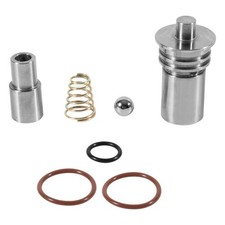
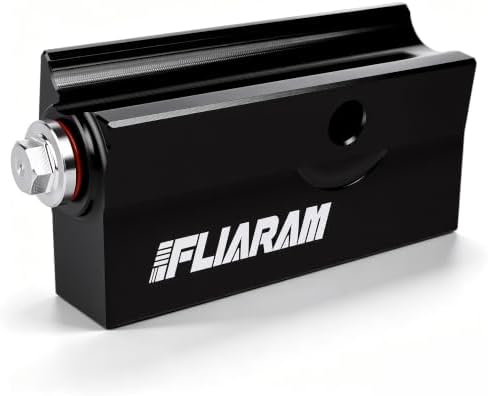
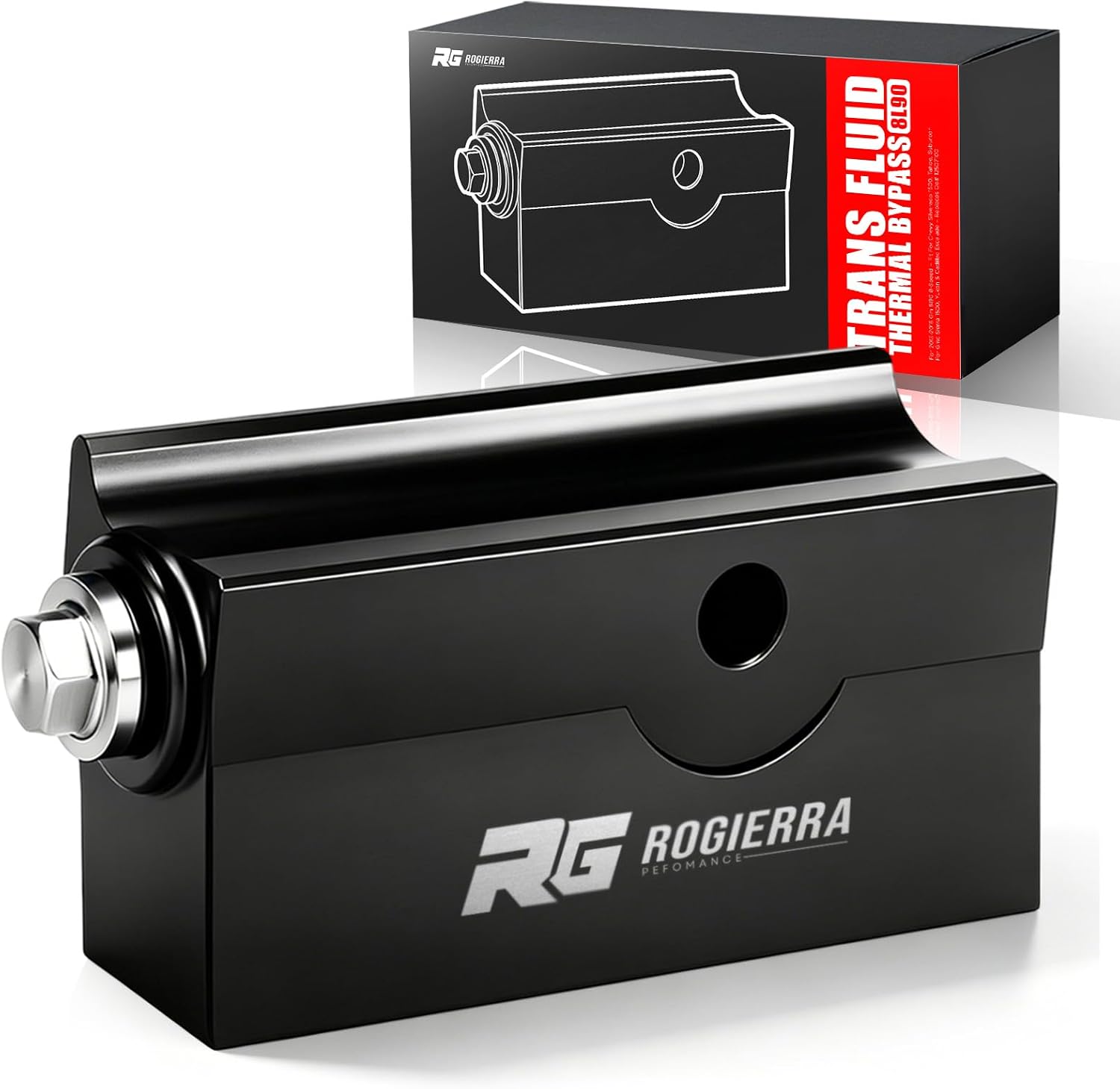
A transmission that keeps coming back with the same overheat complaint after a clean line inspection and a known-good TBV replacement is a candidate for eliminating the thermostatic element entirely rather than replacing it again. TransGo's 6L80-CLR-BYPASS is a drop-in kit built for exactly this: it fits 2015-and-newer 8L90 units (also 2014-and-newer 6L80/6L90 and 2017-2019 Allison), and it forces cooler flow at all times instead of relying on a valve that can hang open or shut with temperature. The tradeoff is that you lose the factory warm-up delay, which is a reasonable trade on a truck with documented valve failures but not something to install as a first response to a single overheat complaint.
On the other end of the spectrum — a truck being built out for heavier towing or a performance cooler swap — the factory quick-connect fittings become the limiting factor rather than the line itself. Adapter plates built for the 6L80E/6L90E/8L90E family convert the factory connection to -6AN or -8AN braided-hose fittings using the factory gasket and mounting bolt, which is the standard path when you are routing to a larger aftermarket cooler and want fittings that won't depend on a plastic quick-connect retainer down the road.
Resetting the Fluid After Line Work
Any time a cooler line is disconnected, fluid drains back out of the cooler circuit and the level needs to be reset — not topped off by guess. GM's TechLink transmission capacities chart lists the 8L90 under RPO N8X at 7.0 liters / 7.4 quarts fluid-change capacity using DEXRON HP for Express/Savana vans, Colorado/Canyon, and Silverado/Sierra 1500 applications. Low Cab Forward trucks running the same 8L90 carry a larger 11.8–12.0 L / 12.5–12.7 qt figure on the same fluid, so confirm the application before you commit to a number.
The 8L90 has no dipstick, so the level gets set through the pan, not poured to a spec. Transmission Digest's teardown notes describe the push-lock fill plug on the passenger side of the case and a stand pipe fitted in the pan: bring the fluid to roughly 100°F, raise the vehicle, pull the stand pipe plug, and see whether fluid trickles out. If it does not, add fluid through the fill hole until it does. Most 8L90 applications end up needing roughly 11½ quarts of DEXRON HP total by the time that level-set is satisfied, which is noticeably more than the 7.4 qt change-capacity figure because the cooler circuit and converter hold fluid a pan drop never touches.
Mistakes That Turn a Line Job Into a Comeback
- Replacing a line that was only twisted. You spend parts money and labor time on a job GM's own bulletin says often needs nothing but untwisting.
- Blaming the line when the TBV is stuck. A straight line and a sticking 194°F valve produce the same customer complaint. Check both branches of 22-NA-182 before you commit to a part.
- Forcing a quick-connect fitting apart without the correct release. Twisting or prying a plastic retainer instead of releasing it properly is a common way to turn a simple disconnect into a second leak point.
- Topping off by a flat quart count instead of the level-set plug. The 7.4 qt figure is a change capacity, not a fill-to number; guessing after cooler work leaves units under- or over-filled.
- Deleting the thermal bypass on the first overheat complaint. A bypass-eliminator kit is the right call for a documented repeat failure, not a substitute for diagnosing the line and the valve first.
FAQ
Does an 8L90 cooler line problem always mean a leak?
No. GM bulletin 22-NA-182 says the common cause behind harsh shift, shudder, surge, stall, neutral/flare and overheating complaints on low-mileage 8L90 trucks is a twisted cooler line, not a leak at a fitting. The line restricts flow when twisted, which can set DTC P27EC on ETRS transmissions, and GM's fix is to inspect for the twist before assuming a line needs replacing.
At what temperature does the 8L90 thermal bypass valve open?
194F (90C). GM bulletin 22-NA-182 lists the 8L90's TBV as external to the transmission and opening at that temperature, compared to 158F (70C) on the 6L80/6L90 and 143F (61C) on the 10-speed units. If the cooler line is not twisted and the truck still runs hot, the TBV sticking shut at that threshold is the next suspect.
Can you just untwist an 8L90 cooler line instead of replacing it?
Yes, if it holds its shape afterward. GM's own procedure in 22-NA-182 is to disconnect the line from the transmission auxiliary cooler, untwist it, and reconnect it. Only if it stays misshapen after that does GM call for replacing the line, followed by a fluid level check per service information.
How much fluid does an 8L90 need after cooler line work?
GM's TechLink transmission capacities chart lists the 8L90 (RPO N8X) fluid-change capacity at 7.0 liters / 7.4 quarts of DEXRON HP for most pickup and van applications. That is a change-capacity figure, not a blind top-off number; set the actual level through the pan's level-set plug per service information rather than pouring in a fixed quart count.
Is it worth deleting the 8L90's thermal bypass valve?
For a truck with a documented history of the OE thermal bypass valve sticking and causing repeat overheating complaints, a drop-in bypass delete kit forces cooler flow at all times instead of relying on a thermostatic element that can hang open or shut. It is a targeted fix for a recurring stuck-valve pattern, not a substitute for diagnosing a twisted line first.
Related guides
- 8L90 Overheating Prevention — the broader heat-management picture beyond the cooler line.
- 8L90 Fluid Leak Common Spots — where fluid actually gets out when it is a real leak.
- 8L90 Fluid Type and Capacity — the DEXRON HP spec and the numbers on one page.
- 8L90 Filter and Pan Service — the level-set procedure in full detail.
- 8L90 Common Problems and Fixes — what else actually breaks on these units.
8L90 Transmission Thermal Bypass Valve, OE 12507100
The 2015-2018 OEM-spec replacement for the exact valve this bulletin names as the second cause of 8L90 overheat complaints, from our sister store CoreTransmissionParts. If you would rather see the whole 8L90 parts shelf first, the full 8L90 collection is here.
Get the thermal bypass valve →Sources
- GM Service Bulletin 22-NA-182, May 2025 revision (hosted by NHTSA). Backs the twisted-cooler-line root cause on low-mileage 6L80/6L90/8L90/10L80/10L90/10L1000 vehicles, the harsh shift/shudder/surge/stall/neutral-flare/overheating/high-fluid-temperature symptom list, DTC P27EC on ETRS transmissions (RPO MHS, MQC), the inspect-untwist-reconnect-or-replace repair sequence, and the thermal bypass valve opening temperatures for each transmission family (8L90 at 194F/90C external; 6L80/6L90 at 158F/70C; 10-speed gas units at 143F/61C in the valve body; 3.0L Duramax LM2/LZ0 at 194F/90C on the frame rail). static.nhtsa.gov/odi/tsbs/2025/MC-11023369-0001.pdf
- GM TechLink — 2026 Transmission Capacities & Fluids chart. Backs the 8L90 (RPO N8X) fluid-change capacity of 7.0 liters / 7.4 quarts DEXRON HP for Express/Savana, Colorado/Canyon and Silverado/Sierra 1500 applications, and the larger 11.8–12.0 L / 12.5–12.7 qt figure for the same transmission in Low Cab Forward trucks. gm-techlink.com — TechLink 2026 transmission capacities
- Transmission Digest — "GM 8L90: The Other 8 Speed Automatic," Wayne Colonna. Backs the no-dipstick fill procedure: the push-lock fill plug on the passenger side of the case, the stand pipe fitted in the pan, checking fluid at roughly 100F, and the approximately 11½-quart total DEXRON HP fill figure once the level-set is satisfied. transmissiondigest.com — GM 8L90: The Other 8 Speed Automatic
- TransGo — 6L80-CLR-BYPASS product listing. Backs the drop-in cooler flow bypass delete kit fitting 2015-and-newer 8L90 units (also 2014-and-newer 6L80/6L90 and 2017-2019 Allison), its elimination of the OE thermostatic assembly, and its function of providing cooler flow at all times regardless of fluid temperature. transgo.com — 6L80 Cooler Bypass Delete Kit
- ICT Billet — 6L80E/6L90E/8L90E transmission cooler line adapter plate listing. Backs the -6AN and -8AN adapter plate option for converting the factory quick-connect cooler fittings to braided-hose AN fittings using a factory-style gasket and mounting bolt. ictbillet.com — 6L80E/6L90E/8L90E cooler line adapter plate