Most of the "TCC problem" complaints that come across an 8L90 don't mean the torque converter clutch failed to apply. They mean it applied exactly the way GM designed it to, and the driver felt it. The 8L90 doesn't lock its converter into a dead mechanical bind the way older three- and four-speed units did — it runs a controlled, electronically managed amount of slip at the clutch, and separating that normal behavior from an actual fault is where most of the diagnostic time should go before a single part gets ordered.
How the 8L90 Actually Applies and Locks the TCC
The 8L90 is GM's own design (RPO M5U), not a licensed ZF unit, though Transmission Digest's teardown coverage of the platform notes it borrows some ZF-style traits: a remote-mounted pump, five friction clutch elements (C1-C5), and four planetary gear sets driven by a slew of solenoids. Unlike the ZF 8HP, GM kept the transmission control module external rather than mounting it inside the case — a deliberate choice Transmission Digest calls out as one thing GM did not copy from ZF.
Gears Magazine's reporting on 8L90 service concerns lays out which friction element covers which gears: C1 handles 1-2-7-8-Reverse, C2 covers 1-2-3-4-5-Reverse, C3 covers 1-3-6-7, C4 covers 2-3-4-6-8, and C5 covers 4-5-6-7-8-Reverse. The torque converter clutch is a separate hydraulic circuit from all five, controlled through its own TCC solenoid and regulated by line pressure the valve body meters specifically for converter apply. There is no internal "lockup gear" the way a simple three-speed box might have one clutch dedicated to lockup — TCC apply is commanded independently of which forward gear the transmission is in, within the RPM and throttle windows the TCM's calibration allows.
Why Some Slip Is Normal: ECCC Control
GM's service documentation for its 8-speed control platform describes the TCC strategy as electronically controlled capacity clutch (ECCC) operation, which intentionally maintains a small amount of slip at the converter rather than commanding a dead mechanical lock. Depending on the vehicle application, that controlled slip typically runs somewhere in the 0-50 RPM range. A scan tool showing 20-40 RPM of slip with the TCC commanded on is not a symptom by itself — it is the strategy working as designed.
The fault threshold GM actually uses is specific: if logged TCC slip speed (input speed minus engine speed, or the equivalent PID your scan tool exposes) exceeds 100 RPM for more than 6 seconds after the solenoid command confirms the TCC is on, that is the point to pull stored codes and move into formal torque converter diagnosis. Watching slip in isolation without that 6-second qualifier will chase phantom problems on a transmission that's behaving normally through a momentary torque spike or throttle transition.
True Shudder vs. a Vibration That Only Looks Like It
Shudder is the complaint that actually drives most 8L90 TCC diagnosis, and GM built a specific test to confirm it before anyone replaces a part. Bulletin 16-NA-175 (and its predecessor PIP5337G, which GM says to discard in favor of the newer number) describes a shake or shudder during light-throttle acceleration, typically reported between 30 and 65 mph, that drivers often describe as feeling like driving over rumble strips. The bulletin is explicit that this needs to be confirmed, not assumed, with a three-mode road test:
| Mode | GDS2 Command | Result That Confirms TCC Shudder |
|---|---|---|
| A — Normal operation | Viewing only, no override | Vibration must be present in this mode first |
| B — TCC disabled | Commanded open | Vibration goes away |
| C — TCC enabled | Commanded locked, slip at zero | Vibration goes away |
The drive cycle itself is specific too: 8th gear, V8 mode (not AFM's 4-cylinder mode), transmission input speed of 1,050-1,300 RPM, roughly 40-55 mph, with constant throttle input holding engine torque between 200-375 Nm. If the vibration disappears in both Mode B and Mode C but is present in Mode A, GM calls that confirmed TCC shudder. If it persists in either disabled or locked mode, the TCC is not the cause and the diagnosis needs to move to tires, driveline, or engine-related vibration instead — chasing a converter replacement on that kind of complaint is wasted labor.
For instrumented confirmation, GM's bulletin describes capturing the disturbance with a PicoScope and NVH software: a true TCC shudder shows up as an unknown disturbance around 26 Hz at 16-24 mg. Gears Magazine's independent reporting on the 8L90 gives a slightly wider confirmed range for this specific platform, roughly 23-28 Hz, and notes the frequency stays fixed in a given gear rather than tracking engine RPM or vehicle speed — if your logged frequency moves with RPM, it's not TCC shudder.
The Fluid Is the Root Cause More Often Than the Converter
This is the part that surprises techs coming from other platforms: on the 8L90, Gears Magazine reports that GM engineering traced the large majority of confirmed TCC shudder complaints to the DEXRON HP fluid itself, specifically that the fluid is hygroscopic and absorbs moisture over time in a way that changes its friction characteristics at the clutch interface. Converter replacement on later-production 8L90 units was found to be largely ineffective at correcting shudder once the fluid had degraded this way, and the complaint frequently returned even after a new converter went in.
Part number matters here. GM bulletin PIP5337G lists the DEXRON HP fluid as US part number 19353429 (19353430 in Canada) — but that is the original formulation. Gears Magazine's reporting specifically flags an updated formulation, identified by a blue label, GM part number 19417577, and warns against using black-bottle or grey-labeled HP fluid when the goal is correcting shudder, since those represent the earlier formulation tied to the complaint in the first place.
| Fluid | GM Part Number | Notes |
|---|---|---|
| DEXRON HP (original, black bottle / grey label) | 19353429 (US), 19353430 (Canada) | Listed in PIP5337G; tied to the formulation implicated in shudder complaints |
| DEXRON HP (updated, blue label) | 19417577 | Current formulation; use this when performing a shudder-correction flush |
GM's Fix: a Triple Flush, Not a Single Drain-and-Fill
Bulletin 16-NA-175 does not call for a simple fluid change. It specifies a three-step drain-and-fill sequence: drain the pan, clean it and the magnet, replace the filter if debris is present, and refill; operate the vehicle on a hoist for 10 minutes cycling through every forward range plus Reverse and Neutral; then drain again and refill a second time following the same hoist cycle; then drain a third time and refill to the correct level using the proper fluid-fill procedure in SI. The bulletin is direct that shudder should improve right away after this, but may need up to 322 km (200 miles) of driving and at least two full cold-to-hot drive cycles before you can say for certain whether the flush corrected the condition. Don't re-evaluate a customer complaint before that mileage and cycle count are satisfied, or you'll misjudge a fix that just hadn't finished working yet.
The later bulletin: 18-NA-355 and the HP fluid exchange
16-NA-175 was not GM's last word. GM bulletin 18-NA-355 (April 2020) widens the complaint window to light-throttle shake or shudder between 25 and 80 mph at steady speed, described as feeling like rumble strips, and still names TCC shudder as the cause. For 2015-2018 Silverado and Sierra trucks with M5U or M5X transmissions (plus Camaro, Corvette, CTS, ATS, Escalade, Yukon, Colorado and Canyon applications in the bulletin's table), the correction is a machine fluid exchange to blue-label Mobil 1 Synthetic LV ATF HP using the DT-45096 TransFlow loaded with 20 quarts of HP fluid. Two details matter: the bulletin says the exchange is done only once per vehicle, and vehicles built after its production breakpoints already left the factory with the HP fluid, so a shudder on one of those goes straight to normal diagnostics.
Before any of that on a 2021-up truck, check the cooler lines. GM Preliminary Information PIP5792E lists 8L90 (RPO MQE) Silverado and Sierra 1500s among the units where harsh shift, shudder, surge or high fluid temperature on a low-mileage vehicle was traced to a twisted transmission cooler line. Untwist or replace the line and set the level per SI before you condemn the converter.
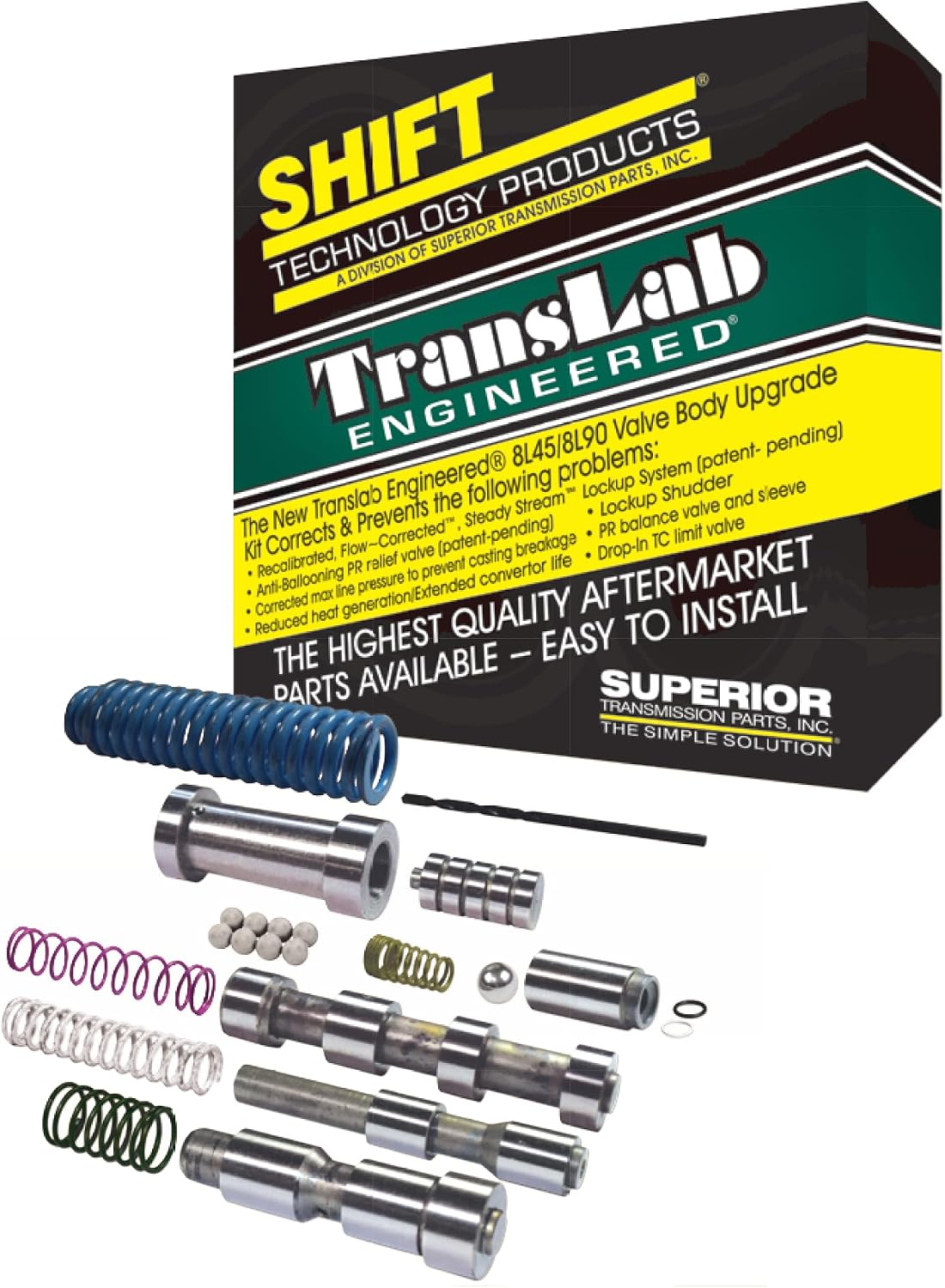
8L90 Transmission Valve Body Shudder Fix Kit
When a confirmed shudder persists after the triple-flush procedure and a fresh blue-label DEXRON HP fill, the next step most shops reach for is a valve body upgrade kit targeting the pulse damper and clutch regulator circuits feeding the TCC solenoid — not another converter.
View the shudder fix kit →When It's Actually the Converter
There's one failure mode where converter replacement is the correct fix, and it's specific to early production: a leaking seal between the turbine wheel and the converter clutch pressure plate. GM addressed this with an updated torque converter casting rather than a fluid change. PIP5337G lists the replacement part numbers directly — 24279497 for 6.2L L86-equipped trucks and utility vehicles, and 24279495 for the 6.2L LT1 Corvette application — and pairs the converter swap with a required cooler and line flush using tool DT-45096, since residual contaminated fluid left in the cooler circuit will undo the benefit of a new converter. If the fluid in the pan comes out cloudy, milky, or shows signs of coolant contamination, the bulletin says to stop and run the separate cooling-system leak test procedure before going any further.
Solenoid, Valve Body Wear, and the PUN/TUN Trap
Not every TCC complaint traces back to fluid or the converter. Aftermarket valve body upgrade kits for the 8L90 (and the lighter-duty 8L45, which shares the platform) target wear in the pulse damper and accumulator bores, where even modest wear changes the solenoid pressure feeding the clutch regulator valves — including the valve that regulates TCC apply pressure. These kits are marketed specifically for shudder that is still present after a proper fluid flush, which tells you something useful diagnostically: if the triple-flush procedure above doesn't resolve a confirmed shudder, worn valve body bores are the next real suspect, not a second converter.
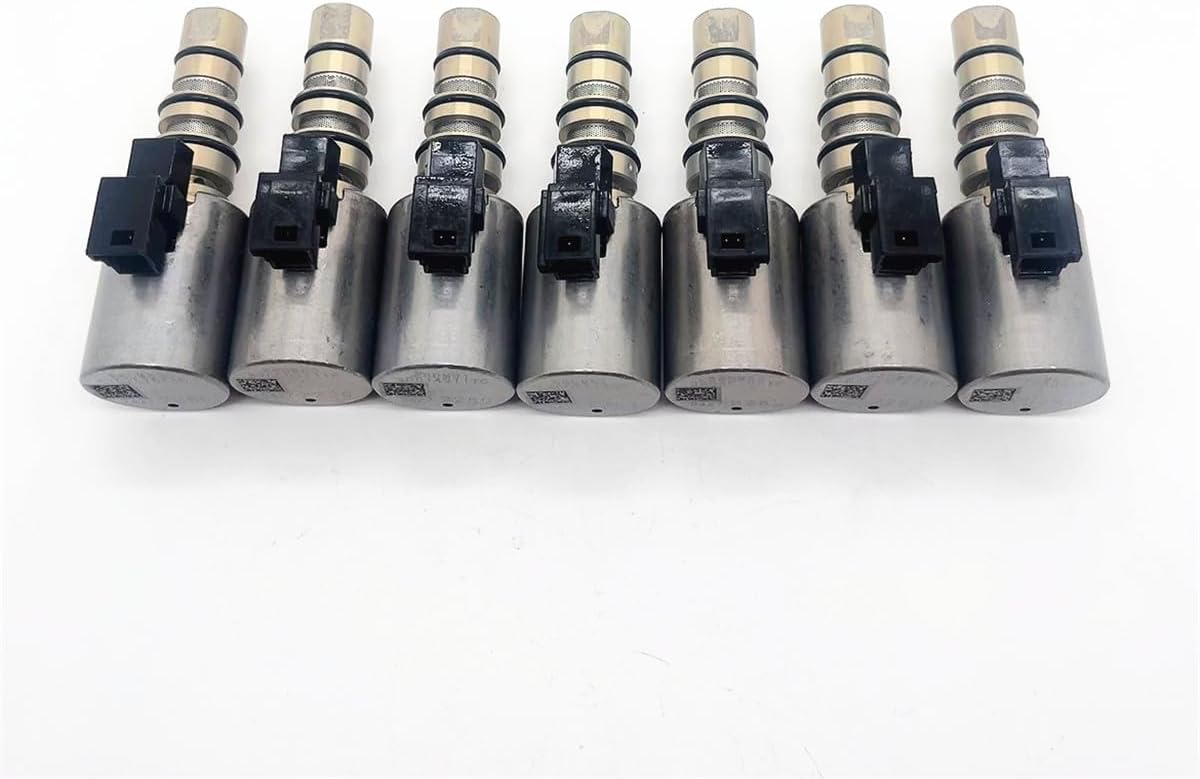
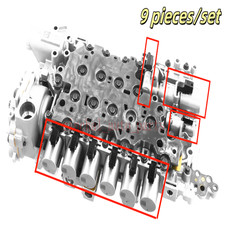
One 8L90-specific trap worth knowing about if a valve body gets swapped or rebuilt: after any valve body replacement, the new PUN (parameter unique number) has to be programmed into the TCM, and the stored solenoid flow-rate values the TCM uses for its adaptive learning are tied to that PUN. There's currently no established field process for determining which flow-rate solenoid belongs in which specific bore position, so if the valve body has been apart and solenoids may have been mixed up, a shift and TCC-apply quality problem can persist until the valve body is replaced outright and the PUN is relearned — simply resetting adapts won't correct a solenoid that's physically in the wrong bore.
Diagnostic Order That Actually Saves Time
- Pull stored codes and freeze-frame data first. A TCC-related code narrows whether you're chasing a circuit fault or a performance/shudder complaint before you drive the vehicle at all.
- Run the three-mode test (A/B/C) at the specified drive cycle — 8th gear, V8 mode, 1,050-1,300 RPM input speed, 40-55 mph, 200-375 Nm — to confirm the complaint is actually TCC shudder and not a tire, driveline, or engine vibration riding along at the same speed.
- If confirmed, check fluid condition and history before touching hardware. Pull a sample; if it's clean and recently serviced with the current blue-label 19417577 fluid, the fluid angle is less likely to be the cause.
- Perform the full triple-flush procedure from 16-NA-175 with the updated DEXRON HP fluid, and give it the full 200-mile, two-cold-start evaluation window before judging the result.
- If shudder persists after a proper flush, move to the valve body: inspect or replace the pulse damper and accumulator bore components rather than reaching for a converter.
- Reserve converter replacement for the documented turbine-to-clutch-pressure-plate seal failure on early units, confirmed by cloudy or contaminated fluid and the specific part numbers above, paired with a full cooler flush.
- For slip-based complaints rather than shudder, log actual TCC slip speed against the 100 RPM / 6-second threshold instead of judging by feel, since 0-50 RPM of ECCC-controlled slip is normal operation, not a fault.
FAQ
How much torque converter clutch slip is normal on the 8L90?
Some slip is normal and expected. GM's electronically controlled capacity clutch (ECCC) strategy deliberately runs the TCC with a small amount of controlled slip, roughly 0-50 RPM depending on the vehicle application, rather than a hard mechanical lock. GM's slip-check procedure flags a problem only when logged TCC slip exceeds 100 RPM for more than 6 seconds after the solenoid command shows the TCC is on, so a scan tool reading of 20 or 30 RPM slip with the TCC commanded locked is not, by itself, a fault.
What frequency is a true 8L90 TCC shudder?
GM's own bulletins and Gears Magazine's reporting on the 8L90 put true TCC shudder at a vibration frequency of roughly 23-28 Hz, with GM's PicoScope-based test method citing a disturbance around 26 Hz at 16-24 mg when the concern is confirmed. If a logged vibration tracks engine RPM or vehicle speed instead of staying fixed at that frequency in a steady gear, it is not TCC shudder and the torque converter clutch is not the right place to keep looking.
Does flushing the fluid actually fix 8L90 TCC shudder?
In most confirmed cases, yes. Gears Magazine reports that GM engineering traced the majority of true 8L90 TCC shudder complaints to the DEXRON HP fluid absorbing moisture over time, which changes its friction characteristics at the clutch interface. GM bulletin 16-NA-175 lays out a triple drain-and-fill procedure rather than a single fluid change, and notes the shudder improves right away but may need up to 200 miles and two full cold-to-hot drive cycles to fully clear.
Will replacing the torque converter fix 8L90 shudder?
Sometimes, but GM's own documentation says converter replacement on later-build 8L90 units was found to be largely ineffective at correcting shudder, and the complaint often returns. Converter replacement is the correct fix only for a specific, earlier failure mode: a leaking seal between the turbine wheel and the converter clutch pressure plate on early-production units, which GM addressed with an updated converter casting rather than a fluid change.
What DEXRON HP fluid part number should I use in an 8L90?
Confirm you are using the current blue-label DEXRON HP formulation, GM part number 19417577, rather than an older black-bottle or grey-label HP fluid. GM bulletin PIP5337G lists an earlier DEXRON HP part number, 19353429 (19353430 in Canada), tied to the original formulation; Gears Magazine's reporting on 8L90 shudder complaints specifically calls out avoiding the older bottles when chasing a shudder fix.
Related 8L90 guides
Sources
- General Motors Service Bulletin 16-NA-175, "Shake and/or Shudder During Light Throttle Acceleration" (June 2016). Backs the three-mode (A/B/C) TCC shudder confirmation test, the exact drive cycle specs (8th gear, V8 mode, 1,050-1,300 RPM, 40-55 mph, 200-375 Nm), and the triple drain-and-fill fluid procedure with its 200-mile / two-cold-cycle evaluation window. static.nhtsa.gov (PDF, hosted by NHTSA)
- General Motors Service Bulletin PIP5337G, "Shake Or Shudder On Acceleration" (Nov. 2016). Backs the PicoScope shudder signature (approximately 26 Hz at 16-24 mg), the DEXRON HP fluid part number 19353429, and the torque converter replacement part numbers 24279497 (6.2L L86 truck/utility) and 24279495 (6.2L LT1 Corvette) for the early turbine seal failure mode. static.nhtsa.gov (PDF, hosted by NHTSA)
- Gears Magazine, "What Is Causing That? A Look at the GM 8L90's Most Common Concerns" (Oct/Nov 2019). Backs the ECCC slip-check threshold (100 RPM slip sustained more than 6 seconds), the 23-28 Hz confirmed shudder range for this platform, the hygroscopic-fluid root cause finding, the updated blue-label DEXRON HP part number 19417577, the C1-C5 clutch-to-gear chart, and the PUN/TUN solenoid programming caveat. gearsmagazine.com
- General Motors Powered Solutions, 8L90 8-Speed Automatic Transmission product page. Backs the DEXRON High Performance ATF fluid specification and the engine torque ratings (460 lb-ft / 624 Nm and 665 lb-ft / 900 Nm, by engine application) directly from GM's own current OEM documentation. poweredsolutions.gm.com
- Transmission Digest, "GM 8L90 — The Other 8 Speed Automatic: Part 1" (Feb. 2016). Backs the architectural overview: RPO M5U, five friction clutch elements, four planetary gear sets, remote-mounted pump, external (non-case-mounted) TCM, approximately 11.5 quarts of DEXRON HP fluid capacity, and a line pressure spec that can approach 300 PSI. transmissiondigest.com
- General Motors Service Bulletin 18-NA-355, "Shake and/or Shudder During Light Throttle Acceleration Between 25 and 80 MPH" (April 2020). Backs the 25-80 mph steady-speed shudder condition, TCC shudder as cause, the M5U/M5X truck coverage, the Mobil 1 Synthetic LV ATF HP exchange with 20 quarts in the DT-45096, the once-per-vehicle note and the post-breakpoint HP factory fill. static.nhtsa.gov (PDF, hosted by NHTSA)
- General Motors Preliminary Information PIP5792E (July 2022). Backs the twisted cooler line root cause for harsh shift, shudder, surge and high fluid temperature on 8L90 (MQE) and related GM units. static.nhtsa.gov (PDF, hosted by NHTSA)