A 9HP48 that will not move in any range is a different job from one that slips or shifts hard. The car starts, the cluster may or may not show a gear, the driver selects Drive or Reverse, and nothing happens, or the shifter throws itself back to Park a second later. On this transmission, sold as the ZF 9HP48 in Honda, Acura and Land Rover applications and built by Chrysler in Kokomo as the 948TE for the Jeep Cherokee, Renegade, Chrysler 200, Fiat 500X and others, that complaint has a short list of causes, and the two dog clutches sit near the top of it.
Before anyone pulls the unit, the order matters. Several of the things that produce a no-go on this platform are free to rule out: a body module code, a low fluid level, or a TCM calibration that FCA has already rewritten. The hardware failures that are real are well documented by ATRA and Sonnax, and they leave fingerprints you can read on a scan tool before the pan comes off.
Why the Dog Clutches Matter for a No-Go
The 9HP48 has six shift elements labeled A through F in power-flow order. Four are conventional multi-plate friction clutches. Two, A and F, are hydraulically actuated dog clutches: splined sleeves that lock two components together with no friction material at all, much like a non-synchronized manual transmission sleeve. ATRA's 948TE introduction webinar, presented by senior research technician Mike Souza, lays out what each one does, and that is the key to reading a no-movement complaint:
| Element | Type | What it does | Ranges it is on |
|---|---|---|---|
| A | Dog clutch (driving) | Part of the input shaft at the rear of the case | 1st through 7th |
| F | Dog clutch (braking) | Holds the P3/P4 sun gear | 1st through 4th, Reverse, Park/Neutral |
| B, C, D, E | Multi-plate friction clutches | Remaining power flow and speed matching | Varies by gear |
Two consequences follow. First, a dog clutch cannot slip, so it can only be engaged when the parts on each side are at the same speed. The TCM handles that by slipping friction clutches and asking the PCM for an rpm or torque change until speeds match. If the dog will not travel, or the TCM cannot confirm that it traveled, it has no way to finish the engagement. Second, because A is applied in forward gears but not in Reverse, the range the vehicle refuses tells you something. ATRA notes that the transmission normally launches in 2nd, with 1st held back for paddle or low-range use, so a normal Drive launch needs A. A truck that backs up but will not go forward points you toward A and its control circuit. A truck that will do neither has a problem common to both directions: F, fluid supply, the park system, or the controls.
Step One: Scan Every Module, Not Just the TCM
Keith Clark's April 2026 GEARS Magazine article on 9HP48 no-go complaints starts the diagnosis with a full-vehicle scan, and for good reason. On shift-by-wire applications the transmission will refuse to leave Park, or return the selector to Park, when the body side reports a door, hood or hatch ajar, or an unoccupied driver seat. That is the vehicle protecting itself, not a transmission failure, and it is the cheapest no-go you will ever fix.
On the transmission side, the codes that matter most:
- P0810 Clutch Position Control Error. The TCM sets it when the actual dog clutch position does not match the commanded position for longer than a calibrated time and a symptom counter passes its threshold. GEARS notes a separate check runs right after engine start that times how long the dog takes to engage. The monitor only runs above a set engine speed and with a working oil pressure sensor. Stuck in Park with P0810 points hardest at the A-dog, though either dog can set it.
- P1CC9 Unable to Engage Gear. Listed in FCA bulletin 21-043-15 alongside P0810 and stuck-in-gear and ratio codes for the 2014 Cherokee 3.2L.
- P1DCD Multiple Clutches Locked Up and P0887 TCM Power Control Circuit High. Both appear in FCA bulletin 21-006-17 for 2017 Cherokees, along with P0810.
Record the codes and freeze-frame data before you clear anything. The freeze frame tells you the gear, temperature and engine speed when the fault set, and on an intermittent no-go that is often the only evidence you get.
Step Two: Check Software Before Hardware
FCA rewrote the 948TE calibration several times in the first model years. Bulletin 21-043-15 (June 19, 2015) reflashes the TCM on 2014 Jeep Cherokee KL models with the 3.2L (sales code EHB) and covers P0810 and P1CC9 among other codes, plus garage shift (Park to Reverse or Drive) improvements. Bulletin 21-006-17 Rev. B (July 29, 2017) covers 2017 Cherokees built on or before June 15, 2017 with the 2.4L (ED6/ED8) or 3.2L (EHK), and lists among its symptoms a limp mode where the transmission stays in a fixed gear and a longer-than-normal delay shifting from Reverse to Drive.
Two details from those bulletins are easy to miss. Bulletin 21-043-15 tells the tech to record the Clutch Fill and Fast Fill counter information in wiTECH before flashing, and to hold battery voltage between 13.2 and 13.5 volts with a charger during the flash; a flash that drops out partway can create the very problem you are trying to fix. And a reflash will not repair a dog that is mechanically hung up. If the code returns after current software and a clean fluid check, you are into hardware.
Step Three: Fluid Level, Done the Right Way
Low fluid is the first cause GEARS lists for P0810, ahead of the valve body and internal damage. The dog clutches share one pressure circuit, and the A-dog valves are fed through a 0.207 inch orifice in a hardened end plug at the input shaft, so a pump that is picking up air cannot stroke them reliably.
There is no dipstick tube on this unit. Per the ATRA webinar, the level is checked through a port on top of the case above the differential using Mopar tool 10323A, marked in 5 mm increments, with the vehicle level, the engine idling in Park, and the fluid above 50 degrees C on the scan tool. On 2.4L vehicles the port is reached by removing the left front wheel and turning the steering full left; on 3.2L and 3.6L vehicles it is under the engine cover. Read the witness mark against the temperature chart.
Fluid type matters as much as level. FCA calls for Mopar ZF 8 and 9 Speed ATF, part 68157995AB, which is pale green, and ATRA notes leak dye is not recommended. ZF's own data sheet for LifeguardFluid 9 states that using any other fluid in an 8HP or 9HP can cause anything from deteriorated shift characteristics to outright transmission failure. If the fluid is burnt or full of material, that is evidence of internal damage, and a fresh fill will not save it.
Step Four: The Valve Body and the Dog Clutch Pressure Switch
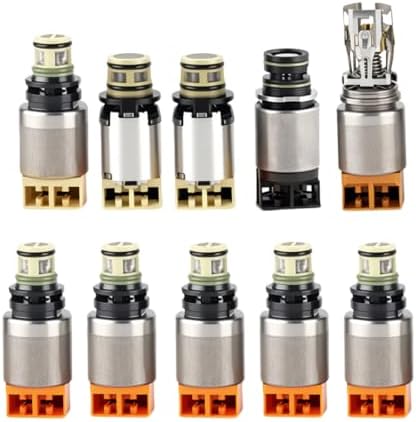
With the software current and the level correct, the next suspect is the control side. GEARS directs you to check the A-dog clutch control valve and the A-dog clutch solenoid for sticking. Clark reports no valve bore wear found in that circuit so far, so this is a sticking or debris problem more than a worn-bore problem. The dog clutch pressure switch on the valve body is a Hall-effect part, and it can be bench tested with a power supply and shop air.
That switch is how the TCM knows the dogs moved. ATRA explains that when a dog clutch releases, there is a brief pressure spike in the dog clutch exhaust circuit, and the TCM watches the shape of that signal for control and diagnosis. A sensor that has failed or a valve that has stuck so the spike never shows up both look the same to the TCM: commanded position and actual position do not agree, and P0810 sets.
Do not ignore line pressure either. Sonnax's 9HP48/948TE tech article explains that line pressure here is set by the pressure regulator valve together with a shift valve-system pressure (SV-SP) valve fed by the system pressure solenoid. Sonnax calls the SV-SP valve highly active and ties wear there to poor line pressure control, poor shift quality and burnt clutches; it offers repair kit 85740-07K for it.
Whenever the valve body, solenoids or TCM are replaced, the adaptations have to be relearned. ATRA's webinar draws the line clearly: the valve body solenoid learn (formerly Quick Learn) is only for a replaced valve body or TCM and erases all adaptation cells, while a replaced complete transmission gets the adaptation learn procedure instead, per FCA bulletin 21-013-13.
Step Five: Inside the Case
If the code comes back with good fluid and good controls, the A-dog assembly itself is next. GEARS lays out the bench checks:
- Check the A-dog sleeve for full-range travel without resistance, measured with a dial caliper.
- Inspect the A-dog spline for damage. Clark notes the sleeve usually fails before the P1/P2 sun or ring gears do.
- Air check with the shaft vertical: apply air to the apply side at the bottom of the shaft. The sleeve should travel to fully applied with minimal leakage, then return to released.
- Check the hardened pin through the valve that attaches to the sleeve for minimal lateral freeplay.
If the assembly fails any of those, GEARS says to replace the entire input shaft and dog clutch assembly rather than chase pieces of it. Note there are two shaft types: the Chrysler 948TE shaft has no orificed tip, and the other applications do. Order by VIN, because ATRA is explicit that ZF and Chrysler units look nearly identical but their parts are not necessarily interchangeable. The A-dog sleeve itself is available from aftermarket hard-parts suppliers.
The No-Go Diagnostic Order
- Scan all modules. Fix any door, hood, hatch or seat-occupancy code first.
- Record transmission codes and freeze frame, then clear.
- Recreate it the way GEARS describes: Reverse, back to Park or Neutral, Reverse again, then Drive. If the selector returns to Park, rescan. Note which range failed.
- Confirm level with tool 10323A above 50 degrees C, and confirm the fluid is 68157995AB or LifeguardFluid 9 and not burnt.
- Confirm TCM software against the bulletins for that VIN, flashing with a charger holding 13.2 to 13.5 volts.
- If it persists, check the A-dog control valve, A-dog solenoid and the Hall-effect dog clutch pressure switch.
- If the controls test good, pull the unit and bench test the A-dog sleeve and input shaft; replace the shaft and dog assembly as a unit if it fails.
- Run the correct learn procedure before the vehicle leaves.
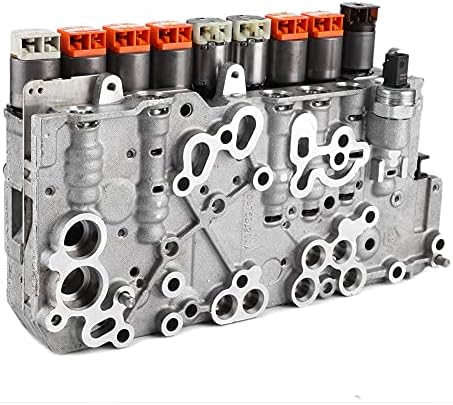
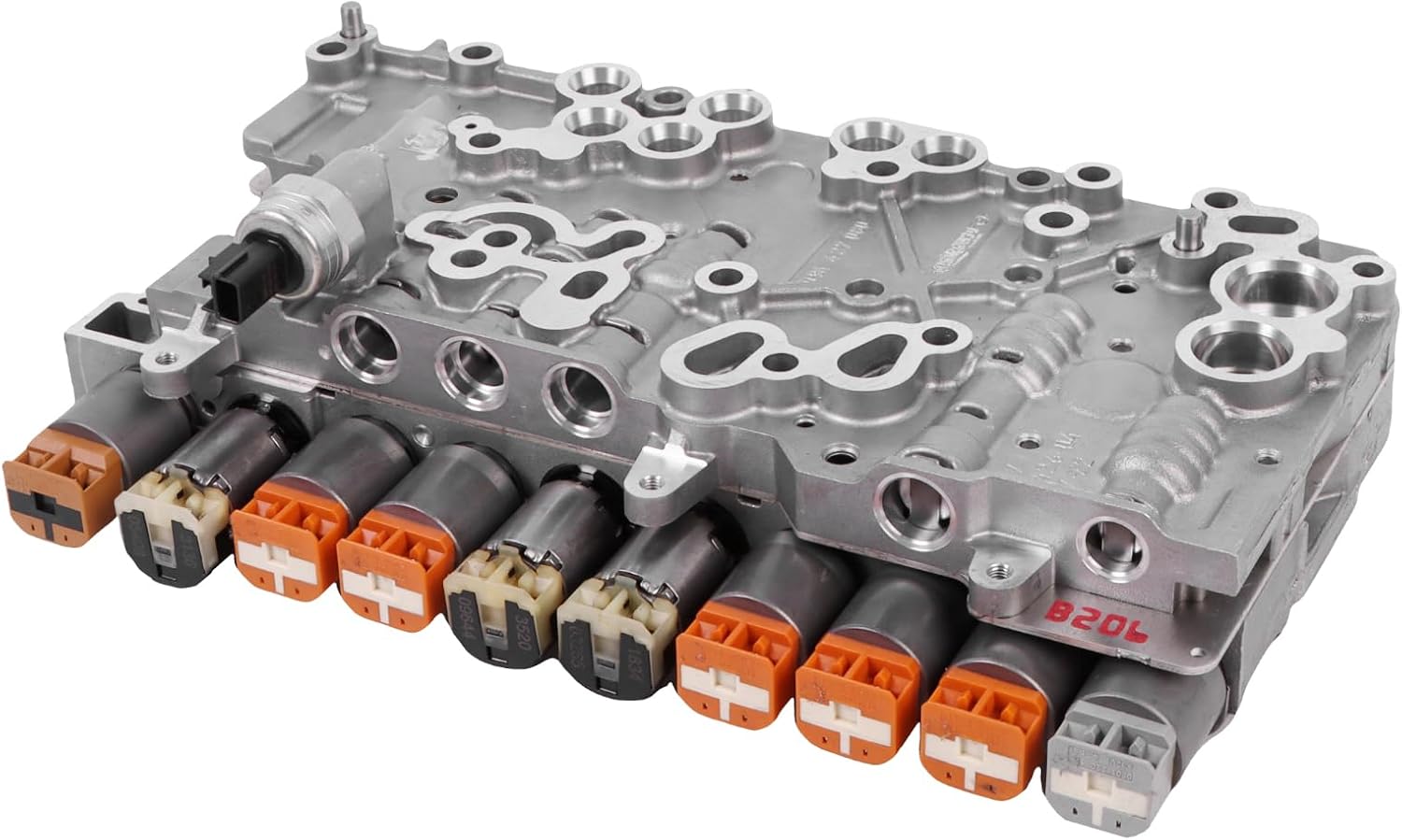
948TE Transmission Valve Body with Wire Harness
For the case where the A-dog control valve or solenoid is sticking and the bore cannot be cleaned up with confidence. Order by VIN, since ZF and Chrysler valve bodies are not necessarily interchangeable, and run the valve body solenoid learn after install.
View the 948TE valve body →FAQ
Why does my 9-speed shift itself back into Park?
On shift-by-wire 9HP48 and 948TE vehicles, the selector can return to Park when the TCM cannot confirm a dog clutch engaged, which usually sets P0810 Clutch Position Control Error. Body codes for a door, hood or hatch ajar, or an unoccupied driver seat, can also hold the vehicle in Park. Scan every module before blaming the transmission.
What does P0810 mean on a Jeep Cherokee 9-speed?
P0810 is Clutch Position Control Error. It sets when the actual position of the A or F dog clutch does not match what the TCM commanded for longer than a calibrated time. GEARS Magazine lists low fluid, dirty fluid, a faulty valve body and internal damage as causes, and FCA addressed the code with TCM software in bulletins 21-043-15 and 21-006-17.
Can low fluid cause no movement on a 948TE?
Yes. Low fluid is the first cause GEARS lists for P0810, because both dog clutches share one pressure circuit that needs a steady supply to stroke. Check it through the top-of-case port with tool 10323A, engine idling in Park, fluid above 50 degrees C, and read the mark against the temperature chart.
It reverses but will not go forward. What does that point to?
Per ATRA, the A dog clutch is applied in 1st through 7th but not in Reverse, while the F dog clutch is applied in both. A unit that backs up but will not drive forward points toward the A-dog circuit: its solenoid, control valve, the dog clutch pressure switch, or the A-dog sleeve on the input shaft.
Will a TCM reflash fix a 9HP48 that will not move?
Sometimes. FCA bulletins 21-043-15 and 21-006-17 list P0810, P1CC9 Unable to Engage Gear, and fixed-gear limp mode among the conditions their software addresses. If the code returns after the flash with correct fluid, the cause is mechanical or in the valve body, and software will not fix it.
Sources
- Gears Magazine (ATRA) — Keith Clark, “ZF9HP48: Worn Parts Create Stuck in Park, Dog Clutch Issues Cause a No-Go,” April 2026. Backs the P0810 set conditions and causes, the body-code Park hold, the recreate-and-rescan procedure, the A-dog control valve/solenoid and Hall-effect pressure switch checks, the 0.207 in. feed orifice, the sleeve travel, spline and air checks, and the two input shaft types. gearsmagazine.com
- ATRA — Mike Souza, “ZF9HP48 / 948TE Introduction” technical webinar, 2015. Backs the A-F element layout, the A-dog (1st-7th) and F-dog (1st-4th, Reverse, Park/Neutral) application, the 2nd-gear launch, dog clutch speed matching, the dog clutch pressure transducer, the 10323A fluid check procedure, fluid 68157995AB, the internal filter, and the learn procedure distinctions. atracom (PDF)
- Chrysler Group LLC / NHTSA — Service Bulletin 21-043-15, “Flash: Transmission Shift and Diagnostic Enhancements,” June 19, 2015. Backs the 2014 Cherokee KL 3.2L (EHB) application, DTCs P0810 and P1CC9, the garage shift improvements, the 13.2-13.5 V charger requirement, and recording Clutch Fill and Fast Fill counters. static.nhtsa.gov (PDF)
- FCA US LLC / NHTSA — Service Bulletin 21-006-17 Rev. B, “Flash: Transmission Diagnostic and Shift Enhancements,” July 29, 2017. Backs the 2017 Cherokee KL application (built on or before June 15, 2017; ED6/ED8/EHK), DTCs P0810, P0887 and P1DCD, fixed-gear limp mode, and the Reverse-to-Drive delay. static.nhtsa.gov (PDF)
- Sonnax — “ZF9HP48/948TE Line Pressure Control Diagnostics,” tech article. Backs the pressure regulator plus SV-SP valve line pressure design, the system pressure solenoid, the wear symptoms (poor line pressure control, poor shift quality, burnt clutches), and kit 85740-07K. sonnax.com
- ZF Friedrichshafen AG — Product Data Sheet, ZF LifeguardFluid 9. Backs the warning that fluids other than LifeguardFluid 9 in an 8HP or 9HP can cause anything from deteriorated shift characteristics to transmission failure. aftermarket.zf.com (PDF)