The ZF 9HP48, badged 948TE on Chrysler, Jeep, Ram and Fiat products and built under license for Honda and Acura's 9-speed, shows up under more nameplates than almost any other modern transaxle - Jeep Cherokee, Chrysler 200 and Pacifica, Ram ProMaster City, Fiat 500X, Acura TLX, Honda Pilot, Odyssey, Passport and Ridgeline, and the Land Rover Evoque and Discovery Sport. That spread matters for overheating specifically, because the two best-documented causes are not the same across platforms. The Honda/Acura version has a factory-defect transmission fluid warmer that can let engine coolant leak directly into the ATF. The FCA version has a documented cooler hose that can rupture and dump fluid. Neither one is a guess - both are the subject of an OEM campaign with a paper trail, and both end the same way: fluid that runs hotter than it should, and clutches that start cooking.
This is what each documented cause actually is, the bulletins and the recall behind them, the baseline temperature a Quick Learn procedure requires before it will even run, and a prevention checklist that does not depend on guessing which failure you have.
The short version: On 2015-16 Acura TLX models, Honda Service Bulletin 17-012 documents a defective ATF warmer that can let engine coolant mix into the transmission fluid, with some vehicles overheating before the leak was caught. On 2021 Jeep Cherokee models, NHTSA recall 21V-310 covers roughly 18,800 units with a Transmission Oil Cooler hose made from incorrectly cured rubber that can rupture and leak fluid - a fire risk per NHTSA, and a fluid-loss/cooler-flow problem mechanically. Independent of either defect, Sonnax documents valve body wear (pressure regulator and SV-SP valve bores) that causes unstable line pressure and burnt clutches - heat damage from a clutch pack that never fully locked. The fix path differs by cause, but the starting point is always the same: confirm which one you actually have before replacing parts.


Cause 1: A Defective ATF Warmer Letting Coolant Into the Fluid (Honda/Acura)
Honda Service Bulletin 17-012, "Product Update: TLX 9-Speed Transmission Warmer," applies to 2015-16 Acura TLX vehicles with the 9-speed automatic. The bulletin's background section is direct: "Some 9-speed transmission warmers were improperly manufactured and allow the engine coolant and ATF to mix. If the fluids mix, the engine and transmission may be permanently damaged and require replacement." The warmer is a heat exchanger that sits in the engine's coolant circuit specifically to bring the ATF up to operating temperature faster after a cold start - a feature meant to reduce friction losses and improve fuel economy, not a flaw by itself. The documented flaw is in the warmer's internal seal.
What makes this bulletin notable is that it covers vehicles that had already had the transmission replaced once for a leaking warmer, before Honda had a finalized repair procedure. Honda's own instructions to the service advisor: "Ask the client if the vehicle overheated, for example, if the MID showed a message Stop Driving Engine Temperature Too Hot or there was steam from under the hood. Other signs include coolant leaking from the radiator cap or the coolant reserve tank." Depending on the warmer's manufacture date and whether the vehicle actually overheated, the corrective action ranges from replacing just the radiator and hoses and flushing the engine, up to replacing the short block, cylinder heads, transmission, radiator, and every coolant hose and flushing the heater core - the full span of repair procedures A through D in the bulletin, keyed to a flowchart that starts with checking the ATF warmer's manufacture date and whether it is actively leaking.
The failed part itself carries Honda part number 06200-5J4-A71. The practical read for anyone working on an affected TLX, Pilot, Odyssey, Passport or Ridgeline with unexplained engine overheating alongside transmission symptoms: check the ATF warmer before assuming a radiator or head gasket problem, because on this platform the two systems share fluid paths that most techs do not expect.
Cause 2: A Ruptured Transmission Oil Cooler Hose (Jeep Cherokee)
NHTSA recall campaign 21V-310 covers certain 2021 Jeep Cherokee vehicles - about 18,800 units - built with a Transmission Oil Cooler (TOC) hose made with incorrectly cured rubber. Per FCA US LLC's own notice: "An incorrectly cured TOC hose may have a weakened hose wall that can rupture, allowing transmission fluid to leak." NHTSA's official consequence statement is squarely about fire risk - "Transmission fluid leaking from a TOC hose may contact a competent ignition source and lead to a vehicle fire" - and that is the safety issue that triggered the recall. The suspect production window was January 19, 2021 through March 8, 2021, and the remedy is dealer inspection and hose replacement at no charge.
The overheating connection is mechanical rather than something NHTSA states directly: a ruptured TOC hose cuts the flow of fluid out to the external cooler mounted at the radiator, and depending on where the rupture sits and how much fluid is lost, the transmission can end up running on a reduced fluid volume with reduced or zero flow through its only real heat-rejection path. A 948TE that has lost cooler flow, is low on fluid, or both, will run hotter under any sustained load than one with an intact cooling circuit - on top of the fire risk NHTSA is actually warning about. Either way, a visible fluid leak at the cooler line routing on an affected Cherokee is not a "top it off and watch it" problem.
Cause 3: Valve Body Wear That Leaves Clutches Slipping and Generating Heat
Independent of either documented defect, Sonnax's technical resource on 9HP48/948TE line pressure control identifies a hydraulic cause that produces heat as a side effect rather than as the primary complaint. Wear at the traditional pressure regulator valve bore, and separately at the 9HP48-specific Shift Valve-System Pressure (SV-SP) valve, both "affect line pressure control, shifts and clutch durability." Sonnax's own product description for the resulting repair kits lists exactly what unstable pressure helps cure: "Poor line pressure control, Poor shift quality, Burnt clutches."
Burnt clutches are a heat signature, not just a wear signature. A clutch pack that is not getting full, stable clamping force slips for a fraction of a shift instead of locking cleanly, and that slip generates friction heat directly in the clutch pack and the fluid around it - heat that has nothing to do with the external cooler or the warmer and everything to do with hydraulic control inside the valve body. This is why a transmission can show overheating symptoms even with a perfectly intact cooler circuit and a correctly functioning ATF warmer: the heat is being generated internally by a control problem, not rejected poorly by the cooling system. Sonnax's oversized pressure regulator valve kit (85740-15K) and SV-SP valve kit (85740-07K) recondition the two wear points independently, since Sonnax notes they wear on their own schedules and a valve body can need one without the other.
Cause 4: Wrong or Degraded Fluid
The 9HP48 calls for a ZF TE-ML 11 9HP48 spec fluid. Ravenol's ATF 9HP Fluid technical sheet documents that spec as a full-synthetic, PAO (poly-alpha-olefin) base fluid, cross-referenced to Mopar part numbers 68157995AB and 68218925AA and to Honda part number 08200-9170 depending on the application, with a flash point of 218°C and a pour point of -54°C per DIN testing standards. A full-synthetic PAO fluid built to that spec has meaningfully more thermal headroom than a generic or mismatched fluid before it starts to oxidize and break down.
That thermal headroom matters because fluid condition is the variable that ties every other cause together. SAE paper 620249, "Temperature Effect on Transmission Operation," is built around exactly this relationship, stating that "fluid failure is accountable for most transmission deterioration" and drawing its conclusions from Pikes Peak hill-climb testing, dynamometer bench testing, and ordinary city and expressway driving specifically to isolate how heat resistance of the fluid governs transmission life. A fluid that is already old, oxidized, or simply the wrong spec gives a 9HP48 far less margin before any of the three mechanical causes above starts doing real damage - which is also why fluid condition is the first thing worth checking any time a transmission runs hotter than expected, regardless of which documented failure is in play.
A Real Baseline: What "Normal" Operating Temperature Looks Like
Stellantis TSB 21-013-16 REV. A, the 948TE Quick Learn procedure, was revised specifically to add a note about transmission temperature: "Transmission temperature must be at least 60°C (140°F) for the quick learn procedure to function properly." The technician warms the transmission by applying the brake, shifting Park to Reverse to Drive, and monitoring the reading live on the Electronic Vehicle Information Center before the TCM's Quick Learn function will even run. That 140°F figure is a useful floor, not a ceiling - it is simply the minimum temperature FCA's own procedure requires to consider the transmission properly warmed, and it is a reasonable sanity check if a scan tool's fluid temperature PID looks implausible (stuck near ambient after a long drive, for example, points at a sensor circuit problem rather than a true overheat condition).
Prevention Checklist
- Honda/Acura owners: if the vehicle shows any combination of an overheat warning and transmission symptoms, have the ATF warmer (Honda part 06200-5J4-A71) inspected per Service Bulletin 17-012 before assuming a standalone cooling-system fault - the two are connected on this platform.
- 2021 Jeep Cherokee owners: confirm whether the vehicle falls under recall 21V-310 and have the TOC hose inspected. A visible fluid leak at the cooler line routing is a leak-and-fire-risk issue first and an overheat risk second - do not drive on it waiting for a convenient appointment.
- Pull the actual fluid temperature PID on a scan tool under real load (a grade, a tow, or a long highway pull) rather than relying on a dash warning alone, which only triggers after the TCM has already decided the condition is severe enough to flag.
- Run the correct full-synthetic ZF TE-ML 11 9HP48 spec fluid and keep the filter and pan service on schedule. Fresh, correct-spec fluid holds heat better and flows cleaner through both the internal valve body and the external cooler than old or mismatched fluid.
- Towing or hauling regularly? Add a dedicated auxiliary cooler rather than relying on the factory circuit alone - sustained high load is exactly the condition that exposes marginal cooling capacity that a daily commute never reveals.
- If burnt-smelling or discolored fluid shows up at a service with no obvious warmer or hose leak, suspect valve body wear at the pressure regulator or SV-SP valve bores before condemning the whole unit - Sonnax's oversized valve kits recondition those wear points without a full valve body replacement.
9HP48 Filter Kits, Fluid, and Valve Bodies
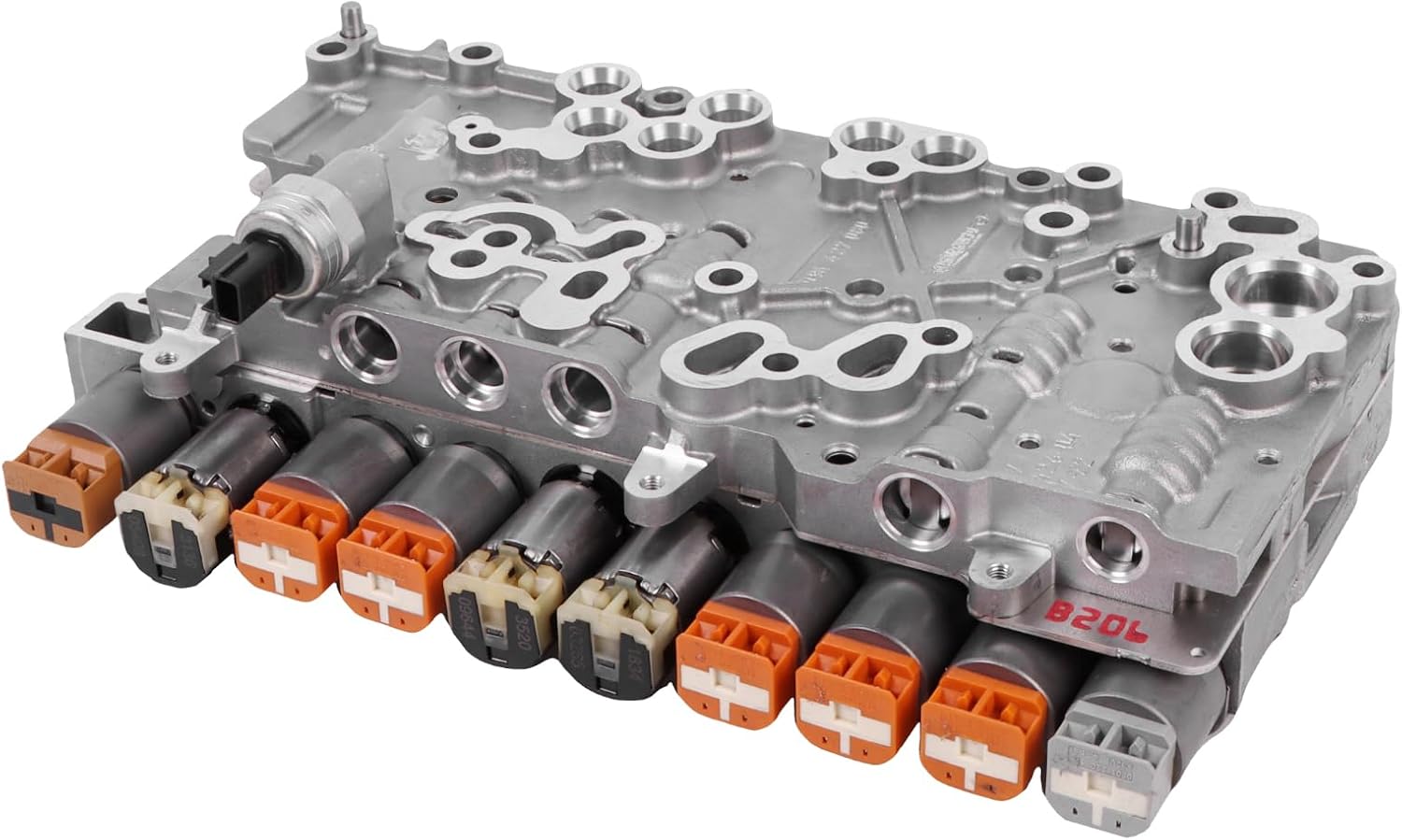
We stock the correct filter and pan gasket kit for a proper fluid service, full-synthetic ZF 6HP/8HP/9HP ATF, and remanufactured valve bodies with all 10 solenoids installed - shipped fast from the USA.
Shop 9HP48 parts →FAQ
What does overheating actually look like on a 9HP48?
On FCA-badged 948TE vehicles the dash typically shows an EVIC transmission temperature warning along with a shift-quality complaint, since the TCM pulls power and alters shift behavior as fluid temperature climbs. On Honda/Acura 9-speed vehicles, Honda's own service bulletin tells technicians to ask whether the multi-information display showed a "Stop Driving Engine Temperature Too Hot" message or whether there was steam or coolant loss under the hood, because on that platform a transmission overheat is frequently an engine coolant symptom too. Dark, burnt-smelling fluid pulled at a service is also a strong retroactive sign that the unit ran hot at some point even if no warning was ever seen.
Why do Honda and Acura 9-speed transmissions overheat from coolant mixing with ATF?
The Honda 9-speed shares the ZF 9HP48 design and uses a transmission fluid warmer that sits in the engine coolant circuit to bring the ATF up to temperature faster. Honda Service Bulletin 17-012 documents that some of these warmers on 2015-16 Acura TLX vehicles were improperly manufactured and allowed engine coolant and ATF to mix internally. Once the fluids cross-contaminate, both the transmission and, in more severe cases, the engine can be permanently damaged, and some of these vehicles overheated before the leak was diagnosed.
Can a transmission cooler hose leak cause a Jeep Cherokee 948TE to overheat?
Yes, indirectly. NHTSA recall campaign 21V-310 covers roughly 18,800 2021 Jeep Cherokee vehicles built with a Transmission Oil Cooler hose made from incorrectly cured rubber that can rupture and leak fluid. NHTSA's stated safety concern is fire risk from fluid contacting an ignition source, but a ruptured cooler hose also cuts off flow to the external cooler and can drop the fluid level, and a 948TE running low on fluid or without full cooler flow will run hotter under load than one with a sealed cooling circuit.
Does using the wrong ATF make a 9HP48 run hotter?
Yes. The 9HP48 calls for a ZF TE-ML 11 9HP48 spec fluid, cross-referenced to Mopar 68157995AB/68218925AA and Honda 08200-9170 depending on the application, and fluid makers like Ravenol build that spec as a full-synthetic PAO-based ATF specifically for its thermal stability. SAE paper 620249, "Temperature Effect on Transmission Operation," states plainly that fluid failure accounts for most transmission deterioration, and a fluid that is the wrong spec or already oxidized from age has far less margin left before heat starts cooking clutch material and seals.
What is the single best thing to do to prevent 9HP48 overheating when towing?
Add or verify a dedicated auxiliary transmission cooler rather than relying on the factory cooler alone, and confirm the fluid is a current, correct-spec full synthetic before a long pull. Towing holds the transmission in a torque-converter-coupled, higher-load state for extended periods, which is exactly the condition that exposes marginal cooling capacity and valve body wear that a short daily commute never reveals.
Sources
- American Honda Motor Co., Inc. — Service Bulletin 17-012, “Product Update: TLX 9-Speed Transmission Warmer (Transmission Previously Replaced for Transmission Warmer Leaking)” (October 6, 2017): the improperly manufactured ATF warmer allowing coolant/ATF mixing on 2015-16 Acura TLX, the service advisor overheat interview questions, repair procedures A-D, and failed part number 06200-5J4-A71. static.nhtsa.gov (NHTSA TSB archive)
- FCA US LLC / NHTSA — Recall Campaign 21V-310, “Transmission Oil Cooler Hose May Leak” (acknowledgment letter, May 7, 2021): 2021 Jeep Cherokee, approximately 18,800 units, incorrectly cured TOC hose rubber, rupture and fluid leak, and the stated fire-risk consequence. static.nhtsa.gov (NHTSA recall archive)
- Stellantis/FCA US LLC — Technical Service Bulletin 21-013-16 REV. A, “948TE 9 Speed Transmission Quick Learn Procedure” (March 25, 2016): the added note requiring a minimum transmission temperature of 60°C (140°F) for Quick Learn to function, and the EVIC-monitored warm-up procedure. static.nhtsa.gov (NHTSA TSB archive)
- Sonnax — “ZF9HP48/948TE Line Pressure Control Diagnostics” technical resource and related oversized valve kits (85740-15K pressure regulator, 85740-07K SV-SP): pressure regulator and SV-SP valve bore wear causing unstable line pressure, poor shift quality, and burnt clutches. sonnax.com
- Ravenol — RAVENOL ATF 9HP Fluid product specification: ZF TE-ML 11 9HP48 spec, full-synthetic PAO base, flash point 218°C, pour point -54°C, and OEM cross-references including Mopar 68157995AB/68218925AA and Honda 08200-9170. ravenol.de
- SAE International — SAE Paper 620249, “Temperature Effect on Transmission Operation”: fluid failure as the primary driver of transmission deterioration, based on Pikes Peak, bench, and real-world driving tests of fluid heat resistance. saemobilus.sae.org