Towing does not break a ZF9HP48 or Chrysler-built 948TE the way a sudden impact or a dropped valve body does. It breaks it slowly, through heat and line pressure cycling, on the exact same drive where everything feels fine until it does not. The transmission that handles a Jeep Cherokee, Chrysler 200, Honda CR-V or Range Rover Evoque around town without complaint is working noticeably harder when there is 3,500 to 4,500 lbs behind it on a grade, and this nine-speed family has a couple of specific, documented weak points that show up first under that load.
This is not a generic “add a cooler and call it done” article. It covers what towing actually does to this transmission mechanically, a real documented failure in its cooling circuit, the component that wears first from sustained high line pressure, and what is actually worth upgrading versus what is just marketing.
The short version: Towing stresses this transmission through sustained torque converter clutch heat and high line pressure, not raw horsepower. Per Sonnax, the SV-SP valve that regulates line pressure on this transmission wears from that kind of duty cycle and causes burnt clutches if ignored. Per ZF's own data sheet, the factory fluid is a lifetime-fill design rated to a 150,000 km interval, which assumes normal duty, not sustained towing. And per American Honda's own service bulletin, at least one vehicle in this transmission family has a documented factory cooling-circuit defect that lets coolant and ATF mix after an overheating history — a good reason to route any added cooler independently of that circuit.


Why Towing Loads This Transmission Differently Than Highway Driving
Per Sonnax's technical writeup on this platform, the 948TE/9HP48 can apply torque converter lockup across all nine forward gears, not just the top two or three like most older automatics. That is good for fuel economy in normal driving, because the converter is rarely allowed to slip and generate heat. Towing works against that design. Climbing a grade with a trailer behind the vehicle forces more torque converter slip and more clutch-to-clutch shifting at the exact moments load is highest, which is also when the transmission's hydraulic system is running at the high end of its line pressure range for the longest stretches of time.
Line pressure control on this transmission is not a simple single-valve setup. Per Sonnax, it uses “an unconventional two-stage pressure control system,” where a shift valve-system pressure valve (the SV-SP valve) takes EPC pressure from the system pressure solenoid and uses it to regulate the pump's line pressure at the balance end of the main pressure regulator valve. That system is what is working overtime every time the transmission has to hold higher clamping force on its clutches to handle load — which is most of the drive, every time you are towing.
The Component That Wears First: the SV-SP Line-Pressure Valve
This is the single most useful fact in this entire article for anyone who tows regularly. Per Sonnax, “wear at the SV-SP valve will affect line pressure control, shifts and clutch durability,” and the progression runs in a predictable order: poor line pressure control first, poor shift quality next, and burnt clutches if it goes unaddressed. That is a direct, documented consequence of exactly the kind of sustained high-load cycling that towing produces.
The practical upshot is that a tow vehicle with this transmission does not necessarily announce SV-SP wear with a check-engine light right away. It shows up as shifts that get a little harsher, a little more hesitant, or a little less consistent specifically when the vehicle is loaded down and climbing, even while the same transmission feels fine driven empty around town. If you only drive it towing-light and the shift quality degrades under load first, that is the pattern to listen for, not a generic “it feels different” complaint.
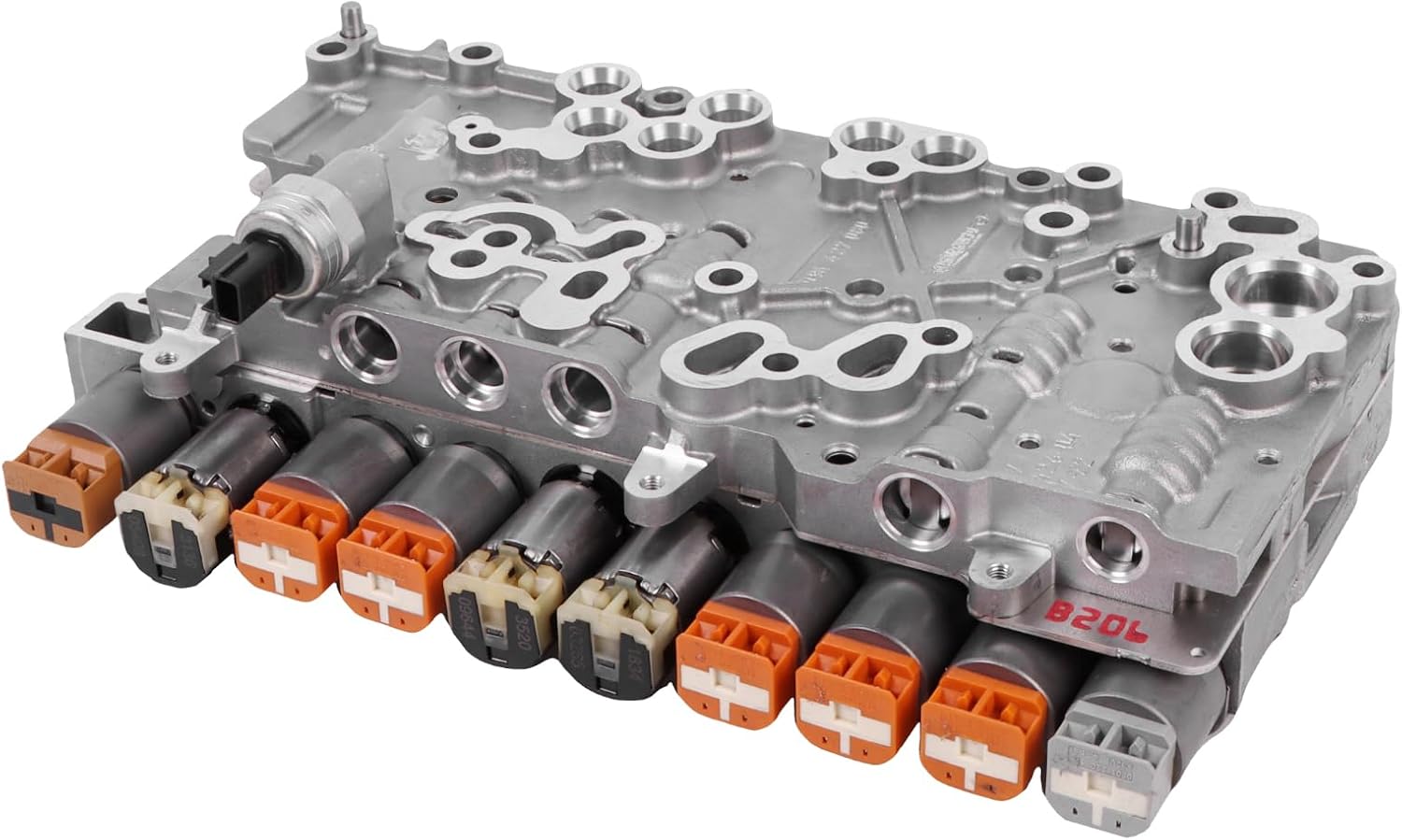
Sonnax backs its own diagnosis with a fix: the Shift Valve System Pressure Valve Kit, Sonnax part #85740-07K, built specifically for the 948TE, the Honda/Acura 9-speed, and the ZF9HP48 platform. If a bench teardown confirms SV-SP wear, that is the targeted repair rather than a full valve body swap in every case — though once wear has reached the point of burnt clutches, a remanufactured valve body with all the solenoids replaced is usually the more complete fix, which is why we stock it as a direct-fit unit rather than piecing individual components back together.
The Fluid Side: a Lifetime Fill That Was Not Designed Around Towing
Per ZF's own product data sheet for LifeguardFluid 9, the fluid developed specifically for the 8HP and 9HP family is described as a lifetime fill, yet ZF still lists a recommended change interval of 150,000 km despite that lifetime-fill design, under the TE-ML 11 approval this transmission requires. The data sheet does not publish a separate, shorter interval specifically for towing or severe duty.
That absence of a published severe-duty number is not the same as towing being easy on the fluid. Sustained high line pressure and more frequent clutch engagement under load are exactly the conditions that oxidize ATF and burn off its friction modifiers faster than normal commuting does, on any transmission. The practical call for a tow vehicle is to check fluid color and smell at every service interval rather than waiting for the full 150,000 km mark, and to use fluid that actually meets the ZF TE-ML 11 / Mopar ZF 8&9 Speed ATF specification rather than a generic “universal” ATF — ZF's own warning on substitute fluids is that they can cause shift deterioration up to outright transmission failure, which is not a risk worth taking on a vehicle that is already working harder than normal.
The Cooling Circuit: a Documented Factory Failure Point
Heat from towing has to go somewhere, and on part of this transmission family, the OEM design runs the ATF through a heat exchanger that shares a boundary with engine coolant rather than through an air-only cooler. That design has a documented failure mode. Per American Honda's own Service Bulletin 17-009, “Product Update: 2016 Pilot 9-Speed Transmission Warmer,” a manufacturing defect in that warmer allowed engine coolant and ATF to mix internally, with the risk of permanent engine and transmission damage, and the bulletin's repair procedure specifically branches based on whether the vehicle has a documented overheating history.
That is not a 948TE-specific bulletin, and it does not mean every vehicle in this family shares the identical warmer part. But it is a real, factory-documented example, inside this same transmission platform, of a coolant-to-ATF heat exchanger failing internally in a way that mixes two fluids that are never supposed to touch. For a tow vehicle already running the transmission hotter and longer than normal, that is a legitimate reason to route any added cooling capacity through an independent air-to-oil cooler rather than relying solely on a shared heat exchanger to do more work than it was sized for.
Adding or Upgrading an Auxiliary Cooler: What Actually Matters
If the vehicle already came with a factory trailer tow package, it likely already has a dedicated auxiliary transmission cooler, and the first move is simply confirming that cooler and its lines are not restricted, not adding a second one on top of it. If it did not come with that package, adding an aftermarket cooler is a reasonable upgrade, but this platform is not a drop-in candidate for just any cooler off the shelf.
Per Sonnax, “ZF transmissions specifically run very high line pressure through the lines and coolers” — notably higher than most other automatics. That means two things in practice: the cooler itself needs to be rated for that pressure and flow, not just picked for its BTU rating, and the fittings connecting it need to be rated for sustained high-pressure ATF rather than the push-connect fittings sold with many universal cooler kits. Plumb any added cooler in series as additional capacity, not as a replacement for the factory cooling path, and confirm fitment against the specific vehicle's cooler line routing before cutting into anything under the vehicle.
Watching It on the Scan Tool While Towing
The most useful real-time check on a tow run is simply watching transmission fluid temperature (TFT) on a scan tool or aftermarket gauge during a sustained grade, rather than waiting for a dash warning. A TFT that climbs steadily and does not level off on a long pull, or that spikes noticeably higher than it does on the same grade without a trailer, is the transmission telling you the cooling system is behind, before it forces the issue with a temperature-based limp mode or derate. If you have already seen that kind of derate behavior on this platform, the mechanism and triggers are covered in our separate 9HP48 limp mode guide.
9HP48 Valve Bodies, Fluid and Service Kits for Tow Vehicles
If sustained towing has already pushed shift quality past “a little harsher under load,” we stock a remanufactured 9HP48/948TE valve body with all solenoids installed, the correct ZF-spec full synthetic ATF, and the filter and pan gasket kit to do the service right before the next towing season.
Shop 9HP48 parts →FAQ
Does the 9HP48/948TE need an aftermarket cooler for towing?
If the vehicle already has the factory Trailer Tow package, it likely has an auxiliary transmission cooler from the factory. If it does not, adding one is worth doing, because towing keeps the torque converter clutch and line pressure working harder for longer than normal driving ever does. Per Sonnax's technical writeup on this transmission family, it also runs unusually high line pressure, so any added cooler and fittings need to be rated for that pressure, not just picked off a generic ATF cooler shelf.
What causes a 9HP48 or 948TE to overheat while towing?
Sustained load from towing keeps the torque converter clutch applying and the line-pressure control system working at the high end of its range, both of which generate heat that has to be shed through the cooling circuit. On some vehicles in this transmission family that circuit runs through a transmission-to-coolant heat exchanger, and American Honda's own service bulletin 17-009 documents a 2016 Pilot 9-speed warmer that developed an internal leak, let coolant and ATF mix, and left a documented overheating history behind as a symptom.
How often should I change the fluid in a 9HP48 if I tow regularly?
ZF's own product data sheet for LifeguardFluid 9 calls this a lifetime-fill design but still lists a recommended change interval of 150,000 km despite that. ZF does not publish a separate shorter number specifically for towing, but sustained high-load use is exactly the kind of severe-duty cycle that ages ATF faster than normal commuting, so checking fluid condition and color at every oil change and not waiting for the full interval if you tow often is the safer practical call.
What are the first symptoms that towing has worn the line-pressure valve?
Per Sonnax, wear at the SV-SP valve, the valve that regulates line pressure on this transmission, shows up first as poor line pressure control and poor shift quality, and if it is left alone it leads to burnt clutches. On a tow vehicle, watch for shifts that get harsher or more delayed specifically when loaded and towing, even if the transmission behaves normally when driven empty.
Can I just add any transmission cooler to a 9HP48?
No. Per Sonnax, ZF-based transmissions in this family run noticeably higher line pressure than most automatics, so a cooler, hose and fitting set rated for that pressure matters more here than on a typical rear-drive automatic. Plumb any added cooler in addition to, not in place of, the factory cooling path, and confirm the fittings are rated for sustained high-pressure ATF flow rather than a generic low-pressure cooler kit.
Sources
- Sonnax — “ZF9HP48, 948TE Line Pressure Control and Diagnostics,” Tech Resource #1048. Backs the all-gear torque converter lockup capability, the two-stage line pressure control design, the SV-SP valve's role taking EPC pressure from the system pressure solenoid to regulate the pressure regulator valve, the SV-SP wear progression (poor line pressure control, poor shift quality, burnt clutches), the Shift Valve System Pressure Valve Kit (part #85740-07K) fitting the 948TE/Honda-Acura 9-speed/ZF9HP48 platform, and the note that these transmissions run unusually high line pressure requiring pressure-rated coolers and fittings. sonnax.com/tech_resources/1048
- ZF Friedrichshafen AG — Product Data Sheet, ZF LifeguardFluid 9 (revision 19.07.2021). Backs the lifetime-fill design of this 8HP/9HP-specific fluid, the TE-ML 11 approval, the 150,000 km recommended change interval despite the lifetime-fill design, and the warning that substitute fluids can cause shift deterioration up to transmission failure. aftermarket.zf.com (PDF)
- American Honda Motor Co. — Service Bulletin 17-009, “Product Update: 2016 Pilot 9-Speed Transmission Warmer,” August 4, 2017. Backs the transmission warmer manufacturing defect that allowed engine coolant and ATF to mix, the resulting risk of permanent engine and transmission damage, and the branching repair procedure based on documented overheating history. static.nhtsa.gov (PDF)
- ATRA — Mike Souza, ATRA Senior Research Technician, “ZF9HP48/948TE Introduction” Technical Webinar. Backs the ZF-Germany vs. Chrysler-Kokomo build split for this transmission family and the six-clutch (A-F) architecture referenced when discussing clutch durability under sustained load. atracom.blob.core.windows.net — 948te_introduction.pdf
- ATRA — Gears Magazine, “Tales From the Bench,” April 2017 (“948TE: Checking Fluid Levels”). Backs the Mopar ZF 8 & 9 Speed ATF part number (68157995AB) and correct fluid identification for this platform. gearsmagazine.com