A Crown Victoria, Town Car or F-150 with an AODE that shakes like it is rolling over rumble strips at 40 mph, right after the 2-3 shift, is one of the most common complaints this unit brings in. Customers call it a bad transmission, a bad driveshaft or a misfire. Nine times out of ten it is the converter clutch trying to apply and not holding smoothly. The question is why, and a new converter is the most expensive way to find out you guessed wrong.
This guide follows Ford's own AODE routine for "Torque Converter Operation Concerns: Cycling/Shudder/Chatter" from the 1994 Mustang Workshop Manual, Section 07-01, the codes and pinpoint test that go with it, and what Sonnax has documented about the Ford bypass converter circuit and the valve body wear that causes most of these. Every spec is listed under Sources.
Why the AODE converter circuit is different
Most lockup converters use two oil circuits: oil goes in one way to release the clutch and the flow reverses to apply it. The AODE does not. Sonnax explains that the AODE/4R70W family, along with the CD4E, AXOD-E and AX4N, uses a three-circuit bypass converter [4]:
- CI (converter impeller) feeds oil into the rear of the converter.
- CT (converter turbine) carries it out. Flow in CI and CT never changes direction.
- CBY (converter bypass) feeds oil between the front cover and the lockup piston to hold the clutch off.
To apply the clutch, the PCM pulses the TCC solenoid, which moves the bypass clutch control valve and reduces CBY pressure. Converter pressure behind the piston then pushes it into the cover. Because CBY can be varied, lockup has three stages: full release, controlled modulated apply and full apply [4]. That modulated middle stage is where shudder lives. If apply pressure is low, or the bypass valve cannot meter CBY steadily, the clutch slips and grabs instead of sliding smoothly to full apply.
Sonnax spells out the failure modes: low CT pressure equals low apply pressure and causes TCC slip; wear at the bypass sleeve and plunger, bypass valve and converter regulator valves lowers apply pressure and limits control of CBY oil; and pump wear or a worn pressure regulator bore starves converter charge [4]. High converter pressure from a stuck regulator can also crack a lockup piston and set a slip code [4].
Step 1: Prove it is the converter and not the engine
A lean miss or a weak coil at light load feels almost identical. Sonnax's rule is to eliminate engine performance before diagnosing shudder, especially if there are no slip codes. On these EEC-IV cars a vacuum gauge still works: a converter clutch shudder does not disturb manifold vacuum, but an engine problem does. A steady needle during the shudder means it is converter related [5].
Then use the lockup itself as a switch. The AODE computer releases the converter clutch when the brake is applied; Ford's code chart notes that a brake on/off (BOO) switch failed off means the converter clutch will not disengage when the brake is applied [3]. Hold steady throttle in the shudder zone and touch the brake pedal just enough to light the brake lamps. If the shudder stops the instant lockup releases and rpm rises, you have confirmed the complaint is in the converter clutch circuit.
Also ask the questions Sonnax recommends: does it shudder on tip-in, on a grade or only at steady cruise, and was anything done to the vehicle just before it started [5]? A shudder that began after a fluid service with the wrong fluid is a different job from one that crept in over 150,000 miles.
Step 2: Pull codes and read what they mean
Ford's Pinpoint Test C covers the converter clutch codes on the AODE [3]:
| Code | Ford definition | What it points to |
|---|---|---|
| 628 / P0741 | TCC engagement error: excessive slippage detected during normal operation | Slipping or erratic converter clutch; Ford refers you to Diagnosis by Symptom |
| 656 / P1741 | Excessive converter clutch engagement error: excessive variation in slip, engine rpm oscillation in 3rd gear | The code most often stored with a shudder complaint |
| 652 / P0743 | TCC solenoid circuit failure during self-test | Open circuit: clutch never engages. Short: engine stalls in 2nd at low idle with the brake applied |
| P1742 / P1743 | TCC solenoid failure | Solenoid failed on by an electrical, mechanical or hydraulic concern |
Do not skip the engine-side codes. Ford's chart lists TP sensor faults (P0122, P0123, P1120, P1121, P1125) as causing "torque converter clutch cycling," and MAF faults as causing incorrect converter clutch scheduling [3]. A TP sensor with a dead spot at cruise throttle will cycle lockup on and off, and the customer will call that a shudder. An engine coolant temperature sensor reading full hot or full cold keeps the clutch off entirely [3].
Step 3: Check the TCC solenoid and its circuit
Pinpoint Test C is written to test the TCC solenoid electrical system only, and Ford warns that engine performance, the BOO switch, harnesses and internal transmission parts can all cause the same symptoms [3]. Still, it is quick and it rules the electrical side in or out:
- Resistance. With the Rotunda transmission tester (007-00085) on the case connector, Ford specifies 1.0 to 3.0 ohms for the TCC solenoid, measured from the VPWR jack to the solenoid jack. Shift solenoids read 20-30 ohms and the EPC solenoid 2.48-5.66 ohms, so a TCC reading in the shift solenoid range means you are on the wrong pin [2].
- Signal. In Output State test mode, with a meter between VPWR and the solenoid circuit at the vehicle harness, pressing and releasing the throttle should change the solenoid output by at least 0.5 volt [3].
- Harness. With the breakout box installed, the signal circuit (PCM pin 53 on the 5.0L, pin 82 on the 3.8L) should read under 5 ohms end to end and over 10,000 ohms to power and ground [3].
- Function. Ford's tester routine has you drive in 3rd at steady speed and press the MCCC switch: the converter should engage and engine rpm should drop. Ford's caution: never press the MCCC switch in gear at a stop, or you can damage the converter clutch [2].
Ford's hydraulic routine adds a practical check: activate the solenoid with the tester and put your hand on it. If you cannot feel it operate, replace it, and inspect its O-rings [1]. A solenoid that clicks but leaks past a torn O-ring still cannot hold CBY pressure steady.
Step 4: Ford's hydraulic list, in order
If the electrical side passes, Ford's Hydraulic/Mechanical Routine 342 for cycling, shudder and chatter lists the causes in this order [1]:
| Area | What Ford lists |
|---|---|
| Fluid condition | If burnt, drain the fluid and the converter, replace fluid and filter, bring to temperature, run the drive cycle and self-test again before going further |
| Main controls | Solenoid pressure regulator valve, No. 7 check ball, bypass clutch control valve and plunger, converter pressure limit valve; bolt torque; blocked solenoid screen; TCC solenoid; gaskets |
| Pump assembly | Bolt torque, porosity or cross leaks, check balls missing or leaking, gaskets |
| Input shaft | Damaged seals |
| Torque converter | Excessive end clearance |
Notice where the converter sits: last. Ford's companion electrical routine 242 covers the PCM, harness, TCC solenoid and OSS with Pinpoint Tests C and F [1]. Clean fluid, a solenoid that tests good and a code 656 is almost always a pressure or valve body problem.
Fluid first, and drain the converter
Ford's first instruction for burnt fluid is to drain the converter too, not just drop the pan [1]. Glazed friction debris left in the converter keeps chattering the new fluid. Sonnax also puts verifying the correct ATF near the top of any shudder diagnosis [5]. The AODE was built for MERCON; use a Ford-approved MERCON V fill, not a universal fluid, on a unit that already shudders. Our fluid spec chart lists the correct spec by unit.
Measure pressure and flow at the same time
Sonnax's shudder flow chart uses a line pressure gauge and a cooler flow meter together [5]:
- Cooler flow normal, pressure low during the shudder: insufficient clamping force. The problem is most likely outside the converter: check inputs such as TP that command pressure, then pump and valve body bore wear.
- Pressure normal, cooler flow low: a restriction. Loop the cooler lines. If the shudder goes away, the restriction is in the cooler or lines.
- Still shudders with the cooler looped: the restriction is before the lockup piston, inside or outside the converter.
Sonnax also notes the release oil must evacuate quickly for a clean apply; a restricted exhaust passage has the same effect as weak apply pressure [5].
The fix for each cause
Worn bypass clutch control plunger and sleeve. This is the most common valve body cause. Sonnax states it is common for AODE, 4R70E, 4R70W, 4R75E and 4R75W units to have TCC shudder, delayed lockup, no lockup or converter codes, and that it can often be traced to wear at the bypass clutch control plunger valve and sleeve [6]. Two drop-in fixes exist. The 76948-04K kit uses a single .030 in. sleeve orifice and gives a firmer, quicker lockup, which Sonnax recommends for earlier units where that feel is wanted. The 76948-64K kit uses four .063 in. orifices to match OE apply timing, which matters more on '96-later calibrations where a harsh apply can lug the engine [6]. For a '92-'95 AODE, the 04K is the usual choice.
Converter pressure limit valve and solenoid pressure regulator. Both are on Ford's list [1]. Vacuum-test the bores while the valve body is apart; a worn limit valve bore lowers converter pressure, and Sonnax ties low CT pressure directly to TCC slip [4]. Sonnax's AODE/4R70W converter limit valve listing spells out the wear: excess clearance at the inboard spool bleeds off converter pressure, giving shudder, TCC slip and an overheated converter, while debris at the outboard spool can bind the valve in either a high or low pressure position [7]. Stuck high is its own problem: Sonnax lists excess converter pressure and a damaged converter for that condition [7], so a converter that shows signs of ballooning is a reason to inspect this valve before the new converter goes in.
Pump and input shaft seals. Cross leaks, porosity or missing check balls in the pump, or damaged input shaft seals, bleed off converter feed [1]. Low pump volume also makes the pressure regulator restrict converter charge oil [4]. Those are overhaul items.
The converter itself. Replace it when the clutch lining is glazed or contaminated, when end clearance is out of spec [1], or when shudder remains after the valve body and pressures are correct. Sonnax's rule: if a new converter cures it, the problem was inside the old one; if it does not, look at the release/exhaust passage through the turbine shaft, pump, case and valve body [5].
Shop the part for this fix: Sonnax bypass clutch control plunger valve kit 76948-04K
The drop-in repair for the worn plunger and sleeve behind most AODE lockup shudder and 656/P1741 codes, with the firmer lockup feel Sonnax recommends for early units. CoreTransmissionParts stocks it for the AODE/4R70W family.
View the 76948-04K kit at CoreTransmissionPartsOr browse the full AODE/4R70W parts collection, including TCC solenoids, converter limit valve kits and pumps.
Keeping the converter clutch healthy
- Change fluid and filter before the fluid darkens, and drain the converter when you do it on a unit with lockup complaints.
- Fix TP, MAF and misfire faults promptly. The PCM schedules lockup and line pressure from those inputs, and bad data cycles the clutch [3].
- Treat an early, mild shudder as a valve body wear warning. Caught early it is a plunger kit and a fluid service; ignored, the slipping clutch glazes and the converter has to come out.
- On any rebuild, vacuum-test the bypass clutch control and converter limit bores. A fresh converter behind a worn bypass valve shudders again.
Need parts for this job?
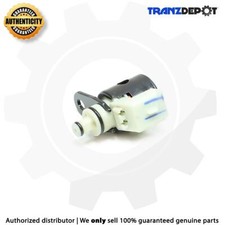
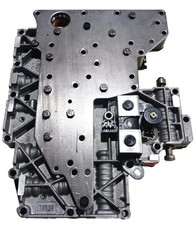
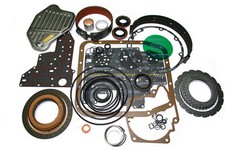
Our AODE parts page carries TCC solenoids, valve bodies, pumps and master rebuild kits for 1992-up AODE units, all on our own checkout. Buy to the test result: the solenoid when it fails the 1.0-3.0 ohm or function test, a valve body when the bypass and limit valve bores are worn, and a rebuild kit when the pump, seals or clutches are involved.
FAQ
Why does my AODE shudder at 35 to 45 mph?
That speed range is where the AODE computer usually applies the converter clutch in 3rd with light throttle. If the clutch cannot clamp smoothly, it slips and grabs, which feels like driving over rumble strips. Ford's routine for this complaint puts fluid condition first, then the bypass clutch control valve and plunger, converter pressure limit valve, No. 7 check ball, pump cross leaks and input shaft seals, and only then the converter itself.
What does code 656 or P1741 mean on an AODE?
Ford defines 656/P1741 as excessive converter clutch engagement error: too much variation in slip across the converter clutch, felt as engine rpm oscillation in 3rd gear. It is a functional code, not a wiring code. The converter clutch is being commanded but is not holding steady, which points at apply pressure, valve body wear, fluid or the converter clutch lining.
How do I test the AODE TCC solenoid?
Ford specifies 1.0 to 3.0 ohms across the TCC solenoid, measured from the VPWR jack to the solenoid jack on the transmission tester. On the car, the PCM signal should change the solenoid circuit voltage by at least 0.5 volt when you cycle it in Output State test mode. Harness circuits back to the PCM should read under 5 ohms and more than 10,000 ohms to power or ground.
Is AODE shudder always a bad torque converter?
No. Sonnax notes that AODE and 4R70W shudder, delayed lockup and converter codes are often caused by wear at the bypass clutch control plunger valve and sleeve in the valve body. Low converter pressure from pump or valve body wear also produces TCC slip. Replace the converter only after the fluid, pressures, solenoid and valve body check out.
Can an engine miss feel like converter shudder?
Yes, and it is worth ruling out first. Sonnax's method is to watch a vacuum gauge, or fuel trims and oxygen sensor data on later vehicles, while the shudder happens. A true converter clutch shudder does not disturb engine vacuum or fuel control, while a misfire or lean condition does.
Related guides
Sources
- Ford Motor Company, 1994 Mustang Workshop Manual, Section 07-01 (AODE), Diagnosis by Symptom. Backs Electrical Routine 242 and Hydraulic/Mechanical Routine 342 "Torque Converter Operation Concerns: Cycling/Shudder/Chatter" (drain converter if fluid is burnt; solenoid pressure regulator valve, No. 7 check ball, bypass clutch control valve and plunger, converter pressure limit valve, solenoid screen, TCC solenoid hand-feel check and O-rings; pump cross leaks; input shaft seals; converter end clearance). SRB71019
- Ford Motor Company, 1994 Mustang Workshop Manual, Section 07-01, Transmission Tester. Backs the TCC solenoid spec of 1.0-3.0 ohms (shift solenoids 20-30, EPC 2.48-5.66), the MCCC overlay labeling, the 3rd-gear converter engagement road test and the caution against pressing the MCCC switch in gear at a stop. SRB71024
- Ford Motor Company, 1994 Mustang Workshop Manual, Section 07-01, Diagnostic Trouble Codes and Pinpoint Test C. Backs codes 628/P0741, 652/P0743, 656/P1741 (rpm oscillation in 3rd), P1742/P1743, the BOO, TP, MAF and ECT effects on converter clutch operation, the 0.5 V signal change test, PCM pins 53 (5.0L) and 82 (3.8L), and the under-5-ohm and over-10,000-ohm harness checks. SRB71026
- Sonnax, Ford Bypass Converter Clutch Circuits (Gregg Nader). Backs the three-circuit CI/CT/CBY design used in the AODE/4R70W, the three lockup stages, and low CT pressure, bypass sleeve/plunger and converter regulator wear, pump volume and cracked-piston causes of TCC slip. sonnax.com
- Sonnax, Troubleshooting Lockup Issues (Ed Lee). Backs ruling out engine performance with a vacuum gauge or fuel/O2 data, verifying the correct ATF, the pressure-plus-cooler-flow shudder method, looping the cooler lines, and the restricted release/exhaust passage. sonnax.com
- Sonnax, AODE, 4R70W Series Bypass Clutch Control Valve Repair Options: When to Use 76948-04K vs. 76948-64K (Tory Royce). Backs plunger valve and sleeve wear as a common cause of AODE-family TCC shudder, delayed or no lockup and converter codes, and the .030 in. single-orifice vs four .063 in. orifice lockup feel difference. sonnax.com
- Sonnax, Converter Limit Valve Kit 76948-56K (AODE, 4R70W, 4R70E, 4R75W, 4R75E). Backs inboard spool wear causing converter pressure loss with shudder, TCC slip, low converter pressure and an overheated converter, and outboard spool debris binding that can stick the valve high (excess converter pressure, damaged converter) or low. sonnax.com/parts/5077