A C6 that drips fluid almost always gets the same first fix: a new pan gasket. Sometimes that's right. Just as often, the pan was never the real problem, and the gasket job buys you a few weeks before the same puddle shows back up. This transmission has four or five genuinely common leak points, and three of them have a documented cause that a gasket alone does not touch — a warped pan flange, a worn pump bushing, and a rear bushing that wears out ahead of schedule. Knowing which one you've actually got saves a repeat trip under the car.
This guide walks through where a C6 leaks, in roughly the order you should check, with the actual failure mechanism behind each one and what fixes it for good. If your C6 is already past due for service, our C6 filter and pan service guide covers the full procedure once you've identified the leak.
The pan: why it keeps coming back
Sonnax's own product notes for its C6 oil pan get straight to the point: Ford C6 vehicles often have oil pan leaks because the original pan is thin-gauge stamped steel, and bolts tightened past a light, even torque warp the flange right at the bolt holes. Once that flange is bent, the gasket has nothing flat to seal against, and no amount of re-torquing fixes it — you're just squeezing a bent piece of sheet metal against a gasket that can't make up the difference. That's why the same leak can survive two or three gasket replacements in a row.
Reliable factory torque figures for the C6 pan bolts are surprisingly hard to pin down in print; what's consistent across rebuilders and Sonnax's own repair guidance is the method, not a single magic number: tighten in a crisscross pattern, go a little at a time, and stop as soon as the ooze stops rather than chasing the leak with more torque. Before you reinstall any pan, lay a straightedge across the flange. If it rocks or shows daylight at a corner, replace the pan instead of fighting it with a thicker gasket or sealant, since sealant in the pan can clog the pickup screen just as easily as it can plug a leak.
Sonnax sells a thicker aftermarket pan (36950-01, about 25% heavier gauge than stock) built specifically to tolerate firmer, even bolting without warping, and it fits the '75-and-later filter style. If you're on an early tapered '66-'74 pan, swapping to this style means updating the filter at the same time.
Front pump seal: the seal is the symptom, the bushing is the cause
A wet bellhousing points to the front pump seal more often than anything else, but replacing just the seal is how this leak comes back in a matter of weeks. The pump bushing supports the converter hub right behind the seal, and once it wears, develops a burr, or gets pressed in backward, the hub has enough play to tear up a brand-new seal almost immediately. Rebuilders who've chased this leak repeatedly land on the same rule: whenever the front seal comes out, the bushing comes out with it, not just when it looks obviously worn. Sonnax lists a leaking front seal, pump noise and excess converter hub-to-bushing clearance among the problems its C6 front pump bushing (36002-01) is built to cure, and points out that the original bushing is machined in place while many drop-in replacements are too thin, which leaves the hub loose from day one; theirs is finished in place with .008" to .010" of material removal to set clearance (Sonnax 36002-01).
Two installation details matter here. First, orientation — the bushing's drain notch has to line up with the case's drain-back hole, or fluid gets routed straight at the new seal instead of back into the sump, which can turn a simple reseal into a worse leak than you started with. Press it in, do not drive it: Sonnax's Brian Wing recommends an arbor press and dedicated installers because shock loads from a hammer and driver deform bushings (Sonnax, Bushwhacked). Second, don't skip inspecting the converter hub itself; a grooved or scored hub will cut up a new seal just as fast as a bad bushing will, so polish or replace a visibly worn hub rather than hoping a fresh seal outruns the damage.
The rear bushing nobody checks until the seal fails twice
The extension housing seal at the back of the case is a common leak point in its own right, and most of the time it gets blamed entirely on the seal. What often doesn't get checked is the rear case bushing the output shaft rides in just ahead of it. Sonnax's part listing for its one-piece rear case bushing describes the original factory bushing's failure mode plainly: premature wear and bushing failure from inadequate lubrication and excessive journal clearance. Sonnax's fix replaces the factory two-piece bushing arrangement with a single bushing that has more bearing surface and better lubrication, using part 36008B on 1989-1994 units (early style, three grooves facing front, none facing back) and 36008D on 1995-and-later units.
Sonnax's own page doesn't frame this as a leak fix — it's billed as a wear and support upgrade. But the mechanical connection to a leak is straightforward: a loose, worn bushing lets the output shaft move more than it should inside the housing, and that extra play accelerates wear on whatever seal rides against the shaft right next to it. If you've already replaced the extension housing seal once and it's leaking again in under a year, check shaft play at the bushing before you blame the seal a second time. Installing the new one-piece bushing requires Sonnax's T36008A installation tool, and on some C6 housings there's a ridge of unmachined material between the two original bushing bores that has to be honed flat first.
The spots people miss: dipstick tube, speedometer seal, case plugs
Not every C6 leak is a major teardown. The fluid filler (dipstick) tube uses an O-ring where it seats into the case, and a cracked or shrunk O-ring here is a common, cheap leak that gets mistaken for a pan leak constantly, because fluid running down the tube lands right at the top of the pan rail. Owners researching this exact symptom on Ford-specific forums report replacing a pan gasket more than once before finding the real leak at the dipstick tube O-ring instead — which matches what rebuilders see on the bench. Pull the tube, replace the O-ring, lightly lubricate it with ATF before reinstalling, and don't use sealant on it; a tube that's hard to pull after decades in place needs patience and penetrating oil, not force.
Two more worth a look before you assume anything bigger: the speedometer cable seal where the cable enters the case, and the manual lever shaft seal where the shift linkage passes through. Both are simple, inexpensive seal swaps, and both get overlooked because they're small and tucked out of the way compared to the pan and bellhousing.
Before you commit to any of the above, rule out fluid that isn't actually coming from the transmission at all. Engine oil from a leaking rear main seal or a valve cover, or power steering fluid blown back from the front of the engine, can both run down onto the bellhousing and converter housing and look exactly like a transmission leak from underneath the car. Clean everything off, run the engine, and recheck before you pull a pan or a pump.
What fluid actually goes back in
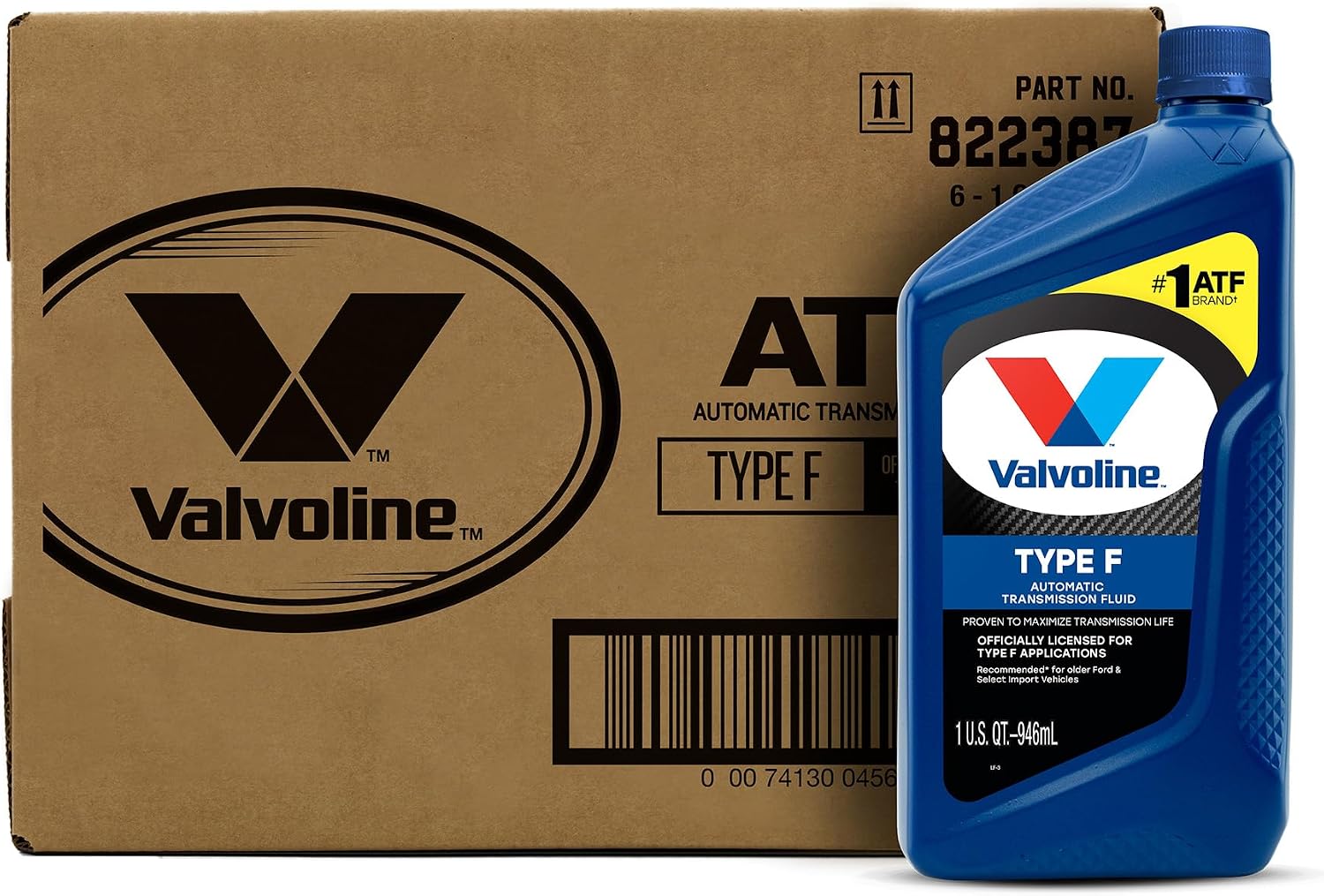
Motorcraft's own Type F product page lists the specification as ESW-M2C33-F (part number XT-1-Q1F), and describes it as developed for Ford automatic transmissions built in the 1970s and earlier, with continued use on many 1977-1980 models. That covers most C6 applications. Type F is not a friction-modified fluid the way Mercon and Dexron are — it's built for firm, high-static-friction engagement, which is exactly what the C6's bands and clutches were calibrated around. Motorcraft's page is explicit that it should not go into transmissions requiring Mercon ULV, Mercon SP, Mercon LV, Mercon V, or similar later-generation fluids.
If your C6 was rebuilt at some point, check what the rebuilder actually put in it before you blindly refill with Type F; some rebuilds are set up to run Dexron/Mercon instead, and mixing philosophies here isn't a leak issue, but it is a shift-quality one. When in doubt, check the dipstick or the data plate for the original call-out, and match whatever is already in the pan unless you know the internals have been changed.
Shop the part for this fix: C6 oil pan at CoreTransmissionParts
If a straightedge check confirms your stock pan is warped, this is the direct replacement — built to the same bolt pattern, sized for a flat, repeatable seal instead of fighting a bent flange forever.
View the C6 transmission oil panNeed parts for this job?
Our parts shop carries the correct Type F fluid for a refill after any of these repairs, on our own checkout.
FAQ
Where does a Ford C6 leak from most often?
The thin stock oil pan flange is the single most common C6 leak point, per Sonnax's own repair notes, because overtightened bolts warp the flange and ruin the gasket seal. After the pan, the dipstick/filler tube O-ring, the front pump seal, and the extension housing seal at the rear of the case are the next most common spots. A puddle under the bellhousing can also be engine oil or power steering fluid running back onto the case, so wipe everything down and recheck before you assume it is the transmission.
Why does a C6 oil pan keep leaking after a new gasket?
Sonnax's product notes for the C6 oil pan explain that the factory pan is thin-gauge stamped steel, and bolts tightened past a light, even torque warp the flange at the bolt holes rather than compressing the gasket evenly. Once the flange is bent, no gasket will seal it, new or not. The fix is to tighten in a crisscross pattern just enough to stop ooze, check for flatness with a straightedge, and replace a visibly warped pan rather than keep re-torquing it.
What causes a C6 front pump seal to leak?
On most C6 leaks at the bellhousing, the seal itself is the symptom and a worn pump bushing is the cause. The bushing supports the converter hub, and once it wears, develops burrs, or gets installed backward, it lets the hub move enough to tear up the new seal almost immediately. That is why a front pump reseal job should always include a new bushing, not just a new seal, and why the orientation of the bushing's drain notch matters on reassembly.
Does the C6 rear bushing cause a leak too?
Sonnax sells a one-piece replacement rear case bushing (36008B for 1989-1994 units, 36008D for 1995-and-later) specifically because the original two-piece rear bushing wears out early from inadequate lubrication and excessive clearance. Sonnax's own part listing does not call this a leak point directly, but a worn, loose rear bushing lets the output shaft move more than it should, which accelerates wear on the extension housing seal riding against it and can turn a dry rear housing into a wet one.
What fluid goes back in a C6 after a leak repair?
Motorcraft's own Type F product page lists the specification as ESW-M2C33-F, developed for Ford automatic transmissions built in the 1970s and earlier and recommended for the C6 where the dipstick or owner's manual calls it out. Type F is not interchangeable with Mercon or Dexron fluids; Motorcraft's page specifically says not to use it in transmissions that require Mercon ULV, Mercon SP, Mercon LV, Mercon V or similar newer fluids. If your C6 was rebuilt by a shop that specified Mercon instead, follow what the rebuilder used, not the original factory call-out.
Related guides
- C6 Filter and Pan Service
- C6 Fluid Type and Capacity
- C6 Flush vs. Drain and Fill
- C6 Overheating: Causes and Prevention
- C6 Rebuild Cost
Sources
- Motorcraft (Ford Customer Service Division), Type F Automatic Transmission Fluid and Power Steering Fluids product page (via Ford Customer Service Division Chemicals & Lubricants catalog). Backs the ESW-M2C33-F specification, part number XT-1-Q1F, the 1970s-and-earlier application window, and the warning against use in Mercon/Dexron-spec transmissions. fcsdchemicalsandlubricants.com
- Sonnax, C6 Oil Pan (36950-01) product page. Backs the thin-pan/flange-warping leak mechanism, the thicker-gauge fix, and the '75-and-later filter fitment note. sonnax.com
- Sonnax, C6/E4OD Rear Case Bushing (36008B/36008D) product page. Backs the factory two-piece rear bushing's wear mechanism (inadequate lubrication, excessive journal clearance), the one-piece replacement design, the model-year split between 36008B and 36008D, and the T36008A installation tool requirement. sonnax.com
- Sonnax, Pump Bushing 36002-01 product page (C6 and other Ford RWD units). Backs the leaking front seal, pump noise, excess converter hub-to-bushing clearance and low pump volume symptoms, the machined-in-place OE bushing, thin drop-in replacements, and the .008"-.010" finish allowance. sonnax.com
- Sonnax, Brian Wing, "Bushwhacked! Keys to Avoiding Preventable Bushing Problems" (January 2020). Backs pressing bushings with an arbor press and dedicated installers rather than driving them, because shock loads deform bushings. sonnax.com
- Ford-Trucks.com owner forum, "C6 Identification and Fluid Type" discussion thread. Cited as a real-world data point for owners misdiagnosing a dipstick tube O-ring leak as a pan leak and for Type F vs. Mercon/Dexron application confusion on later C6 units; not counted as an authoritative source. ford-trucks.com