A noise complaint on a C6 is harder to chase than a shift complaint, because there is no code, no modulator reading, and no governor pressure gauge that tells you "bearing." All you have is your ears, and the C6 gives you two very different families of noise that get lumped together by customers using the same word: "it's making a noise." Sorting a continuous whine from a sharp clunk is the first branch in the diagnosis, because they point at almost completely different parts of the drivetrain.
This guide splits the two apart, lists what Sonnax's own C6 symptom data and parts catalog tie to each one, and gives you the checks that confirm which side of the fork you are on before you pull a pan or a transmission.
Whine vs. clunk: the first fork in the diagnosis
These are not two flavors of the same problem. A whine is a rotating-component noise: something is spinning at a speed proportional to engine rpm or output shaft speed, and a surface that should roll smoothly is instead dragging, cavitating or rattling in a worn bore. A clunk is a slack-and-impact noise: a loose coupling takes up backlash and then slams into the next part in line, once per event, not continuously.
| Trait | Whine | Clunk |
|---|---|---|
| Character | Continuous tone, pitch tracks rpm | Single sharp impact, not continuous |
| Trigger | Present while running, often worse under load or at speed | Shift into gear, takeoff from a stop, sudden throttle change, 3-1 coastdown |
| Likely source | Pump, converter hub bushing, output-shaft bearing | Driveshaft U-joints, slip yoke splines, output shaft bushing, band/servo apply |
| Changes with steering? | Sometimes (rules in/out power steering pump) | No |
| Changes in Park/Neutral? | Pump whine persists; bearing/converter noise may drop | Usually silent until a gear or direction change loads the driveline |
Diagnosing a whine
Sonnax's own C6 unit data lists "Pump noise," "Bearing noise," "Low pump volume" and "Excess converter hub-to-bushing clearance" as filed symptoms against specific C6 parts, which confirms these are documented, recurring failure points rather than guesswork [1].
Pump bushing and converter hub clearance
Sonnax's C6 pump bushing (36002-01) is sold specifically against "pump noise" and "excess converter hub-to-bushing clearance." The stated cause isn't wear from mileage alone: Sonnax notes the OE bushing is machined in place to fit each individual pump housing, while a generic drop-in replacement bushing is often not thick enough to hold that same tight tolerance, leaving the converter hub loose inside the bushing [2]. That looseness lets the hub wobble at speed, which reads as a whine that climbs with rpm. The bushing is a finish-in-place part: a machinist bores it to the correct 0.008-0.010 in. hub clearance after installation rather than trusting it straight out of the box [2].
Bearing noise from the gear train
If the whine changes pitch with output shaft speed rather than engine speed, suspect a bearing instead of the pump. Sonnax lists its rear sun gear bearing and race assembly (96423) against "bearing noise" specifically for the C6, E4OD, AX4S, AX4N, AXODE and AXOD family, an enclosed hardened-steel bearing with a 2.800 in. outer diameter and 1.850 in. bore [3]. A failing bearing here tends to produce a steadier, higher-pitched whine than pump cavitation, and it will not go away with a fluid top-off.
Cavitation from low or wrong fluid
Before chasing a part, check the simplest cause. A starved pump pulls air in with the fluid, a condition called cavitation, and it sounds like a whine that worsens as rpm increases. Check the level hot on the dipstick with the engine running. While you're there, confirm the fluid itself: Ford's current replacement for the original MERCON fluid in post-1977 C6 units is MERCON V, licensed and dyed red for leak detection, and it is not interchangeable with MERCON SP, MERCON LV, MERCON ULV or Type F fluid [6]. A low-mileage C6 topped off with the wrong fluid type can show marginal pump performance that a correct refill alone will quiet down.
Rule out the power steering pump first
Before you condemn the transmission, rule out the one component that fools more people than any other: the power steering pump. With the engine running, the vehicle stationary and the transmission in gear with the brake held, turn the steering wheel fully to both lock positions. If the whine's pitch or volume changes with steering effort, the noise is coming from the power steering pump, not the transmission, no matter how closely it seems to track engine rpm.
Diagnosing a clunk
A clunk is almost always backlash finding a stop. The question is which coupling has the slack: the driveline ahead of the transmission, the output shaft inside it, or a band/servo taking up clearance on a shift.
Driveshaft U-joints and slip yoke splines
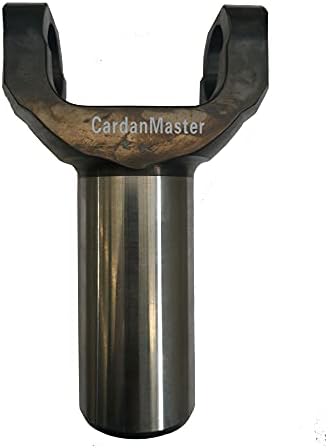
This is the single most common clunk source on an older truck or car running a C6, and it costs nothing to check. Grab the driveshaft by hand with the vehicle safely supported and try to twist it independent of the pinion and the transmission output shaft; any play is a worn U-joint. Dry or worn slip yoke splines produce the same symptom under power: the yoke rattles in the output shaft spline before torque transfers cleanly, giving a clunk on takeoff and on sudden throttle changes. A worn 31-spline yoke should be replaced, not just greased, once the spline teeth show visible wear.
Output shaft rear case bushing wear
If the driveline itself checks out tight, look inside the case. Sonnax documents that the OE rear case bushings in C6 and E4OD transmissions "tend to wear out prematurely" from insufficient lubrication, excessive journal clearance, or too much load for the bearing area, and the resulting symptoms are listed as premature wear, bushing failure and inadequate lubrication [4]. A worn rear case bushing lets the output shaft move radially instead of staying centered, and that slop produces a clunk under load reversal that feels exactly like a driveline problem from inside the cab. Sonnax's fix is a one-piece replacement bushing (36008B for '89-'94 units, 36008D for later), installed with their T36008A tool, which replaces the OE two-bushing design with more bearing surface area and better lubrication [4].
Reverse shudder and buzz under load
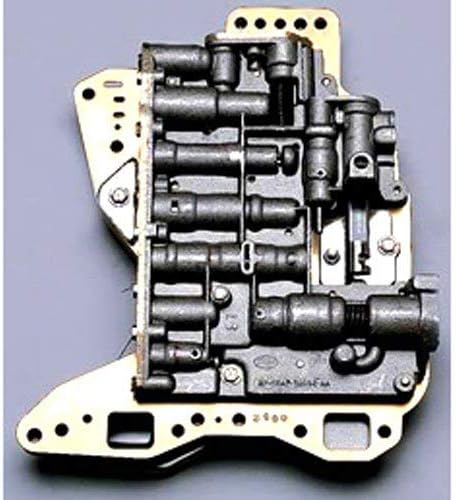
Not every noise under load is a clean whine or a single clunk; some are a buzz or shudder that repeats with torque, not rpm. Sonnax ties this directly to boost sleeve wear inside the valve body: a worn boost sleeve lets oil leak past the boost valve to exhaust instead of building line pressure, and the documented symptoms are poor line rise, erratic shift timing, reverse shudder and direct clutch failure [5]. This is a shift-quality problem that announces itself as noise before it announces itself as a soft shift, so don't rule it out just because the complaint was "noise, not slipping."
A bench-ready sequence to narrow it down
- Compare Park, Neutral and Drive. A whine that persists in Park/Neutral at idle points at the pump or converter; one that only shows in gear under load points more at a bearing or boost valve issue.
- Do the steering wheel test. Rules the power steering pump in or out in under a minute.
- Check fluid level hot, and confirm fluid type. Low or wrong fluid is the cheapest fix if it applies.
- Inspect the driveline by hand. U-joint play and dry slip yoke splines are visible and free to check before anything else.
- Pressure test if the noise tracks load. A buzz or shudder that follows throttle position, not rpm, belongs in the valve body, not the pump or bearings.
- Pull the pan and check the rear bushing clearance if the clunk survives the driveline inspection. Excess play at the output shaft confirms bushing wear.
Shop the part for this fix: C6 pump
Pump whine confirmed and the bushing fix isn't enough? CoreTransmissionParts stocks a complete OEM-spec C6 pump assembly, 1966-1996.
View the C6 pump at CoreTransmissionPartsNeed parts for this job?
Our parts shop carries the C6 slip yoke, valve bodies and the correct ATF for the refill, all on our own checkout. For every Ford fluid spec side by side, see our transmission fluid spec chart.
FAQ
What is the difference between a transmission whine and a clunk on a Ford C6?
Whine is a continuous tone that tracks engine or output shaft speed and usually points to the pump, converter hub bushing or a worn bearing. Clunk is a single, sharp mechanical impact tied to a shift, a direction change, or taking up slack after coasting, and it usually points to the driveline, output shaft bushing or a band/servo engagement, not a spinning component.
Can low or wrong fluid cause a C6 to whine?
Yes. A starved front pump pulls air along with fluid, a condition called cavitation, and that shows up as a whine that gets worse as rpm climbs. Check the level hot on the dipstick and confirm the fluid is the correct Ford-licensed MERCON V for a post-1977 C6, since using Type F era fluid or a badly degraded fill can mask or worsen pump noise.
What usually causes a clunk when a C6-equipped truck takes off from a stop?
The most common non-transmission cause is worn U-joints or dry slip yoke splines on the driveshaft, which take up slack with a clunk before power transfers smoothly. On the transmission side, a worn output shaft rear case bushing lets the shaft move radially under load reversal, which produces the same kind of clunk and is a documented premature-wear point on C6 and E4OD cases.
Does a C6 whine always mean the pump is failing?
No. A failing power steering pump can sound almost identical from inside the cab, especially at idle or low speed. Turn the steering wheel fully both directions with the engine running and the vehicle in gear and stationary; if the pitch changes with steering effort, the noise is the power steering pump, not the transmission.
Is reverse shudder related to a C6 noise complaint?
It can show up alongside a whine or buzz under load. Sonnax documents reverse shudder and direct clutch failure as symptoms of boost sleeve wear inside the C6 valve body, which lets line pressure fall right when the clutches need it most, producing a buzzing or shuddering noise that is easy to confuse with a bearing or pump complaint.
Related guides
Sources
- Sonnax, Ford C6 unit page. Backs the filed C6 symptom list referenced throughout this article: pump noise, bearing noise, low pump volume and excess converter hub-to-bushing clearance. sonnax.com
- Sonnax, Pump Bushing 36002-01 (Ford C6/4R70W/4R75W/AODE/4R100/E4OD family). Backs the pump-noise and converter hub-to-bushing clearance cause (OE bushing machined in place vs. a thinner drop-in replacement) and the finish-in-place 0.008-0.010 in. clearance spec. sonnax.com
- Sonnax, Rear Sun Gear Bearing & Race Assembly 96423 (C6/E4OD/AX4S/AX4N/AXODE/AXOD). Backs the bearing-noise symptom and the enclosed hardened-steel bearing specs. sonnax.com
- Sonnax, Ford C6/E4OD Rear Case Bushing 36008B. Backs the premature OE bushing wear mechanism (insufficient lubrication, excessive journal clearance, overload), the resulting symptoms, and the 36008B/36008D replacement and T36008A installation tool. sonnax.com
- Sonnax, C6 Boost Valve Kit 36946-01K. Backs boost sleeve wear causing poor line rise, erratic shift timing, reverse shudder and direct clutch failure. sonnax.com
- Motorcraft (Ford Customer Service Division), MERCON V Automatic Transmission and Power Steering Fluid product page. Backs the current fluid specification for post-1977 C6 units, the red dye for leak detection, and the exclusion list against MERCON SP/LV/ULV and Type F. fcsdchemicalsandlubricants.com