Most ZF 6HP units I see past 100,000 miles have never had the fluid changed. That is not owner neglect so much as the way the car was sold: the 6HP family went out as a "lifetime fill," and plenty of dealers repeated that until the warranty ran out. ZF itself does not say that. Its lubricant list TE-ML 11 says the 5-, 6-, 8- and 9-speed units are filled maintenance-free, but that ZF recommends an oil change after 150,000 km (about 93,000 miles), and sooner if the car has seen high temperatures and loads or if its history is unknown. On a used BMW, Jaguar, Land Rover or Audi with a 6HP, the history is almost always unknown.
The problem with a high-mileage 6HP is not the fluid change itself. It is doing the fluid change on a unit that was already failing, or doing it wrong and creating a failure. This is the checklist I work through, in order, built on ZF's own service bulletins, BMW's sleeve bulletin and Sonnax's converter-circuit work. Sources are at the bottom.

1. Scan Before You Wrench
Hook up a scan tool before the car goes up in the air. You need it anyway, because ZF's oil change procedure (Service Information 50145) starts with connecting a diagnostic unit to read transmission oil temperature and engine speed. You cannot set a 6HP level correctly without the temperature PID.
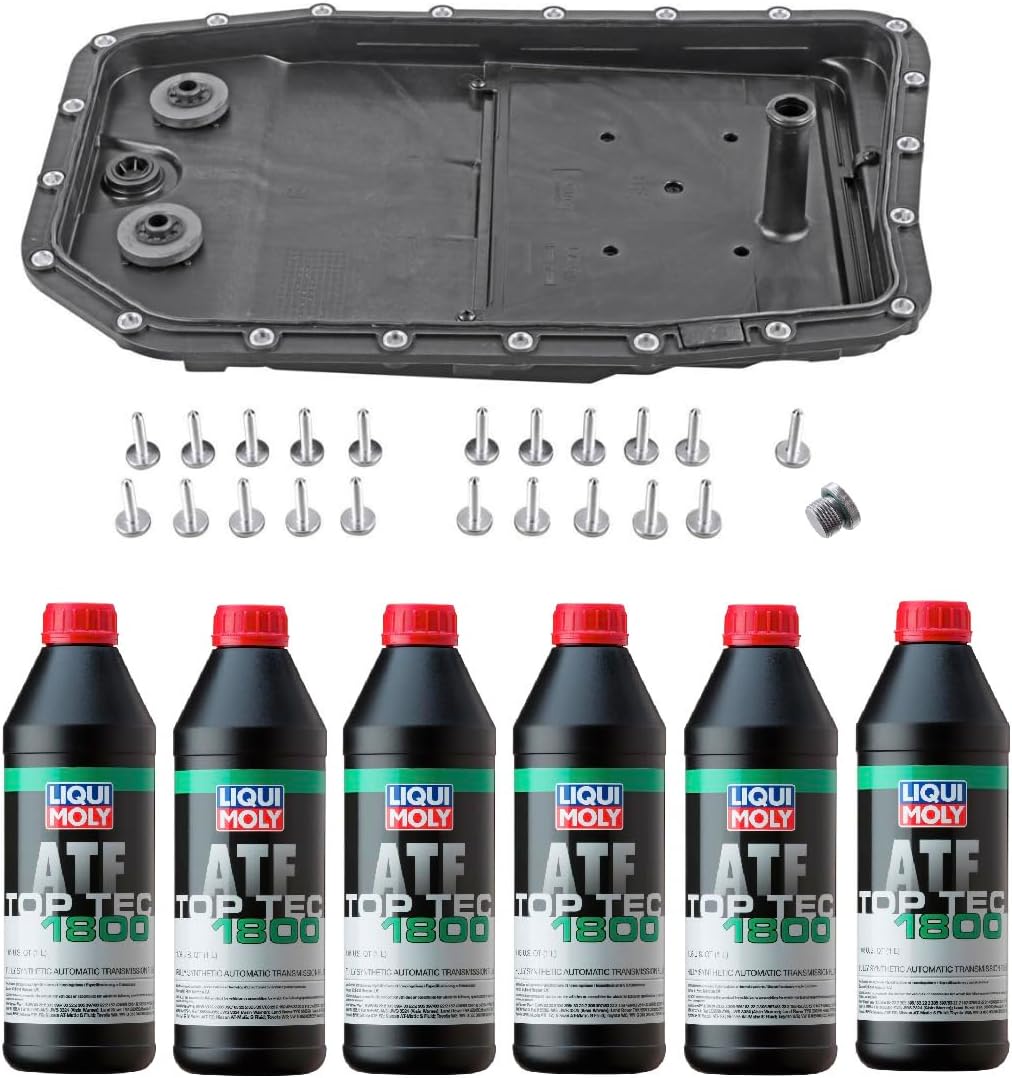
- Stored and pending codes. Ratio, solenoid and converter-clutch codes on a high-mileage unit change the plan. A fluid service will not fix a ratio code caused by worn bushings, and it may make the driver think you broke it.
- Idle speed. ZF's flowchart requires 650-950 rpm at idle in Park. If idle is outside that range, ZF says correct adjustment of the oil level is not possible. Fix the engine side first.
- Software level and adaptations. Note them before you start. On a unit with harsh shifts, you want to know whether a calibration update applies before blaming hardware.
- Fluid temperature while driving. A unit that runs hot on a normal drive has a cooler or converter problem that needs attention before new fluid goes in.
2. Identify the Exact Transmission Code
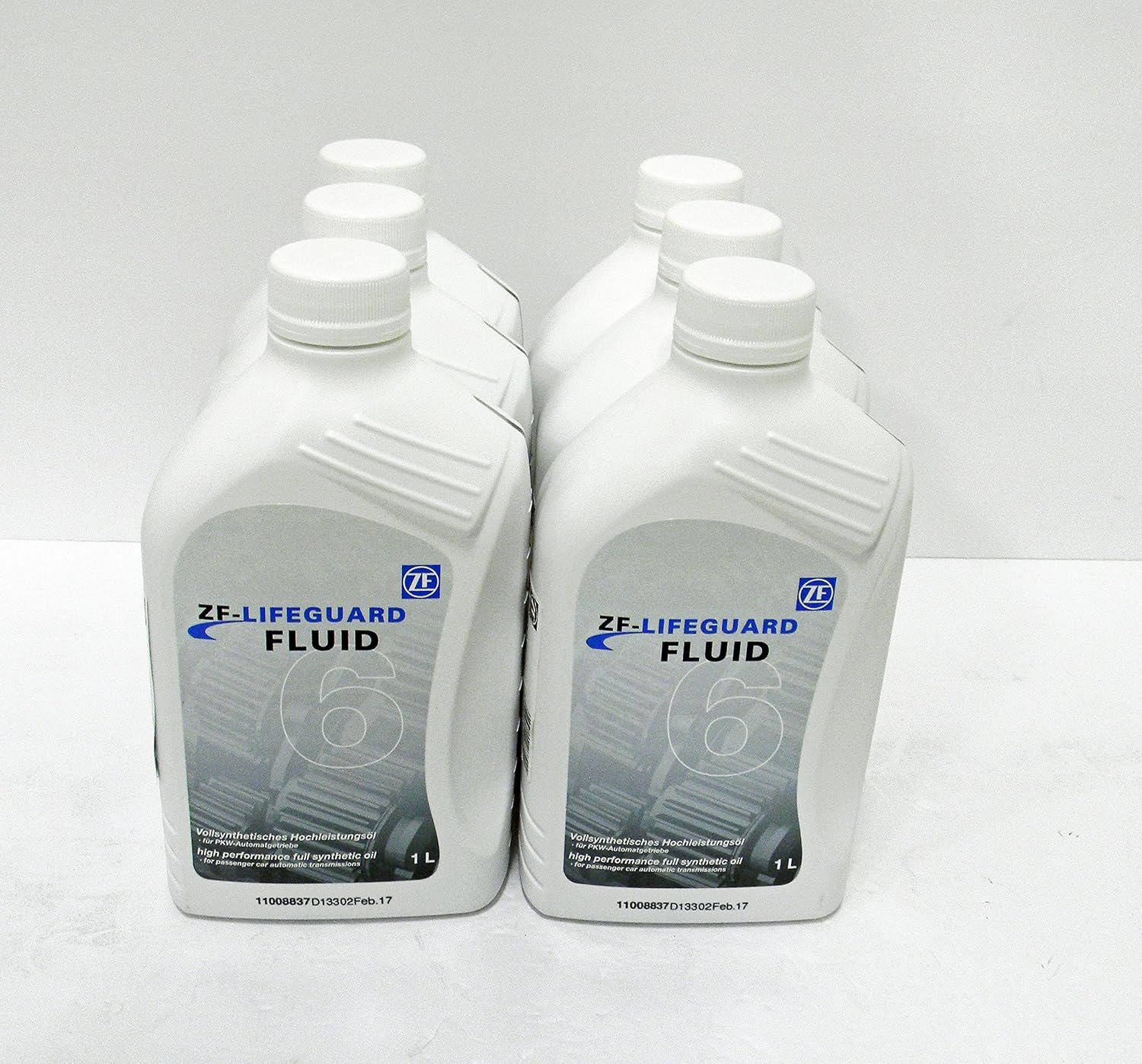
"6HP" covers a dozen application codes, and the fluid, the pan and the plug hardware all change with them. Read the ID plate on the case. Per TE-ML 11, most of the family takes ZF LifeguardFluid 6, including the 6HP19, 6HP21, 6HP26, 6HP26X, 6HP28 and 6HP32. The 6HP19A, the 6HP19X when it is installed in an Audi Q7, and the 6HP28AF take LifeguardFluid 8, and 6HP26A61 units behind the Audi W12 engine are called out separately. ZF's oil change kit table in SI 50145 matches this: the 6HP19A and 6HP28AF kits list LifeguardFluid 8, the rest list LifeguardFluid 6.
The same bulletin, and TE-ML 11, are blunt about additives: none. Additives of any kind change the oil in an unpredictable way and ZF accepts no liability for damage from them. That rules out the "transmission conditioner" bottle and the cleaning cycle on a flush machine.
3. Read the Pan Before You Clean It
This is the step that decides whether you are doing a service or quoting an overhaul. ZF builds it into the flowchart in SI 50145. Drain the fluid, loosen the pan bolts in the correct order so the flange does not warp, drop the pan, and ask two questions:
- Does the oil smell burned?
- Are there large chips or fragments in the oil?
If the answer to either is yes, ZF's instruction is to abort the oil change: the transmission is defective and goes to a service partner. Fine gray paste on the magnet is normal wear on a high-mileage unit. Bronze flakes, steel chips or clutch material mean the bushings, a drum or a planetary is already on its way out, and fresh fluid will only hide the evidence for a few hundred miles.
4. Pan, Filter and Plug Torques
The filter arrangement follows the pan material, not the model number. Per SI 50145:
| Pan material | Pan bolt torque | Filter |
|---|---|---|
| Aluminum | 4 Nm + 45° | Separate, new sealing ring |
| Plastic | 10 Nm | Integrated; replace the pan assembly |
| Steel plate | 12 Nm | Separate, new sealing ring |
Tighten in ZF's crosswise sequence, from the center out. Most repeat pan leaks I see on these units are bolt order and torque, not the gasket. The drain and filler plugs also vary by code:
| Code (per SI 50145) | Drain plug | Filler plug |
|---|---|---|
| 6HP19/19X, 6HP21/21X (BMW); 6HP26 (BMW, Jaguar); 6HP26X (BMW, Land Rover); 6HP28/28X, 6HP32 (BMW) | M24 x 1, 10 mm hex, 8 Nm | M18 x 1.5, 8 mm hex, 35 Nm ± 3.5 |
| 6HP19A (VW); 6HP26A61 (Audi, Bentley); 6HP26X (BMW, second plug style) | M10 x 1, 5 mm hex, 12 Nm ± 1.2 | M30 x 1.5, 17 mm hex, 80 Nm ± 8 |
| 6HP28AF (Audi) | M30 x 1.5, 10 mm hex, 8 Nm | M18 x 1.5, 5 mm hex, 12 Nm ± 1.2 |
Note that a BMW 6HP26X appears under both plug styles in ZF's own tables. Match the hardware in front of you, not the badge. Use a new seal on the drain plug every time.
5. Inspect the Mechatronic Sleeve While the Pan Is Down
The harness connects to the mechatronic through a plastic guide sleeve in the case wall right above the pan. Its O-rings harden with age and the weep runs down onto the pan, so a lot of sleeve leaks get sold as pan gaskets. With the pan off, the sleeve costs almost nothing extra to replace.
BMW's bulletin on the sleeve, summarized in the trade press as "Leaky Bimmer," gives the details that matter:
- The repair is the sealing sleeve (BMW 24 34 7 588 725) plus a new pan gasket. Oil both sleeve O-rings with transmission fluid and push the sleeve firmly into the housing before closing the locking tab.
- Clean the groove in a plastic pan and keep the gasket sealing surface oil-free. On plastic-pan units, replace the drain plug.
- After installation, the gap between the harness connector and the case should be no more than 3 mm, and the connector should lock without extra force. About 7-8 mm means the sleeve is not seated.
- A misinstalled sleeve causes intermittent communication faults (BMW fault codes 5079 and 507A) and the transmission emergency program. Forcing it can damage the pins in mechatronic connector X8500, and those pins cannot be repaired. The fix then is a mechatronic.
Disconnect the battery before you unplug the connector, observe ESD precautions, and do not touch the mechatronic contacts. ZF's oil change bulletin carries the same warnings.
Shop the part for this fix: 6HP26 Valve Body Sleeve and Connector Seal Kit
The sleeve and its seals are the cheapest insurance on a high-mileage 6HP pan service. Confirm your 6HP code before ordering, or browse the rebuild kit collection.
View the 6HP26 sleeve seal kit at CoreTransmissionParts →6. Fill and Set the Level by Temperature
This is where most 6HP services go wrong. There is no dipstick, and the level is only correct at one temperature window. ZF's procedure in SI 50145, condensed:
- Car level, Park, parking brake on. Fill through the side filler hole with the specified LifeguardFluid until it runs out.
- Start the engine and fill again until it runs out. Depending on the version, hold 2,000 rpm for 30 seconds to fill the converter, and cycle through R, D and the gears, holding each a few seconds.
- Check the oil temperature on the scan tool. Below 30°C, let it warm up. Above 35°C, let it cool. At 30-35°C, open the filler and top off until it runs out.
- Wait until the temperature reaches 40°C and only single drops come from the filler hole, then close it. The oil must not exceed 50°C during the check.
Some applications have a thermostat valve in the cooler circuit. For those, ZF says the oil must reach at least 75°C on the test drive so the valve opens, then the unit cools and the level is rechecked at 35°C. Skip that and the cooler circuit fills after you have closed the plug, and the unit runs low.
Getting it wrong in either direction costs money. Per ZF, too little oil damages the transmission. Too much oil leaks out through the vent when it heats up, and that oil can ignite on the exhaust.
On capacity: a pan drain only gets part of the fill, because the converter, cooler and passages stay full. ZF's 6HP26A61 catalog lists 9.4 liters plus 0.5 liter for the cooling system, and its oil change kits ship with seven one-liter bottles. On a high-mileage unit with dark fluid, plan a second pan service a few hundred miles later rather than one big machine exchange on fluid you have not inspected.
7. Check the Mounts and the Converter Circuit
A tired engine or transmission mount on these heavy, torquey cars makes every engagement feel worse than it is. Sonnax's ZF6 converter-circuit guide recommends confirming the mounts are not blown before condemning the converter for a rough idle in Reverse.
If the car has a shudder, flare or harsh coast downshift, put a gauge on the converter circuit. Sonnax documents the WK port on the driver side of the bellhousing above the cooler lines, marked "AUF WK" on ZF cases, with a 10 x 1.00 mm thread. Use a 100 psi gauge. Normal values per Sonnax:
| Condition | WK pressure |
|---|---|
| Cool, converter released | 70-75 psi (4.8-5.1 bar) |
| Warm, converter released | 65-68 psi (4.5-4.7 bar) |
| Reverse selected | Dips to about 50 psi, then returns |
| Maximum | 80 psi (5.5 bar) |
| Converter fully applied | 0 psi; 1.5-2 psi is designed slip |
WK that stays above zero after the 2-3 shift points to flare from converter slip. WK that will not rise above a few psi on a 2-1 coast or a hard 3-2 means the converter stays locked, and you get the clunk. Low WK in the 50-60 psi range points to a release or supply problem. All three are wear in the converter circuit, not a fluid problem.
8. Know When It Is an Overhaul, Not a Service
Some high-mileage 6HP faults are wear that no fluid can reach. Learn to recognize them so you quote the right job.
Bushings
Sonnax states that OE bushings in the 6HP26 and 6HP28 tend to wear prematurely because of their material, leading to loss of correct pressure to the E and B clutches and to gear ratio or solenoid codes. Its 95030-26K kit replaces the rear stator support, "A" drum, input/output shaft, sun gear shaft and "B" clutch bushings, for input shaft journals of 1.022 in. (25.97 mm) and 1.180 in. (29.96 mm). Sonnax requires an arbor press for installation; a hydraulic press or a driver and hammer distorts the bushing.
E clutch and pump
In GEARS Magazine, Rob Faucett traces the common 6HP E clutch performance code to a few places: a worn rear stator support bushing that lets the input shaft damage the seal surface, cracked E clutch drums, and the pump. The 6HP pump has no gaskets between its halves or between the pump and the case, and E clutch oil runs very close to the pump's suction side. Warpage or loose bolts cause cross leaks. His teardown habit is worth copying: check valve body and pump bolt torque with a torque wrench before anything comes apart with an impact.
Valve body
Sonnax lists the wear areas behind most high-mileage converter and shift complaints: the main regulator (SYS.DR-V), converter release regulator (WK-V), bypass clutch control (WD-V), lubrication control (SCHM-V) and the solenoid pressure regulator (DR.REO-V), whose worn bore makes all solenoid output high or low. Shift valve and solenoid end plugs loosen and leak, and failed accumulator dampers make solenoid output erratic and harsh.
And one hard rule from the same Sonnax guide: do not swap mechatronics or mix parts between units. They are programmed to a specific VIN, and the hydraulics, solenoids, mapping and separator plates differ across the 6HP19, 21 and 26.
9. Set the Interval Going Forward
Once the unit is serviced and healthy, put it on a schedule. ZF's 150,000 km is the ceiling for normal use. SI 50145 notes the oil ages faster at very high operating temperatures, and gives examples: many trips at high speed, frequent towing and sporty driving. TE-ML 11 adds high temperatures and loads, and unknown history, as reasons to shorten the interval. For a tow vehicle or a hard-driven BMW, I would halve it.
The Checklist
| Step | Pass | Stop and rethink if |
|---|---|---|
| Scan codes, idle, temp | No ratio/TCC codes, idle 650-950 rpm | Ratio or solenoid codes present |
| ID plate and fluid | Fluid matches TE-ML 11 for the code | Previous service used a generic ATF |
| Pan contents | Fine paste on magnet only | Burned smell, chips or fragments |
| Pan and plugs | Torqued to SI 50145 by pan material and code | Warped flange or stripped threads |
| Mechatronic sleeve | New sleeve, connector gap 3 mm or less | Gap of 7-8 mm or connector forced |
| Level | Set at 30-35°C, closed at 40°C, never above 50°C | Idle out of range or no temp PID |
| Mounts and WK | Mounts solid, WK in Sonnax range | Flare, shudder or coast clunk with bad WK |
ZF6HP pan and filter service kits, sleeve seal kits, LifeguardFluid 6 and master rebuild kits for the units that fail the pan check.
Shop ZF6HP parts →Related guides
- ZF6HP Filter and Pan Service Guide
- ZF6HP Fluid Type and Capacity
- ZF6HP Flush vs Drain-and-Fill
- ZF6HP Fluid Leak Common Spots
- ZF6HP Overheating: Causes and Prevention
FAQ
How often should a ZF 6HP transmission fluid be changed?
ZF sells the 6HP as a maintenance-free fill, but its lubricant list TE-ML 11 recommends an oil change after 150,000 km, about 93,000 miles. ZF says to shorten that interval for high temperatures and loads, frequent towing or high-speed driving, or when the vehicle history is unknown.
Is it safe to change the fluid in a high-mileage ZF 6HP?
Yes, if you inspect before you refill. ZF's oil change procedure says to abort the service if the old oil smells burned or contains large chips or fragments, because the transmission is already defective. A unit that passes that check and is filled with the correct LifeguardFluid to the correct temperature-based level is safe to service.
How do you check the fluid level on a ZF 6HP with no dipstick?
Use a scan tool to read transmission oil temperature with the engine idling in Park. Per ZF, fill through the side filler hole at 30 to 35 C until fluid runs out, then close the plug once the oil reaches 40 C and only single drops come out. The oil must not exceed 50 C during the check.
Why does my ZF 6HP leak from the pan right after a service?
Often it is not the pan. The mechatronic connector guide sleeve sits just above the pan and its O-rings harden with age, so fluid runs down onto the pan. Pan leaks that are real usually come from bolt order and torque: ZF specifies 4 Nm plus 45 degrees for aluminum, 10 Nm for plastic and 12 Nm for steel pans, tightened crosswise.
Which fluid does a ZF 6HP26 take?
The 6HP26, 6HP26X and most of the family take ZF LifeguardFluid 6 per ZF's TE-ML 11 list. The 6HP19A, the 6HP19X in an Audi Q7 and the 6HP28AF take LifeguardFluid 8, and 6HP26A61 units behind the Audi W12 are listed separately. ZF does not permit additives of any kind.
Sources
- ZF Friedrichshafen AG — Service Information 50145 EN, "Oil change kit for ZF 5HP/6HP automatic transmission" (03.2023). Backs the scan-tool start, the 650-950 rpm idle check, the burned-smell and chips "abort oil change" step, pan bolt torque and filter type by pan material, drain and filler plug sizes and torques by code, the 30-35°C / 40°C / 50°C level procedure, the 75°C thermostat-valve note, the overfill and underfill warnings, the no-additives rule, the fluid assignment per kit, and faster oil aging at high speed, towing and sporty driving. aftermarket.zf.com (PDF)
- ZF Friedrichshafen AG — List of Lubricants TE-ML 11, edition 01.10.2026. Backs the maintenance-free fill with a recommended oil change after 150,000 km, shorter intervals for high temperature, load or unknown history, the LifeguardFluid 6 vs LifeguardFluid 8 assignment by 6HP code, and the ban on additives. aftermarket.zf.com (PDF)
- Vehicle Service Pros — "Leaky Bimmer" (BMW TSB summary, July 2012). Backs the sealing sleeve part number 24 34 7 588 725, oiling the O-rings and seating the sleeve, cleaning the plastic pan groove, the 3 mm vs 7-8 mm connector gap, fault codes 5079 and 507A, and the unrepairable X8500 pin damage. vehicleservicepros.com
- Sonnax — Bob Warnke, "Six Ways from Sunday: Diagnosing ZF6 & Ford 6R60/80 TC-Related Drivability Concerns." Backs the WK port location and thread, the WK pressure table, the flare, coast-clunk and Reverse rough-idle readings, the mounts-first advice, the valve body wear areas, end plugs and accumulator dampers, and the rule against swapping or mixing mechatronics. sonnax.com
- Sonnax — Bushing Kit 95030-26K (ZF6HP26, ZF6HP28). Backs premature OE bushing wear, the resulting loss of E and B clutch pressure and ratio or solenoid codes, the kit contents, the 1.022 in. and 1.180 in. journal sizes, and the arbor-press installation requirement. sonnax.com
- GEARS Magazine (ATRA) — Rob Faucett, "Tracking Down the ZF6HP21 E Clutch Failure" (June 2019). Backs the stator support bushing and seal surface damage, cracked E clutch drums, the gasketless pump halves and pump-to-case joint, E clutch oil near the pump suction side, and checking pump and valve body bolt torque before teardown. gearsmagazine.com