A Jaguar with a ZF six-speed that bangs into 2nd, thumps on the 3-2, squawks into 3rd or flares on a coast-down usually doesn't need a transmission. These are the S-Type, X350 and X351 XJ, X100 and X150 XK and the first XF. Jaguar wrote two service bulletins for exactly these shift complaints, and neither one calls for a single hard part. A third bulletin, on the later cars, covers the shift complaint that does need a teardown. The skill is telling them apart before you spend the customer's money.
This is the order I work a Jaguar 6HP26 or 6HP28 shift complaint in, from the free checks to the expensive ones. If you haven't confirmed which unit is in the car yet, start with our Jaguar 6HP overview. The ZF tag on the case decides whether you buy Gen 1 or Gen 2 valve body parts.

How a 6HP Shift Works, and Why Jaguars Drift
The 6HP is a clutch-to-clutch transmission. There are no bands and no one-way clutch doing the timing for you. Five friction elements make all six forward gears and reverse. Per Sonnax's ZF6 apply chart, the A clutch is applied in 1st through 4th, B in 3rd, 5th and reverse, C in 2nd and 6th, D is the low/reverse brake, and E is applied in 4th, 5th and 6th (Sonnax ZF6 webinar).
Every shift means one element releasing while another applies, and the TCM controls both sides with pressure solenoids. Jaguar's own adaptation bulletin, JTB00145, spells out which element each shift teaches. The 1-2 upshift adapts the C clutch, the 2-3 adapts B, the 3-4 adapts E. The coast-down from 5th to 4th adapts A, and coming to a stop adapts D.
The TCM keeps a learned fill pressure and fill time for each of those elements, and it keeps adjusting them as the clutches wear and the fluid ages. When those learned values wander too far, the shift gets harsh or soft even though nothing is broken. That's adaptive drift, and on these Jaguars it's the most common shift complaint by a wide margin.
Step 1: Fluid Level and Voltage Before Anything Else
Sonnax's ZF6 symptom chart calls low fluid level "one of the most common and overlooked issues on the 6HP" for erratic shifting, and the same line tells you to check for an OE reflash on shift concerns. The level can only be read correctly ZF's way. ZF Service Information 50145 requires the engine idling at 650-950 rpm and the fluid between 30 and 35 C at the filler hole. Above 50 C the reading is wrong, so you let it cool and start over (ZF SI 50145). A Jaguar that has had a pan job somewhere else and was filled "until it looked right" is very often a half-liter or more low.
Then put a meter on the battery and charging system. Sonnax notes that supply voltage below 9.0 or above 16 volts causes erratic transmission control. A tired battery on an XJ with a lot of electrical load will do this, and you'll chase phantom shift problems for a week if you skip it.
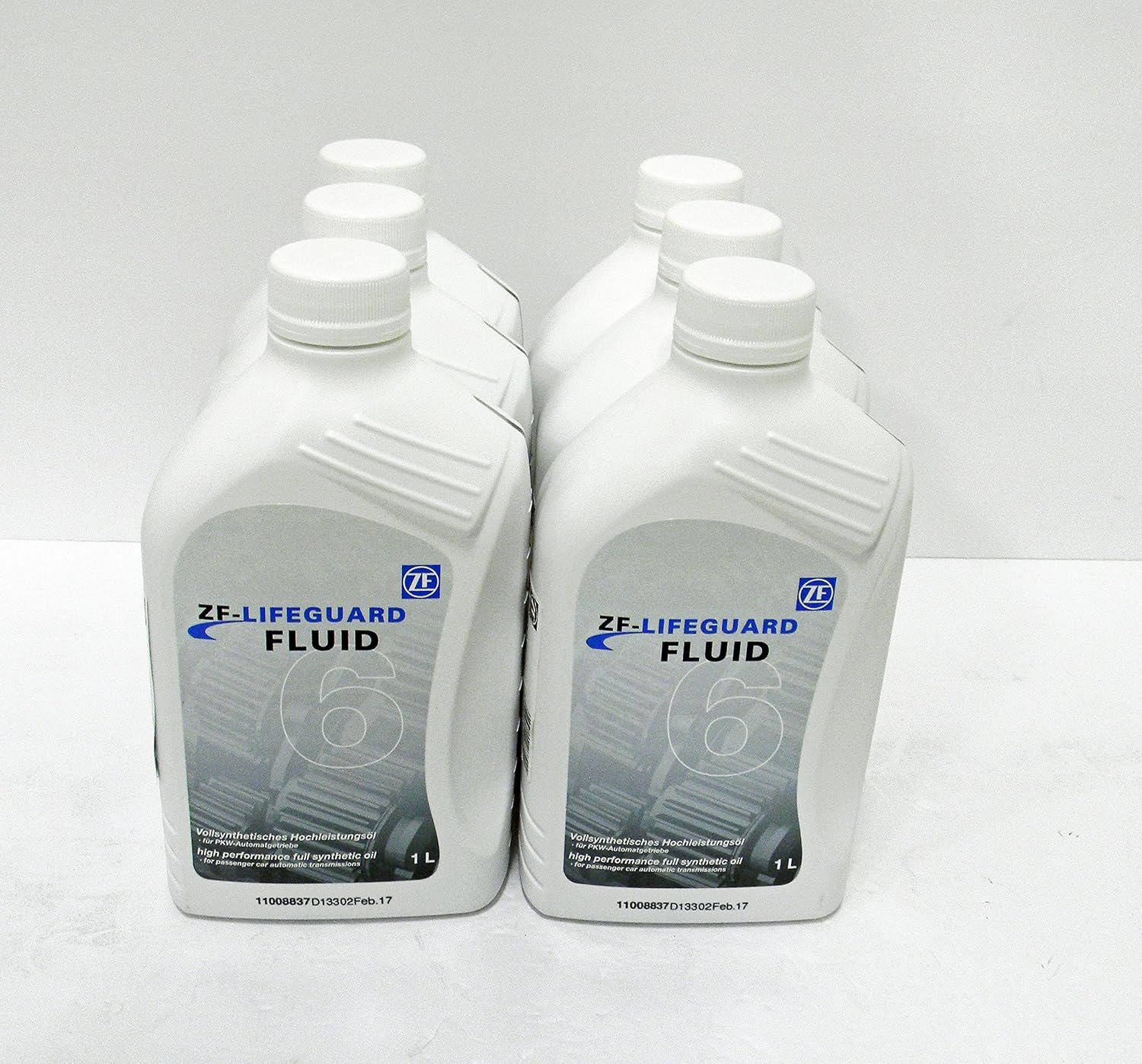
While you're under the car, check the fluid itself. ZF's LifeguardFluid 6 data sheet recommends a change after 150,000 km (about 93,000 miles), sooner with heat, heavy loads or unknown history, and warns that the wrong oil can cause anything from poor shift quality to failure (ZF LifeguardFluid 6). Sonnax lists Jaguar part 8432 among the OE fluids that are the same product as ZF LifeguardFluid 6 for the 6HP26 and 6HP28. Anything else in there is a shift-quality problem waiting to happen.
Step 2: Clear Adaptations and Reconfigure the TCM
Jaguar's harsh-shift bulletin is JTB00040 version 2 (section 307-01, 31 July 2007), "Harsh Transmission Shifts or Noise During Shifts." It covers the XJ from VIN G00442 to G49700, the S-Type from M45255 to N52047 and the XK8 from A30645 to A48684. The bulletin says the adaptive shift strategy "can drift over time causing higher than normal clutch pressures," and that's your harsh shift (JLR JTB00040).
Jaguar's fix has three parts. Read and clear all DTCs, run the "Transmission control module Adaption Clear" application, then run "Re-configure existing TCM." After that comes a structured road test, because a TCM with cleared adaptations is running on base values and will shift firm until it relearns. The bulletin tells the dealer to warn the owner that shift quality "will improve over time" as it adapts. Put that on the repair order too.
The JTB00040 adaptation drive cycle
- Normal mode, not sport, on a flat road, with the fluid between 60 C (140 F) and 100 C (212 F).
- Accelerate from rest with light, steady throttle and don't move the pedal during a shift. The 1-2, 2-3 and 3-4 shifts must happen inside the bulletin's engine speed window. That's 1800-2000 rpm for the 3.0 V6. The 4.2 V8 windows are 1450-1700 rpm and depend on VIN and whether it's supercharged, so look up the car's row.
- Keep accelerating gently to 50 mph (80 km/h) so it takes 5th.
- Lift off and let it coast down into 4th without braking.
- Brake gently to a stop and hold the brake for at least 15 seconds.
- Repeat at least five times.
The guided version, JTB00145
In February 2009 Jaguar added a guided procedure to IDS. JTB00145 covers the S-Type (X200) 2003-2008, the XJ (X350) 2004 onward and the XK (X100) 2003-2006. It is meant for exactly the case where a car still shifts harsh after a TCM reconfiguration. The IDS screen shows a torque bar graph and ticks off each element as it adapts: C on the 1-2, B on the 2-3, E on the 3-4, A on the lift-off coast from 5th to 4th, and A and D alternately on each stop held for 10 seconds. It's finished when every element has adapted three times. The fluid has to stay between 50 C and 100 C, and Jaguar requires two people in the car. One drives, one watches the screen. The bulletin's labor time is 0.8 hours under SRO 86.99.77 (per JLR bulletin JTB00145 Issue 1).
If you don't have IDS or SDD, a scan tool that can reset ZF adaptations will do the clear, but it can't reconfigure a Jaguar TCM. Do the reset, then drive the JTB00040 cycle by hand. Never reset adaptations on a unit that's low on fluid. It will learn the wrong pressures and you'll be back where you started.
Step 3: The Squawk Into 3rd (Earlier Cars Only)
JTB00040 also covers a noise that owners describe as a shift problem: a squawk or chirp when the transmission changes into 3rd, on a kick-down from 4th or 6th to 3rd, or on a part-throttle 3-4. Jaguar's stated cause is the E clutch sticking and releasing as it engages and disengages. The dealer fix was to drain exactly one liter with the transmission cold, tighten the drain plug to 8 Nm (5.9 lb-ft), add one liter of additive C2C 37157 through the filler with the engine idling, then fit the "service fix" label to the pan and recheck the level.
The limits on that additive matter more than the fix. Jaguar says to use it only for the squawk and never for a harsh shift or a stored DTC. It goes in once per transmission, unless the fluid has had a complete change since. And it isn't approved for any car from the 2006 model year on: S-Type from VIN N52048, XJ from H00332, and every new-shape XK. Jaguar warns that misuse reduces clutch friction, can set codes and can cause flare. If the label is already on the pan, don't do it again. The bulletin warns that a second dose can severely damage the transmission.
Sonnax lists the same 3-4/4-3 squawk as incorrect fluid or a lack of friction modifier and gives ZF modifier S671 090 288. On a car with unknown service history, I start with a correct fluid change, not an additive.
Step 4: Shift Problems That Come With Codes
The rules change once there's a hard code. On the 2008-2011 XK, the 2008-2009 X350 XJ, the 2009-2011 XF and the 2010-2011 X351 XJ, JLR bulletin JTB00305NAS1 links P0729 through P0735, P0783 and P2702 through P2704 to "degradation and failure of the lead-free bush." The dealer repair was an exchange transmission, plus an oil cooler if the fluid was burnt (JLR JTB00305NAS1). P0783 is the 3-4 shift and P2702-P2704 are apply-time faults for C, D and E. That's a shift complaint on paper, but the cause is a bushing leaking E clutch oil. No reflash or adaptation reset is going to fix that. Clear it, drive it, and if the same ratio or apply-time code comes back, plan the teardown. Our Jaguar 6HP slipping guide covers that rebuild.
Step 5: Valve Body and Solenoid Faults
A harsh or flared shift that comes back after a proper level check and adaptation reset is usually hydraulic. Sonnax's chart sends three symptoms straight to valve body repair: slip in reverse, harsh shifting once hot, and a 4-5 slip or flare. It also lists harsh shifts from a fluid temperature sensor or solenoid out of range. The TCM carries two temperature sensors, one for the fluid and one for itself, and if either goes over 170 C (338 F) the transmission and TCM shut down.
Sonnax's valve-level symptom lists show why worn bores feel like shift problems. Worn solenoid pressure regulator valves cause flare shifts, harsh upshifts and downshifts, neutral shifts and wrong-gear starts. A worn main pressure regulator causes harsh or soft shifts and erratic line pressure. On Gen 2 units like the 6HP28, a worn A and E clutch control valve causes coast-down neutral, downshift bind-ups and a 5-4 flare.
Electrical checks before you pull the valve body
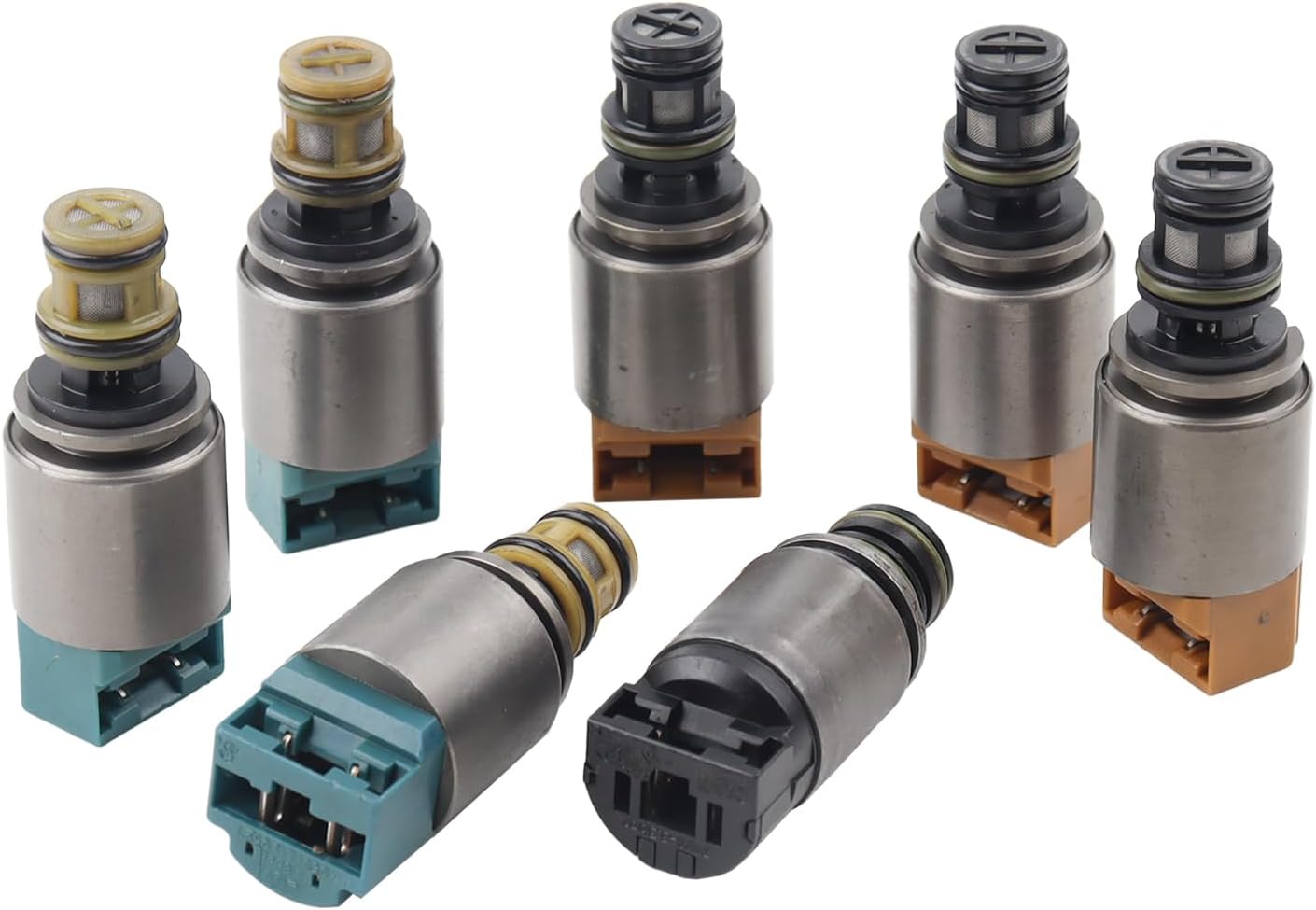
- Typical PWM solenoid resistance is 5-6 ohms at 20 C. The on/off MV solenoids read 10-10.5 ohms.
- Commanded current runs about 700-850 mA at high duty cycle and 50-100 mA at low. A solenoid that won't follow its command shows up here.
- Gen 1 (6HP26) normally vented solenoids are EDS1, EDS3 and EDS6, and the normally applied ones are EDS2, EDS4 and EDS5. Gen 2 is different, so don't swap a Gen 2 map onto a Gen 1 unit.
- Sonnax says a transmission that won't adapt, runs maximum line pressure and sets the MIL has a solenoid circuit problem. Check the connector sleeve and harness before you buy a valve body.
If you replace the mechatronic, it has to be programmed to the car. Sonnax notes an unprogrammed unit limits the vehicle to about 8 mph (13 km/h).
Step 6: Engine-Side Causes That Look Like Shift Faults
This is the part people skip. The 6HP TCM shifts on engine torque data, so a bad input makes a good transmission shift badly. Sonnax's ZF6 chart lists four of these:
- Poor 3-2 and 2-1 shifts, slip, flare, even slip or ratio DTCs. Inspect the MAF sensor and the intake duct for cracks or a loose clamp at the throttle body. A cracked intake boot on an older XJ is cheap and easy to miss.
- Intermittent neutral during a shift. A spark plug misfire can cause electrical interference that corrupts the throttle position values. Replace the plugs.
- Early downshifts. Check engine performance first.
- No upshift after a downshift. The software has a "corner detection" mode that uses front wheel speeds. Sonnax notes that a side-to-side tire rollout difference of as little as 1 km/h, from mismatched tires or uneven pressure, can trigger it.
Jaguar 6HP Shift Quick Map
| Complaint | Most likely cause | First move |
|---|---|---|
| Harsh 1-2, 2-3 or 3-2, no codes | Adaptive drift (JTB00040) | Level and voltage, then clear adaptations, reconfigure TCM and drive the cycle |
| Still harsh after reconfiguration | Adaptations not completed | JTB00145 guided drive cycle, 50-100 C fluid |
| Squawk into 3rd or on the 3-4 | E clutch stick-slip, wrong or tired fluid | Correct fluid; pre-2006 cars only: one-time additive per JTB00040 |
| P0729-P0735, P0783, P2702-P2704 | Bushing wear, E clutch oil loss (JTB00305NAS1) | Plan a rebuild, replace the cooler if fluid is burnt |
| Harsh once hot, 4-5 flare, reverse slip | Valve body wear | Solenoid checks, then valve body repair |
| Poor 3-2 or 2-1, flare | MAF or intake leak | Inspect intake duct and MAF |
| Neutral during a shift | Misfire EMI | Plugs and ignition |
| Won't upshift after a downshift | Tire rollout mismatch | Match tires, set pressures |
Shop the part for this fix
When the shift complaint is a worn Jaguar 6HP26 or 6HP28 valve body, or a bushing failure that needs a rebuild, Core Transmission Parts carries ZF six-speed overhaul and master rebuild kits. Match the tag on the case before you order.
See ZF rebuild kits at Core Transmission Parts →Frequently Asked Questions
Why does my Jaguar transmission shift hard?
With no codes stored, the usual cause is adaptive drift. Jaguar bulletin JTB00040 says the adaptive shift strategy can drift over time and raise clutch pressures. The fix is to clear adaptations, reconfigure the TCM and drive the adaption cycle. Check the fluid level at 30-35 C and the charging voltage first, because low fluid and voltage outside 9-16 volts also cause erratic shifts.
How do you reset a Jaguar transmission adaptation?
Jaguar's procedure uses IDS or SDD to run Transmission Control Module Adaption Clear, then Re-configure Existing TCM. After that you drive the adaption cycle in normal mode on a flat road with the fluid between 60 and 100 C, using light steady throttle and holding the pedal still during shifts. Bulletin JTB00145 adds a guided IDS version that confirms each clutch has adapted three times.
What causes a squawk when my Jaguar shifts into 3rd?
Jaguar bulletin JTB00040 blames the E clutch sticking and releasing as it engages. On pre-2006 cars only, the dealer fix was a one-time dose of additive C2C 37157 after draining one liter. Jaguar says never to use it for harsh shifts or codes, and never on 2006 model year and later cars. Sonnax also links the squawk to the wrong fluid or a lack of friction modifier.
Can a bad MAF sensor cause Jaguar shift problems?
Yes. The 6HP shifts on engine torque data, and Sonnax's ZF6 symptom chart lists poor 3-2 and 2-1 shifts, slip, flare and even ratio codes as reasons to inspect the MAF sensor and look for intake duct cracks. A misfire can also cause neutral during a shift through electrical interference, so check the engine before you condemn the transmission.
Sources
- Jaguar, Service Technical Bulletin JTB00040 Version 2, "Harsh Transmission Shifts or Noise During Shifts," section 307-01 (31 July 2007). Backs the XJ, S-Type and XK8 VIN ranges, the adaptive strategy drift cause, the adaption clear and TCM reconfiguration, the drive cycle (60-100 C fluid, rpm windows, 50 mph, overrun to 4th, 15-second hold, five repeats), the E clutch squawk cause, and the C2C 37157 additive procedure and restrictions, including the 8 Nm drain plug. Bulletin copy (PDF)
- Jaguar Land Rover North America, Technical Bulletin JTB00145 Issue 1, "ZF Transmission Adaptions Drive Cycle - IDS Procedure," section 307 (3 February 2009). Backs the S-Type 2003-2008, XJ 2004-on and XK 2003-2006 coverage, the use after harsh shifting following reconfiguration, the clutch-by-shift adaptation order (C, B, E, A, D), the three-times completion rule, the 50-100 C window, the two-person road test and SRO 86.99.77 at 0.8 hours. Print bulletin, available through JLR's technical information service; no manufacturer-hosted copy is online, so it is cited here unlinked rather than through a forum repost.
- Jaguar Land Rover North America, Technical Bulletin JTB00305NAS1, "Transmission MIL Illuminated," section 307-01 (22 April 2015). Backs the 2008-2011 application list, codes P0729-P0735, P0783 and P2702-P2704, the lead-free bush cause, and the exchange transmission and oil cooler repair. NHTSA (PDF)
- Sonnax, ZF6 technical webinar. Backs the A-E apply chart, Jaguar fluid 8432, solenoid resistance, current and normally vented/applied groupings, the 9-16 V note, the 170 C shutdown, the unprogrammed-mechatronic speed limit, the valve symptom lists, and the symptom chart (low fluid, valve body, squawk and modifier S671 090 288, MAF, misfire, early downshift, corner detection). Sonnax (PDF)
- ZF Friedrichshafen AG, Service Information 50145, "Oil change kit for ZF 5HP/6HP automatic transmission" (03.2023). Backs the 650-950 rpm idle requirement, the 30-35 C level check and the 50 C limit. aftermarket.zf.com (PDF)
- ZF Friedrichshafen AG, Product Data Sheet, ZF LifeguardFluid 6. Backs the 150,000 km change recommendation, earlier changes under heat, load or unknown history, and the warning that unsuitable oil causes poor shift quality. aftermarket.zf.com (PDF)
Shop valve bodies, solenoid kits, ZF fluid and rebuild kits for the ZF 6HP26 and 6HP28 in Jaguar S-Type, XJ, XK and XF, on our own secure checkout.
Shop ZF6HP parts →