A Jaguar owner rarely says "flare." They say the XJ revs up between gears, or the XK feels like it drops into neutral for half a second on the 3-4, or the XF won't pull from a stop when it's hot. On every one of these cars the unit behind the engine is a ZF six-speed: a 6HP26 in the 2008-2009 X350 XJ, the 2008-2011 X150 XK and the 2009-2011 XF, and a 6HP28 in the 2010-2011 X351 XJ, per Jaguar bulletin JTB00305NAS1. A slip complaint on these units has a short list of real causes. Most of them can be sorted before the pan comes off.
Here is the order I work them in. Fluid level first, then the electrical and engine-side checks the TCM depends on, then scan data, then valve body, then teardown. Skipping steps is how a $90 level check turns into a $3,000 rebuild that didn't fix the car.
Use the Apply Chart to Find the Clutch
The 6HP has five friction elements in a Lepelletier gear train: three driving clutches (A, B, E) and two brakes (C, D). Sonnax's ZF6 technical webinar lays out what each one does. When you know which gears slip, the apply chart tells you which element is losing oil.
| Element | Applied in | Slip shows up as |
|---|---|---|
| A clutch | 1st, 2nd, 3rd, 4th | Slip in all the lower gears, 5-4 flare or neutral, delayed forward |
| B clutch | 3rd, 5th, Reverse | Slip in 3rd and 5th that also shows in Reverse |
| C brake | 2nd, 6th | Flare into 2nd or 6th |
| D brake | Low (1st), Reverse | Reverse slip, soft 1st under load |
| E clutch | 4th, 5th, 6th | 3-4 flare, slip in 4-5-6 only, ratio codes in the top gears |
A Jaguar that pulls fine in 1st through 3rd and then flares on the 3-4 and slips in 5th and 6th is an E clutch circuit problem until proven otherwise. Slip in both 3rd and Reverse points at B. Slip in every gear, forward and reverse, points away from any one clutch and toward line pressure or fluid level.
Step 1: Set the Fluid Level the ZF Way
Sonnax's symptom chart calls low fluid level "one of the most common and overlooked issues on the 6HP." There is no dipstick, and the level is temperature-critical, so a lot of these cars have been running a quart or more low since the last time someone had the pan off.
ZF Service Information 50145 gives the procedure. Put the car level on a lift with the engine idling at 650-950 rpm and a scan tool reading transmission oil temperature. Open the fill plug (on the Jaguar 6HP26 it is an M18 x 1.5 plug torqued to 35 Nm, plus or minus 3.5 Nm). The level is correct when fluid just runs out of the fill hole at 30-35 C. Below 30 C, let it warm up. Above 35 C, let it cool. ZF says the oil temperature must not exceed 50 C during the check, because a hot unit reads low and you will overfill trying to chase it.
The X351 XJ's 6HP28 adds a step. ZF SI 50145 flags the Jaguar 6HP28 as a version with a thermostat valve. After an oil change, the test drive has to bring the fluid to at least 75 C so the thermostat opens and fills the cooler circuit. Then let it cool and recheck at 35 C. If you skip that, the cooler loop takes fluid you thought was in the pan, and the unit ends up low.
Look at what drains out. ZF's sheet says to stop the oil change if the oil smells burned or there are large chips in the pan. That transmission is already damaged, and fresh fluid will not save a burned clutch. Use only the correct fluid: Sonnax's fluid table lists Jaguar part 8432 as the same oil as ZF LifeguardFluid 6, S671 090 255. ZF also says not to use additives.
Where the fluid went
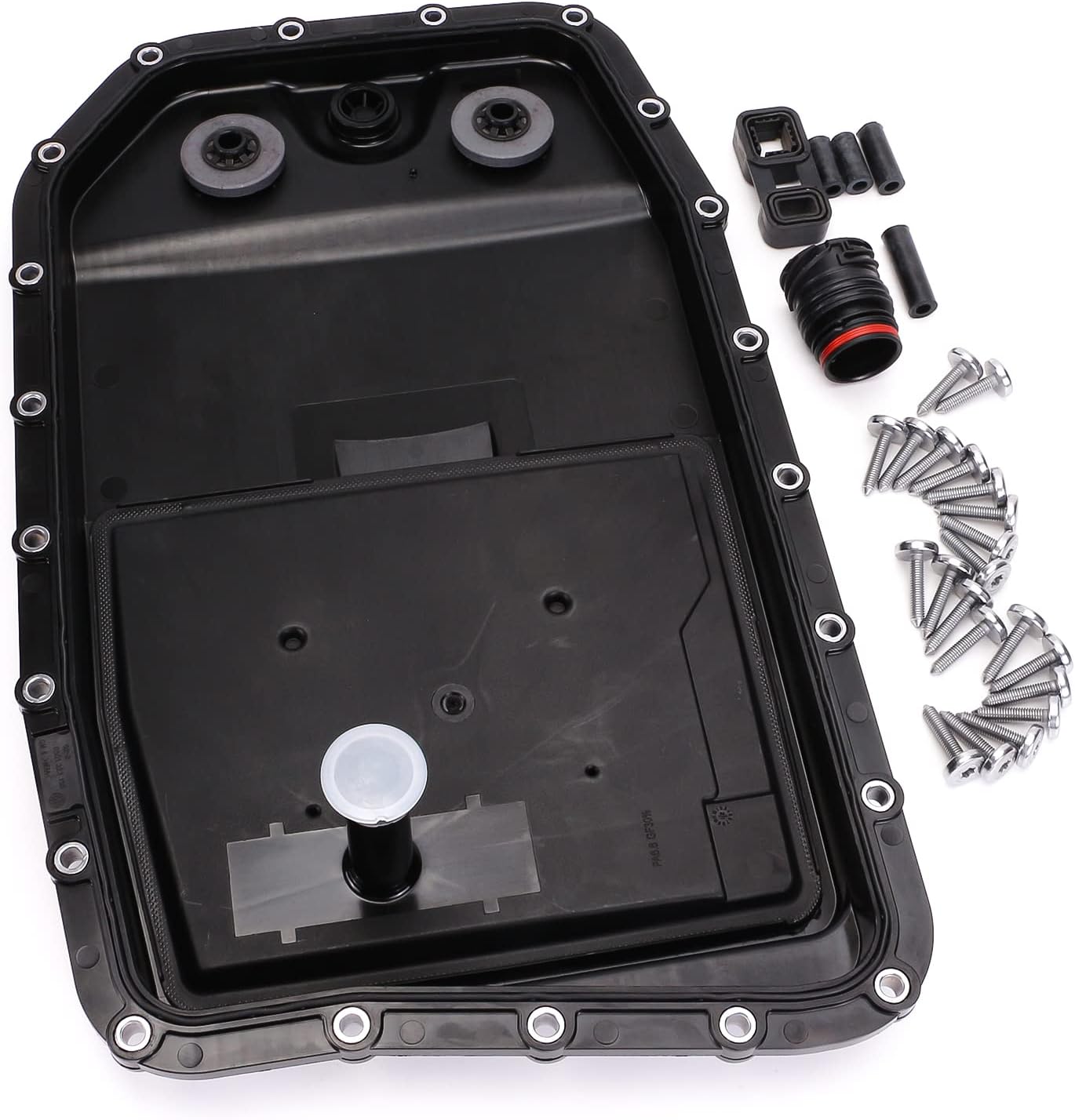
If it was low, find out why before you send the car out. The two usual leaks on a Jaguar 6HP are the electrical connector sleeve, which seals to the case with O-rings, and the plastic pan, which is also the filter. ZF's torque for the plastic pan bolts is 10 Nm. An overtightened pan cracks or warps and weeps. If the sleeve is wet, replace the sleeve seals and the pan together.
Step 2: Rule Out What Isn't the Transmission
The 6HP sets clutch pressure from what the engine says it is making. If that data is wrong, the TCM commands the wrong pressure, and the clutch slips even though nothing inside is worn. Sonnax lists three outside causes worth checking on any 6HP slip complaint:
- Air intake and MAF. Sonnax's chart ties "poor 3-2, 2-1 shifts, slip, flare, possible slip/ratio DTCs" to the MAF sensor and air intake. Look for a cracked intake duct or one that has come off the throttle body. A supercharged Jaguar with an unmetered air leak reports less torque than it makes, so the TCM under-pressures the clutches.
- Supply voltage. Sonnax notes that battery and alternator voltage below 9.0 volts or above 16 volts causes erratic transmission control. Load-test the battery and check charging voltage before you blame the mechatronic.
- Misfire. An intermittent neutral during a shift can come from spark plug misfire creating electrical noise that corrupts the throttle position signal, per the same chart.
Only after those three check out does it make sense to clear adaptations and run the adaption drive cycle in Jaguar's diagnostic software. Resetting adaptations on a car that is low on fluid or short on voltage just teaches the TCM the wrong values.
Step 3: Read the Slip in the Scan Data
Feel can mislead you. Converter clutch slip feels like a transmission slip to most drivers, and so does a flare between gears. Put a scan tool on it and road test with these values on screen:
- Engine speed, turbine (input) speed and output speed. In a locked gear, turbine speed divided by output speed should hold steady at that gear's ratio. If the calculated ratio wanders while the gear readout says 5th, that element is slipping.
- TCC slip. With the converter clutch commanded on, engine speed and turbine speed should be within a few rpm of each other. If engine speed runs well above turbine speed with the clutch commanded on, the slip is in the converter, not in a clutch pack.
- Commanded gear during the shift. A flare is a short overlap where turbine speed rises before the oncoming clutch picks up. Watch which shift it happens on and match it to the apply chart above.
- Transmission oil temperature. Note when the slip starts. A slip that only appears hot points to wear in valve body bores, where leakage grows as the oil thins.
While you are connected, check the solenoids electrically. The Sonnax webinar lists the EDS pressure control solenoids at about 5 ohms and the MV1 and MV2 shift solenoids at 10-10.5 ohms, measured at 20 C. On a Gen 1 6HP26, EDS4 controls the D and E clutches and EDS6 controls the TCC. On a Gen 2 6HP28, EDS4 is the E clutch and EDS2 is the TCC. The firing order changed between generations, so make sure you have the right chart for the tag on the case.
Step 4: Ratio Codes and the Jaguar Bushing Bulletin
If the slip came with a MIL and ratio codes, check Jaguar bulletin JTB00305NAS1 (section 307-01, dated 22 April 2015). It covers the 6HP26 and 6HP28 cars listed above with DTCs P0729 through P0735, P0783 and P2702 through P2704 stored in the TCM. Jaguar's stated cause is "degradation and failure of the lead-free bush." The dealer fix was an exchange transmission, and the bulletin says to replace the oil cooler if the oil is found burnt or contaminated.
Those codes fit the E clutch story. P0729 is the 6th gear ratio, P0783 is the 3-4 shift, and P2702-P2704 are friction element apply-time faults. E clutch apply oil passes through sealing rings and bushings at the rear of the stator support, so when that bushing wears, apply oil leaks away and the clutch slips, applies late and burns. Sonnax makes an upgraded rear stator support bushing, 95030-02, for the 6HP26, 6HP28 and 6R80, and says the OE bushing wears prematurely, causing loss of correct pressure to the E clutch, gear ratio and solenoid codes, and a burned E clutch. Sonnax says to install it with an arbor press only.
A Jaguar with these codes, burned fluid and slip in 4th through 6th is a rebuild, not a fluid service. Fluid and adaptations will not put back clutch material that's already gone.
Step 5: Valve Body Wear That Causes Slip
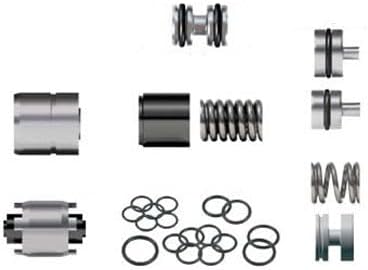
When the fluid is clean, the clutches haven't burned yet and the slip gets worse as the unit warms up, the valve body is the next suspect. Sonnax's chart is direct about it: "slip in Reverse, harsh shifting once hot, 4-5 slip or flare" means valve body repair is likely necessary. The bores wear, valves leak, and the clutch gets less pressure than the TCM commanded.
The parts depend on generation, because the 6HP26 is Gen 1 and the 6HP28 is Gen 2 with a different valve body. From Sonnax's ZF6 material:
| Valve | Gen 1 (6HP26) | Gen 2 (6HP28) | Slip-related symptoms |
|---|---|---|---|
| Main pressure regulator | 95740-01K (not with 053 plate), 95740-78K (053 plate only) | 95740-69K | Slips in forward and reverse, erratic or low line pressure |
| Solenoid pressure regulator | 95740-17K | 95740-64K | Flare shifts, gear ratio codes, neutral shifts |
| Lube control valve | 95740-11K | 95740-71K | Flare shifts, bushing failure, low converter pressure |
| Position valve | Not listed for Gen 1 | 95740-75K (E-shift only) | A, B or E clutch burned |
| A and E clutch control | 95740-21K boost kit | 95740-28K, 95740-72K (E-shift) | 5-4 flare or neutral, no 4-5, flare shifts |
| Converter release regulator | Not listed for Gen 1 | 95740-05K (E-shift) | Excess TCC slip rpm and related codes |
Note the lube control valve line. A worn lube valve starves the bushings, and starved bushings are what JTB00305NAS1 is about. If you are rebuilding for the bushing bulletin and you leave a leaking lube valve in the valve body, the new bushings can go the same way. Vacuum test the bores before you decide, using Sonnax's ZF6 Gen 2 vacuum test guide for the 6HP28 or the individual kit instructions for Gen 1. Sonnax also points out that the spacer plate code (A035 through A065) identifies which plate you have, and that matters for the 01K versus 78K pressure regulator choice.
Step 6: On the Bench
Once it is out, Rob Faucett's GEARS Magazine piece on the Gen 2 E clutch failure gives a good procedure for finding the leak instead of just replacing parts:
- Before you take anything apart, put a torque wrench on the pump and valve body bolts. Loose bolts can cause cross leaks, and you won't know they were loose if they came out with an impact.
- Air check the circuits with the valve body off, before you remove the drivetrain. Check endplay and clutch clearances as you go.
- Air test the E drum at full shop pressure with some fluid in it, not the usual 35 psi. Air from around the base of the separator tube in the feed hole means the drum gets replaced, because the tube is not sold separately. Coat the base of the drum shaft with assembly gel and look for bubbles, since the drums can crack there.
- Check the stator support where the sealing rings ride and inspect the bushing. A worn bushing lets the input shaft damage the support's inner seal surface.
- Flat sand the pump halves. There are no gaskets in the pump or between the pump and case, and E clutch oil passes close to the pump suction side, so any warpage pulls apply oil into the suction circuit.
Then replace the cooler if the fluid was burnt, as the Jaguar bulletin says. Bushing material and clutch debris trapped in the cooler will end up in the new clutches on the first drive.
When the "Slip" Is the Converter
If the scan data showed engine speed running ahead of turbine speed with lockup commanded, the clutch packs may be fine. Sonnax lists wrong fluid as a cause of TCC shudder or rpm swing on the 6HP, and says the fix may take a complete flush, possibly more than once. Other causes on that list are lockup clutch material coming loose, a leaking O-ring on the converter piston ID, and worn converter release or lube regulator valves on Gen 2. Correct fluid and a valve body check come first. The converter comes after that.
Jaguar 6HP Slip Quick Map
| What you see | Most likely cause | Next move |
|---|---|---|
| Slip in every gear, worse on hills | Low fluid level | ZF level check at 30-35 C, find the leak |
| Slip or flare with an intake leak or MAF fault | Bad torque signal to the TCM | Fix the engine side, then reset adaptations |
| 3-4 flare, slip in 4-5-6, P0729-P0735, P2702-P2704 | E clutch oil loss from bushing wear | JTB00305NAS1, rebuild with bushings and cooler |
| Reverse slip, 4-5 flare, only when hot | Valve body bore wear | Vacuum test, generation-correct valve kits |
| Engine rpm above turbine rpm in lockup | TCC slip, often wrong fluid | Correct fluid, flush, check converter regulator |
| Burned fluid or chips in the pan | Clutches already burned | Stop the service and plan a rebuild |
Shop the part for this fix
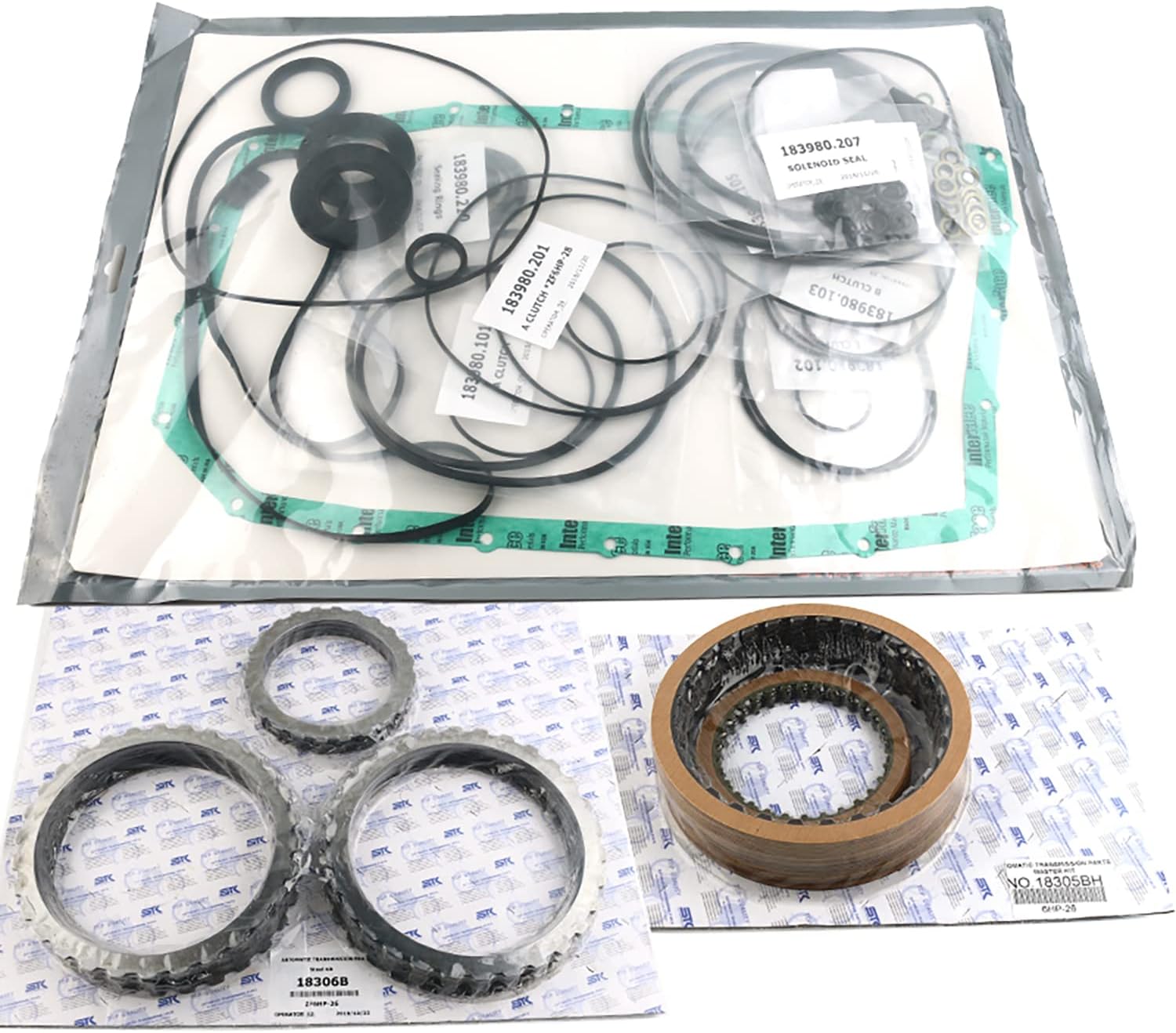
If the slip came with burned fluid or the bushing-related ratio codes, a rebuild is the fix. Core Transmission Parts carries ZF six-speed overhaul and master rebuild kits. Match the tag on the case before you order.
See ZF rebuild kits at Core Transmission Parts →Frequently Asked Questions
Why is my Jaguar transmission slipping?
On the ZF 6HP26 and 6HP28 used in the XJ, XK and XF, the most common cause is a low fluid level, which Sonnax calls one of the most overlooked 6HP issues. After that come engine-side faults like an intake leak or MAF problem, worn valve body bores that leak pressure when hot, and E clutch oil loss from a worn stator support bushing. Check the level by ZF's 30-35 C procedure before anything else.
How do you check the fluid level on a Jaguar ZF 6-speed?
There is no dipstick. Per ZF Service Information 50145, put the car level with the engine idling at 650-950 rpm, read transmission temperature on a scan tool, and open the fill plug at 30-35 C. The level is correct when fluid just runs out of the fill hole. Do not check it above 50 C, and on the X351 XJ 6HP28 drive it to at least 75 C first so the thermostat valve fills the cooler, then let it cool and recheck.
Can a fluid change fix a slipping Jaguar transmission?
Only if the slip came from low or wrong fluid. If the old fluid smells burned or there are large chips in the pan, ZF says to stop the oil change, because the transmission is already damaged. A slip with codes P0729-P0735 or P2702-P2704 and burned fluid usually means E clutch damage from bushing wear, which needs a rebuild.
What does Jaguar bulletin JTB00305NAS1 cover?
It covers 6HP26 and 6HP28 transmissions in certain 2009-2011 XF, 2008-2011 XJ and 2008-2011 XK cars with a transmission MIL and codes P0729 to P0735, P0783 and P2702 to P2704. Jaguar blames degradation and failure of a lead-free bush. The dealer fix was an exchange transmission, plus a new oil cooler if the fluid was burnt or contaminated.
Sources
- Jaguar Land Rover North America, Technical Bulletin JTB00305NAS1, "Transmission MIL Illuminated," section 307-01 (22 April 2015). Backs the 6HP26 and 6HP28 applications for the XF X250, XJ X350 and X351 and XK X150, codes P0729-P0735, P0783 and P2702-P2704, the lead-free bush cause, the exchange transmission fix and the burnt-oil cooler replacement note. NHTSA (PDF)
- ZF Friedrichshafen AG, Service Information 50145, "Oil change kit for ZF 5HP/6HP automatic transmission" (03.2023). Backs the 650-950 rpm idle requirement, the 30-35 C level check and 50 C limit, the Jaguar 6HP26 fill plug torque (35 Nm), the 10 Nm plastic pan bolts, the 75 C thermostat-valve test drive for the Jaguar 6HP28, the burned-oil and chips stop rule and the no-additives warning. aftermarket.zf.com (PDF)
- Sonnax, ZF6 technical webinar. Backs the A, B, C, D and E apply chart, the Gen 1 and Gen 2 groupings and solenoid assignments and resistances, the Jaguar 8432 fluid cross-reference, the Gen 1 and Gen 2 valve kit part numbers and symptoms, and the symptom chart (low fluid, MAF and intake, 9-16 V supply, misfire, hot slip and flare, TCC shudder). Sonnax (PDF)
- Sonnax, ZF6 Gen 2 Vacuum Test Guide. Backs the Gen 2 vacuum test locations and the symptoms tied to the E control, pressure regulator, converter release regulator and lube control valves. Sonnax (PDF)
- Sonnax, Rear Stator Support Bushing 95030-02 (ZF6HP26, ZF6HP28, 6R80). Backs the premature OE bushing wear, the loss of E clutch pressure, the ratio and solenoid codes, the burned E clutch and the arbor-press-only installation note. sonnax.com
- GEARS Magazine (ATRA), Rob Faucett, "Tracking Down the ZF6HP21 E Clutch Failure" (June 2019). Backs the bolt torque check before teardown, the full-shop-pressure E drum air test, the separator tube and drum crack checks, the stator support and bushing inspection and flat-sanding the pump halves. gearsmagazine.com
Shop rebuild kits, seal kits, solenoids and valve bodies for the ZF 6HP26 and 6HP28 in the Jaguar XJ, XK and XF, on our own secure checkout.
Shop ZF6HP parts →