P0730 is one of the least specific codes a ZF6HP will throw, and that's exactly why it gets misdiagnosed. The generic SAE definition is "Incorrect Gear Ratio" -- the TCM compared input and output shaft speed, calculated what ratio it was actually seeing, and found it didn't match the ratio it commanded for that gear. It doesn't say which gear failed, and it doesn't say whether the cause is hydraulic, electrical, or mechanical. On a 6HP, that question matters a lot, because the companion codes P0731 through P0736 (1st through 6th gear) point at specific valve body wear points that Sonnax has documented in detail -- and most of them are fixable without a full rebuild.
This guide covers how to read the companion gear code correctly, which specific valve body bores Sonnax's own wear chart ties to ratio faults, the solenoid resistance specs to bench-test before you tear anything down, and the fluid specification ZF itself publishes for this family.


Read the Companion Code Before You Touch Anything
P0730 by itself tells you almost nothing actionable. The gear-specific companion codes do: P0731 is 1st gear, P0732 is 2nd, P0733 is 3rd, P0734 is 4th, P0735 is 5th, and P0736 is 6th. Pull the full code list from the scan tool, not just the headline P0730, before you start testing. Which gear (or gears) failed the ratio check is the single most useful piece of diagnostic information you have, because Sonnax's documented valve body wear points for this transmission are tied to specific gears, not to the transmission as a whole.
Confirm Generation 1 vs. Generation 2 First
Before you order any part, confirm which half of the ZF6HP family you're actually working on. Sonnax's published identification guide splits this platform by case side: Generation 1 covers the ZF6HP19, 26 and 32, built 2002 through 2005, and Generation 2 covers the ZF6HP21, 28 and 34, built 2006 and later. The 2006 revision upgraded the mechatronic unit to increase oil flow and shorten shift duration, and that change was significant enough that the pressure regulator valves and sleeves between the two generations are different sizes and cannot be interchanged. A 6HP26 is always Gen 1 by definition, and a 6HP28 is always Gen 2 -- but verify this against the valve body casting rather than assuming from the model number alone, since some BMW 6 and 7 Series cars with six accumulators use a differently sized pressure regulator valve, most commonly on units built with the A053/B053 separator plate. That "053" plate is a documented sub-variant within Gen 1 with valve sizes and locations that differ from standard Gen 1 units, so check the separator plate's stamped code against Sonnax's application chart before ordering valve body parts.
There's a second split that affects solenoid count: Gen 1 and Gen 2 both come in an "M" version with a manually-shifted Park/Reverse/Neutral/Drive valve, and an "E" version where that function is solenoid-controlled. The M version uses seven solenoids; the E version adds two more dedicated to electrically shifting into and out of Park, for nine total. Confirm which version you have before counting connector pins or ordering a solenoid kit.
The Valve Body Wear Points That Actually Throw Ratio Codes
Sonnax's own installation and testing booklet for this platform includes a symptom-to-cause wear chart for the valve body, and several entries on it name "ratio" codes directly -- not generic slip or shift-quality complaints:
- Clutch C Regulator Valve -- worn bore symptoms: 2nd & 6th gear slip, clutch failure, poor shift quality, ratio errors. This is the direct explanation if your scan tool paired P0730 with P0732 (2nd gear) or P0736 (6th gear): both of those gears route through the C clutch, and a worn regulator bore here produces exactly that ratio-error signature. Sonnax's replacement is part 95740-40K.
- Solenoid Multiplex Valve -- worn bore symptoms: wrong gear starts, gear ratio codes. This valve sits downstream of the solenoid pack rather than in a clutch-specific circuit, so wear here can throw a ratio fault without pointing to any single gear.
- Solenoid Pressure Regulator Valve -- worn bore symptoms: flare/harsh shifts, wrong gear starts, TCC slip, harsh upshifts and downshifts, delayed forward/reverse, solenoid performance codes, and gear ratio codes. Replaced with Sonnax part 95740-17K.
- Main Pressure Regulator Valve -- worn bore symptoms: poor shift quality, flare/harsh shifts, erratic line pressure, delayed/no reverse. This bore controls overall line pressure, so wear here can produce ratio-adjacent symptoms across multiple gears rather than one isolated position. Sonnax sells a drop-in sleeve (95740-03, no machining needed) for sleeve-only wear, or an oversized valve kit (95740-01K, requires tooling) when the bore itself is worn.
The practical takeaway: a bare P0730, or P0730 paired with a specific gear's companion code, is very often a valve body bore wear issue rather than a failed clutch pack or a transmission that needs a full rebuild. Matching the companion gear code to the right bore above saves a lot of unnecessary teardown.
ZF 6HP26 Valve Body Sleeve and Connector Seal Kit
If your ratio fault traces to the main pressure regulator bore (erratic line pressure, flare/harsh shifts across multiple gears) rather than a specific clutch-pack bore, this is the sleeve-and-seal fix -- no special tooling required for a sleeve-only repair.
View the valve body sleeve kit →Bench-Test the Solenoids Before You Condemn the Valve Body
Sonnax's own solenoid function and resistance table for Gen 1 units (ZF6HP19/26/32) gives you a quick electrical check before any disassembly:
| Connector color | Position | Function | Resistance at 68°F (20°C) |
|---|---|---|---|
| Yellow / Green | EDS 1, 3, 6 | 1 – A Clutch; 3 – C Brake; 6 – TCC | 5.05 ohms |
| Blue / Black / Gray | EDS 2, 4, 5 | 2 – B Clutch; 4 – D & E Clutch; 5 – EPC | 5.05 ohms |
| Black | MV1 | Selector Valve | 11.5 ohms |
| Black | MV2 | Park Lock Valve | 11.5 ohms |
| Green | MV3 | Park Lock Cylinder | 24–26 ohms |
Test with the mechatronic circuit board removed so you're reading the coil in isolation, and use an ohmmeter with no more than 0.6 volts of test supply -- a higher-voltage meter can return a false reading. A solenoid reading well outside these windows confirms a coil fault. One a reading comes back in spec, remember that resistance alone doesn't clear a solenoid for mechanical wear (a seal that won't hold vacuum can still throw a ratio or performance code with a perfectly healthy coil) -- but it does tell you whether the electrical circuit is the problem before you spend time on the valve body.
Check Fluid Level and Type Before Any Teardown
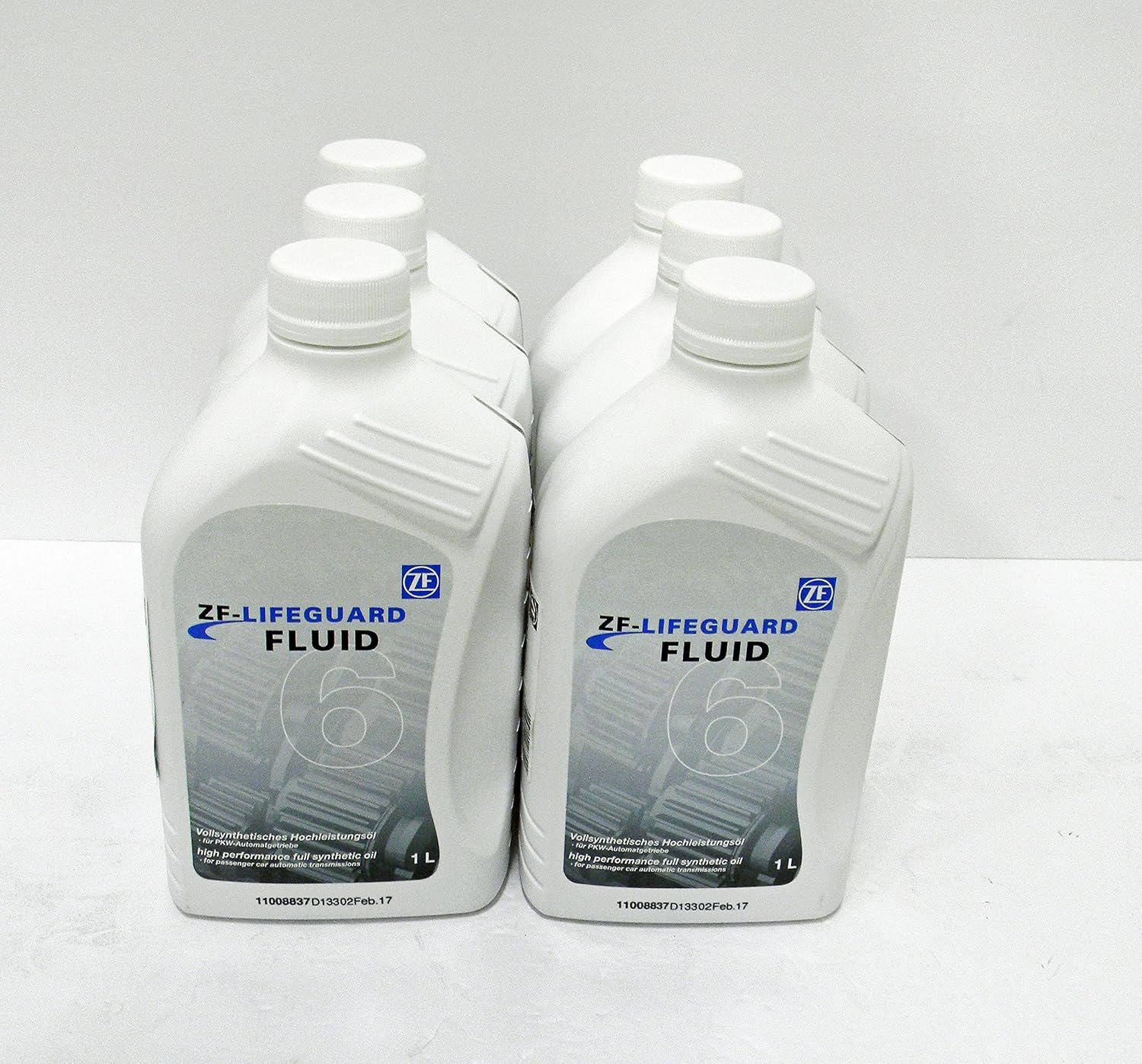
Low fluid or the wrong fluid changes clutch apply pressure and slip timing -- exactly what the TCM's ratio-monitoring logic is watching for -- so it belongs at the top of the diagnostic order, not the bottom. ZF Services North America's own fluid reference chart specifies ZF LifeguardFluid 6, part number S671 090 255, for the 6HP19, 6HP19X, 6HP26, 6HP26X and 6HP32 family. There are two documented exceptions worth checking against your specific VIN: the Audi Q7's 6HP19X and the 6HP26A61 behind an Audi W12 engine both call for LifeguardFluid 8 instead. Don't substitute a generic "universal" ATF -- this fluid's friction properties are matched specifically to this clutch pack design.
Torque and Clearance Reference
| Spec | Value |
|---|---|
| Fluid (ZF) | ZF LifeguardFluid 6, part S671 090 255 (LifeguardFluid 8 for 6HP19X Audi Q7 and 6HP26A61 w/ Audi W12) |
| EDS solenoid resistance (Gen 1) | 5.05 ohms at 68°F/20°C, circuit board removed |
| MV1 / MV2 resistance | 11.5 ohms |
| MV3 resistance | 24–26 ohms |
| Mechatronic-to-case / valve body half bolts | 8 Nm / 71 in-lb |
| Metal oil pan-to-case | 14 Nm / 10 ft-lb |
| Plastic oil pan-to-case | 10 Nm / 89 in-lb |
| Pump bolts to case | 10 Nm / 89 in-lb |
| Output shaft flange nut | 60 Nm / 44 ft-lb |
| Rear unit endplay (flanged output) | 0.15–0.35 mm / .006–.013 in |
| Input shaft endplay | 0.2–0.4 mm / .008–.015 in |
After any valve body, solenoid or fluid service, run a drive-cycle relearn: bring the fluid to normal operating temperature, then perform several light throttle-up and coast-down shift cycles through all gears. Skipping this step is a common reason a correctly repaired unit still shows a ratio complaint or rough shift on the test drive -- the TCM needs the chance to relearn its adapted flow rates before you trust the road test.
Diagnostic Order: What to Check, In What Sequence
- Pull the full code list. Identify exactly which gear-specific companion code (P0731-P0736) is paired with P0730, not just the generic headline code.
- Check fluid level and fluid identity. Confirm it's ZF LifeguardFluid 6 (or 8 for the documented Audi exceptions) at the correct level before testing anything electrical or mechanical.
- Confirm Gen 1 vs. Gen 2 and M vs. E shift. Verify from the valve body casting and separator plate stamp, not the model number alone.
- Bench-test the relevant solenoid's resistance. Compare against the Gen 1 table above (5.05 ohms for EDS positions) with the circuit board removed.
- Match the gear code to the documented valve body wear point. 2nd/6th gear points to the Clutch C Regulator Valve; a non-specific ratio code points toward the Solenoid Multiplex Valve, Solenoid Pressure Regulator Valve, or Main Pressure Regulator Valve bore.
- Repair the confirmed cause -- a sleeve or oversized valve kit for the matched bore, a solenoid pack for a confirmed coil or seal failure, or a full valve body if multiple bores are out of spec.
- Run the drive-cycle relearn after any repair before judging the fix by the test drive alone.
Worked in that order, a P0730 on this platform gets diagnosed as the specific, usually repairable valve body issue it almost always is -- instead of becoming an expensive guess that jumps straight to a full rebuild.
Shop ZF6HP valve body sleeve kits, solenoid kits and ZF-spec LifeguardFluid 6 — shipped fast from the USA.
Shop ZF6HP parts →FAQ
What's the difference between P0730 and codes like P0729 or P0735 on a ZF6HP?
P0730 is the generic umbrella code for Incorrect Gear Ratio -- it fires when the TCM compares input and output shaft speed, calculates the actual ratio, and finds it doesn't match what that gear should produce, without saying which gear. SAE's companion codes P0731 through P0736 narrow that down to a specific position: P0731 is 1st gear, P0732 is 2nd, P0733 is 3rd, P0734 is 4th, P0735 is 5th, and P0736 is 6th. On a 6-speed ZF6HP, a ratio fault almost always logs one of these companion codes alongside or instead of the bare P0730, and that gear number is the single biggest clue for where to look in the valve body.
Is the valve body the same between a ZF6HP26 and a ZF6HP28?
No. Sonnax's identification guide for this platform splits it into Generation 1 (ZF6HP19, 26 and 32, built 2002-2005) and Generation 2 (ZF6HP21, 28 and 34, built 2006 and later), with a 2006 mechatronic upgrade that increased oil flow and shortened shift duration. The pressure regulator valves and sleeves between the two generations are different sizes and cannot be interchanged, and the solenoid connector colors and resistance specs differ too. Confirm the generation from the valve body casting and separator plate stamp -- not just the model number -- before ordering any valve body or solenoid parts.
Can a solenoid or wiring fault cause a gear ratio code, or does it always mean worn valve body bores?
Both are documented causes on this exact transmission. Sonnax's own wear-point chart for the ZF6HP19/26/32 valve body lists "Gear ratio codes" as a direct symptom of a worn Solenoid Multiplex Valve and a worn Solenoid Pressure Regulator Valve bore -- not just worn clutches. So a ratio code can originate in the valve body's hydraulic control section well before the clutch pack itself has failed. Bench-test the affected solenoid's coil resistance against Sonnax's published spec (5.05 ohms at 68 degrees F for the EDS solenoids on Gen 1 units) before assuming the fix requires a clutch or band replacement.
Why does Sonnax tie 2nd and 6th gear specifically to one valve?
Because both of those gears share a common clutch element in the ZF6HP's internal gearset design. Sonnax's wear chart lists "2nd & 6th Slip, Clutch failure, Poor shift quality, Ratio errors" as the symptom set for a worn Clutch C Regulator Valve bore, replaced with Sonnax part 95740-40K. If your scan tool logs P0730 alongside the companion code for 2nd gear (P0732) or 6th gear (P0736), that bore is the documented first place to check before condemning the clutch pack itself.
What fluid does a ZF6HP take, and does the wrong fluid cause ratio codes?
ZF Services North America's own fluid reference chart specifies ZF LifeguardFluid 6 (part number S671 090 255) for the 6HP19, 6HP19X, 6HP26, 6HP26X and 6HP32 family -- with two documented exceptions: the Audi Q7's 6HP19X and the 6HP26A61 behind an Audi W12 engine both call for LifeguardFluid 8 instead. Low fluid level or the wrong friction-modified fluid changes clutch apply pressure and slip time, which is exactly what the TCM's ratio-monitoring logic is watching for, so checking fluid level and fluid identity is the correct first step before any valve body or solenoid work.
Sources
- Sonnax — ZF6-6R60-ZIP Kit Identification Guide & Installation/Testing Booklet, ZF6HP19/26/32 (Gen. 1) & Ford 6R60/6R75/6R80 (2009-2014). Backs the Gen 1/Gen 2 split and timeline, the M-shift vs. E-shift solenoid counts, the valve body wear-point symptom chart (Clutch C Regulator Valve 2nd & 6th slip/ratio errors; Solenoid Multiplex Valve and Solenoid Pressure Regulator Valve gear ratio codes; Main Pressure Regulator Valve erratic line pressure), the Gen 1 solenoid resistance table, torque specifications, and endplay tolerances. cdn.transend.us (Sonnax document)
- Sonnax — Pressure Regulator Sleeve, Part 95740-03. Backs the main pressure regulator bore/sleeve wear symptom (high or erratic line pressure from leaking balance fluid) and the drop-in sleeve fix for Gen 1 ZF6HP19/26/32 and Ford 6R60/6R75/6R80 units without an 053 separator plate. sonnax.com
- Sonnax — "ZF6HP19-26-32 Generation 1, Ford 6R60-6R75-6R80, ZF6HP21-28-34 Generation 2 Identification Guide." Backs the Gen 1/Gen 2 case-side identification method and the A053/B053 separator plate caveat for six-accumulator BMW applications. sonnax.com
- Transmission Digest — "'Tween': How to Identify ZF6HP Series Valve Body that Bridges 1st & 2nd Generation Designs." Backs the 053 separator plate as a documented bridge sub-variant most commonly found in BMW 6 and 7 Series applications. transmissiondigest.com
- ZF Services North America — ZF 6-Speed Fluid Reference, Transmission Oil Recommendation. Backs ZF LifeguardFluid 6 (part S671 090 255) as the specified fluid for the 6HP19/19X/26/26X/32 family, and the LifeguardFluid 8 exceptions for the Audi Q7 6HP19X and the Audi W12 6HP26A61. rimmerbros.com (ZF Services NA document)