P0729, Gear 6 Incorrect Ratio, is the control module telling you the input and output speed sensors don't agree with the ratio it expects once it's commanded sixth gear. On most of the import platforms this transmission ended up in -- BMW, Audi, Jaguar, Land Rover and more -- that's the ZF6HP case, and this family has two specific, well-documented hydraulic wear points that produce exactly this kind of ratio shortfall before anything downstream actually breaks. Chasing the code with a parts swap, in either direction, skips the part of the diagnosis that actually tells you which one you're looking at.
This guide covers confirming which generation and sub-variant of ZF6HP you're actually working on, the two hydraulic wear points Sonnax has documented for this platform, a real shop's valve-body diagnostic method pulled from a published case on a related ZF6HP failure, the fluid detail that's worth ruling out before any of that, and a diagnostic order that keeps you from guessing.


Confirm Which ZF6HP You're Actually Working On
Before you test anything, confirm the generation. Sonnax's published identification guide for this platform splits it in two by case design: Generation 1 covers the 6HP19, 26 and 32, built through 2005, and Generation 2 covers the 6HP21, 28 and 34, built 2006 and later. In 2006 the mechatronic unit was revised to increase oil flow and shorten shift duration, and that revision changed enough internally that the pressure regulator valves and sleeves between the two generations aren't interchangeable. There's a further sub-split inside Generation 1 as well: some units, most commonly certain six-accumulator BMW applications, were built with an "053" separator plate code that uses different valve sizing and locations than a non-053 Gen 1 unit. Read the valve body casting and separator plate stamp yourself rather than assuming from the model year -- ordering a hydraulic kit for the wrong sub-variant is a fast way to buy a part that doesn't fit.
Rule Out Fluid Before You Rule In Hardware
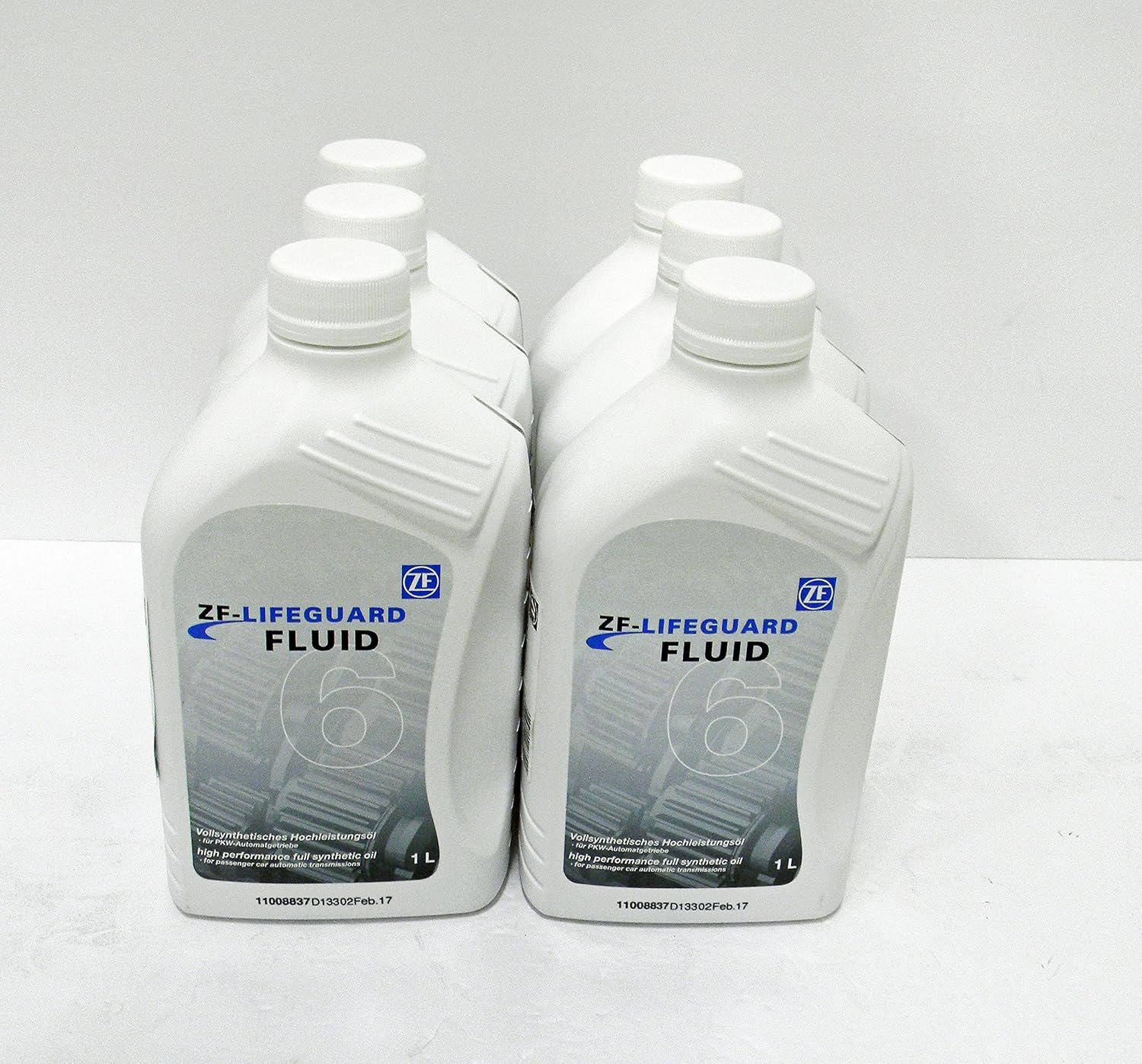
ZF's own aftermarket datasheet specifies LifeguardFluid 6 as the fluid for this transmission family, with friction properties tuned specifically to the unit's clutches -- a generic "universal" ATF changes the friction curve the TCM was calibrated around, and on a case that's already running sixth gear at its highest, most overdriven ratio, that's exactly where a marginal friction mismatch tends to show up first as slip. The datasheet carries an important exception, too: it specifies that certain variants -- the 6HP19A, 6HP19X, 6HP26A61 and 6HP28AF -- are approved only for LifeguardFluid 8 instead, per ZF's own TE-ML 11 lubricant approval list. Confirm your exact transmission code before a pan-and-filter service, not just the family name, since putting the wrong one of these two fluids in the wrong variant can itself be the source of a ratio-affecting slip. For the full capacity and service-fill figures by variant, our ZF6HP fluid type and capacity guide has the breakdown -- this section is only about confirming you're not chasing a hydraulic fault that a correct fluid service would have solved.
Two Documented Gen 1 Wear Points That Produce This Exact Symptom
If fluid and generation are both confirmed, Sonnax's own technical documentation for this Gen 1 platform names two specific valve body wear points that produce the apply-pressure shortfall behind a ratio code, and they aren't the same circuit.
The Position Valve / MV2 Circuit
The position valve is a two-valve train controlled by the MV2 solenoid, and its job is routing line pressure to the A, B and E driving clutches through their individual clutch regulator valves. Sonnax's documentation for the oversized position valve kit traces the root cause to ordinary bore wear from repeated valve oscillation: as the bore and spools wear, you lose MV2's command pressure or get reduced line pressure to the regulators, and either way the driving clutches stop getting full apply pressure. The progression Sonnax describes is exactly what you'd expect from a ratio code -- shift concerns that progress to slipping in gear, and eventually burned A, B and E clutches if it's left to run. The fix is reconditioning the bore and installing the oversized valve kit to restore proper hydraulic clearance, not just swapping a solenoid.
The Pressure Regulator Bore
Separately, Sonnax documents wear at the pressure regulator bore as a cause of line-pressure problems on this same Gen 1 family. Their technical notes for the replacement sleeve state that excess valve-to-bore clearance here "allows critical line pressure balance fluid to cross-leak to exhaust" -- which shows up as high, erratic or unstable line pressure, restricted converter and lube flow, and, if it progresses, broken internal parts from the pressure swings. This bore isn't a drop-in match between sub-variants either: Sonnax lists separate sleeve and valve part numbers for Gen 1 units without the 053 plate, Gen 1 units with the 053 plate, and Gen 2 units, with different dimensions for each. If the rest of the bore shows wear beyond what a sleeve alone corrects, Sonnax's documentation points you to the oversized valve kit instead.
ZF 6HP19/6HP26 Valve Body with Solenoids
If a vacuum test confirms wear at either circuit and you'd rather not recondition bores on the bench, a complete replacement valve body with the solenoids already installed is the faster path back on the road.
View the valve body with solenoids →A Real Shop's Diagnostic Method, Not Just a Parts List
GEARS magazine -- ATRA's trade publication -- published a shop case directly relevant to how this valve body should actually be diagnosed, covering a related failure on the ZF6HP21 (sold in some applications as the 6R60). The article's premise is that fluid leaks inside the valve body's clutch-apply circuits, not a single obviously-bad part, are usually the real cause, and it lays out a method rather than a guess: map every ATF flow path for clutch apply and check each one for a possible leak, flat-sand the valve body castings to find low spots that won't show up any other way, inspect the bores and valves for damage and broken springs and vacuum-check them even where wear isn't visible, and disassemble the full valve body even without an obvious symptom, because ZF's anodized valve coating can wear off without leaving a mark you'd catch by eye. The article also describes a simple bench test for the EDS-series solenoids on this platform: block the feed port, apply roughly 30 psi of shop air to the valve side, and confirm air passes freely with the solenoid de-energized and seals off when it's energized. If a solenoid and the circuits you've checked all pass, the article's own conclusion is that you're more likely looking at leaks or wear you haven't found yet than at a mechatronics command problem -- which is a useful check against stopping the diagnosis too early.
Why a Vacuum Test Catches What a Flashlight Won't
Transmission Digest's TASC Force technical tips cover the same reasoning for this exact Gen 1 family: valve and bore wear builds up gradually as a valve repeatedly strokes inside its bore or casting, and that wear eventually opens clearance past what's needed for a proper hydraulic seal -- well before it's visible to a wiggle test, a deflection check, or a flashlight down the bore. The traditional checks still have a place, but a vacuum test at the documented port is what actually tells you whether a bore is holding the seal it needs to, instead of relying on how it looks.
Shop the part that actually fits a 6HP26
CoreTransmissionParts carries a 7-piece shift solenoid kit built for the 6HP26's 2002-2011 solenoid bank -- the same circuit behind an MV2-side ratio fault. If your diagnosis points at the solenoids rather than a worn bore, this is the direct replacement.
View the 6HP26 shift solenoid kit →Diagnostic Order: What to Check, In What Sequence
- Confirm the generation and sub-variant. Read the valve body casting and separator plate stamp to verify Gen 1 (6HP19/26/32) versus Gen 2 (6HP21/28/34), and note the 053 plate code if present, before you order any hydraulic part.
- Check fluid condition and confirm the correct spec. LifeguardFluid 6 for most of the family, LifeguardFluid 8 for the 6HP19A, 6HP19X, 6HP26A61 and 6HP28AF -- confirm by transmission code, not family name.
- Scan for companion codes. Other ratio codes, solenoid performance or electrical codes, and speed sensor codes all narrow down whether you're looking at one circuit or a system-wide pressure problem.
- Watch live input and output speed data in sixth gear. A clean but mismatched ratio points at a mechanical or hydraulic shortfall; an erratic or implausible reading points at a sensor or wiring fault instead.
- Vacuum-test the valve body at the position valve/MV2 circuit and the pressure regulator bore before condemning either one on sight.
- Bench-test the solenoids with the shop-air method -- free flow unenergized, sealed when energized -- rather than assuming a solenoid is bad because the code points at its circuit.
- Map the full valve body for leaks and low spots if the obvious circuits check out, per the GEARS diagnostic method, instead of stopping at the first part that looks suspect.
- Repair or replace accordingly -- a sleeve or oversized valve kit for confirmed bore wear, a solenoid kit for a confirmed coil or seal failure, or a complete valve body if wear is spread across both circuits.
Worked in that order, a sixth-gear ratio code on this platform gets diagnosed as what it actually is -- a specific hydraulic or electrical shortfall in one of two well-documented circuits, or occasionally a fluid problem -- instead of becoming an expensive guess that starts and ends at "replace the valve body."
Shop ZF6HP valve bodies, solenoid kits and ZF-spec fluid — shipped fast from the USA.
Shop ZF6HP parts →FAQ
Is P0729 the same problem on every car that runs a ZF6HP?
No. The ZF6HP case went into more brands running more different control software than almost any other transmission -- BMW, Audi, Jaguar, Land Rover, Bentley, Rolls-Royce and others, each with its own TCU calibration. But the bigger split is inside ZF's own lineup: Generation 1 (6HP19, 26 and 32, built through 2005) and Generation 2 (6HP21, 28 and 34, built 2006 and later) use different-sized pressure regulator valves and sleeves that are not interchangeable, per Sonnax's own identification guide. Confirm your generation and separator plate code from the valve body casting before ordering any hydraulic parts.
What's the fastest way to tell if this is a sensor problem instead of a hydraulic one?
Pull live data and watch input (turbine) speed against output shaft speed while the module is commanding sixth gear, and check for companion codes. A clean, steady input/output relationship that simply doesn't match the expected sixth-gear ratio points at a mechanical or hydraulic shortfall -- the clutch isn't fully applying. An erratic, dropping-out, or implausible speed reading points at a sensor or wiring problem upstream of the ratio calculation entirely, not at the clutch circuit. Don't skip this step; it decides whether you're pulling a valve body or chasing a connector.
Can I just install a shift kit or new solenoids and clear the code?
Not reliably, and a documented ZF6HP shop case backs that up. GEARS magazine's write-up on a related ZF6HP21 clutch failure found the fix wasn't a single part -- it required mapping the valve body's ATF flow paths for leaks, flat-sanding the castings for low spots, vacuum-checking the bores and valves, and disassembling the unit even without obvious damage, because ZF valves can lose their anodized coating without a visible sign. A solenoid swap alone skips all of that. Bench-test the solenoid first -- the same article's method is a simple shop-air seal check -- before you commit to parts.
Does P0729 mean sixth gear itself is damaged?
Not necessarily. Sonnax's own technical documentation for this Gen 1 platform ties ratio-affecting slip to two specific, well-documented hydraulic wear points: the position valve circuit controlled by the MV2 solenoid, which feeds line pressure to the driving clutches, and the pressure regulator valve bore, where wear lets critical line-pressure-balance fluid cross-leak to exhaust. Both produce the kind of apply-pressure shortfall that shows up as an incorrect-ratio code before any clutch pack is actually burned. Catching either one early, with a vacuum test rather than a teardown-and-guess, is cheaper than condemning the gear train.
Will a fluid change alone fix a sixth-gear ratio code?
Sometimes, if the fluid itself is the root cause. ZF's own aftermarket datasheet specifies LifeguardFluid 6 for this transmission family because its friction behavior is tuned to the unit -- a generic "universal" ATF doesn't shift the same. The datasheet also carves out an exception worth knowing before a pan service: certain variants, including the 6HP19A, 6HP19X, 6HP26A61 and 6HP28AF, are approved only for LifeguardFluid 8 instead, per ZF's TE-ML 11 approval list. Putting the wrong fluid in one of those variants can itself produce the clutch slip that sets this code. If the fluid is already correct, full, and clean, move on to the two hydraulic wear points covered above.
Sources
- Sonnax — Oversized Position Valve Kit, Part 3471 (95740-75K), ZF6HP19/26/32 (Gen. 1) & ZF6HP21/28/34 (Gen. 2). Backs the position valve/MV2 circuit description, the A/B/E driving clutch feed, the bore-wear root cause and failure progression (shift concerns to slip to burned clutches), and the oversized-valve correction. sonnax.com
- Sonnax — Pressure Regulator Sleeve, Part 2664 (95740-03), ZF6HP19/26/32 (Gen. 1), Ford 6R60/6R75/6R80. Backs the pressure regulator bore-wear mechanism, the line-pressure-balance-fluid cross-leak-to-exhaust description, the symptom list, and the non-053/053/Gen. 2 part-number and dimension distinctions. sonnax.com
- GEARS Magazine (ATRA) — "Tracking Down the ZF6HP21 E Clutch Failure," Rob Faucett, September 2019. Backs the valve-body diagnostic method (flow-path mapping, flat-sanding castings, vacuum-checking bores and valves, full disassembly for hidden anodizing wear) and the shop-air solenoid bench test (approx. 30 psi, free flow unenergized / sealed energized). gearsmagazine.com
- ZF Friedrichshafen AG — ZF LifeguardFluid 6 Product Data Sheet, Aftermarket Portal. Backs LifeguardFluid 6 as the specified fluid for this transmission family, the LifeguardFluid 8 exception for the 6HP19A, 6HP19X, 6HP26A61 and 6HP28AF variants, and the TE-ML 11 approval reference. aftermarket.zf.com
- Transmission Digest — TASC Force Tips (technical archive). Backs the explanation of progressive valve/bore wear from repeated stroking, the Gen 1 (2000-2005) to Gen 2 (2006-on) mechatronic timeline, and vacuum testing as the reliable check against wear that isn't visually apparent. transmissiondigest.com
- Sonnax — "ZF6HP19-26-32 Generation 1, Ford 6R60-6R75-6R80, ZF6HP21-28-34 Generation 2 Identification Guide," Tech Resource 249. Backs the Gen 1/Gen 2 case-design split, the 2006 mechatronic revision, and the A053/B053 separator plate caveat for certain Gen 1 applications. sonnax.com