Most ZF6HP solenoid complaints isolate to one gear or one clutch, which is exactly what makes the pressure control solenoid different. When this circuit goes bad, the truck or sedan doesn't shift badly in third gear, it shifts badly in every gear, because the EPC (Electronic Pressure Control) or LPC (Line Pressure Control) solenoid sets the base hydraulic pressure that every clutch and the torque converter apply circuit depends on. Get that one wrong and nothing downstream of it can be right.
ZF's own documentation calls it the line pressure control solenoid. Ford, which licenses this architecture for the 6R60, 6R75, 6R80 and 6R100, calls the identical function the EPC or LPC solenoid. Same job, same hydraulics, different badge. This article covers how it works, the symptom list, how to test it without guessing, and the one part that fails almost as often as the solenoid itself.

How the EPC/LPC Solenoid Actually Works
Per Sonnax, on the Gen 1 ZF6HP19/26/32 and the Ford 6R60, 6R80 and 6R100 that share its hydraulics, the variable force solenoids control clutch apply and release, torque converter clutch apply and release, and line pressure. The pressure control solenoid's output acts on the main pressure regulator valve (ZF's SYS.DR-V) — the valve that actually sets pump line pressure for the whole transmission — and its own feed comes from the solenoid pressure regulator valve (DR.REO-V), which supplies regulated pressure to every solenoid in the unit, as Bob Warnke lays out in Sonnax's ZF6 converter diagnostics article. That is why a worn DR.REO-V bore makes all solenoid output, line pressure included, read too high or too low at once.
The control logic is inverse: more commanded current means less output pressure, and less current means more output pressure. At zero current, the solenoid's hydraulic valve opens fully and sends maximum pressure to the main regulator valve, which drives line pressure to its maximum. As the PCM or TCM increases current, the outlet port closes down and line pressure falls. This is a deliberate fail-safe. If the circuit ever loses power, loses continuity, or the PCM yanks control for a fault, pressure defaults high instead of low, so the clutches clamp hard instead of slipping and burning.
The short version: The EPC/LPC solenoid sets base line pressure for the entire transmission, not one gear. A failure here or in the valve that feeds it shows up across every clutch and the converter apply circuit at once — harsh shifts everywhere, not a flare isolated to the 2-3 shift. Test the solenoid electrically and mechanically before replacing anything, and check the shared solenoid pressure regulator valve bore if more than one circuit is acting up.
The Full Symptom List
Because this circuit sets the pressure baseline for every apply device in the transmission, the symptom list reads like a greatest-hits of transmission complaints rather than one specific shift:
- Harsh upshifts and harsh downshifts across multiple gears, not just one — the signature that separates this from a single shift solenoid problem.
- Flare shifts and neutral shifts if pressure momentarily runs low instead of high during a transition.
- Delayed Forward or Reverse engagement and wrong gear starts from low initial apply pressure.
- Torque converter clutch slip, since TCC apply pressure is derived from the same regulated line pressure.
- Gear ratio error and solenoid performance DTCs as the TCM sees apply times and ratios outside the values it expects. These typically log as Pressure Control Solenoid circuit or performance codes in the generic P0960-P0963 / P0746 range, though BMW, Audi, Jaguar and Land Rover's own diagnostic systems may show their own manufacturer-specific fault numbers for the same circuit.
- Burnt or glazed clutch packs over time if the solenoid sticks toward low pressure instead of failing to its high-pressure default, since low apply pressure lets clutches slip and cook under load.
That last point is the exception to the fail-safe rule worth remembering: the design defaults to maximum pressure at zero current, but a solenoid that is mechanically sticking or internally leaking does not necessarily behave like a clean electrical open. A gummed-up or worn solenoid can still deliver inconsistent or low pressure under commanded current even though the fail-safe would protect it at true zero current. That is exactly why you test the part instead of reasoning from the fail-safe design alone. Sonnax's Bob Warnke makes the same point for the whole ZF6 family: mechanical rather than electrical failure is the common culprit in these solenoids, and a vacuum test confirms it.
EPC Symptoms vs. Shift Solenoid Symptoms
It is easy to chase the wrong solenoid on this valve body because the complaint vocabulary overlaps. The distinction that matters on the bench:
| Pattern | Points to |
|---|---|
| Harsh or flare on one specific shift (e.g., only 2-3), other shifts feel normal | A single shift/clutch solenoid (EDS circuit) — see our ZF6HP shift solenoid symptoms guide |
| Harsh or flare across most or all shifts, plus TCC slip | EPC/line pressure circuit or the shared solenoid pressure regulator valve |
| Delayed engagement at every cold start, improves once warm | Could be either; check fluid level and type first |
| No movement in any gear, pump noise normal | Not this circuit — see our ZF6HP no-reverse guide for forward clutch and pump-level causes |
If you are not sure which bucket a complaint falls into, pull codes first. A stored Pressure Control Solenoid code narrows it immediately; a stored code tied to one specific shift solenoid circuit (EDS1, EDS2, etc.) sends you to the other guide instead.
Testing the Solenoid Off the Car
This family of solenoids — shift and pressure control alike — uses the same two-part test procedure, and skipping either half leaves a real failure undetected.
Electrical: resistance check
Remove the circuit board from the mechatronic unit before testing; do not check resistance through the 16-pin external connector. Per Sonnax's test manifold instructions for this solenoid family, orange, blue and yellow-capped solenoids should read 5 to 6 ohms at 68°F (20°C). Use an ohmmeter that does not exceed 0.6 volts output, or the test itself can damage the coil.
Mechanical: vacuum check
Sonnax is explicit that internal mechanical sealing, not the electrical coil, is the leading cause of failure for this solenoid family — which means a solenoid can pass the resistance check and still be bad. Seat the solenoid in the color-matched Sonnax test manifold (orange, blue or yellow; test-fit if the cap color has faded), connect the vacuum test line from the VACTEST-01K stand, and pull vacuum.
| Vacuum reading | Result |
|---|---|
| Over 21 in-Hg, holds steady | Good solenoid |
| Under 20 in-Hg | Compromised — replace it |
One application note: on the yellow manifold the solenoid under test must be energized to get a valid reading, or a good solenoid can fail the test. The 95430-VTK kit covers Ford 6R60, 6R75, 6R80 (both 2009-2014 and 2015-later), 6R100, and ZF6HP19, 6HP21, 6HP26, 6HP28, 6HP32 and 6HP34 — the entire family across both generations and the Ford cousins, pressure control solenoid included.
Need the valve body, not just a solenoid?
When the regulator bore is worn alongside the solenoid, or the solenoid tests bad and the core is beyond a single-part fix, a remanufactured valve body resolves both at once.
See the ZF6HP19/26 valve body with solenoidsThe Part That Fails Almost as Often: the Solenoid Pressure Regulator Valve
Every solenoid on this valve body, EPC included, draws its working supply from one shared valve: the solenoid pressure regulator, ZF part designation DR.REO-V. Sonnax's technical writeup is direct about what happens when its bore wears: excess valve-to-bore clearance lets pressurized feed oil cross-leak to the sump, which reduces the oil available to every solenoid downstream. Low feed pressure at idle produces delayed engagement and wrong-gear starts; excessive feed pressure floods the solenoids and produces harsh upshifts, harsh downshifts, high line pressure, and gear ratio or solenoid codes. That is nearly the identical symptom list a bad EPC solenoid produces, which is exactly why the two have to be told apart on the bench rather than guessed at from the service bay.
Sonnax's oversized solenoid pressure regulator valve kit (95740-17K, valve only as 95740-17A) addresses this wear with a hard-coat anodized valve sized to restore proper bore clearance. It fits ZF6HP19, 6HP26 and 6HP32 (Generation 1) and the Ford 6R60, 6R75, 6R80 and 6R100 cousins only. It does not fit Generation 2 (ZF6HP21, 6HP28, 6HP34) — confirm which generation is in hand off the transmission tag before ordering, the same way you would before ordering any valve body hard part for this family.
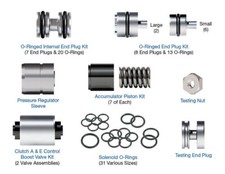
If the symptom pattern looks like an O-ring or end-plug leak rather than a worn regulator bore — broken parts tied to excessive line pressure, excess heat, firm shifts, flare shifts and bind-ups, delayed engagement, or harsh engagement — Sonnax's Zip Kit reseals the solenoid O-rings, accumulator pistons, end plugs and pressure regulator sleeve in one pass. It is generation- and separator-plate-specific: ZF6-053-ZIP for Gen. 1 with the 053 separator plate, ZF6-6R60-ZIP for Gen. 1 without it plus the Ford 6R60/6R75/6R80, and ZF6-GEN2-ZIP for Gen. 2 6HP21/28/34.
Diagnosis Order That Works
- Pull codes. A Pressure Control Solenoid circuit or performance code, or a complaint pattern that spans multiple gears plus TCC slip, points here rather than at a single shift solenoid.
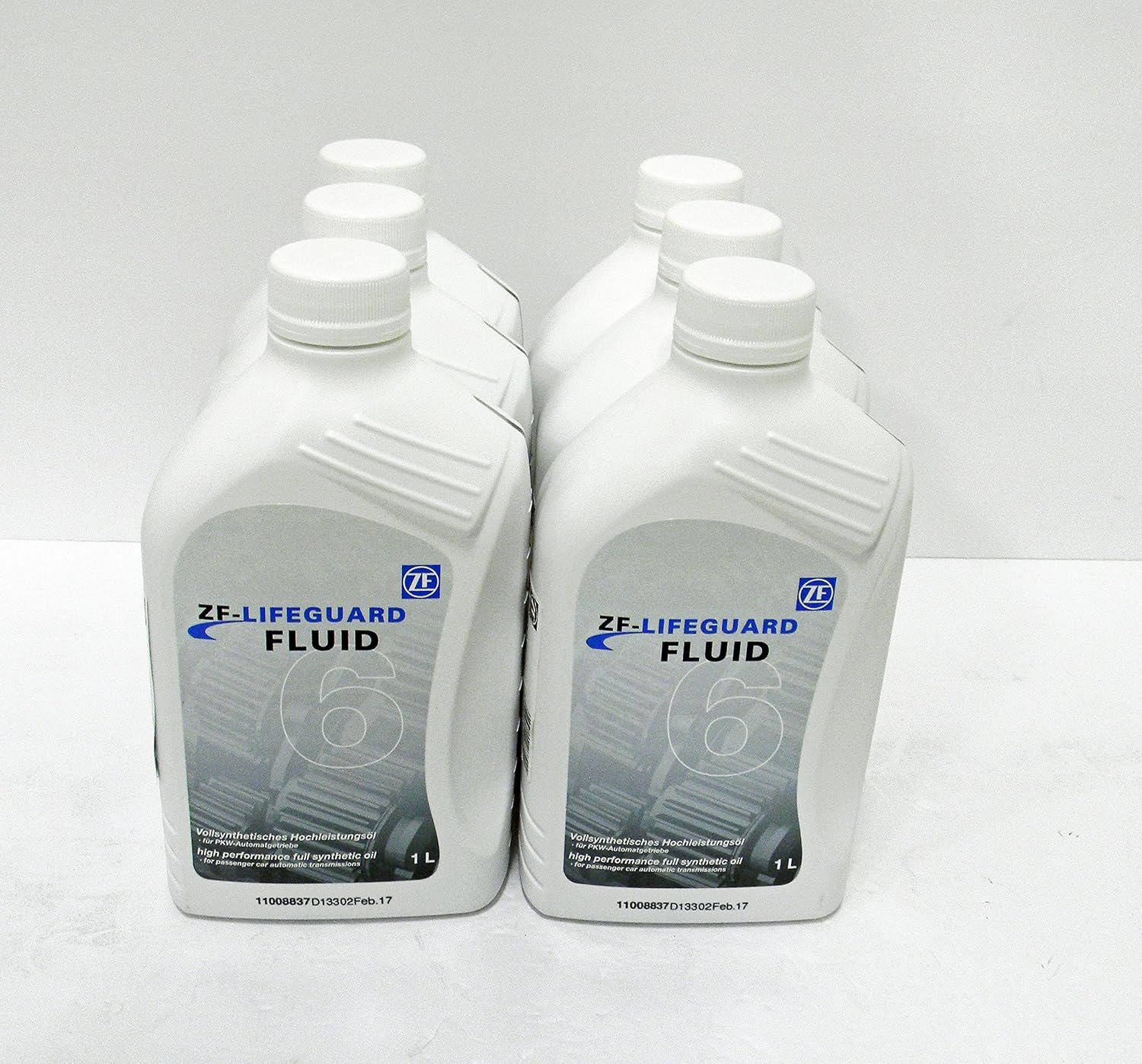
- Check fluid level and condition. Low or wrong fluid mimics low line pressure complaints before you touch a solenoid. ZF specifies LifeguardFluid 6 for this family.
- Pull the mechatronic circuit board and resistance-test the EPC/line pressure solenoid at 68°F. Anything outside 5 to 6 ohms is suspect.
- Vacuum-test it on the correctly matched manifold. Anything under 20 in-Hg gets replaced regardless of resistance.
- If the solenoid tests clean but the symptom pattern still spans multiple circuits, suspect the shared solenoid pressure regulator valve bore next, not a second solenoid.
- Confirm Gen. 1 vs. Gen. 2 off the transmission tag before ordering a regulator valve kit, Zip Kit or solenoid — none of these parts cross generations.
- Clear adaptations and drive a full relearn cycle after any repair. Shift feel will not settle until the TCM relearns against the corrected pressure.
FAQ
What does the EPC/line pressure control solenoid do on a ZF6HP?
It is a variable force solenoid that sets main line pressure to match torque demand. The PCM/TCM varies its current and the solenoid's output pressure moves the opposite way, so the transmission can run light pressure for a soft part-throttle shift and high pressure for a firm shift under load.
What are the symptoms of a failing ZF6HP line pressure control solenoid?
Symptoms affect the whole transmission at once rather than one gear: harsh upshifts and downshifts, flare shifts, neutral shifts, delayed Forward or Reverse engagement, wrong-gear starts, torque converter clutch slip, and gear ratio or solenoid performance codes. Because every clutch and the converter apply circuit share this pressure, a bad EPC circuit rarely isolates to a single gear the way a single shift solenoid does.
What happens if the ZF6HP EPC solenoid loses power or fails electrically?
By design it fails safe. The line pressure solenoid on this family is a normally-high variable force solenoid with an inverse relationship: at zero current the solenoid's hydraulic valve opens fully and sends maximum pressure to the main regulator valve, giving maximum line pressure. That protects the clutches from slipping if the circuit loses power, but it also means a lost or shorted EPC circuit shows up as uniformly harsh, high-pressure shifts in every gear rather than a no-pressure stall.
How do you test the ZF6HP line pressure control solenoid?
Two checks. Electrically, pull the circuit board and ohm the solenoid with the board removed and an ohmmeter under 0.6 volts; orange, blue and yellow-capped solenoids on this family read 5 to 6 ohms at 68 degrees F. Mechanically, seat the solenoid in the color-matched Sonnax test manifold and pull vacuum: over 21 in-Hg is good, under 20 in-Hg means replace it. The vacuum test catches the leading failure mode, internal mechanical sealing, that the resistance check alone misses.
Is a harsh-shift-in-every-gear complaint always the EPC solenoid itself?
No. Every solenoid on this valve body, including the EPC/line pressure solenoid, draws its working feed from a single solenoid pressure regulator valve. Sonnax's oversized regulator valve kit exists because wear in that one valve's bore cross-leaks pressure and produces the same system-wide symptom list as a bad EPC solenoid. Test the solenoid itself first; if it tests good and the symptom pattern still spans multiple circuits, the regulator valve bore is the more likely culprit.
Tested in order — codes, fluid, resistance, vacuum, then the shared regulator valve — a system-wide harsh-shift complaint on a ZF6HP stops being a parts-cannon job and becomes a two-visit repair at most.
Sources
- Sonnax — Bob Warnke, "Six Ways from Sunday: Diagnosing ZF6 & Ford 6R60/80 TC-Related Drivability Concerns" (March 2016). Backs the solenoid pressure regulator valve (DR.REO-V) feeding regulated pressure to all solenoids, the main regulator valve (SYS.DR-V) role, worn regulator bores skewing every solenoid output high or low, and mechanical (not electrical) failure being the common solenoid fault on the ZF6 family, confirmable by vacuum test. sonnax.com
- Sonnax — Oversized Solenoid Pressure Regulator Valve Kit (95740-17K / 95740-17A) product page. Backs the full system-wide symptom list for solenoid-feed pressure wear (flare shifts, neutral shifts, harsh upshifts/downshifts, gear ratio codes, solenoid performance codes, delayed Forward/Reverse engagement, wrong gear starts, TCC slip), the root-cause explanation of shared feed pressure and bore cross-leak, and the Generation 1-only application list (ZF6HP19/26/32, Ford 6R60/6R75/6R80/6R100), excluding Generation 2 6HP21/28/34. sonnax.com
- Sonnax — "How to Identify Similar Ford & ZF6 Transmissions: Four Features to Check Before You Begin a Rebuild," by Maura Stafford. Backs the Generation 1 vs. Generation 2 identification approach and the caution to confirm generation off the unit before ordering generation-specific hard parts. sonnax.com
- Sonnax — Solenoid Test Manifold Kit 95430-VTK Instructions (95430-VTK-IN, 11-25-20). Backs the 5 to 6 ohm resistance spec at 68°F with the circuit-board-removed and 0.6-volt-ohmmeter cautions, the 21 in-Hg pass / under 20 in-Hg fail vacuum thresholds, the note that internal mechanical sealing is the leading failure mode for this solenoid family, the yellow-manifold energized-solenoid requirement, and the full application list across Ford 6R60/6R75/6R80/6R100 and ZF6HP19/21/26/28/32/34. cdn.transend.us
- Sonnax — Zip Kit (ZF6-053-ZIP / ZF6-6R60-ZIP / ZF6-GEN2-ZIP) product page. Backs the O-ring/end-plug-side symptom list (broken parts from excessive line pressure, excess heat, firm shifts, flare shifts and bind-ups, delayed engagement, harsh engagement) and the generation- and separator-plate-specific part number split. sonnax.com
- ZF Friedrichshafen AG — ZF LifeguardFluid 6 Product Data Sheet (revision 2021-07-19). Backs the identification of LifeguardFluid 6 as the ZF-specified fluid for this transmission family, referenced for readers ruling out fluid condition alongside a pressure-circuit diagnosis. aftermarket.zf.com