Every automatic F30 sedan, F31 wagon and F34 Gran Turismo, the 2012-2019 3 Series, has a ZF eight-speed behind the engine. The ones that roll into a shop usually come in with one of five problems: a leak at the cooler line connections that BMW wrote a bulletin about, a leak that looks like the pan but often is not, a shift complaint that is really a fluid level problem, fluid that was never changed because it was sold as "lifetime," or valve body bore wear that shows up as bump shifts and converter codes. Four of the five never need the transmission out of the car.
Here is what each one looks like, what BMW and ZF actually published about it, and the order I work them in.
First: Which 8HP Is in This 3 Series?
Do this before you order a single part. The early F30 cars with the N20 four-cylinder, the N26 (the SULEV version of the N20) and the N55 six use the first-generation 8HP45. BMW's own bulletin SI B24 02 15 groups exactly those engines with the 8HP transmission for the F30, F31 and F34. The later cars built around the B46/B48 four and B58 six moved to the second-generation units in the 8HP50 family. The tag on the side of the case is the final answer, and BMW's diagnostic bulletin SI B24 02 13 tells techs to record the serial and part number etched into the case for exactly that reason.
It matters because aftermarket hard parts do not cross the generation line. The SK 8HP shift kit covered in ATRA's GEARS Magazine fits GEN1 ZF8HP45, 8HP55, 8HP70, 8HP90 and the Chrysler 845RE, and the listing says plainly that it does not fit the GEN2 8HP50, 8HP75, 8HP95 or 850RE. Buy for the tag, not for the model year range on a parts website.
Problem 1: Fluid Loss at the Cooler Line Connections
This is the one with a BMW bulletin that names the 3 Series directly. SI B24 02 15, "8HP: Transmission Fluid Loss From Cooler Lines Connections," covers the F30 3 Series sedan, F31 Sports Wagon and F34 Gran Turismo, plus the F22/F23 2 Series, F32/F33/F36 4 Series, E84 X1 and E89 Z4, with the N20, N26 or N55 engine and the 8HP. The situation it describes is a fluid leak around the oil cooler lines on the transmission side.
The cause BMW gives is damaged O-rings due to unfavorable cooling line connection tolerances. The fix is the part people skip: replace the O-rings and the cooling lines. The bulletin says in writing that replacing only the O-rings may result in a repeat failure. If the lines that cut the first set of O-rings go back on the car, they will cut the second set too.
Plan the labor before you quote it. On rear-drive cars the bulletin allows 15 FRU for the cooler line work as the main job. On xDrive cars it adds removing the left engine support arm and removing and installing the front driveshaft, so the same leak is a much bigger job on an all-wheel-drive car. Either way, the bulletin also calls for checking and topping up the fluid with a battery charger connected and a vehicle test. That is the level procedure covered under Problem 3, not a quick top-off through the fill hole.
These connections sit above the pan, so the fluid runs down the case and drips off the pan rail and gets blamed on the pan gasket. Clean the case above the pan and see where the wet trail starts. Our ZF8HP cooler line replacement guide walks through the line swap itself.
Problem 2: The Pan Leak That Is Not Always the Pan
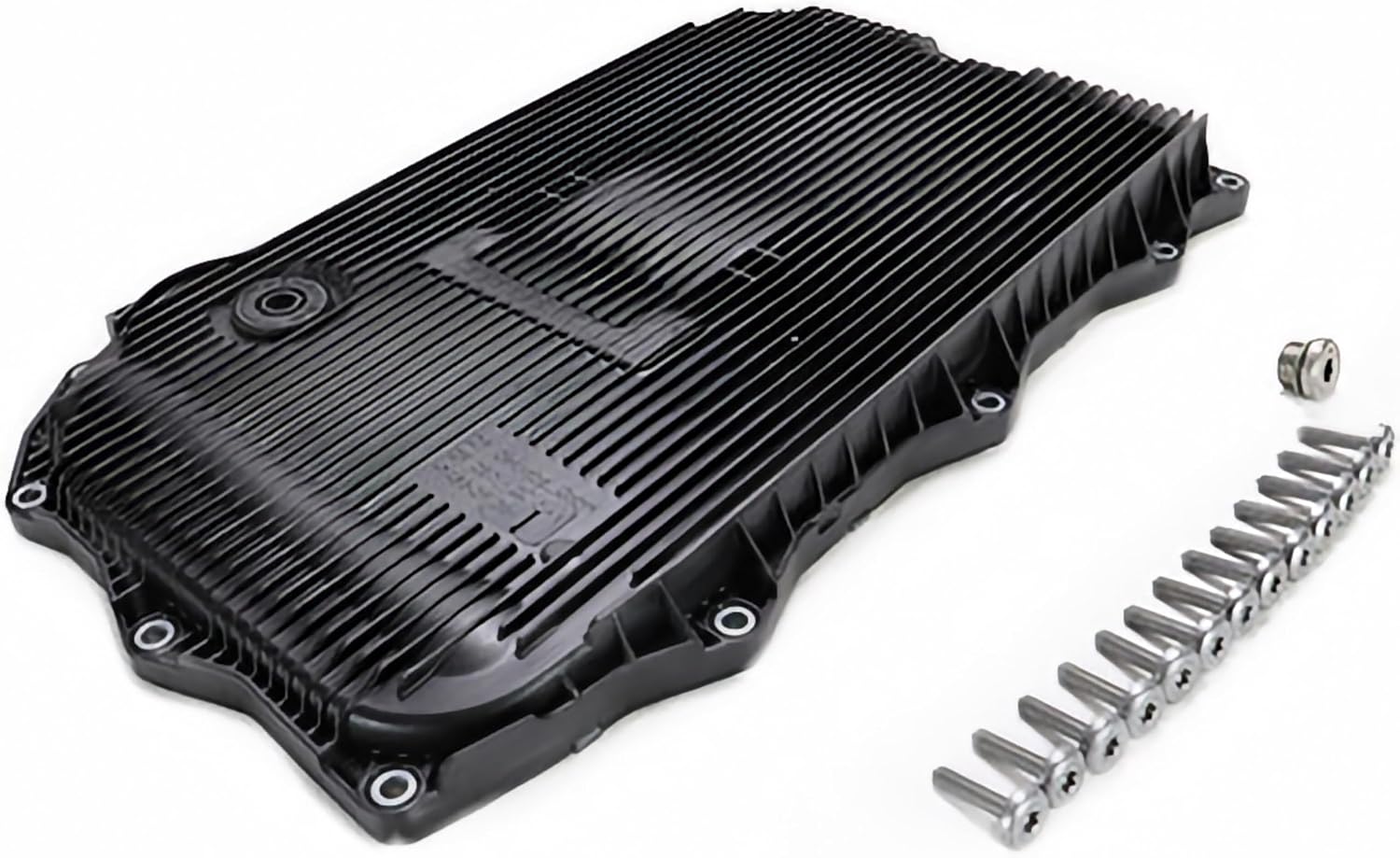
The F30's 8HP uses the composite (plastic) oil pan with the filter built into it. ZF's Service Information 50130 for the 8HP oil change kit lists the plastic pan as having the filter "integrated in oil pan" and gives it a 10 Nm bolt torque, tightened crosswise from the center out after every bolt has been started by hand. Over-torque a plastic pan or tighten it around the edge and it will warp and weep, which is a real source of pan leaks.
The other leak in the same area is the mechatronic pass-through, the sealed connector where the harness plugs into the control unit inside the case. ZF sells separate mechatronic seal kits by generation, and that is the same Gen 1 / Gen 2 split as above. Our 8HP mechatronic sleeve leak guide covers tracing it with dye, hot. Degrease above the pan and road test to full temperature before you order a pan.
Problem 3: Shift Complaints That Are Really a Fluid Level Problem
This is the most expensive mistake on these cars, because it ends in a mechatronic or a transmission that was never bad. BMW's SI B24 02 13, "8-Speed ZF Automatic Transmission Diagnosis and Troubleshooting Hints," applies to every model with the ZF 8HP, and BMW wrote it because of the high cost and complexity of these units. Its rules are worth following in any shop, dealer or not:
- Check the fluid level for every transmission concern, even with no obvious sign of an external leak.
- BMW says fluid level can only be checked using test plan ABL-DIT-AS2460_GSOEA_8HP. If no fluid flows when the plug is removed, add fluid until it just trickles out. The bulletin specifically says not to put your fingers in the filler hole to find the level.
- Do not program the car or reset the EGS adaptations if the complaint cannot first be verified. Clearing adaptations first wipes out the data that tells you what is wrong.
- If a car comes back with a slip complaint after an oil leak repair, BMW's own note is that the fluid level is probably wrong.
- Fix verified engine drivability problems first. Stumbling, misfires and hesitation can show up as transmission shift complaints, and BMW tells techs to resolve them before blaming the transmission.
Once the level is corrected, BMW's sequence is to clear the EGS adaptation values and drive the car warmed up at various speeds for at least five miles. If the shift problem is gone, the job is now finding the leak that dropped the level. If it is not gone, then you start looking inside the unit.
The ZF Level Check, Step by Step
ZF's oil change kit instructions (SI 50130) spell out the same temperature-gated procedure without needing BMW's software, as long as your scan tool can read transmission oil temperature. Prerequisites: limp home mode off, lights, A/C and other loads off, car level on the lift, selector in P, parking brake on, and a tester connected that reads transmission oil temperature.
- Start the engine and read the transmission oil temperature. Below 30 C, let it warm up.
- Between 30 and 50 C, hold 2,000 rpm for 30 seconds to fill the converter, then return to idle.
- Select P, R and D, then manually shift D1 and D2, holding each for about 10 seconds. Recheck the temperature: still 30 to 50 C.
- Open the fill plug. If fluid does not run out, add the specified ZF LifeguardFluid until it does.
- Wait until only single drops come from the filler hole, then install the plug. On a rear-drive 8HP ZF lists the filler plug as M18 x 1.5, 8 mm hex, 35 Nm; on all-wheel-drive units it is M22 x 1.5, 10 mm hex, 30 Nm.
Do not set the level above 50 C. ZF warns that too little fluid damages the transmission, and too much escapes through the overflow once it is hot, where it can ignite on the exhaust.
| Item | F30 8HP spec | Source |
|---|---|---|
| Level-check temperature | 30 to 50 C transmission oil | ZF SI 50130 |
| Converter fill step | 2,000 rpm for 30 s | ZF SI 50130 |
| Plastic pan bolt torque | 10 Nm, crosswise from center out | ZF SI 50130 |
| Filler plug, RWD | M18 x 1.5, 8 mm hex, 35 Nm | ZF SI 50130 |
| Filler plug, AWD (xDrive) | M22 x 1.5, 10 mm hex, 30 Nm | ZF SI 50130 |
| BMW fluid part numbers | 83 22 2 152 426 (20 L), 83 22 2 289 720 (1 L) | BMW SI B24 02 15 |
| Recommended change | 150,000 km (about 93,000 miles), sooner for severe use | ZF LifeguardFluid 8 data sheet |
Problem 4: "Lifetime" Fluid That Was Never Changed
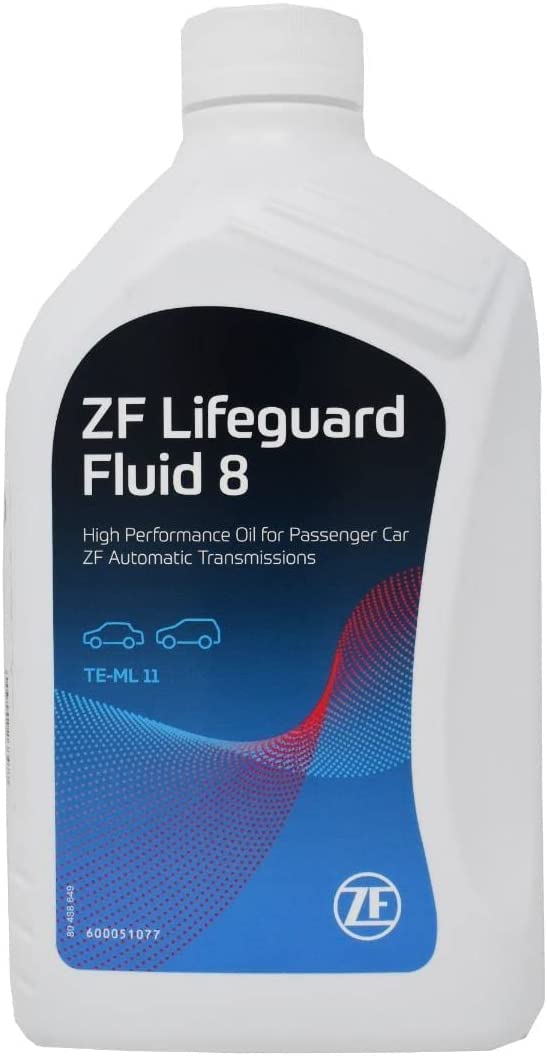
The F30's maintenance schedule does not call for a transmission fluid change, and plenty of these cars are past 100,000 miles on the factory fill. ZF's LifeguardFluid 8 product data sheet says the transmissions are generally filled with lifetime oil, and in the same document recommends an oil change after 150,000 km, roughly 93,000 miles, and sooner under high temperature or load, or when the car's past use is unknown. ZF's service sheet names the conditions that age the oil faster: lots of high-speed driving, towing, and sporty driving.
Use only the specified fluid. The LifeguardFluid 8 data sheet allows only LifeguardFluid 8 or 9 in these transmissions, and ZF's oil change instructions say no additives of any kind, because they change the oil's chemistry. On the 3 Series, a proper service is a new plastic pan (which brings a new filter with it) and a refill set by the level procedure above. Fluid type, capacity and the full interval discussion are in our ZF8HP fluid type and capacity guide.
Problem 5: Valve Body Bore Wear: Bump Shifts, Flares and TCC Codes
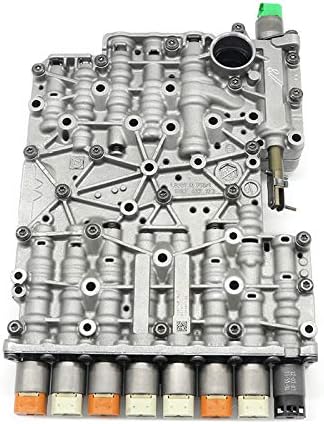
When the level is right and the complaint is still there, the 8HP45's valve body is the next stop. Sonnax's ZF8HP45/ZF8HP70 valve body layout maps the common complaints to specific worn bores, and it lines up well with what these cars come in with:
- Bump shifts, burnt clutches, flare shifts, gear loss, and gear ratio or solenoid codes point at the clutch holding valve bores. Sonnax's oversized clutch holding valve kit, 35740-20K, covers five holding valve locations.
- Converter shudder, TCC slip, TCC codes and an overheated converter point at the TCC valve (ZF WK-V), kit 35740-13K.
- Coastdown clunk, harsh TCC apply, TCC codes, overheating and TCC lining failure point at the TC pressure valve (ZF WD-V), kit 35740-18K.
- Harsh or soft shifts and erratic or high line pressure point at the pressure regulator valve (ZF SYS-DR), kit 35740-01K.
For a first-generation 8HP45, the SK 8HP shift kit from the GEARS write-up hits several of these in one pass: a redesigned pressure regulator valve with a calibrated spring and bushing, a drop-in TCC regulator valve and spring, an oversized pressure reducing (AFL) valve and spring, two end plug retainers and seven solenoid damper inserts. Its stated targets are TCC codes and lining failures, harsh, soft and erratic shifts, and gear ratio and solenoid performance codes.
A gear ratio code with clean, correct-level fluid and a car that bump-shifts warm is usually a valve body bore case. A ratio code with burnt fluid and debris in the pan means the unit comes apart. The bench procedure for testing these bores is in our ZF8HP valve body wear guide, and the converter side is covered in the ZF8HP TCC shudder diagnosis.
The Order I Work an F30 Transmission Complaint
- Read the case tag: Gen 1 8HP45 or Gen 2 8HP50. Every part decision depends on it.
- Print and save all EGS, DME and DSC fault codes. Do not clear adaptations yet.
- Fix verified engine drivability faults first.
- Check the fluid level with the temperature-gated procedure. Note how much it took.
- If it was low, find the leak: cooler line connections (SI B24 02 15, lines and O-rings both), the connector sleeve, or the pan.
- Clear adaptations and drive at least five miles warm. If the complaint is gone, you are done once the leak is fixed.
- If it remains with clean fluid, go to the valve body bores that match the symptom. Burnt fluid and debris mean a rebuild.
Shop the part for this fix
Resealing a leaking 8HP45 or going in after a worn unit? Core Transmission Parts carries an 8HP45 overhaul gasket and seal kit for 2011-2018 units. Confirm Gen 1 8HP45 from the case tag before you order.
See the 8HP45 gasket and seal kit at Core Transmission Parts →Frequently Asked Questions
What transmission is in a BMW F30 3 Series?
Automatic F30, F31 and F34 3 Series cars use the ZF eight-speed. Cars with the N20, N26 and N55 engines use the first-generation 8HP45, while the later B46/B48 and B58 cars use the second-generation 8HP50 family. Read the ZF tag on the case before ordering parts, because Gen 1 and Gen 2 valve body and seal parts do not interchange.
Why is my BMW 3 Series leaking transmission fluid?
The common sources are the cooler line connections at the side of the case, the plastic pan and its gasket, and the mechatronic connector sleeve. BMW bulletin SI B24 02 15 covers the cooler line leak on F30, F31 and F34 cars with the N20, N26 or N55: replace both the O-rings and the cooler lines, because O-rings alone may fail again. Clean the case above the pan and trace the leak hot before buying a pan.
Does the BMW 3 Series 8-speed need a fluid change?
BMW does not schedule one, but ZF's LifeguardFluid 8 data sheet recommends an oil change after 150,000 km, about 93,000 miles, and sooner for high heat, load or unknown history. On the F30 the filter is built into the plastic pan, so the service is a new pan plus a refill with LifeguardFluid 8 or 9, with the level set at 30 to 50 C.
Why does my BMW 3 Series shift hard after a leak repair?
BMW's SI B24 02 13 says that when a car comes back with a shift or slip complaint after an oil leak repair, the fluid level is probably wrong. Check the level with the temperature-gated procedure before anything else. Do not reset the EGS adaptations until the complaint is verified, then clear them and drive the car warm for at least five miles.
Sources
- BMW of North America, SI B24 02 15, "8HP: Transmission Fluid Loss From Cooler Lines Connections" (November 2016), on NHTSA's bulletin server. Backs the F30/F31/F34 and other affected models with the N20, N26 or N55 engine and 8HP, the leak at the transmission-side cooler line connections, the cause (O-rings damaged by unfavorable cooling line connection tolerances), the instruction to replace both the O-rings and the lines because O-rings alone may fail again, the xDrive labor (left engine support arm, front driveshaft), the 15 FRU RWD main labor allowance, and BMW fluid part numbers 83 22 2 152 426 and 83 22 2 289 720. static.nhtsa.gov (PDF)
- BMW of North America, SI B24 02 13, "8-Speed ZF Automatic Transmission Diagnosis and Troubleshooting Hints" (May 2013), on NHTSA's bulletin server. Backs checking fluid level on every concern, test plan ABL-DIT-AS2460_GSOEA_8HP, the trickle-out fill and no-fingers rule, not resetting EGS adaptations before the complaint is verified, the clear-adaptations-and-drive-five-miles sequence, printing fault codes first, resolving engine drivability faults first, the wrong-level-after-leak-repair note, and recording the case serial and part number. static.nhtsa.gov (PDF)
- ZF Friedrichshafen AG, Service Information 50130 EN, "Oil change kit for ZF 8HP automatic transmission" (11.2024). Backs the level-check prerequisites, the 30-50 C window, the 2,000 rpm / 30 s converter fill, the P-R-D and D1/D2 cycle, the fill-until-it-runs-out and single-drops step, the over- and under-fill warnings, the no-additives rule, the severe-use examples, the plastic pan with integrated filter and its 10 Nm crosswise torque, and the filler plug sizes and torques. aftermarket.zf.com (PDF)
- ZF Friedrichshafen AG, Product Data Sheet, ZF LifeguardFluid 8. Backs the lifetime-fill wording, ZF's 150,000 km oil change recommendation and the shorter interval for high temperature, load or unknown history, and the rule that only LifeguardFluid 8 or 9 may be used. aftermarket.zf.com (PDF)
- Sonnax, "ZF8HP45, ZF8HP70 Valve Body Layout." Backs the symptom-to-bore mapping and kit numbers 35740-20K (clutch holding valves), 35740-13K (TCC valve, WK-V), 35740-18K (TC pressure valve, WD-V) and 35740-01K (pressure regulator, SYS-DR). sonnax.com
- GEARS Magazine (ATRA), "ZF8HP/845RE Shift Kit Valve Body Repair Kit" (May 21, 2025). Backs the GEN1 fitment (8HP45, 8HP55, 8HP70, 8HP90, 845RE) and the stated non-fitment on GEN2 8HP50, 8HP75, 8HP95 and 850RE, the kit's target symptoms, and its contents. gearsmagazine.com
Shop pans with integrated filters, ZF fluid, solenoid kits, valve bodies and rebuild kits for the ZF 8HP in the BMW 3 Series, on our own secure checkout.
Shop ZF8HP parts →