When an F30, F31 or F34 3 Series owner says the automatic is slipping, they can mean four different things. The engine flares a few hundred rpm on one particular shift. The car feels soft and vague at steady cruise. The dash throws a drivetrain warning and the car holds one gear. Or, on the later B58 cars, the car rolls in neutral right after it was put in reverse on a cold morning. Those four complaints have four different causes, and only one of them means burnt clutches.
This is how I sort them out on a ZF 8HP in the 2012-2019 3 Series, cheapest check first, using what BMW, ZF and Sonnax have published about the unit. The common-problems overview for this car is in our ZF8HP BMW 3 Series common problems guide. This one stays on slip.

How the 8HP Holds a Gear (and Why That Tells You What Is Slipping)
The 8HP gets eight forward gears and reverse out of four planetary gear sets, two brakes (A and B) and three clutches (C, D and E). Sonnax's write-up on the unit lays out the apply chart, and the rule is simple: every gear uses exactly three of the five elements. A shift releases one element and applies one other. That is why the shifts are so fast, and it is also why you can work out which element is slipping from which gears it slips in.
| Gear | Elements applied |
|---|---|
| 1st | A, B, C |
| 2nd | A, B, E |
| 3rd | B, C, E |
| 4th | B, D, E |
| 5th | B, C, D |
| 6th | C, D, E |
| 7th | A, C, D |
| 8th | A, D, E |
| Reverse | A, B, D |
Turn the chart around and you get the version I actually use on a road test:
- A brake: 1st, 2nd, 7th, 8th and reverse.
- B brake: 1st through 5th and reverse.
- C clutch: 1st, 3rd, 5th, 6th and 7th.
- D clutch: 4th through 8th and reverse.
- E clutch: 2nd, 3rd, 4th, 6th and 8th.
If the car slips under load in 2nd, 3rd, 4th, 6th and 8th but holds in 1st, 5th and 7th, every slipping gear shares the E clutch and none of the good gears use it. If it only flares going into one gear and then holds fine once it gets there, that is not a worn pack. That is apply timing or apply pressure on the element coming on during that shift, which is a fluid level, adaptation or valve body question.
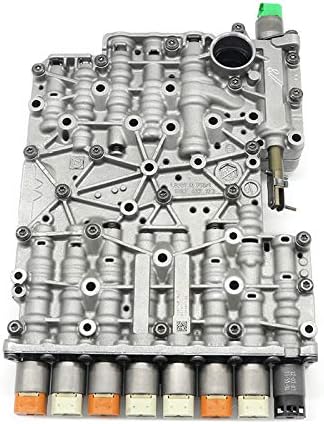
Each element has its own pressure control solenoid in the mechatronic. Sonnax's ZF8 webinar maps them for the 8HP45/70: EDS-1 controls A, EDS-3 controls B, EDS-5 controls C, EDS-6 controls D and EDS-4 controls E. EDS-2 is the converter clutch, EDS-7 is line pressure, and MV-1 is the park solenoid. The same document gives the solenoid resistance as 5 to 6 ohms depending on temperature. A solenoid inside that range has a good coil. That proves the coil, not the valve it feeds.
Step 1: Check the Fluid Level Before You Believe Anything Else
BMW wrote SI B24 02 13, "8-Speed ZF Automatic Transmission Diagnosis and Troubleshooting Hints," for every model with the 8HP, and its first rule is to check the fluid level for every transmission concern, leak or no leak. BMW says the level can only be checked with test plan ABL-DIT-AS2460_GSOEA_8HP, and that if nothing flows when the plug comes out you add fluid until it just trickles out. If the car comes back with a slip complaint after an oil leak repair, BMW's own note is that the level is probably wrong.
Low fluid shows up as slip first because the pump starts pulling air on hard acceleration, turns and braking, and line pressure drops right when the clutches need it most. On an F30 the usual places it went are the cooler line connections and the mechatronic connector sleeve, both covered in the common-problems guide.
Without BMW software, ZF's oil change kit instructions (Service Information 50130) give the same temperature-gated check, as long as your scan tool reads transmission oil temperature. Car level, selector in P, loads off, limp mode not active.
- Start the engine. Let the transmission oil temperature come up to 30-50 C.
- Hold 2,000 rpm for 30 seconds to fill the converter, then back to idle.
- Select P, R and D, then shift manually through D1 and D2, about 10 seconds each. Confirm the temperature is still 30-50 C.
- Pull the fill plug. If no fluid runs out, add ZF LifeguardFluid until it does.
- When only single drops come out, install the plug: M18 x 1.5 at 35 Nm on rear-drive cars, M22 x 1.5 at 30 Nm on xDrive.
Write down how much it took. Half a liter on a car that slips on hard right-hand corners is the diagnosis. ZF also warns against setting the level above 50 C, because the excess pushes out the overflow once the unit is hot.
| Check | Value | Source |
|---|---|---|
| Level-check window | 30 to 50 C transmission oil | ZF SI 50130 |
| Converter fill | 2,000 rpm for 30 s | ZF SI 50130 |
| Fill plug, RWD / xDrive | M18 x 1.5, 35 Nm / M22 x 1.5, 30 Nm | ZF SI 50130 |
| Plastic pan bolts | 10 Nm, crosswise from the center out | ZF SI 50130 |
| Solenoid resistance | 5 to 6 ohms, temperature dependent | Sonnax ZF8 webinar |
| TCC apply | From about 14 mph, 40 rpm maximum slip | Sonnax ZF8 webinar |
| Converter charge (PZT) pressure | About 30 psi in D at a stop, about 20 psi once TCC applies | Sonnax ZF8 webinar |
Step 2: Save the Codes, Then Rule Out the Engine and the Software
SI B24 02 13 is blunt about two habits that wreck the diagnosis. Print and save the fault memory before doing anything, and do not reset the EGS adaptations if the complaint cannot first be verified. Clearing adaptations on the first visit erases exactly the information that tells you which shift has been fighting. The bulletin also says to fix verified engine drivability faults first, because stumbles, misfires and hesitation get reported as transmission slip or shift complaints. A misfire under load on an N20 can feel just like a flare.
The second check is software. BMW's SI B24 03 17 (October 2017) covers 3 Series F30 and F34, plus F22/F23, F32/F33/F36, G12 and G30 cars, with the B58 engine and the 8HP50, built up to November 8, 2017. After a cold start, when the selector is put in R and the car starts moving, the transmission can intermittently shift to neutral. To a driver that feels like the transmission let go. The cause BMW lists is a DME software error, the fix is programming with ISTA 4.08.1x or higher to integration level F020-17-11-520 or later, and the bulletin says outright that parts replacement will not provide a remedy. On a 340i or 330i-era B58 car with that complaint, check the integration level before you touch the pan.
That bulletin also confirms a point that matters for parts: the B58 3 Series cars run the second-generation 8HP50, not the 8HP45 in the earlier N20, N26 and N55 cars. Read the ZF tag on the case before you order anything internal.
Step 3: Separate Converter Slip From Clutch Slip
A soft, vague feel at steady cruise is usually the converter clutch, not a gear. On the 8HP the converter clutch can apply in any forward gear, 1st through 8th. Sonnax's webinar notes for the BMW application say it applies from about 14 mph and runs at 40 rpm maximum slip. That gives you a clean scan-tool test: at a steady 40-50 mph with light throttle, compare engine speed with transmission input (turbine) speed. Locked, they should be within a few dozen rpm. If engine speed wanders 100-200 rpm above input speed and climbs on light throttle, the converter clutch is not holding.
For a pressure check, Sonnax shows the PZT tap on the converter charge circuit at about 30 psi in D at a stop, dropping to about 20 psi at 14 mph in 1st when the TCC applies, then rising slightly with throttle and load. Sonnax's "A New Path for ZF" article adds that the converter circuit is a three-path design with at least 14.5 psi held in the converter during apply, and that the 8HP valve showing the most severe wear is the TC pressure valve, because of how hard it works. Sonnax's valve body layout ties that bore (ZF WD-V) to coastdown clunk, harsh TCC apply, TCC codes, overheating and lining failure, and sells oversized kit 35740-18K for it. The full converter workup is in our ZF8HP TCC shudder diagnosis.
Step 4: A Flare on One Shift Points to the Valve Body
Sonnax's webinar walks through how a clutch apply is controlled, using the 4-5 shift and the C clutch as the example. In 4th, C is off and the TCC is on, but prefill pressure is already sitting in the C apply circuit. During the shift into 5th, C apply pressure ramps up, regulated by the C solenoid acting on the C holding valve (HV-C) and clutch valve (CV-C), and the TCC goes partial. Once 5th is complete, C runs at full line pressure with low solenoid amperage and the TCC is back on.
That ramp is where a worn valve body shows itself. If the holding valve bore for the oncoming element is worn, apply pressure bleeds off through the clearance during the ramp, the element comes on late, and the engine flares before the next gear catches. The adaptations will try to correct it by adding pressure or fill time, which is why a car with worn bores often drives fine cold and flares once the fluid thins out hot. Sonnax's valve body layout maps bump shifts, burnt clutches, flare shifts, gear loss and gear ratio or solenoid codes to the clutch holding valve bores, and its oversized clutch holding valve kit, 35740-20K, fits any of the five holding valve locations. It requires reaming, so it is a bench job with the fixture, not a driveway job.
Use the apply chart to name the suspect. A 4-5 flare is C coming on. A 5-6 flare is E coming on. A 2-3 flare is C again. If two shifts flare and both apply the same element, you have found your bore or your solenoid. If the solenoid tests 5-6 ohms and the flare follows it when the solenoids are swapped between positions on the bench, the solenoid is the part. If it stays with the position, it is the bore. Our ZF8HP valve body wear guide covers vacuum testing those bores.
Step 5: Steady Slip in Several Gears Means the Unit Comes Apart
When the level is right, the software is current, the converter holds, and the car still slips under steady load in a group of gears that all share one element, that element is worn. Check the fluid and the pan before you quote it. Dark, burnt-smelling fluid and friction material in the pan magnet area mean the pack has been slipping for a while, and swapping a valve body into that unit will only buy time.
Also note what the computer does. When the EGS sees input and output speeds that do not match the commanded gear, it stores a ratio monitoring fault. BMW's SI B24 02 13 says every ratio monitoring code makes ISTA ask whether the fluid level was checked, and tells techs to answer "No" so the oil balancing test plan, ABL-DIT-AS2460_GSOEA_8HP, is added automatically. That is BMW telling you, again, that a ratio code on these cars is a level problem until proven otherwise.
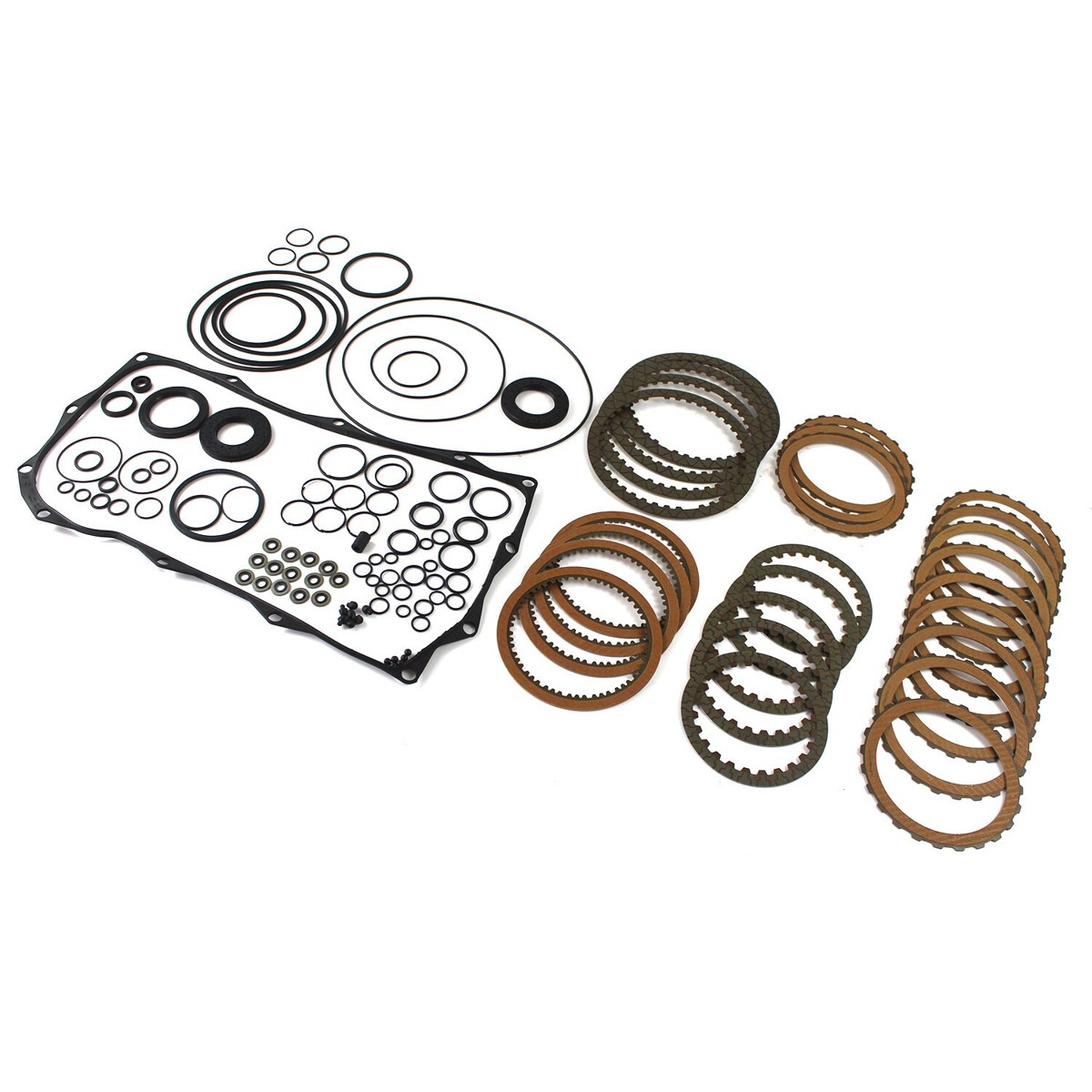
If the case does have to come apart, the rebuild decision is the same as any 8HP45: full friction set, all seals, and the valve body checked or replaced, because worn bores are often what burned the pack. Clutch slip mechanics across the whole 8HP family are covered in our ZF8HP slipping causes and fix article.
The Order I Work an F30 Slip Complaint
- Road test and write down which gears slip, which shifts flare, hot or cold.
- Print and save all EGS and DME fault codes. Do not clear adaptations.
- Fix verified engine drivability faults first.
- Check the fluid level at 30-50 C. Note how much it took and find the leak if it was low.
- On a B58 car with a cold reverse-to-neutral complaint, check the integration level against SI B24 03 17.
- Compare engine speed with input speed at cruise to separate converter slip from clutch slip.
- Use the apply chart to name the element. A flare on one shift is valve body; slip across a group of gears is the element itself.
- After any repair, clear adaptations and drive the car warm at varied speeds for at least five miles, as SI B24 02 13 directs.
Shop the part for this fix
If the road test points at a worn element and the 8HP45 has to come apart, Core Transmission Parts carries an 8HP45 transmission rebuild kit. Confirm a Gen 1 8HP45 from the case tag first; B58 cars use the Gen 2 8HP50.
See the 8HP45 rebuild kit at Core Transmission Parts →Frequently Asked Questions
Why does my BMW 3 Series feel like the transmission is slipping?
The most common cause on an F30 8HP is a low fluid level, usually from a leak at the cooler line connections or the mechatronic connector sleeve. BMW's SI B24 02 13 says to check the level on every transmission concern and that a slip complaint after an oil leak repair usually means the level is wrong. Engine misfires and converter clutch slip can also feel like a slipping transmission, so check those before blaming the clutches.
How do I check the transmission fluid level on a BMW F30?
With the car level and a scan tool reading transmission oil temperature, warm the fluid to 30-50 C, hold 2,000 rpm for 30 seconds, and cycle P, R, D, D1 and D2. Then open the fill plug and add ZF LifeguardFluid until it runs out, and install the plug once only single drops come out. ZF lists the plug at 35 Nm on rear-drive cars and 30 Nm on xDrive.
Why does my BMW 340i go into neutral after I put it in reverse?
BMW bulletin SI B24 03 17 covers F30 and F34 cars with the B58 engine and 8HP50 built up to November 8, 2017. After a cold start the transmission can intermittently shift to neutral when driving off in reverse. The cause is DME software, the fix is programming with ISTA 4.08.1x or higher, and BMW states that replacing parts will not fix it.
Can a bad valve body make an 8HP slip?
Yes. Sonnax ties flare shifts, burnt clutches, gear loss and gear ratio codes on the 8HP45 to worn clutch holding valve bores, which bleed off apply pressure while a clutch is coming on. A flare on one specific shift, worse when hot, points to the valve body. Steady slip in every gear that shares one clutch or brake points to a worn element instead.
Sources
- BMW of North America, SI B24 02 13, "8-Speed ZF Automatic Transmission Diagnosis and Troubleshooting Hints" (May 2013), on NHTSA's bulletin server. Backs checking the fluid level on every concern, test plan ABL-DIT-AS2460_GSOEA_8HP and the trickle-out fill, the wrong-level-after-leak-repair note, saving fault codes first, not resetting EGS adaptations before the complaint is verified, fixing engine drivability faults first, the instruction to answer "No" to the fluid-level question on ratio monitoring codes so the oil balancing test plan is added, and the five-mile warm drive after clearing adaptations. static.nhtsa.gov (PDF)
- BMW of North America, SI B24 03 17, "8HP50 Transmissions Gear Shifts From Reverse to Neutral" (October 2017), on NHTSA's bulletin server. Backs the F30/F34 and other B58 8HP50 models built up to 11/08/2017, the intermittent shift to neutral after a cold start in reverse, the DME software cause, the ISTA 4.08.1x programming fix to integration level F020-17-11-520 or higher, and the statement that parts replacement will not remedy it. static.nhtsa.gov (PDF)
- ZF Friedrichshafen AG, Service Information 50130 EN, "Oil change kit for ZF 8HP automatic transmission" (11.2024). Backs the level-check prerequisites, the 30-50 C window, the 2,000 rpm / 30 s converter fill, the P-R-D and D1/D2 cycle, the overfill warning, the plastic pan 10 Nm crosswise torque, and the RWD and AWD fill plug sizes and torques. aftermarket.zf.com (PDF)
- Sonnax, "A New Path for ZF." Backs the four planetary sets, two brakes and three clutches, the element apply chart for all eight gears and reverse, TCC apply in any forward gear, the three-path converter with at least 14.5 psi in the converter during apply, and the TC pressure valve as the most severely worn 8HP valve. sonnax.com
- Sonnax, "Dodge TorqueFlite 8 (ZF8) Theory of Operation and VB Information," webinar part 1 (PDF). Backs the ZF8HP45/70 solenoid-to-element map (EDS-1 A, EDS-3 B, EDS-5 C, EDS-6 D, EDS-4 E, EDS-2 TCC, EDS-7 line pressure, MV-1 park), the 5-6 ohm solenoid resistance, the BMW-application TCC apply at 14 mph with 40 rpm maximum slip, the PZT pressures (about 30 psi at a stop, about 20 psi at TCC apply), the C clutch prefill-ramp-line pressure sequence through HV-C and CV-C, and kit 35740-20K fitting any of five holding valve locations with reaming. Sonnax webinar (PDF)
- Sonnax, "ZF8HP45, ZF8HP70 Valve Body Layout." Backs the mapping of bump shifts, burnt clutches, flare shifts, gear loss and ratio or solenoid codes to the clutch holding valve bores (35740-20K), and of coastdown clunk, harsh TCC apply, TCC codes and lining failure to the TC pressure valve, ZF WD-V (35740-18K). sonnax.com
Shop solenoid kits, valve bodies, rebuild kits, pans and ZF fluid for the 8HP in the BMW 3 Series, on our own secure checkout.
Shop ZF8HP parts →