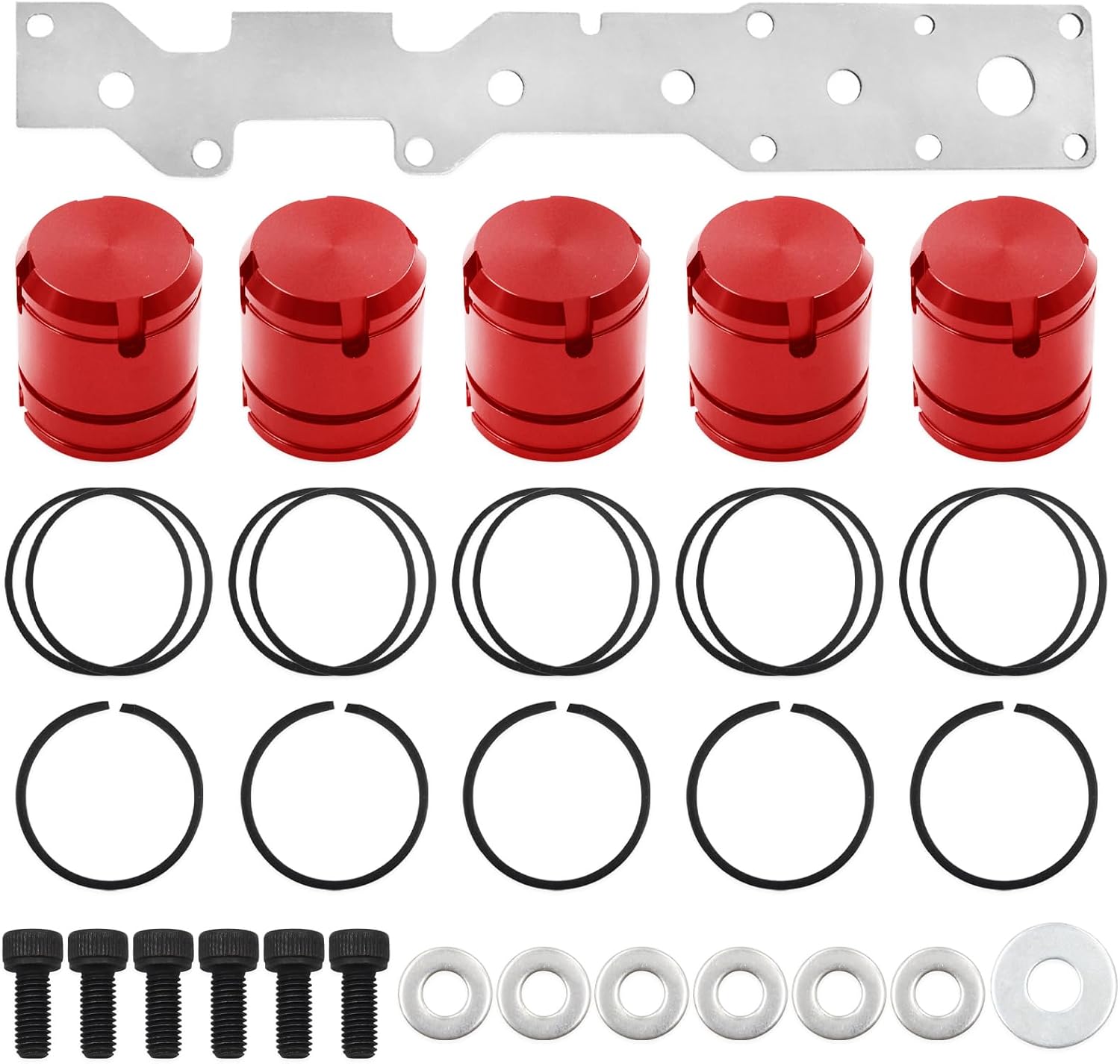
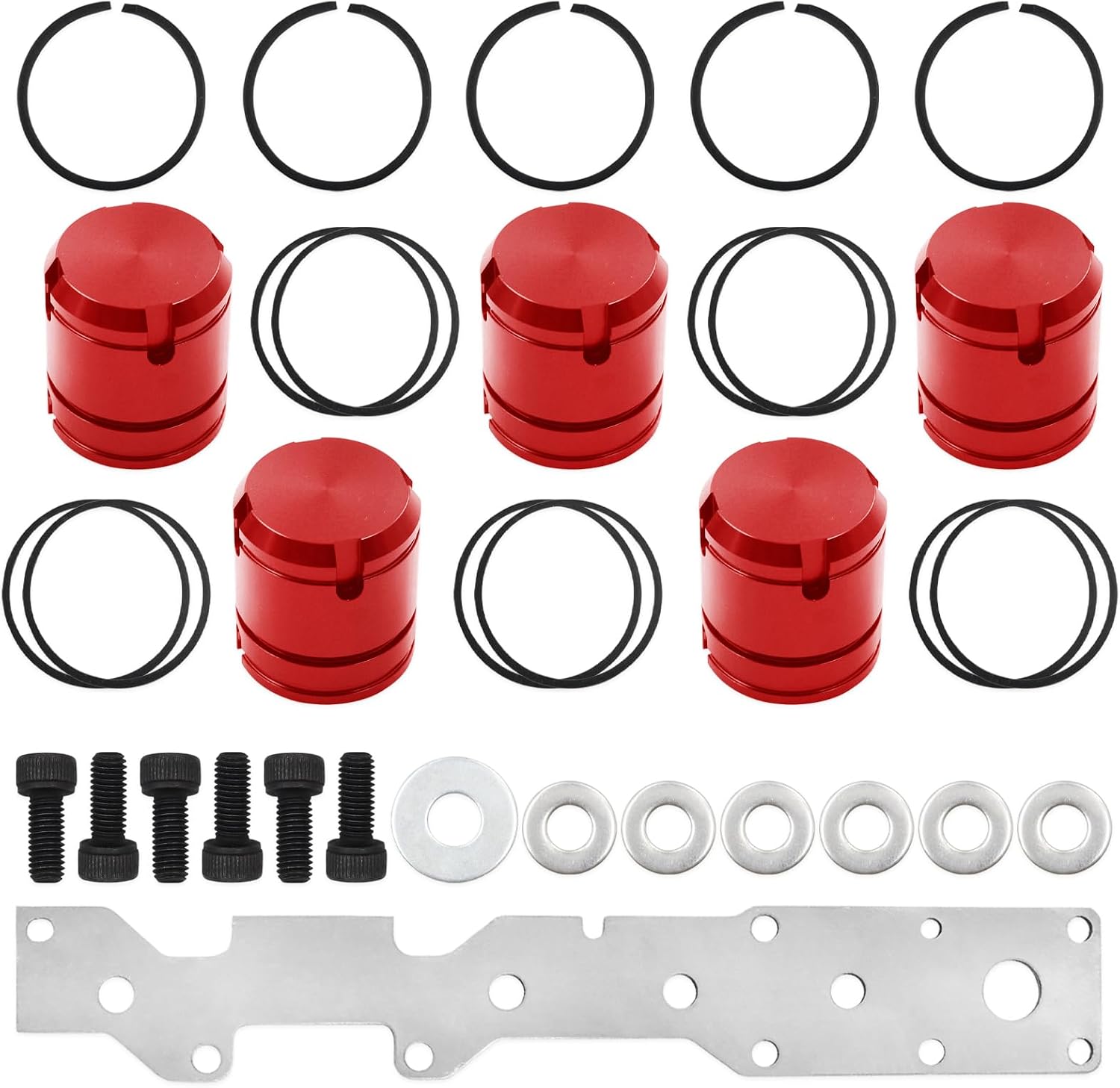
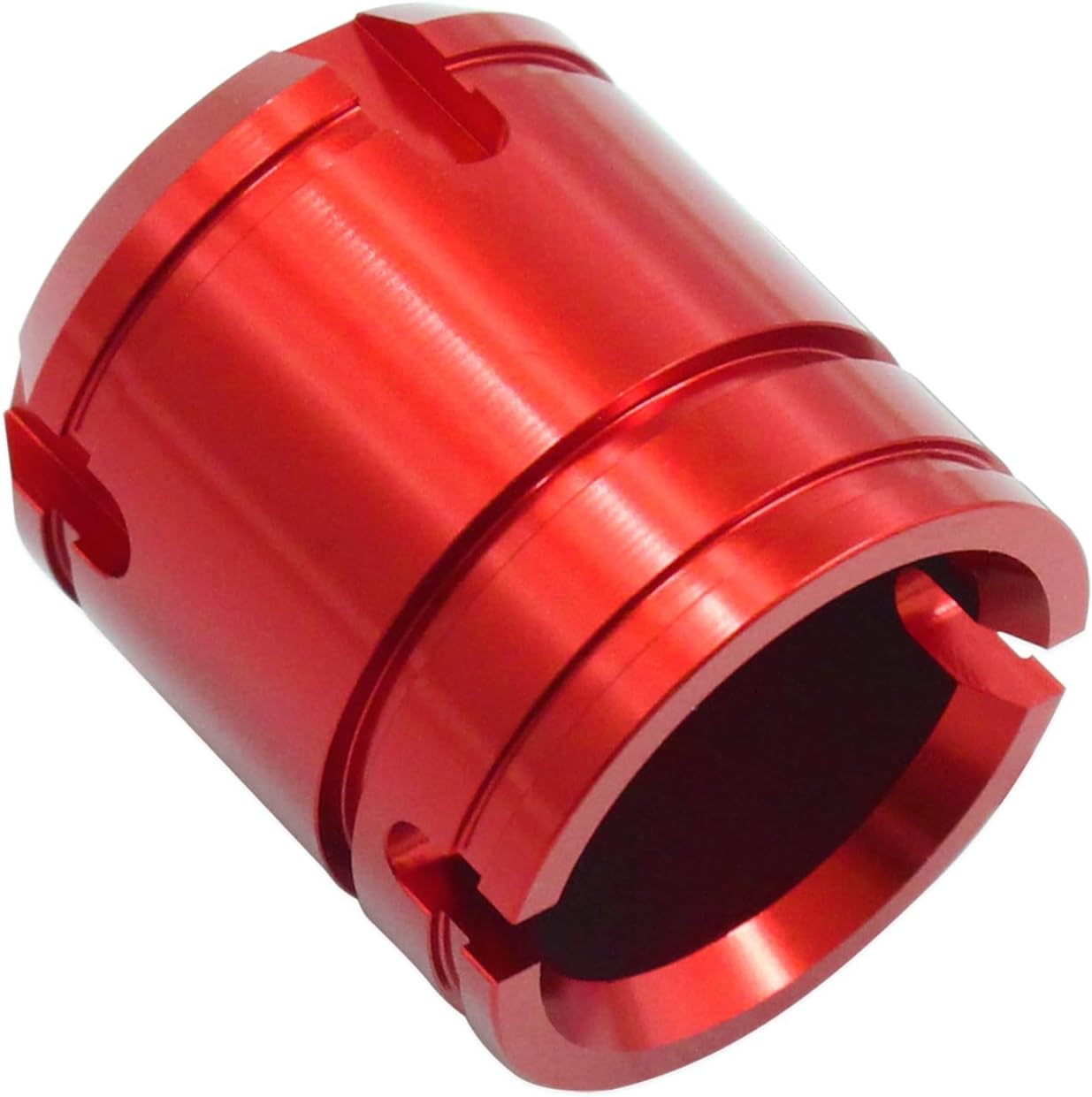
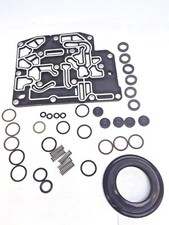
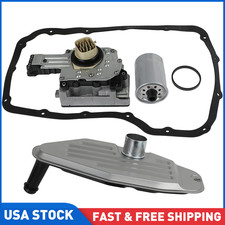
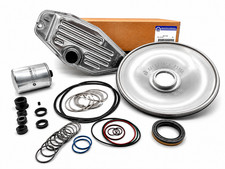
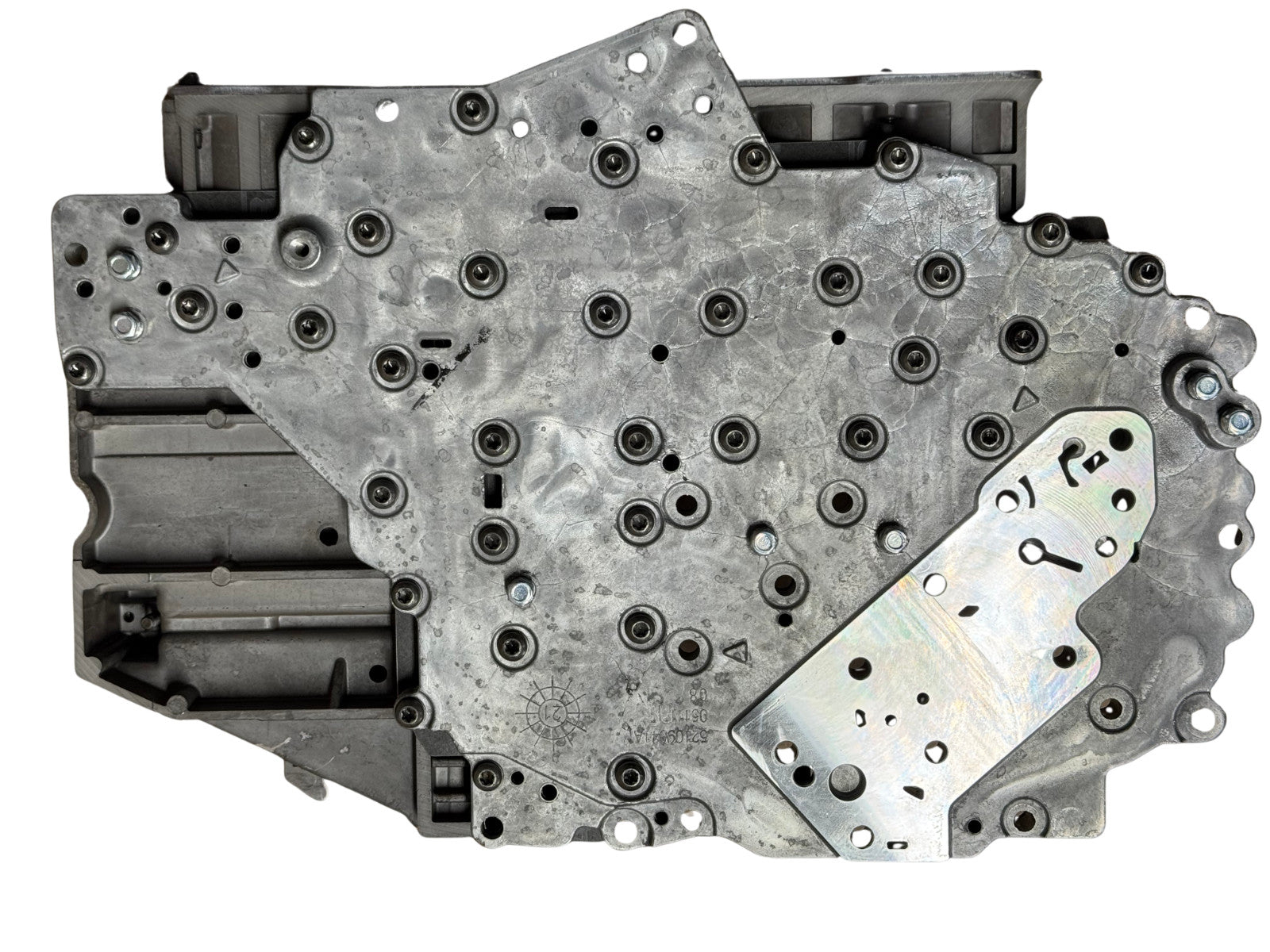
If your Ram's 1-2 or 2-3 shift has gone soft and flared, or the truck bangs into gear one day and slips the next, the accumulator stack in the valve body is a likely suspect. This kit rebuilds that stack in the RFE family valve body: five billet aluminum accumulator pistons, ten solid PTFE guide seals, five scarf-cut PTFE seals, a reinforced steel accumulator plate with shim, and six screws with washers. It is built for the 68RFE behind the 6.7L Cummins in Ram 2500 and 3500 trucks, and it also fits the 45RFE, 545RFE, 65RFE and 66RFE from 1999 on.
What the accumulators do in a 68RFE
Each accumulator is a spring-loaded piston teed into a clutch apply circuit. When a solenoid opens a circuit, part of that oil has to stroke the piston against its spring before full pressure reaches the clutch, which softens the apply and gives the shift a controlled ramp instead of a hammer blow. In the RFE design there is no oil pressure on the back side of the piston, only the springs, so seal drag and piston friction change the shift feel directly. Sonnax points out that the factory piston is guided at only one end. Side load can push the primary seal down into its deep groove until bare piston rubs the aluminum bore, and once the bore is scuffed, apply oil leaks past every shift.
The factory cover plate holding the stack is a second weak point. It flexes as the pistons hit it, the screws lose their grip, and they can back out or break. A loose plate lets the pistons cock in their bores and speeds up the wear.
Symptoms of worn accumulator pistons or a flexing plate
- Flared or slipping upshifts, worst on the 1-2 and 2-3 when the fluid is hot
- Harsh or bumpy shifts that change from day to day as seal drag varies
- Delayed or rough engagement into Drive or Reverse when cold
- Clutch ratio or pressure-related codes that keep returning after the solenoid pack has already been replaced
- Loose screws, a bowed cover plate or broken piston pieces found when the valve body is out
How to confirm the problem before you order
Rule out the cheap items first. Check the fluid level hot, scan for codes, and look at the solenoid pack and its connector, because a sticking solenoid can mimic an accumulator leak. Our 68RFE valve body testing guide walks through the order of checks, and the Ram 3500 shift problem guide sorts shift complaints by cause. If the valve body is already on the bench, look straight at the accumulator bores. A bright polished band or a step you can feel with a fingernail, or a piston with scuff marks along one side, tells you the factory stack is done.
Fitment
The kit is listed for the 45RFE, 545RFE, 65RFE, 66RFE and 68RFE automatics, 1999 and newer, which share the accumulator layout. In practice that covers the 68RFE in 2007-up Ram 2500, 3500 and cab-chassis trucks with the 6.7L Cummins, plus the gas RFE units in Ram 1500, Dakota, Durango and Jeep applications. The rest of the internals are not shared across the family, so confirm which unit you have from the transmission tag, or send us your year and VIN before ordering. You can browse other parts for your unit on the 68RFE parts page.
Install notes
- Drain the fluid, drop the pan and filter, unplug the solenoid pack and remove the valve body. Lay it flat on a clean bench.
- Remove the accumulator plate. Keep every spring in its own bore position; inner and outer springs differ and are not interchangeable.
- Clean and inspect each bore. The new pistons carry a guide seal at each end, and the primary seal sits on a part of the bore the factory seal never rode on, so light scuffing can be saved. Deep scoring or a cracked bore calls for a valve body instead.
- Lube the PTFE seals in clean ATF+4 and ease each piston in by hand. Dual-seal pistons are slower to start than the originals, so take your time and do not force them.
- Set the springs, fit the shim and reinforced plate, and tighten the screws evenly in a cross pattern by hand. The threads are in aluminum, so never use an impact. The plate's extra holes need threads tapped into the casting before they can be used.
- Refill with ATF+4 and check the level with the fluid at or above 160 degrees F, as Chrysler specifies.
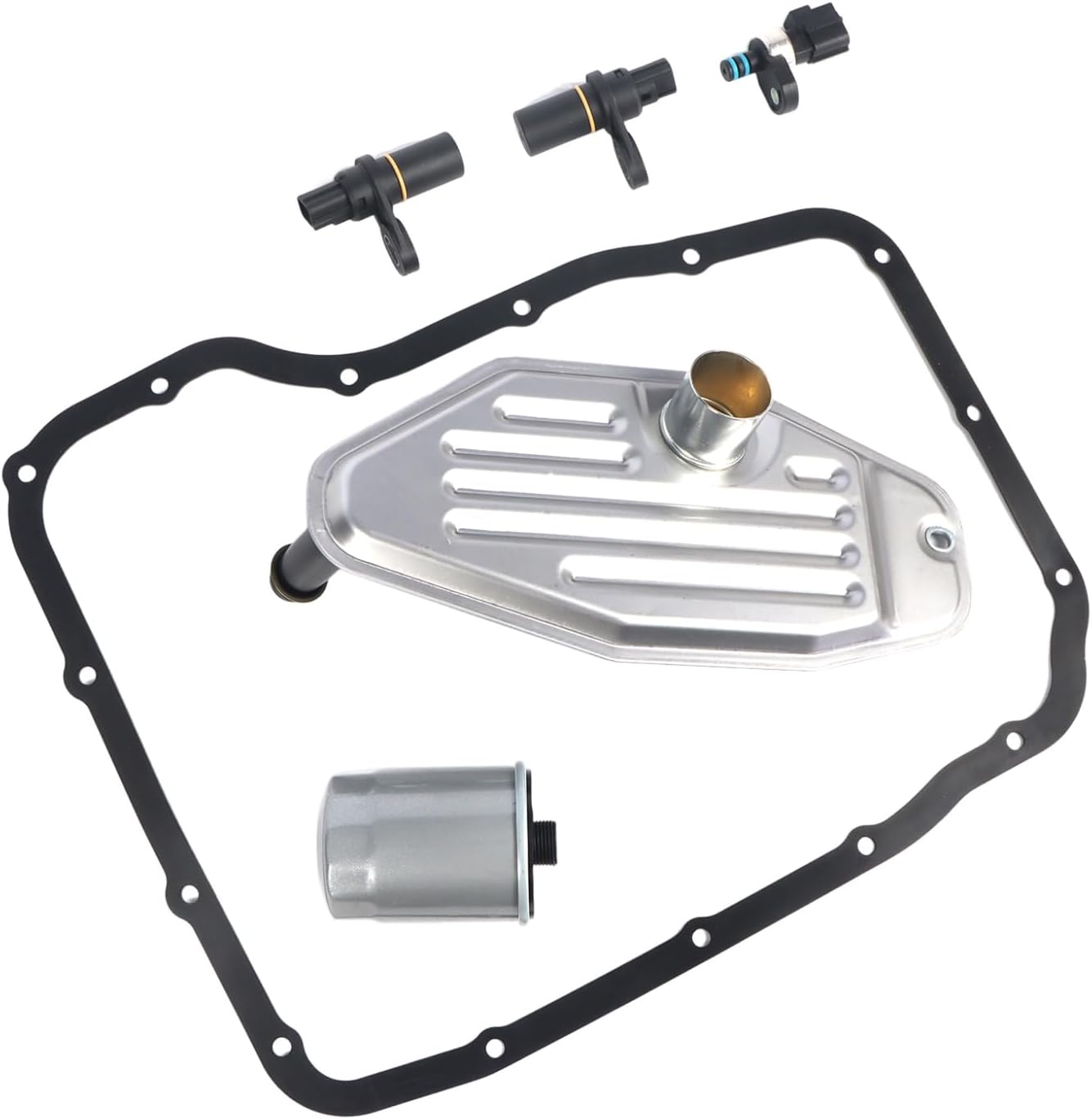
If the valve body is out because of shift complaints, this is the right time to fit a new 68RFE solenoid kit or a 68RFE shift kit, so you only pull the valve body once.