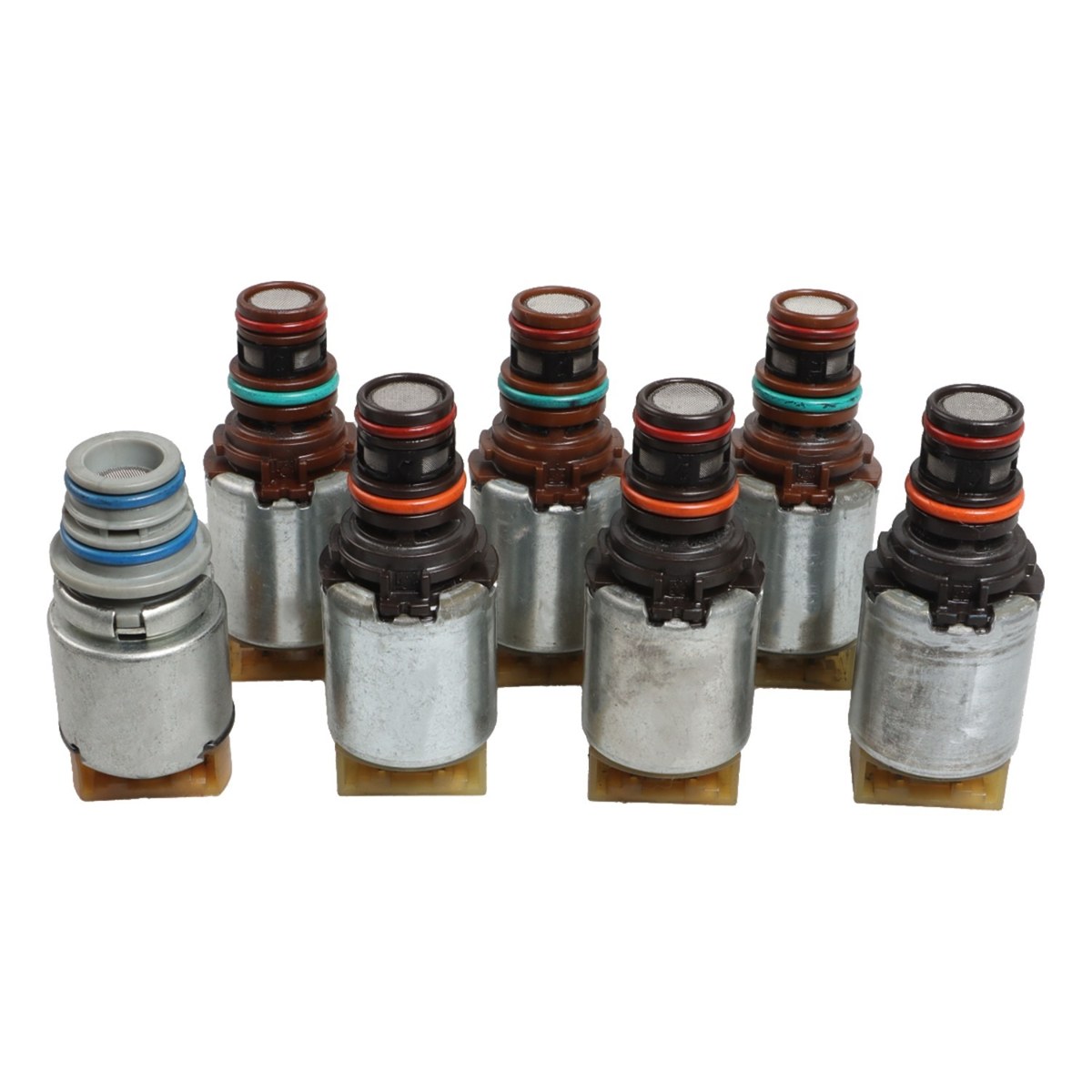
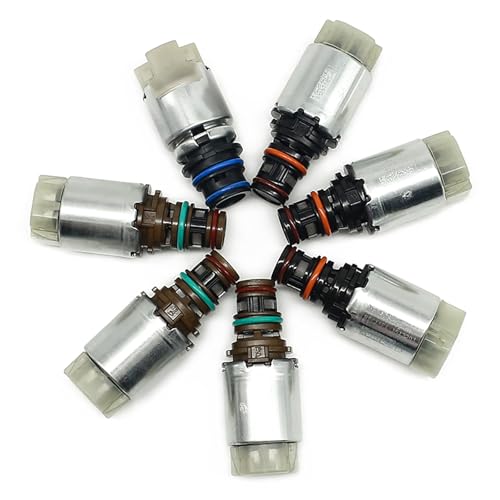
This listing is a remanufactured set of original-equipment solenoids for the early Ford 6F35 six-speed, sold as the 2008 version. The early 6F35 is the automatic in the first six-speed Ford Escape, Mercury Mariner and Mazda Tribute, and it shared its solenoid design with the first Fusion applications. If your car shifts erratically, gets stuck in one gear with the wrench light or check engine lamp on, or bangs into Drive after sitting, and the codes point at shift solenoid performance, this is the set that replaces the whole solenoid group in one job. The photo shows what you get: seven solenoids, including the line pressure solenoid with its blue seals.
What these solenoids do in an early 6F35
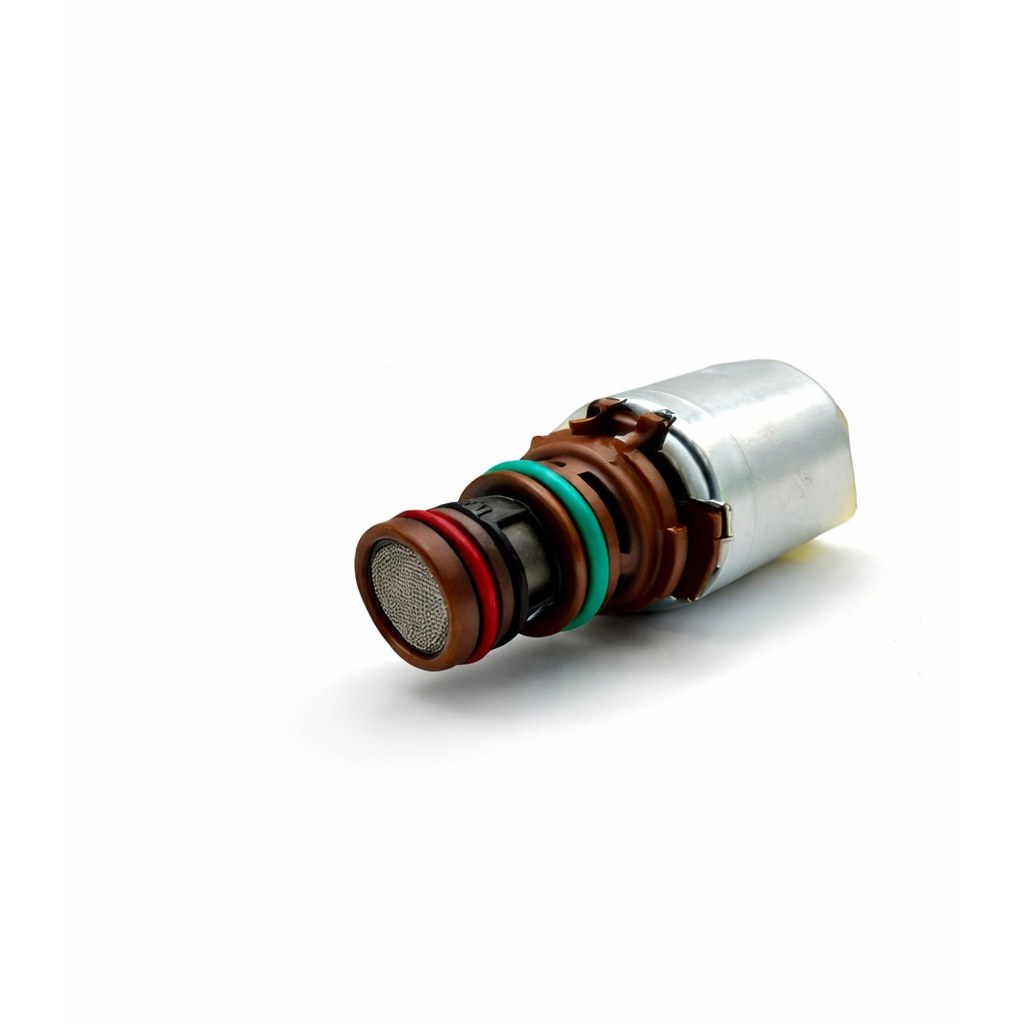
Every clutch apply in the 6F35 is commanded electrically. The transmission computer modulates current to each solenoid, and the solenoid turns that current into a hydraulic signal that strokes a regulator valve and fills a clutch. The line pressure solenoid sets base pressure for all of it, and one solenoid controls the converter clutch. Sonnax points out that first-generation 6F35 solenoids use canisters and caps similar to the older ZF six-speed design with blue and yellow caps, while later units moved to clear caps with band numbers printed on the canister. The yellow-capped canisters in our photo match that first-generation description. The two families are calibrated differently and are not interchangeable.
Symptoms of tired solenoids
- Erratic shifting, hunting between gears, or upshifts that arrive late
- Stuck in a single gear in limp mode after a code sets
- Shift solenoid performance codes that return after clearing
- Harsh engagement into Drive or Reverse from a stop
- Converter clutch that will not lock or shudders while locking
How to confirm the solenoids are the problem
Check the cheap things first. The external harness connector on the 6F35 is known for a wire breaking inside its insulation, which sets solenoid and speed sensor codes on a sound transmission, so back-probe and wiggle-test it with a meter. Pull a fluid sample, because burnt fluid causes slip by itself. Then note which gears misbehave: a problem only in certain ranges points at that circuit's solenoid or its regulator bore, while low pressure everywhere points elsewhere. Our Ford 6F35 problems guide covers the full test order and the worn solenoid pressure regulator bore that can mimic bad solenoids.
Fitment
The listing is titled for the 6F35 in 2008, which in practice means the first-generation unit; the 6F35 itself reached the Escape, Mariner and Tribute around the 2009 model year. Fitment follows the valve body, not just the calendar. Sonnax identifies first-generation units by the casting numbers 9L8P or BL8P-7A100 on the main valve body, solenoid body and lead frame, and that is what you should find before ordering. If your casting reads CV6P-7A100, you have a later unit and need the CV6Z-7G391-A solenoid pack instead. Compare the caps and connectors on your old solenoids with the photo, or send us your year and VIN and we will confirm it. The rest of the parts for this unit are on our 6F35 parts page.
Install notes
- Lay the old solenoids out in order as they come out so each one goes back into the same bore.
- Check every connector pin and the internal lead frame for heat damage before fitting anything new.
- Fit new O-rings, wet them with clean ATF and seat each solenoid by hand, then reinstall its retainer.
- Service the filter while the pan is off with a 6F35 filter and pan gasket kit; old screens loaded with clutch material are a warning worth heeding.
- If the converter clutch circuit was the main complaint, compare this set with the separate 6F35 TCC solenoid.
- Refill with Mercon LV only, clear codes and reset adaptive shift values, then road test through all six gears.
Prefer a brand-new set with screens and seals preinstalled? See the new 7-piece 2008-2011 6F35 solenoid kit.