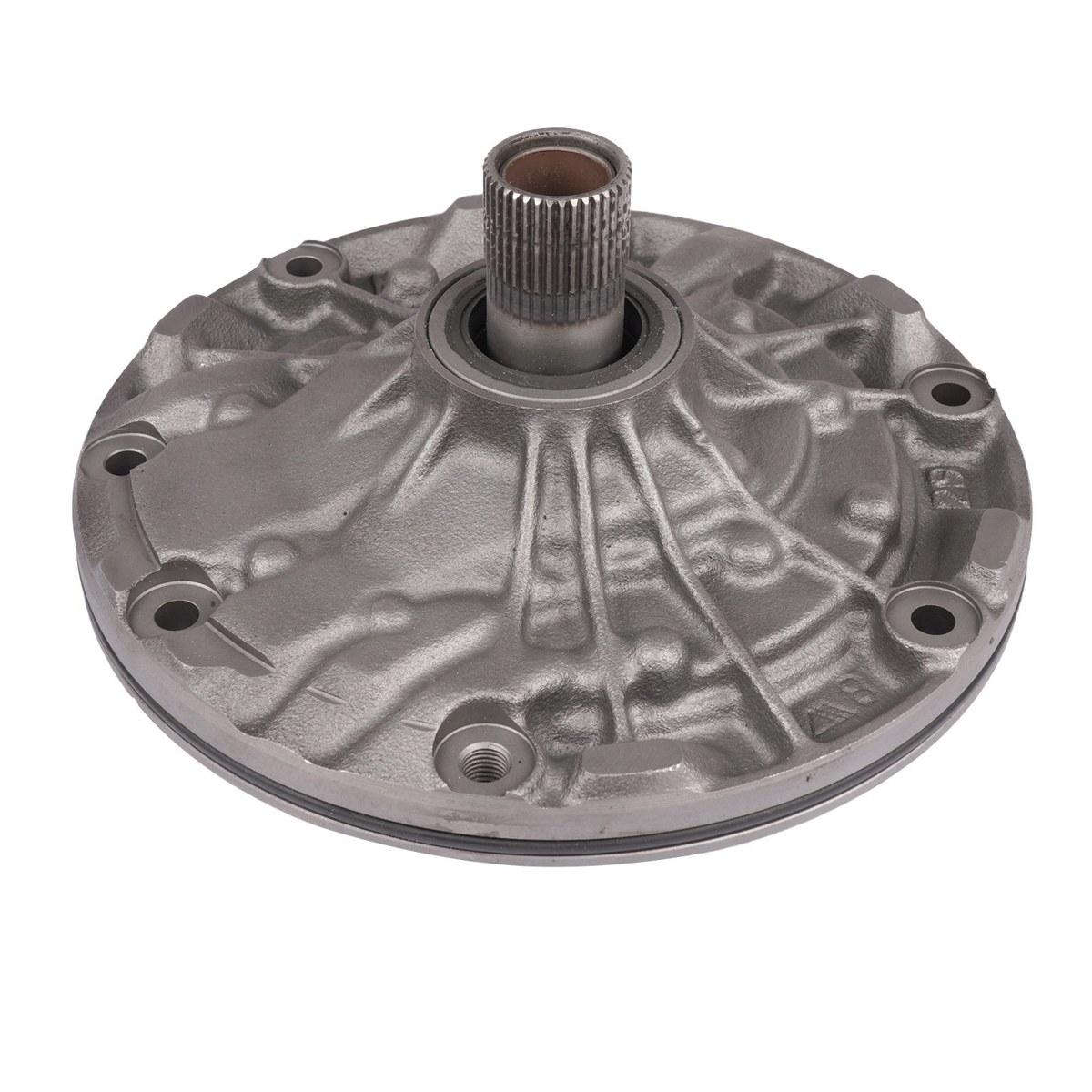
The A343F is the heavy four-speed automatic Toyota bolted to its biggest four-wheel-drive trucks, including the 80-series and 100-series Land Cruiser and the Lexus LX 450 and LX 470. When one of these starts taking a second or two to pull into gear, feels soft under load while towing, or makes a whine that climbs with engine speed, a worn front pump is a real possibility. This is a new, complete oil pump assembly with the stator shaft and outer O-ring, so you replace the body, gears and support as one unit instead of reusing a worn pocket.
What the oil pump does in an A343F
The A343F shares its basic layout with the A340 family: a crescent-type gear pump at the front of the case, driven by tangs on the torque converter hub. It feeds the primary regulator valve in the valve body, which sets line pressure for the clutches and brakes and supplies converter and lube oil. On these trucks the pump works hard. They are heavy, they tow, and many have spent years at idle in heat, so the bushing and gear pocket see more wear than in a car application.
Symptoms of a worn A343F pump
- Long delay engaging Drive or Reverse, especially hot
- Slipping or flare in all gears while towing or climbing
- Pump whine in Park and Neutral that follows engine RPM
- Front seal leak or fluid at the bell housing drain
- Overheated fluid and burnt clutch material in the pan
GearBoxList describes the typical A343F failure chain: hard use wears the converter lockup clutch, the debris clogs the valve body and causes harsh, jerky shifts, and in neglected units shaft vibration destroys the oil pump bushing. If you find lockup material in the pan, the converter and cooler need attention along with the pump.
How to confirm the pump is the cause
Start with fluid level and condition, then measure line pressure at idle and at stall in Drive and Reverse. Pressure that is low in every range points to the supply side. Before you pull the transmission, though, look at the valve body: Sonnax reports that wear in the main pressure regulator bore on A340E/F series units causes low line pressure, low lube flow and burnt clutches, which is easy to mistake for a pump problem. Our guide to Aisin slipping under load walks through the pressure test, and converter hub and pump bushing wear shows what a failed bushing and hub look like.
Fitment
This pump is listed for the A343F and cross-references to Toyota pump numbers 35301-30040, 35301-35010 and 35370-30031. The same assembly is listed for the A340E, A340H, A340F, A341E, A350E and A650E as well. In the US, the A343F is best known from the Land Cruiser 80 series and Lexus LX 450, and from the Land Cruiser 100 series and LX 470 in the late 1990s and early 2000s; it was also used in Prado, Fortuner and other world-market models.
Toyota built the A343F for a long time and changed details along the way, so do not order on the transmission code alone. Compare the number cast or tagged on your old pump, the stator spline and the bolt pattern to this assembly, or send us your year and VIN to confirm. You can browse more parts for this family in our Aisin transmission collection.
Install notes
- Remove the old pump with pullers in its threaded holes; do not pry against the stator shaft or the case.
- Lube the gears and the outer O-ring with clean ATF, then fit the converter and make sure it engages the inner gear and turns freely before the transmission goes in.
- Tighten the pump bolts evenly in a cross pattern and check input shaft end play.
- Flush the cooler and lines, or replace the cooler if the old pump or converter shed metal. Debris left in the cooler will go straight back into the new pump.
- Refill with Toyota Type T-IV. GearBoxList lists 12.3 liters total capacity, with about 4.5 liters coming out at a pan drop.
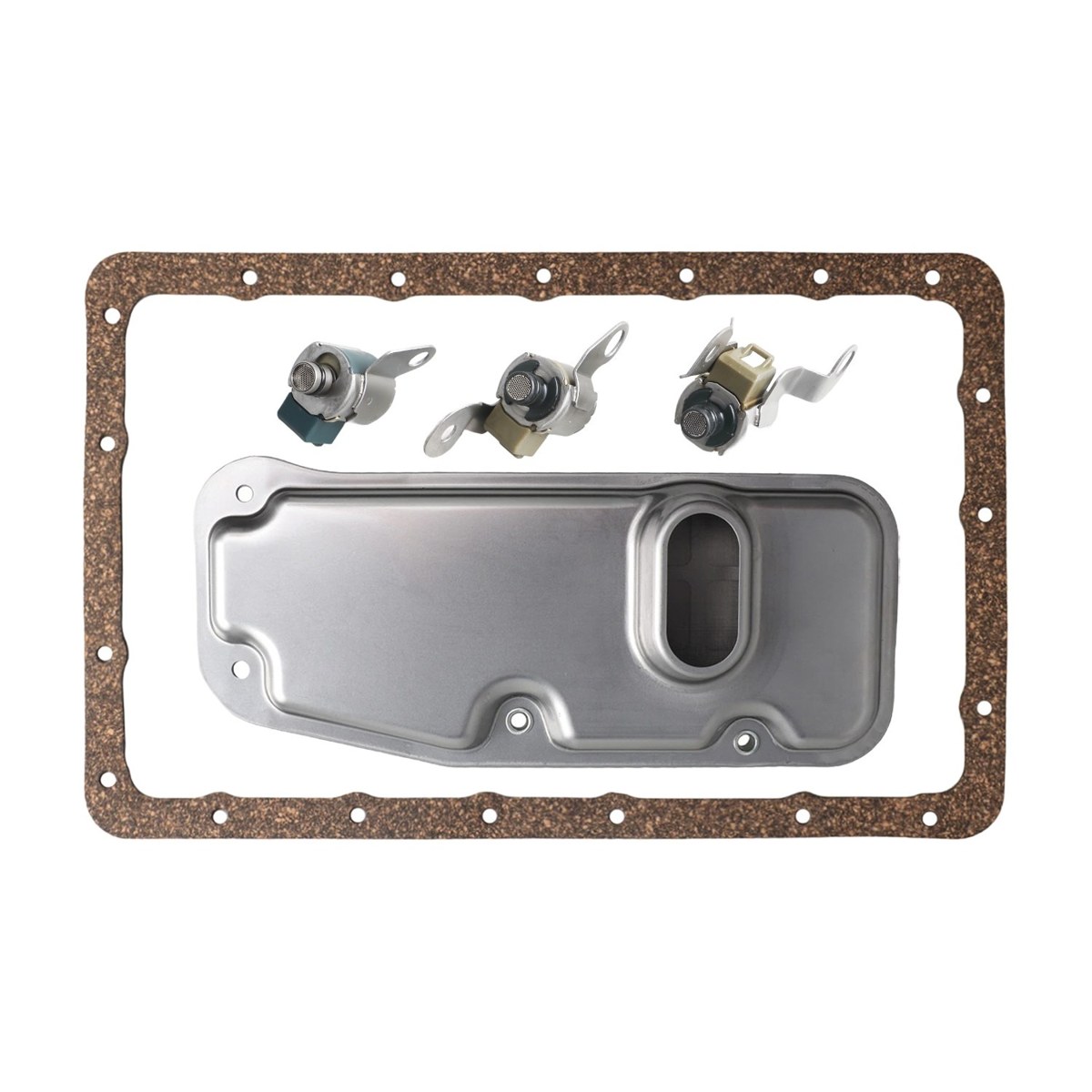
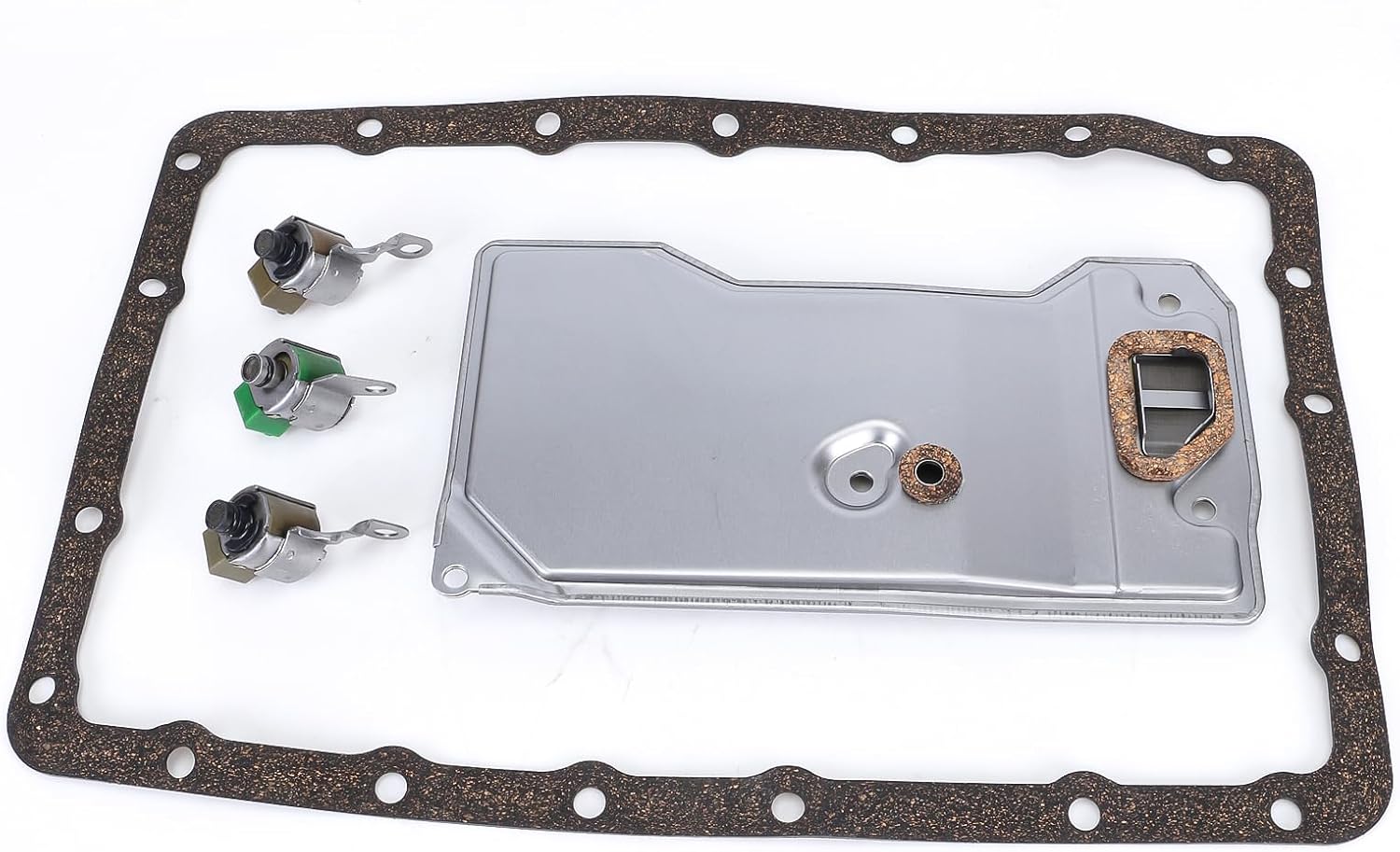
A pump is usually part of a full overhaul; the A340E/A340F/A343F master rebuild kit supplies the seals, gaskets and frictions. If shift timing was also erratic, fit a new A343F solenoid kit while the valve body is out.