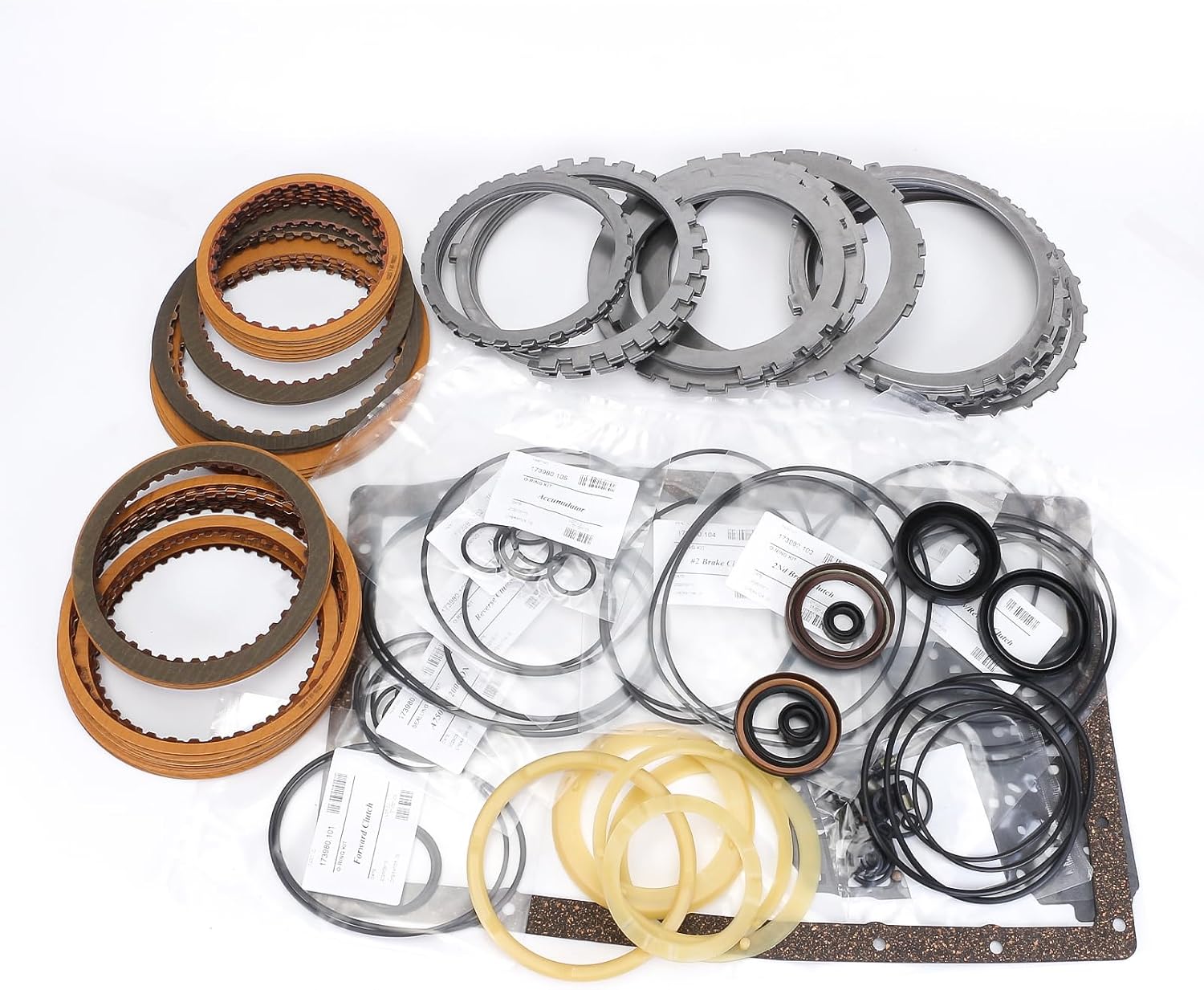
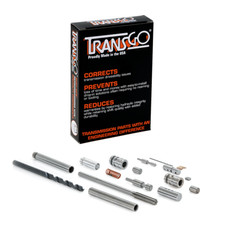
Fourth-generation 4Runner owners usually land here after the truck starts slipping on the 2-3 upshift, hesitates going into Drive on a cold morning, or the transmission fluid comes out dark after years of towing or trail use. This master overhaul kit is for the A750E and A750F five-speed used behind the 1GR-FE 4.0L V6 and 2UZ-FE 4.7L V8 in the 2003-2008 4Runner, and the same unit in the GX470, Tacoma, Tundra and FJ Cruiser. It replaces the T17300A, T17302A, T173080A and T173081A overhaul kits.
What is in the box and what it does in an A750
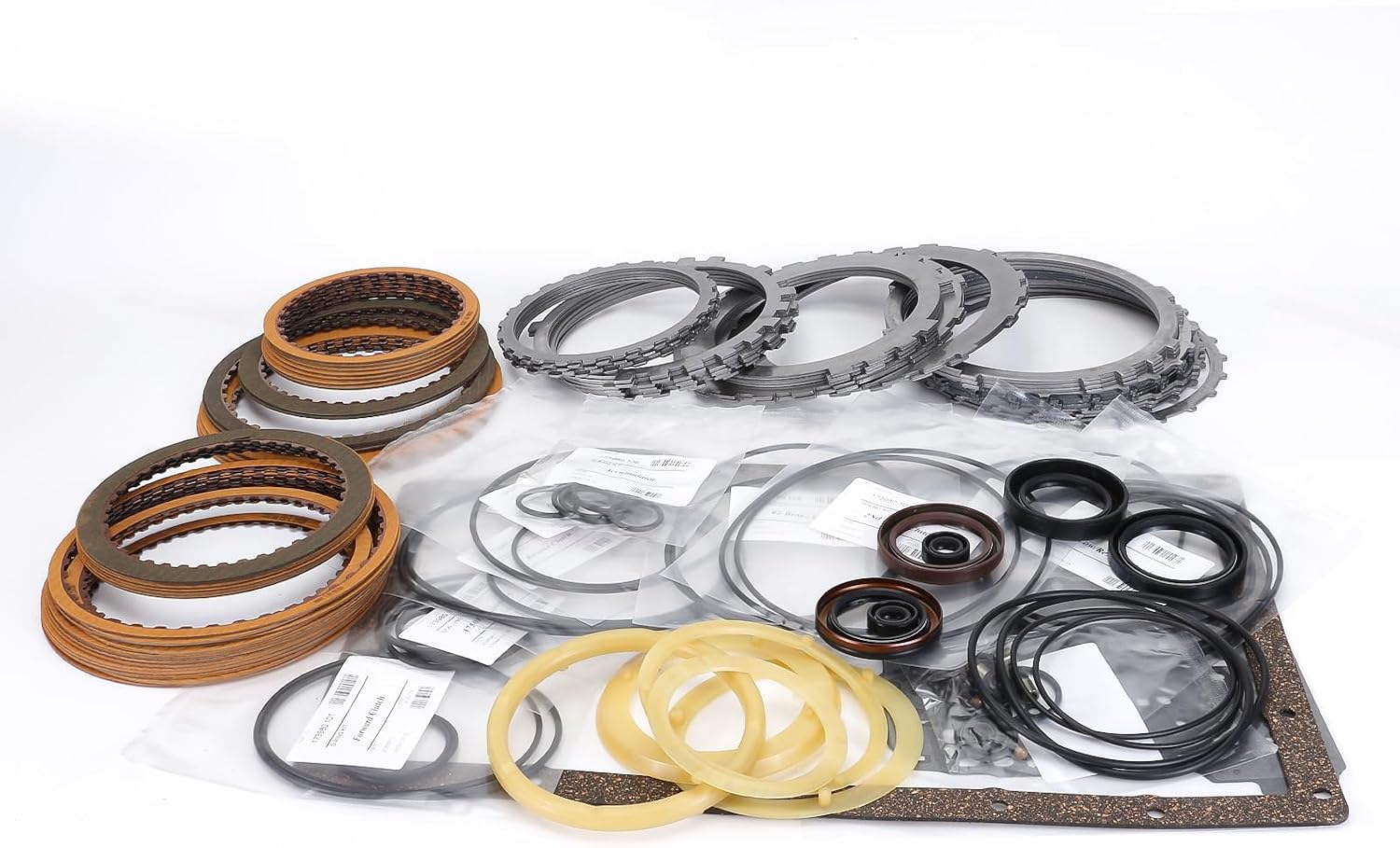
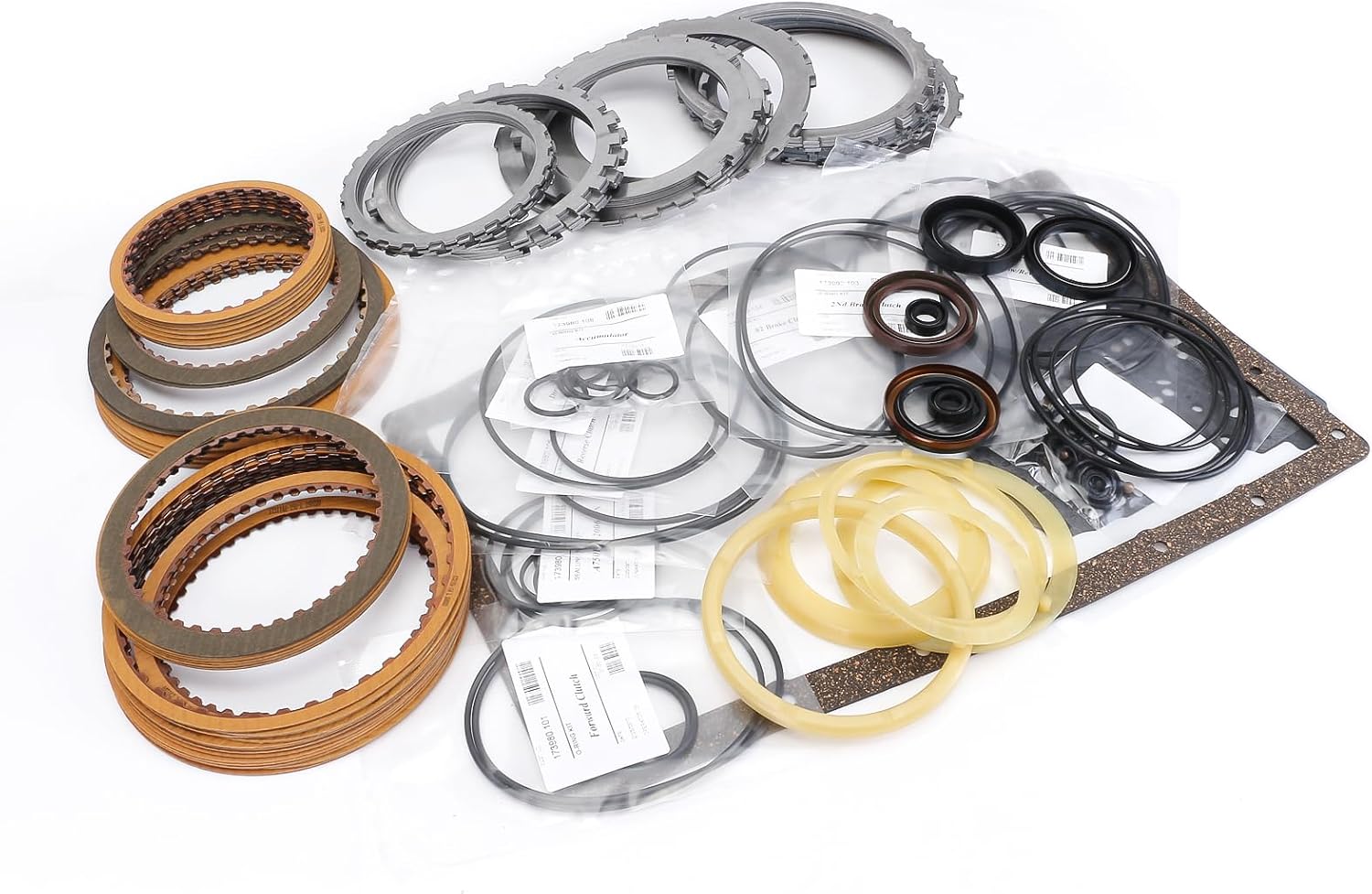
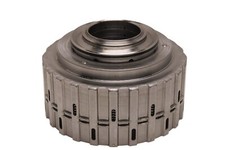
The kit contains the friction plate set for every clutch pack, the matching steel plates, the gasket and rubber seal set, the metal-clad lip seals, sealing rings, and the O-rings for the valve body and pump. In the A750 those seals carry apply oil to the clutch pistons and the frictions hold each gear. When the lip seals in the drums and pump harden with age and heat, the clutch gets less pressure than the computer commands, so the truck can slip without the fluid ever smelling burnt. Replacing frictions and seals together addresses both failure paths. It ships at about 10 lb in a 15.2 x 10.24 x 7.13 inch box; Toyota WS fluid is not included.
Symptoms on a 4Runner A750
- Flare on the 2-3 shift or a bind-up feel as third engages
- Delayed engagement into Drive or Reverse when cold
- Shuttle shifting between fourth and fifth on the highway
- Slip in third or fourth with moderate throttle, especially on a grade
- Rough kickdown at highway speed because the lockup clutch releases slowly
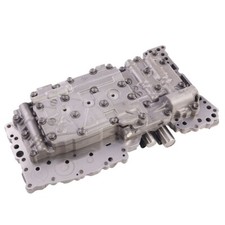
TransGo lists shuttle shifts, 2-3 bind-up or flare, slips in third and fourth, and rough kickdown from slow TCC release as the common A750 complaints, and ties many of them to a worn TCC relay valve bore and solenoid modulator valve bore. Those live in the valve body, not the clutch packs.
How to confirm before you buy
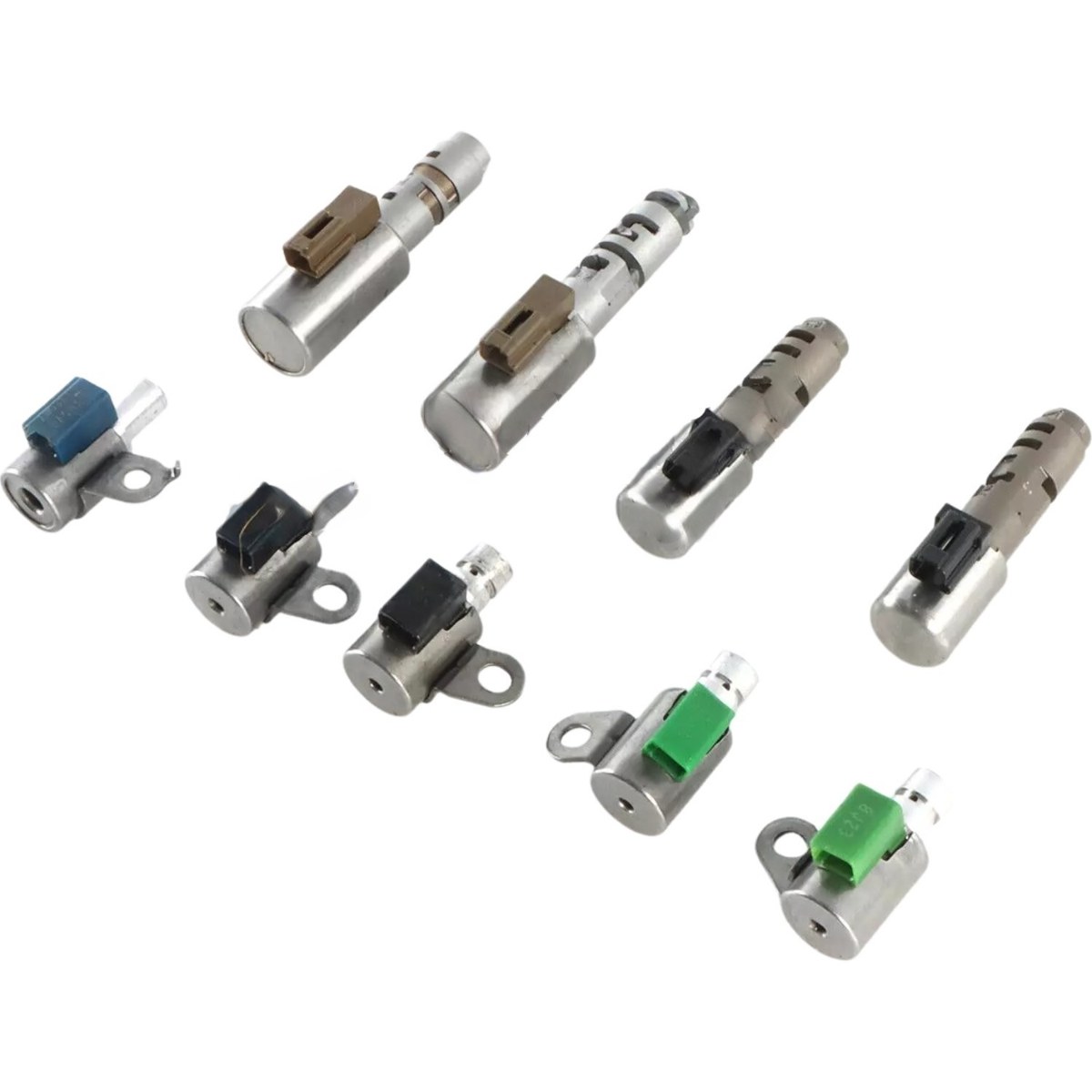
Check fluid condition and level first, then read codes and freeze frame data. Transmission Digest notes that Toyota names the same A750 solenoids differently in the repair manual, the parts catalog and the scan tool, so match the code to the right solenoid before you condemn anything. Test the solenoids for resistance and operation using our solenoid bench test guide, and work through Aisin harsh or delayed shifts to separate a hydraulic problem from worn clutches. If the solenoids and line pressure are good and the truck still slips, the overhaul is the repair.
Fitment
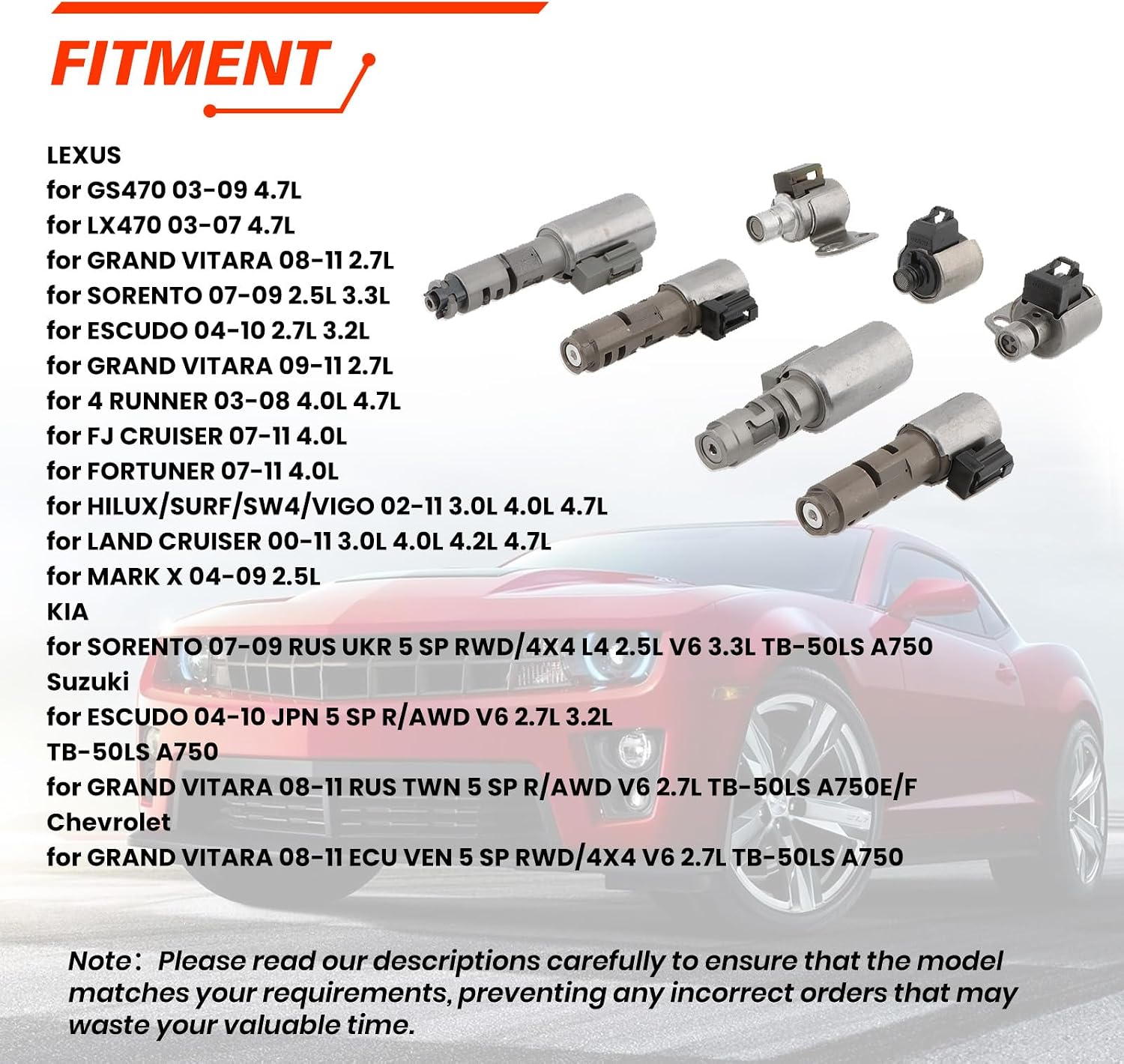
Listed fitment is 4Runner 2003-2008, FJ Cruiser 2007-2014, Land Cruiser 2000-2014, Sequoia 2005-2008, Tacoma 4.0L 2005-2014, Tundra 2005-2014, Lexus GX470 2003-2009 and LX470 2003-2007. For the 4Runner, both the V6 and V8 used the A750 in these years, the F suffix marking four-wheel drive. Land Cruiser and V6 Tundra buyers should verify the code on the tag, since application lists show other transmissions in some of those years. If you are unsure, send us the year and VIN. More parts for this unit are on the Aisin transmission page.
Install notes
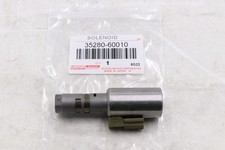
Tear down one assembly at a time and keep the parts in order. Inspect the pump bushing and converter hub together; our article on converter hub and pump bushing wear explains why a worn hub destroys a new pump seal. Soak frictions in Toyota WS for at least fifteen minutes, measure clearance on each pack, and air-check each drum before closing the case. If the valve body has worn bores, replace it with a rebuilt A750E valve body or repair it, and replace a weak lockup solenoid with a new A750E TCC solenoid. Fill with Toyota WS only, set the level hot, and reset adaptive learning before the road test.