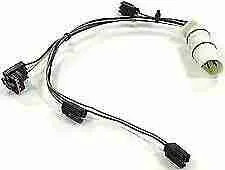
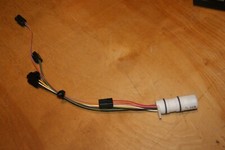
When an early-1990s Ford with the AODE starts acting possessed, shifting perfectly on a cold morning and then refusing overdrive, flaring between gears or dropping converter lockup once it warms up, the problem is often a cracked wire inside the pan rather than a worn-out transmission. This new 1992-97 AODE internal wiring harness replaces the soft-wire loom that carries every electrical signal between the case connector and the valve body. The harness shown uses black leads running to a white round case connector, the style used on these pre-1998 units.
Why the harness matters in an AODE
Ford's AODE is the electronic version of the old AOD. The engine computer controls it with four solenoids: two on/off shift solenoids, a pulse-width-modulated converter clutch solenoid and an electronic pressure control solenoid for line pressure. Nothing in the transmission shifts, locks the converter or sets pressure without a clean signal through this harness. On the 1992-97 units the loom is a set of individually insulated leads rather than a plastic frame, and Sonnax notes that the fluid temperature sensor is mounted in that harness while the EPC solenoid is installed in the case.
The weak points are predictable. Leads rub on the valve body, connector latches get brittle from heat, terminals lose their grip, and the O-rings on the case pass-through flatten until fluid wicks out into the vehicle-side plug. Each of those faults tends to show up only hot, only on rough roads, or only some of the time.
Symptoms of a failing harness
- Shifts and lockup work cold, then misbehave once the fluid reaches operating temperature
- Code combinations that cover more than one solenoid, since they share the same loom and case connector
- Flare on upshifts or harsh engagement as the EPC signal cuts in and out
- Stuck in one gear until the engine is restarted
- Implausible or frozen fluid temperature readings on a scan tool
- Wet, fluid-soaked external transmission connector
How to confirm the harness is the fault
Do a hot test, because cold readings can look perfect. Drive until the fault appears, then measure the solenoid circuits at the case connector right away. Sonnax's booklet lists roughly 20-30 ohms for each shift solenoid, 10-16 ohms for the converter clutch solenoid and 2-5 ohms for the EPC solenoid; it prints a separate connector layout for 1997-and-earlier units, so use that chart. An open or wandering reading that becomes normal when you measure at the solenoid itself puts the blame on the harness. Our shift problems diagnosis guide and the common problems guide walk through the other faults to rule out on this transmission family before you open the pan.
Fitment
This harness is for AODE transmissions from 1992 through 1997, the years that use the soft-wire loom and the white case connector. It does not fit 1998-and-later units, which use a black connector and a molded lead frame, and ATRA notes that installing the wrong harness produces multiple codes and erratic shifts. The 4R70W of the same years shares this connector style, but always compare your old harness, the case connector and the number and shape of the solenoid plugs with the photo. If the transmission has been swapped, or your vehicle was built close to the 1998 changeover, send us the year and VIN and we will check it first. More early AODE parts are on the 4R70W and AODE parts page.
Install notes
- Unhook the battery and the vehicle-side transmission plug before working inside the pan
- Remove the pan and filter, then unplug the solenoids and the temperature sensor one at a time, noting where each lead goes
- Release the old case connector and clean the bore; lube the new O-rings with ATF and press the connector in straight
- Copy the original routing and clipping so no lead can be pinched by the pan or chafed by moving linkage
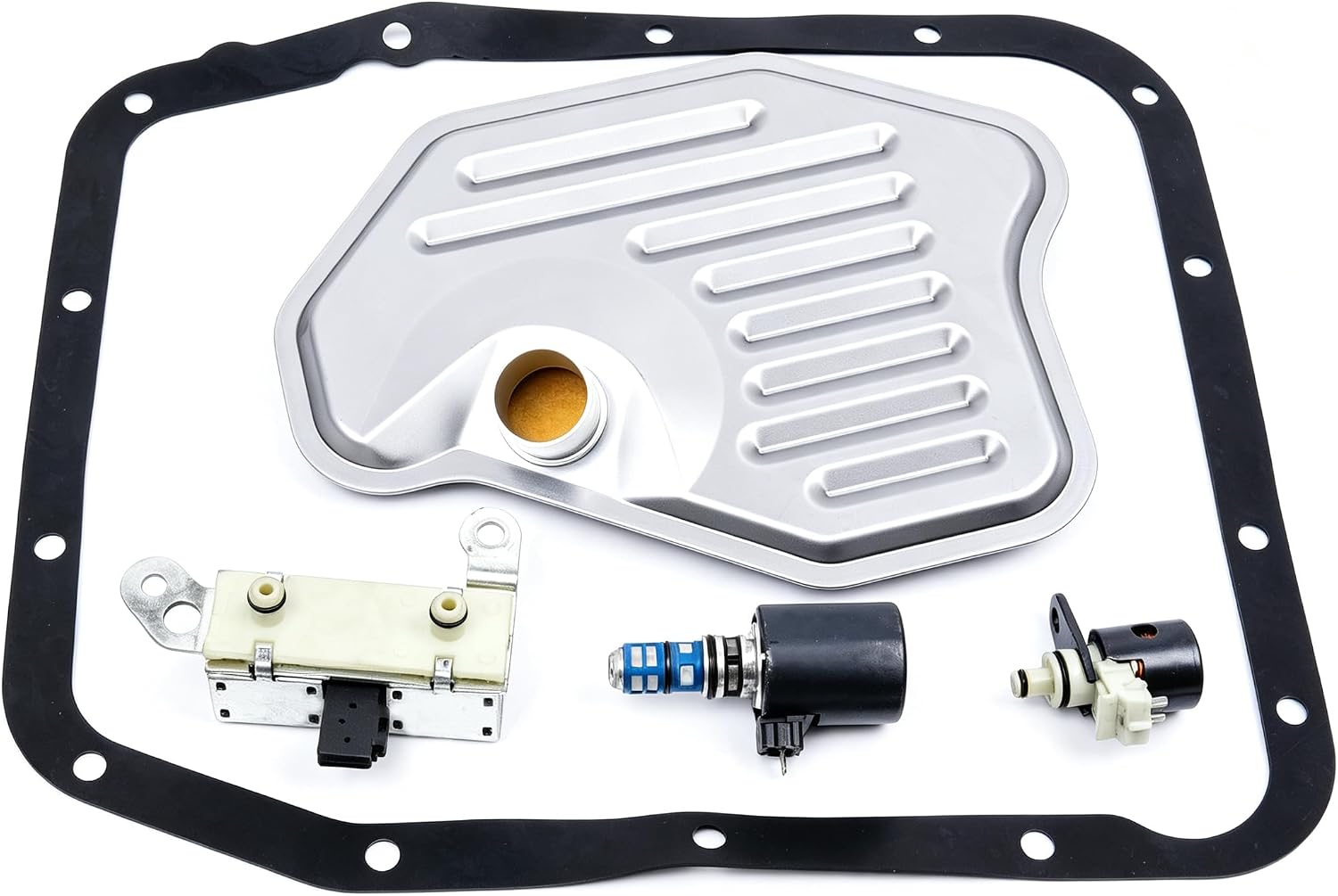
- Check each circuit again at the case connector before closing up, then install a new filter and pan gasket
- Refill with the fluid your dipstick or owner guide specifies and check the level hot
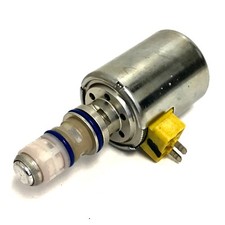
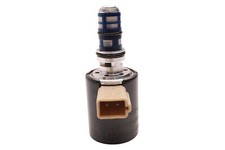
If the testing showed a solenoid at the edge of its range, replace it now; the 1992-1997 AODE EPC solenoid is the one most often blamed for harsh or soft shifts. If the fluid was dark and full of friction material, the electrical fault may have already hurt the clutches, and inspecting the pump for low line pressure is the next step before you put miles on it.