A 4R70W Explorer that "shifts funny" is a different job from one that will not move. The truck still drives, the owner still uses it, and the problem usually lives in one hydraulic circuit or one electrical part, not in the whole unit. The 4R70W sits behind the 5.0L V8 in the 1996-2001 Explorer and the Mercury Mountaineer. The V6 trucks use a different transmission entirely, so confirm the unit before you open a parts catalog.
This guide goes shift by shift. Each upshift on this transmission applies one specific clutch or band, so a complaint about one shift points you at one circuit. Learn which one, and you stop throwing solenoids and rebuild kits at a truck that needed a $40 piston. For electrical no-shift faults, fuse 13 and the case connector, see our 4R70W Explorer common problems guide. This page is about the trucks that do shift, just badly.
Which part makes each shift
Sonnax's application chart for the AODE, 4R70E, 4R70W, 4R75E and 4R75W shows what is applied in each gear. In Overdrive range, 1st uses the forward clutch. 2nd adds the intermediate clutch. 3rd adds the direct clutch on top of forward and intermediate. 4th applies the overdrive band with the intermediate and direct clutches. Reverse is the reverse clutch and the low/reverse band.
| Shift | What applies | What cushions it | Typical complaint when it goes wrong |
|---|---|---|---|
| 1-2 | Intermediate clutch | 1-2 accumulator | Harsh bang into 2nd, or slow, slipping 1-2 |
| 2-3 | Direct clutch | 2-3 accumulator | Flare (rpm jumps) on the 2-3, later a burned direct clutch |
| 3-4 | Overdrive band | Overdrive servo circuit | Slipping into 4th, 4-3-neutral, no overdrive |
| Converter lockup | Converter clutch | Bypass clutch control valve | Shudder, late or no lockup, converter codes |
Two things apply to every shift: line pressure, which the PCM sets through the EPC solenoid and the pressure regulator valve, and the shift solenoids, which decide when each shift happens. If every shift is bad, look at pressure and electrical first. If only one shift is bad, go to that circuit.
Step one: put a scan tool on it
Before anything comes apart, road test it with a scan tool and watch the PCM's side of the story. On these trucks the useful data items are transmission fluid temperature (TFT), the transmission range sensor (TR), vehicle or output shaft speed, commanded gear, the SS1 and SS2 commands, EPC pressure and the TCC command. Ask yourself three questions:
- Is TFT believable? A cold truck sees cold-strategy shift points. The PCM holds some shifts longer when the fluid is cold to warm up the heater faster, so a late 2-3 on a frosty morning can be normal. A TFT that reads cold on a hot transmission keeps that strategy running and makes shifts late all the time.
- Does TR match the lever? A range sensor that reads between positions confuses the shift schedule. Fix the adjustment or the sensor before you blame anything inside.
- Is the shift late because the PCM commanded it late, or because the transmission was slow to respond? If the solenoid command changes on time but the gear change is late or slips, the problem is hydraulic or mechanical. If the command itself is late, the problem is an input or the calibration.
Check the solenoids with an ohmmeter
The shift solenoids are cheap and easy to test, so test them before you condemn them. Sonnax's 4R70W remanufactured valve body install sheet gives the resistance values: SS1 and SS2 at 20-40 ohms, EPC at 3-6 ohms and the TCC solenoid at 10-16 ohms. Measure through the case connector first. If a reading is out of range there, pull the pan and measure again at the solenoid. A good reading at the solenoid and a bad one at the connector puts the fault in the internal harness, not the solenoid.
Resistance only proves the coil is intact. A solenoid can read fine and still stick or leak once it is hot. When the readings are good but a shift only goes wrong after the truck warms up, a contaminated or worn solenoid is still possible. On a high-mileage Explorer, if the pan is already down and the fluid is dark, replacing the solenoid set is cheap insurance. The same Sonnax sheet gives 100 in-lb for the valve body to case bolts and recommends checking the torque again after a 10 to 15 minute wait.
Harsh 1-2 shift
A 1-2 that bangs in hard is the most common shift complaint on these trucks. Start with pressure. If EPC pressure is high, because the EPC solenoid is out of range or its circuit is open, line pressure goes to maximum and every shift is firm, not just the 1-2. If the 1-2 is the only harsh shift, look at the 1-2 accumulator.
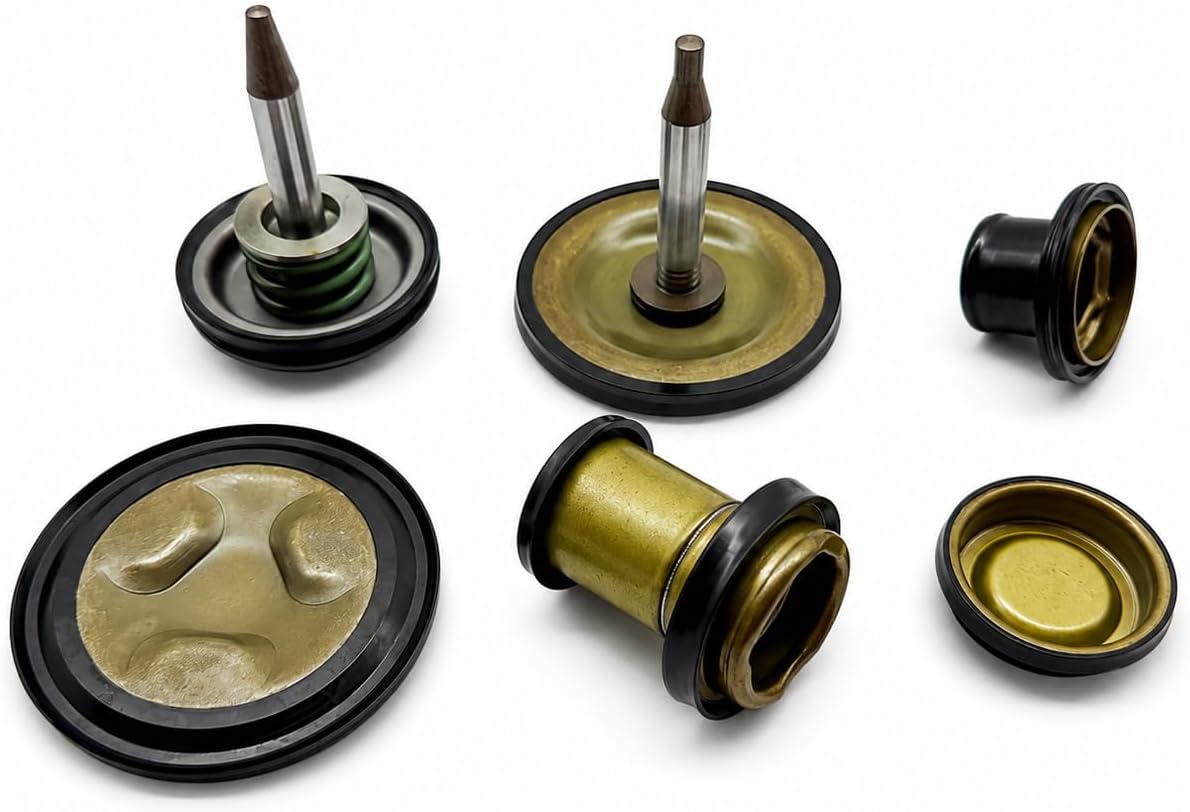
Sonnax lists harsh 1-2 shifts, delayed forward engagement, and worn or scored 1-2 accumulator bores as the symptoms its 1-2 accumulator sleeve kit, 76890-01K, cures. The accumulator piston runs in a bore in the case. Once that bore is scored, the piston leaks, 2nd clutch pressure is lost, and the cushion that should soften the shift is gone. Sonnax is blunt about it: once the bore is damaged, the fix is a new case or a sleeve. The sleeve kit is a drop-in repair that needs no machining, and it includes the sleeves, piston, O-rings and cover.
Bench check: pull the accumulator cover and piston and look at the bore. Scoring you can catch with a fingernail means the bore needs a sleeve, and a new piston alone will not fix it. Check the springs while you are there. A broken accumulator spring changes shift feel just as much as a leaking piston. The Sonnax 76890-01K sleeve kit is the part for a scored bore.
2-3 flare and the direct clutch
On a 2-3 flare, the engine rpm jumps between 2nd and 3rd before the direct clutch catches. Take it seriously. Every flare is the direct clutch slipping under load, and a direct clutch that slips on every 2-3 is a direct clutch that is burning.
The first suspect is the 2-3 accumulator. Sonnax's 2-3 accumulator piston, 76836A, lists three symptoms it cures: 2-3 flare, direct clutch failure and 3-4 neutral. It is an OE-style replacement with bonded rubber seals that stop leakage between the piston outside diameter and the case bore. If the original piston seal is hard or nicked, direct oil bleeds off during the apply and the shift flares. If that bore is damaged, Sonnax also makes a 2-3 accumulator sleeve and piston kit.
The second suspect is sealing rings, and this is the one a valve body swap will not fix. In its valve body install sheet, Sonnax notes that a 2-3 flare can be caused by sealing ring wear in the drum, or at the rear of the case where the output shaft sealing rings ride. The direct clutch on this transmission is fed from the back of the case through the output shaft, so worn rings or a grooved bushing land back there leak direct oil no matter how good the valve body is. If you are rebuilding a unit that came in with a 2-3 flare, inspect the ring lands in the case and on the output shaft, not just the drum.
The 2001 trucks have one more problem. That year Ford deleted the stiffener plate under the 2-3 accumulator, and forward oil can cross-leak into the direct circuit. That makes the direct clutch drag instead of flare, and it is covered in our Explorer common problems guide.
Soft, sliding shifts under throttle
If the shifts are fine at light throttle but slide at medium to full throttle, especially once the truck is hot, the transmission is not getting line rise. Transmission Digest's Wayne Colonna described the cause on AODE and 4R70W units: wear in the pressure regulator valve bore. EPC pressure is routed to the pressure regulator valve next to a passage that goes back to the inlet side of the pump. When the bore wears between those two circuits, the pump pulls EPC pressure away, and the line pressure never rises with throttle. The result is slipping in gear and sliding shifts.
The trap is that the EPC solenoid gets blamed. Colonna's article notes that techs see EPC pressure near zero on a gauge, replace the solenoid, and the problem stays. His quick test: drop the pan and filter and blow compressed air into the TV pressure port. Air and fluid coming out around the EPC solenoid is normal. Air and fluid coming out of the filter means bore wear. When that article was written, the fix was a replacement valve body. He also notes that milder bore wear can go unnoticed and show up only as premature forward clutch wear.
Prove the pressure problem before you pull anything apart. Tee a gauge into the line pressure tap and compare it with the EPC value the PCM is commanding while you load the engine. If the PCM asks for more pressure and the gauge does not follow, you have found your problem.
Late, rough or missing converter lockup
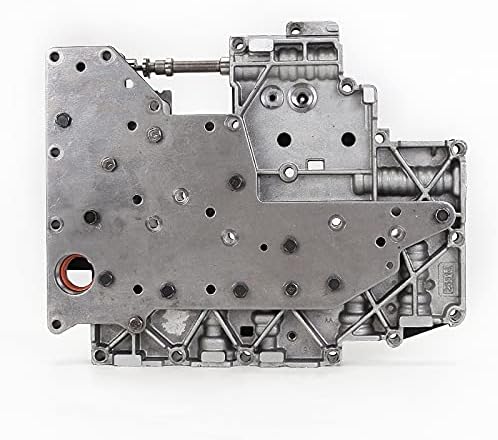
Drivers often call converter lockup "a shift," so a shudder at 45 mph or a missing lockup ends up on the same work order. Sonnax lists TCC shudder, delayed lockup, no lockup and converter codes as symptoms of wear at the bypass clutch control plunger valve and sleeve in AODE and 4R70W-series valve bodies. Sonnax offers two drop-in fixes: 76948-04K with a single .030 in. orifice for a firmer lockup, and 76948-64K with four .063 in. orifices that match OE apply timing. On a stock Explorer, the OE-calibrated version is the right choice. A lockup that is too firm on a 5.0L truck lugs the engine.
Sonnax's install sheet also points to wear in the stator where the turbine shaft solid rings ride as a cause of shudder and early converter clutch failure. A new converter on a worn stator support is a repeat failure waiting to happen.
Fluid and prevention
Many of these shift complaints get worse on old fluid, and some shudder complaints go away with fresh fluid of the right spec. Use a fluid that is approved for Mercon V. Ford's Motorcraft MERCON V, part number XT-5-QMC for a quart, is recommended for Ford vehicles that call for MERCON V or MERCON. Ford says not to use it where MERCON SP, LV, ULV or Type F is specified. One caution is specific to AWD Explorers: the same Ford page says not to use MERCON V in transfer cases where MERCON ATF was previously recommended. Look up the transfer case spec on its own instead of filling it from the same bottle.
After any valve body or solenoid repair, Sonnax's install sheet recommends warming the fluid to about 185 degrees F, then running 10 to 15 upshift and downshift cycles through all four gears on the road test. Do it. It purges air from the circuits and shows you a problem now, before the customer finds it.
A diagnosis order that saves parts
- Confirm fluid level and condition, with the truck warm and on level ground.
- Scan for codes, then road test with TFT, TR, speed, commanded gear, SS1/SS2, EPC and TCC on screen.
- Ohm the solenoids through the case connector, then at the solenoids if anything reads out of range.
- Gauge line pressure against commanded EPC to rule the pressure circuit in or out.
- Only then go into the single circuit that matches the bad shift: the 1-2 accumulator, the 2-3 accumulator and sealing rings, the overdrive servo, or the bypass clutch control valve.
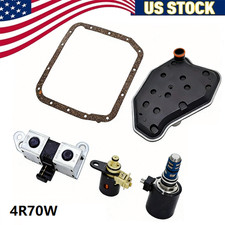
4R70W solenoid set, dual shift, EPC and TCC, 1998-2004
Covers the 1998-2001 Explorer and Mountaineer 5.0L. Replace the whole set when the ohm readings drift, or when a shift problem only shows up hot and the fluid is dark. Sold by our sister store, CoreTransmissionParts.
Shop the part for this fix →Need accumulator sleeves, servo parts or a rebuild kit? The 4R70W parts collection has the full range.
Need parts for this job?
4R70W solenoid kits, accumulator and servo piston sets, valve bodies and master rebuild kits are all on our 4R70W parts page, with checkout on site.
FAQ
Why does my 4R70W Explorer shift hard from 1st to 2nd?
The 1-2 shift is the intermediate clutch applying, cushioned by the 1-2 accumulator. Sonnax lists a worn or scored 1-2 accumulator bore in the case as a cause of harsh 1-2 shifts and delayed forward engagement, because the scored bore loses 2nd clutch pressure. High EPC pressure from a faulty EPC solenoid or wiring can also make every shift firm, so check EPC on the scan tool first.
What causes a 2-3 flare in a 4R70W?
The 2-3 shift applies the direct clutch, and anything that leaks direct oil makes it flare. The usual suspects are a leaking 2-3 accumulator piston and worn sealing rings, either in the drum or at the rear of the case where the output shaft sealing rings ride. Left alone, the flare burns the direct clutch.
What should 4R70W shift solenoids measure?
Sonnax's 4R70W valve body install sheet lists shift solenoids SS1 and SS2 at 20 to 40 ohms, the EPC solenoid at 3 to 6 ohms and the TCC solenoid at 10 to 16 ohms. Measure through the case connector first, then at the solenoid, so you know whether a bad reading is the solenoid or the internal harness.
What transmission fluid does a 4R70W Explorer use?
Use a fluid approved for Mercon V, such as Motorcraft MERCON V (XT-5-QMC). Ford says it can be used where MERCON V or MERCON is called for, but not where MERCON LV, ULV, SP or Type F is specified. Ford also warns not to use it in transfer cases that called for MERCON ATF, so check the AWD transfer case spec separately.
Related guides
- 4R70W Explorer Common Problems and Fixes
- 4R70W Explorer Slipping: Causes and Fix
- 4R70W Shift Solenoid Symptoms
- 4R70W Harsh Shift Causes
- 4R70W Pressure Control Solenoid Symptoms
Sources
- Sonnax — F095/F098 4R70E, 4R70W, 4R75E, 4R75W Remanufactured Valve Body Tech & Install Tips. Backs the gear-by-gear clutch and band application chart, the SS1/SS2 20-40 ohm, EPC 3-6 ohm and TCC 10-16 ohm values, 100 in-lb valve body bolt torque, the 2-3 flare from drum and output-shaft sealing ring wear, stator ring wear causing TCC shudder, and the 185 F road test procedure. Sonnax install sheet (PDF)
- Sonnax — 1-2 Accumulator Sleeve Kit 76890-01K. Backs harsh 1-2 shifts, delayed forward engagement, scored 1-2 accumulator bores causing loss of 2nd clutch pressure, and the case-replacement or sleeve repair. sonnax.com
- Sonnax — 2-3 Accumulator Piston 76836A. Backs 2-3 flare, direct clutch failure and 3-4 neutral as accumulator symptoms, and the bonded seals that stop leakage at the piston outside diameter. sonnax.com
- Transmission Digest — Wayne Colonna, "I Lost My EPC." Backs pressure regulator valve bore wear in AODE and 4R70W units, the EPC-to-pump-inlet leak path, slipping and sliding shifts at medium to full throttle, the compressed-air test at the TV port, and valve body replacement. transmissiondigest.com
- Sonnax — "AODE, 4R70W Series Bypass Clutch Control Valve Repair Options: When to Use Sonnax 76948-04K vs. 76948-64K." Backs TCC shudder, delayed or no lockup and converter codes from bypass clutch control valve wear, and the .030 in. vs four .063 in. orifice options. sonnax.com
- Ford Customer Service Division (Motorcraft) — MERCON V Automatic Transmission and Power Steering Fluid product details. Backs the MERCON V recommendation for vehicles calling for MERCON V or MERCON, the SP, LV, ULV and Type F exclusions, and the transfer case warning. fcsdchemicalsandlubricants.com