"It shifts funny" covers a lot of ground on a 1997-2004 F-150. I have had trucks come in for a soft, sliding 1-2, a 2-3 that drops into neutral for a second, a truck that takes off in a gear that is obviously too tall, and one that will not touch overdrive no matter how long you drive it. All four were 4R70W shift problems, and none of them had the same fix.
The good news is that the 4R70W is a simple, honest unit to diagnose. Two on/off shift solenoids pick the gear, one EPC solenoid sets line pressure, and the hydraulics that turn those signals into shifts have a short, well-documented list of wear points. This guide walks the F-150 shift complaint in the order I actually work it: fluid, codes and electrical, line pressure, then the valve body bores that Sonnax and Transmission Digest have been writing about for twenty years. Sources are at the bottom.
Step 1: fluid level and type, checked hot
It sounds too basic to print, but a low or wrong-fluid 4R70W shifts badly before it does anything else, and I still see F-150s that have been topped off with whatever was on the shelf. Ford's 2003 F-150 owner guide lists Motorcraft MERCON V for the 4R70W with an approximate capacity of 13.2 L (13.9 qt). The same guide warns that MERCON and MERCON V are not interchangeable and tells you to drive about 20 miles (30 km) to get the fluid to operating temperature before you read the dipstick, because ATF expands as it warms.
What to look for on the stick:
- Low: flares on the 1-2 and 2-3, worse on turns and hills, because the pump is pulling air. Find the leak before you condemn anything.
- Overfilled: foamy fluid, soft shifts after a highway run, fluid puking from the vent.
- Burnt and dark with friction material in the pan: the shift problem has already become a clutch problem. Read the slip side of the diagnosis in our F-150 4R70W slipping guide.
Step 2: scan it, and treat codes as circuit faults
Pull every stored and pending code, then put the truck on a road test with a scan tool recording the PCM's view of the transmission: commanded gear, shift solenoid states, commanded EPC pressure, transmission fluid temperature (TFT), throttle position and output shaft speed. One F-150-specific note: the 4R70W in these trucks has no turbine speed sensor. ATRA's 2009 interchange notes point out that the 4R70E/4R75E center support carries an extra notch for the TSS that the 4R70W support does not. So on an F-150 you judge slip and shift timing by comparing engine rpm to output shaft speed, ideally with the converter clutch released.
How the code list reads:
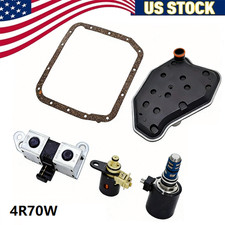
- Several solenoid circuit codes at once almost never means several bad solenoids. The shift solenoids share a 12-volt supply, so one bad terminal, one chafed wire or one wrong connector takes out the lot.
- A single solenoid circuit code means the PCM saw an electrical fault on that circuit somewhere between the computer and the solenoid. The solenoid is only one suspect.
- Ratio or shift-performance codes with clean circuits point to hydraulics: the solenoid did its job and the valve body did not follow.
Step 3: the harness and case connector
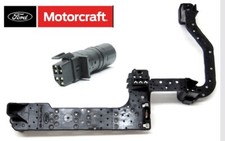
On F-150s this is where I find more "shift problems" than anyone expects. Transmission Digest published a case where a 4R70W was overhauled, the hard wire frame and case connector were replaced along the way, and on the first road test the truck took off in a higher gear with the MIL on and a set of solenoid codes that were not in the original scan. The aftermarket connector had two terminals pushed back into the housing so they never contacted the hard wire frame, and one of them was the 12-volt solenoid supply. No supply, no shift solenoids, wrong-gear start. Ford original parts went in, hard wire frame F8AZ-7G276-BA and its connector, and the codes cleared and stayed gone.
There is a generation trap here too. ATRA's interchange notes show that from 1993-1997 the 4R70W used a white case connector with soft wiring built in, and from 1998 on it went to a black connector with a separate hard plastic harness. Solenoids do not interchange between the two because the connections are different, and ATRA warns that installing the wrong harness "can create multiple codes and erratic shifts." The 1997 F-150 sits right on that line, so check what is in the case before you order parts.
My bench rule: codes that show up after a repair and were not in the pre-teardown scan belong to the repair. Check the pass-through connector, the hard wire frame seating and the external harness routing before you touch the valve body. On trucks that have had exhaust work, look for the harness lying on the pipe.
Step 4: line pressure and line rise
Once the electrical side is proven, put a gauge on the line tap. Idle pressure tells you the pump and regulator can make oil. Shift quality on a 4R70W, though, lives in line rise. As throttle opens, the PCM changes the EPC command and line pressure should climb with it. Unplug the EPC solenoid and line should go to maximum. If idle pressure looks fine but line never rises, you have a soft, sliding-shift truck that will eventually burn clutches.
Transmission Digest's "I Lost My EPC" explains the classic cause. Wear in the pressure regulator valve bore on the AODE/4R70W can reduce or completely kill EPC pressure when the unit is hot. EPC oil enters the PR valve next to a passage Ford calls the boost circuit, which actually routes back to the pump inlet. Once the bore wears between the two, the pump simply pulls the EPC signal away. The result is minimal line rise, sliding shifts and slip at medium to full throttle, and a gauge that reads near 0 on the EPC tap at any throttle, even unplugged. The usual wrong move is a new EPC solenoid, which changes nothing.
Their quick test: drop the pan and filter and blow compressed air into the TV pressure port. Air and fluid out around the EPC solenoid area is normal. Air and fluid out of the filter opening means the bore is worn through to the suction side.
Sonnax adds the part people miss. Scoring on the EPC end of the PR valve is usually visible, but the casting wear often is not, and a new valve in a worn bore still will not seal. Their fix is to vacuum test the bore, then ream it and install an oversized valve: 76948-17K for 1996-and-later units (76948-16K is the pre-1996 version). Sonnax lists the symptoms of that wear as soft or poor-quality shifts, throttle buzz, low line rise, delayed engagements and premature clutch or band failure. If you do not have the reamer and fixture, a known-good valve body is the practical answer.
Step 5: match the shift complaint to the valve body
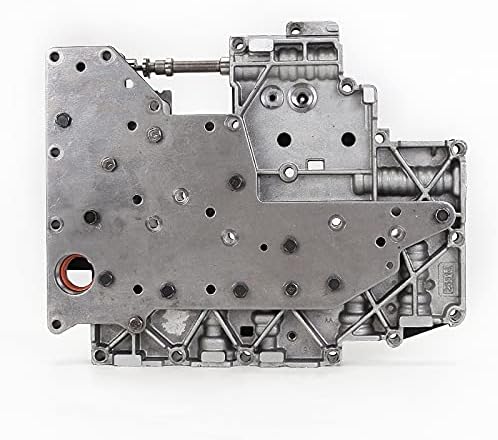
With fluid, wiring and line pressure proven, the remaining F-150 shift complaints map cleanly to specific valve body wear points. Sonnax's AODE/4R70W vacuum test guide lists the symptoms each repair kit addresses, and it reads like a customer complaint sheet:
| Complaint | Likely wear point | Sonnax repair |
|---|---|---|
| Erratic shifts, 2-3 neutral, no 2nd, 3rd and Reverse only, neutral after 4th, loss of Forward on a hard launch | Solenoid regulator valve bore | 76948-14K (oversized 76948-47K) |
| 4-3 neutral, no 4th, burnt overdrive band (2001-up) | Overdrive servo regulator valve and sleeve | 76948-29K |
| Soft shifts, low line rise, throttle buzz, clutch and band failure | Pressure regulator valve and bore | 76948-17K (1996-up) |
| No 4th, no Reverse, burnt bands (2001-up) | 3-4 shift valve end plug leak | 76948-49K |
The solenoid regulator valve: the "bad solenoid" that isn't
The shift solenoids do not make pressure. They exhaust or hold a regulated feed, and that feed comes from the solenoid regulator valve. When its bore wears, solenoid pressure drops and wanders, and the shift valves stop doing what the solenoids tell them. From the driver's seat it looks exactly like a failed shift solenoid: a 2-3 that falls into neutral, a missing 2nd, erratic shifts that come and go with temperature. The solenoids ohm out fine and a new set changes nothing. This is the most common reason I see F-150 owners on their second solenoid kit. Vacuum test that bore before you buy the third.
The overdrive servo regulator: 4-3 neutral and no 4th
On 2001-and-later units, Sonnax documents wear at the inside diameter of the overdrive servo regulator boost valve sleeve. Overdrive oil leaks past it and the servo is no longer properly regulated, so the band does not hold. The complaints are a 4-3 downshift into neutral, no 4th, and eventually a burnt overdrive band. If you are replacing the band on a 2001-2004 F-150, fix this circuit too or the new band will follow the old one.
Step 6: the 2001-2003 F-150 cross leak
If the truck is a 2001-up and the complaint is a 2-3 shift that binds, flares or feels like it is fighting itself, look at the separator plate. Per Sonnax, for 2001 Ford deleted the two-bolt stiffener plate under the 2-3 accumulator, along with the capacity modulator valve, whose bore is now cast closed. Without that clamping force, forward clutch oil pushes up on the separator plate. Sonnax measured the plate bowing up to .011 in. at normal forward clutch pressure, which lets forward clutch oil cross into the direct clutch circuit. The two circuits are normally isolated everywhere except the casting under the plate below the 2-3 accumulator.
A dragging direct clutch in 1st and 2nd and a forward-to-direct leak during the 2-3 shift make for strange shift feel long before anything burns. Sonnax's tell is the gaskets: lay the upper gasket over the lower and you see a heavy valve body imprint everywhere except around the 2-3 accumulator, because that area never got clamped. The fix is the 76507F-01K Valve Body Retainer Plate Kit, which puts a two-bolt plate back on. You drill and tap the valve body and drill the separator plate, using the lower gasket to locate the holes. On any 2001-2003 F-150 valve body that is on my bench, that kit goes in.
Putting it together: my F-150 shift checklist
- Fluid: MERCON V, level checked hot after about 20 miles, condition noted.
- Codes and data: multiple circuit codes mean supply or harness first; record commanded gear, EPC, TFT and output speed on the road test.
- Wiring: correct connector generation (white 1993-1997, black 1998-up), terminals seated, harness clear of the exhaust.
- Pressure: idle line, then line rise with throttle and with EPC unplugged.
- Valve body: vacuum test the PR and solenoid regulator bores; on 2001-up units check the OD servo regulator and install the retainer plate kit.
- Only then condemn hard parts. If the fluid was burnt, plan a rebuild, not a valve body.
Sonnax Solenoid Regulator Valve Kit (76948-14K)
If your F-150 has erratic shifts, a 2-3 neutral or no 2nd and the solenoids test good, this is the valve body repair Sonnax lists for exactly those complaints. Sold by our sister store, CoreTransmissionParts.
Shop the part for this fix →Need something else? The 4R70W parts collection has solenoid kits, servo regulator kits, retainer plate kits and complete rebuild kits.
Need parts for this job?
Our 4R70W parts page carries F-150 valve bodies, shift solenoid kits, 1998-2008 internal harnesses, the Sonnax retainer plate kit and master rebuild kits. Checkout is on site.
FAQ
Why does my F-150 4R70W shift erratically even after new solenoids?
Because the solenoids only exhaust or hold a regulated feed, and that feed comes from the solenoid regulator valve. Sonnax lists erratic shifts, 2-3 neutral, no 2nd and 3rd-and-Reverse-only as symptoms of a worn solenoid regulator valve bore. New solenoids cannot fix a bore that leaks, so vacuum test the valve body before buying another solenoid kit.
Why did my F-150 start in a higher gear after a transmission repair?
Check the case connector and hard wire frame first. Transmission Digest documented a 4R70W that took off in a higher gear with new solenoid codes after an overhaul because an aftermarket connector had a terminal pushed back, cutting the 12-volt solenoid supply. Ford original parts fixed it, and ATRA warns that installing the wrong harness generation also causes multiple codes and erratic shifts.
What transmission fluid does a 4R70W F-150 take and how much?
Ford's 2003 F-150 owner guide specifies Motorcraft MERCON V for the 4R70W with an approximate capacity of 13.2 liters (13.9 quarts). Check the level only after about 20 miles of driving so the fluid is at operating temperature. Do not mix MERCON and MERCON V.
Why does my 4R70W drop into neutral on the 4-3 downshift?
On 2001-and-later units, Sonnax documents wear in the overdrive servo regulator boost valve sleeve that lets overdrive oil leak, so the servo is not properly regulated. The symptoms are a 4-3 neutral, no 4th and eventually a burnt overdrive band. The Sonnax 76948-29K kit restores the circuit, and it should be done any time the overdrive band is replaced.
Related guides
- 4R70W F150 Slipping: Causes and Fix
- 4R70W F-150 Common Problems
- 4R70W Shift Solenoid Symptoms, Testing and Replacement
- 4R70W Harsh Shift Causes
- 4R70W Won't Shift Into Overdrive
Sources
- Transmission Digest, "Ford 4R70W: Solenoid Codes Set" (Transmission Tech/Talk). Backs the post-overhaul higher-gear start with MIL and new solenoid codes, the aftermarket case connector with terminals pushed back including the 12-volt solenoid supply, and the Ford hard wire frame F8AZ-7G276-BA and connector fix. transmissiondigest.com
- Transmission Digest, Wayne Colonna, "I Lost My EPC." Backs AODE/4R70W pressure regulator bore wear killing EPC pressure when hot, minimal line rise and sliding shifts, EPC near 0 even unplugged, the boost circuit routing to the pump inlet, and the compressed-air test at the TV port. transmissiondigest.com
- Sonnax, "Ford 4R70E/4R70W/4R75E/4R75W/AODE Vacuum Test Guide" and related parts listing. Backs the symptom lists for the solenoid regulator valve kit 76948-14K/47K, overdrive servo regulator kit 76948-29K (2001-up), pressure regulator kits 76948-16K/17K, and 3-4 shift valve end plug kit 76948-49K. sonnax.com
- Sonnax, "Watch Out for 4R70W Pressure Regulator Valve Casting Wear." Backs visible scoring on the EPC end of the PR valve, casting wear that is often not visible, vacuum testing the bore, and reaming for an oversized valve (76948-17K for 1996-later units). sonnax.com
- Sonnax, "4R70W/4R75W 2001-Later Forward/Direct Clutch Problems: The Easy Valve Body Fix." Backs the 2001 deletion of the 2-3 accumulator stiffener plate and capacity modulator valve, separator plate bow up to .011 in., the forward-to-direct cross leak, the gasket imprint check, and the 76507F-01K retainer plate kit. sonnax.com
- ATRA, 2009 Technical Seminar Manual, Ford 4R70W/4R75E interchange information. Backs the 1993-1997 white soft-wire case connector versus the 1998-on black connector with separate hard plastic harness, non-interchangeable solenoids, the wrong-harness warning, and the 4R70E/4R75E center support notch for the turbine speed sensor. atracom (PDF)
- Ford Motor Company, 2003 F-150 Owner Guide, Maintenance and Specifications. Backs Motorcraft MERCON V and 13.2 L (13.9 qt) for the 4R70W, the warning not to mix MERCON and MERCON V, and the 20-mile warm-up before checking fluid level. Ford's own host blocks direct PDF access, so this links the Internet Archive copy. web.archive.org (PDF)