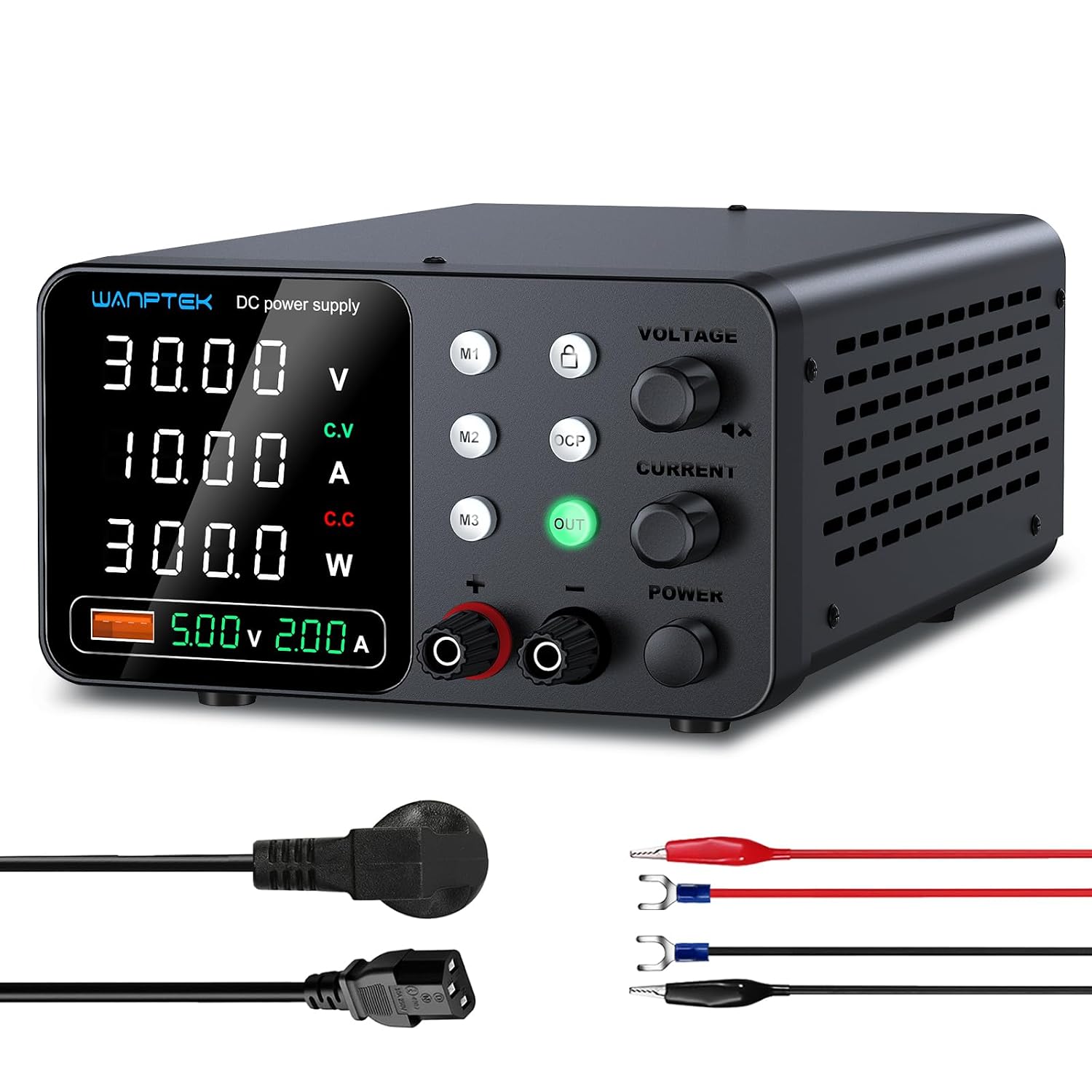
A regulated benchtop DC supply that puts 0-30 volts and 0-10 amps on a set of leads with a knob for each, so you can power a transmission solenoid, sensor or actuator on the bench instead of guessing at it in the car. Output is 300 watts through a 4-digit LED display that reads set voltage and actual current draw at the same time. The unit is the TPS-C3010H, 8.27 x 5.71 x 3.15 inches on the bench and about 2.6 pounds.
The reason it belongs on a transmission bench is current. An ohmmeter across a shift solenoid tells you the winding is not open, and that is all it tells you. Hook the same solenoid to this supply, dial 12 volts, and you get three things at once: you hear it click, you see the exact amps it pulls, and you can leave it energized while it heats up. A healthy GM or Ford shift solenoid clicks crisply and settles well under an amp. One that pulls high, drifts up as the coil warms, or clicks once and then goes quiet is the one that was setting your P0753 or P0973, and you find it on the bench rather than after the pan is back on.
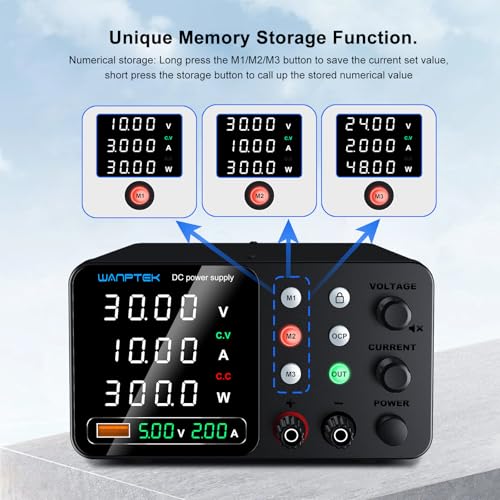
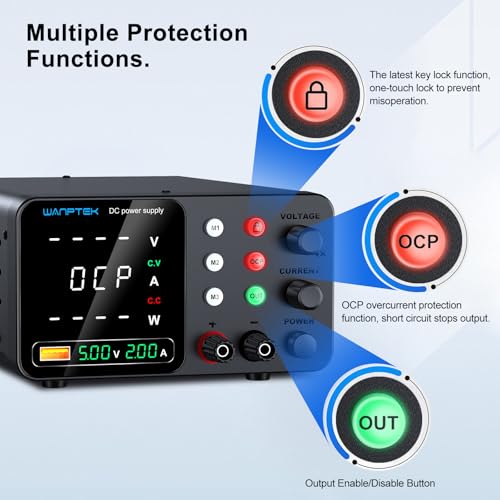
Practical bench use: set the voltage first with the output switch off so you do not spark the leads, clip to the solenoid terminals, then switch the output on. Save 12 volts to M1 and battery-charging voltage around 13.8 to M2 and you can recall either with one key instead of re-dialing the knob for every solenoid in a valve body. The OCP trips and cuts output on a dead short, then resumes once you clear it, which matters when you are probing a harness connector with bare leads. Key lock freezes the settings so an elbow on the bench does not change them mid-test. The same supply runs pressure switches, speed sensors, TCC and EPC solenoids for a click-and-flow check, and small 12-volt shop items like a test pump.
One setup note that catches people: there is a 115V/230V input selector switch on the back of the case. In the United States it must be set to 115V before you plug it in. The box includes the supply, one output test lead, an AC cord and the manual. The give-away lead is thin, so use your own heavier leads for anything you plan to hold energized at real current.