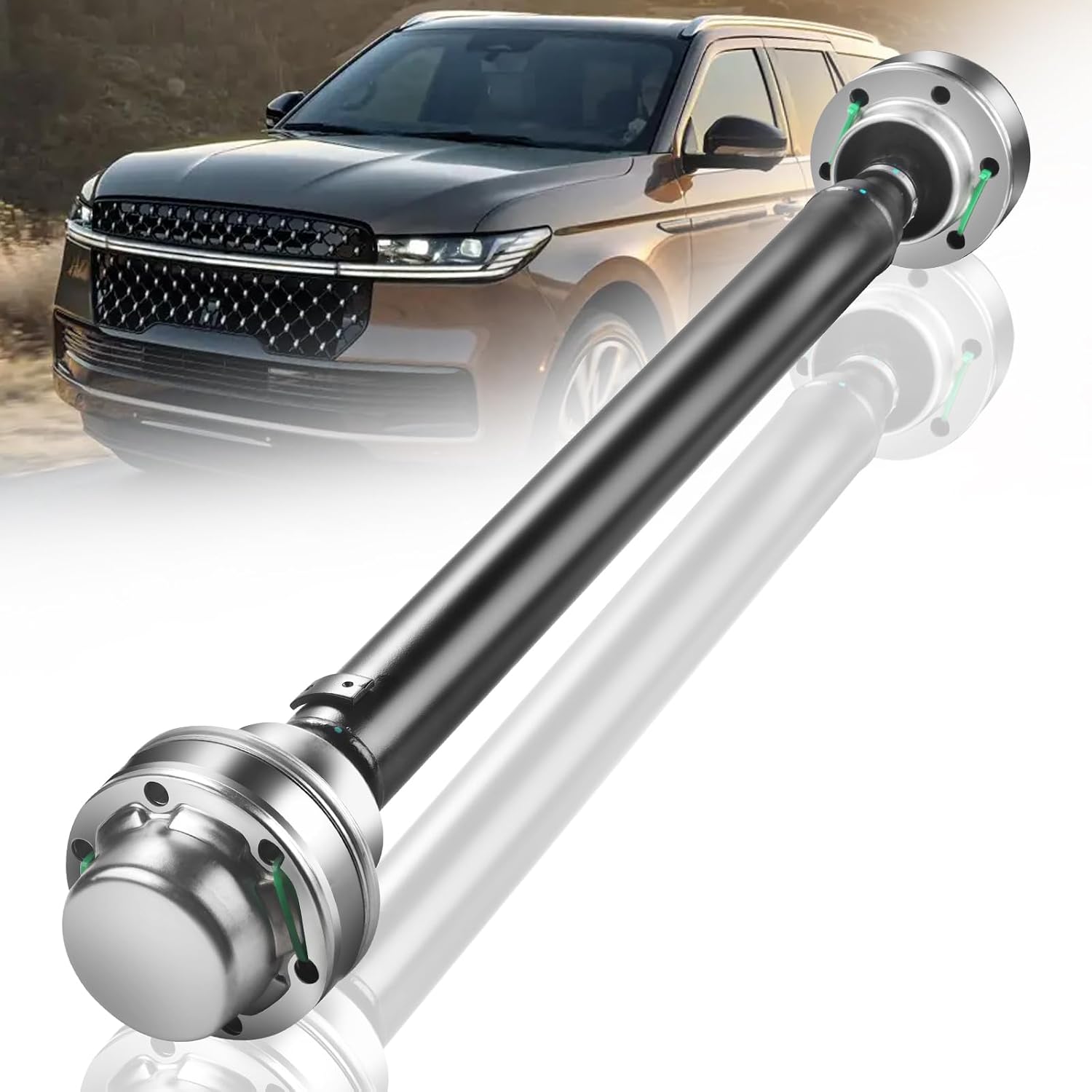
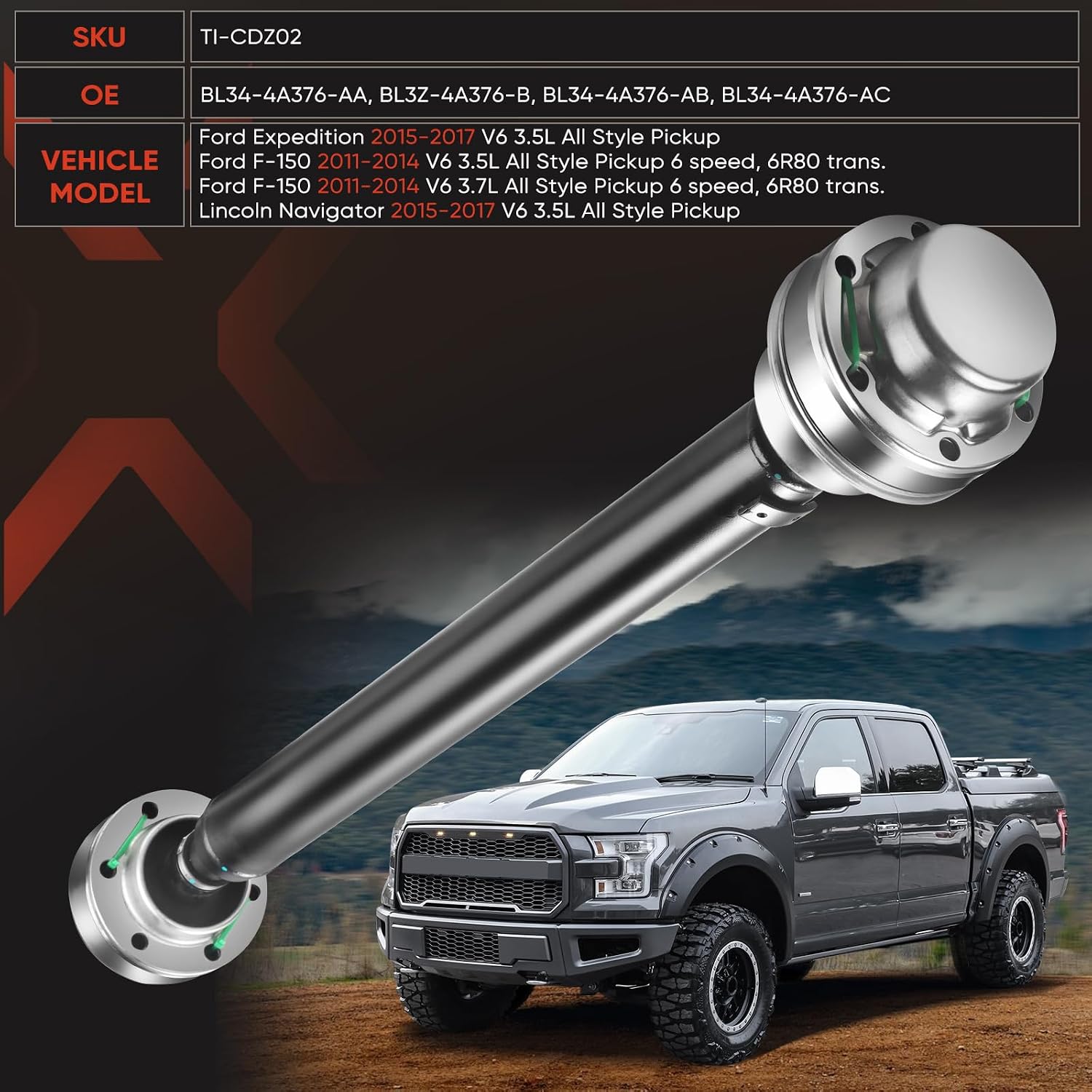
If your V6 F-150 clunks when you shift into 4-high, shakes only when four-wheel drive is engaged, or has a torn boot slinging grease across the skid plate, the front driveshaft is the part to look at. This is a complete, assembled front shaft that replaces Ford BL3Z-4A376-B and the BL34-4A376-AA, -AB and -AC service numbers, listed for 2011-2014 F-150 3.5L EcoBoost and 3.7L V6 4WD trucks with the 6R80 six-speed, and for 2015-2017 Expedition and Lincoln Navigator 3.5L.
What the front driveshaft does on a 6R80 4WD truck
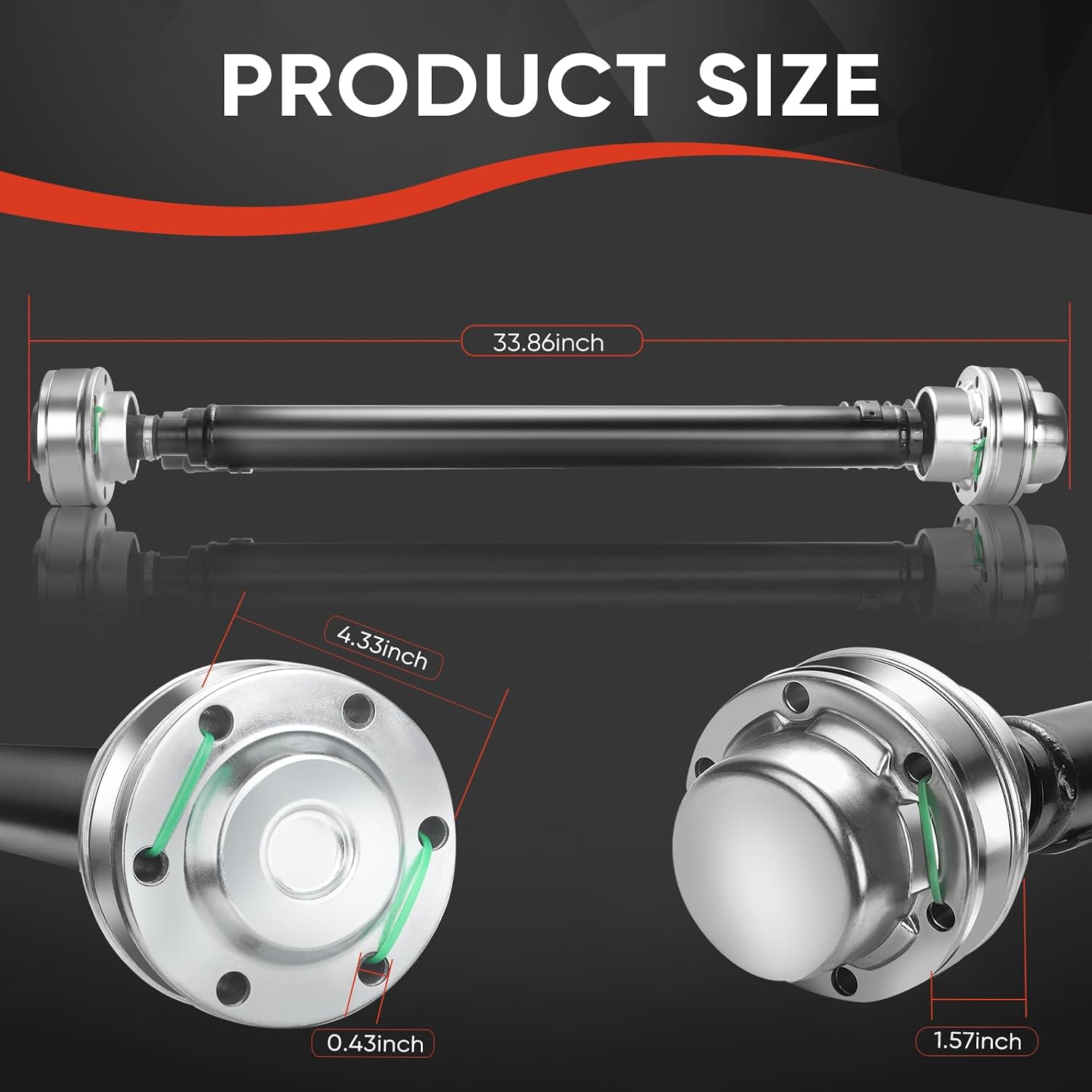
The 6R80 sends power out its tail shaft into the transfer case. In 2WD the transfer case drives only the rear shaft. Select 4-high or 4-low and it starts turning its front output, and this shaft carries that torque forward to the front differential. On these trucks it is a short shaft, about 33.9 inches overall as listed, with a flanged joint at each end sealed under a rubber boot. Because a part-time system only loads the front shaft in 4WD, a worn joint can go unnoticed for months and then show up the first snowy morning or the first time you pull a boat up a wet ramp.
Symptoms of a worn front driveshaft
- A clunk or bang as 4WD engages, or when you take off in 4WD
- Vibration that appears only in 4-high and goes away in 2WD
- A split boot and grease thrown around the transfer case, skid plate or front crossmember
- A joint that feels notchy, gritty or loose when you rotate the shaft by hand
- Clicking on tight turns in 4WD that is not coming from the front axle shafts
Not every clunk on these trucks is driveline. A hard engagement into gear, a harsh 1-2 shift or a sudden downshift is often the transmission controls, and Ford ran several recalls on the 6R80 lead frame in 2011-2017 F-150s. Our F-150 6R80 shift problems guide helps separate the two.
How to confirm before you buy
With the truck safely supported, the transfer case in 2WD and the wheels chocked, grab the shaft near each end and try to move it up, down and around. Any clunk or free play in a joint is wear. Turn it slowly through a full rotation and feel for roughness. Look hard at both boots; once water and grit get past a torn boot the joint wears quickly. Then drive the same road in 2WD and 4-high at the same speed. A vibration that only exists in 4WD points forward of the transfer case. If the shake is there in both modes, check the rear shaft, tires and the items in our F-150 6R80 common problems guide first.
Fitment
Listed fitment is 2011-2014 Ford F-150 with the 3.5L EcoBoost or 3.7L V6, 4WD and the 6R80 automatic, plus 2015-2017 Ford Expedition and Lincoln Navigator 3.5L. Front shafts on these trucks change with engine, cab, bed and model year, and V8 trucks use a different shaft, so read the part number on your old shaft or its tag and match it before ordering. If the tag is gone, measure your old shaft flange to flange, or send us your year and VIN and we will check it. Transmission parts for the same trucks are in the 6R80 collection.
Install notes
- Put the transfer case in 2WD, park on level ground and chock the wheels; the front shaft must spin freely to line up bolts.
- Paint-mark both flanges before you remove anything so the new shaft goes in with the same indexing.
- Support the shaft while the bolts at each end come out. Letting it hang stretches the joints and can tear the new boots.
- Clean rust and old thread locker off the flange faces and bolt threads so the flanges seat flat, then torque the bolts to the factory spec in a crisscross pattern.
- Test drive in 2WD, then 4-high, and recheck the bolts after the first few miles.
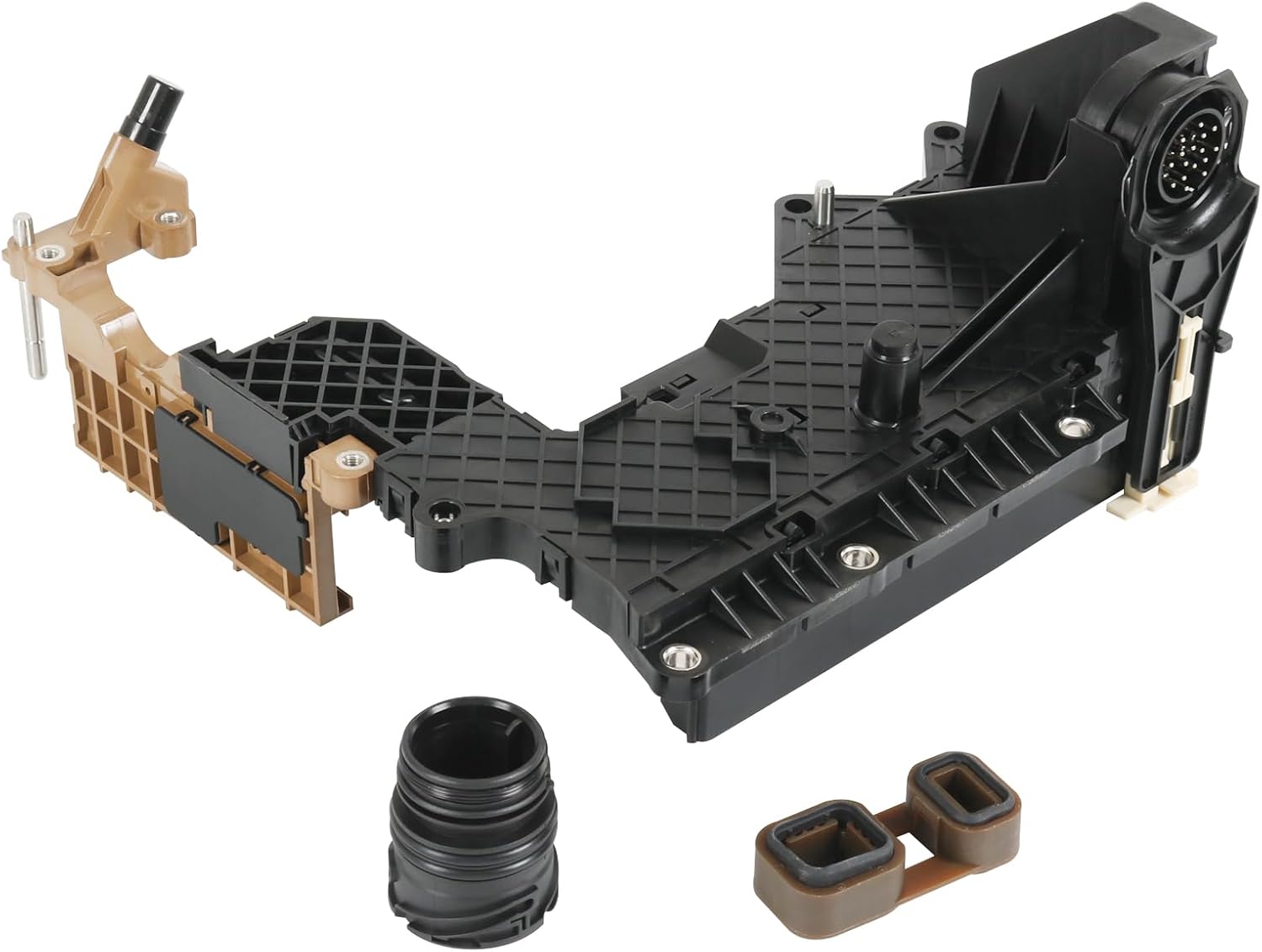
- If the truck also has a shift complaint, a 2011-up 6R80 valve body or a 6R80 lead frame with connector and seal may be the other half of the noise.