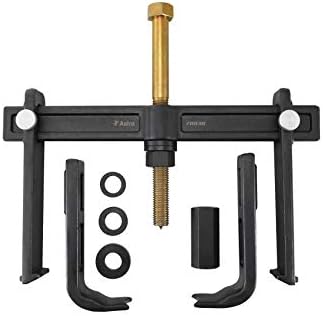
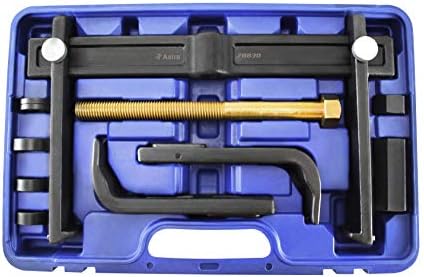
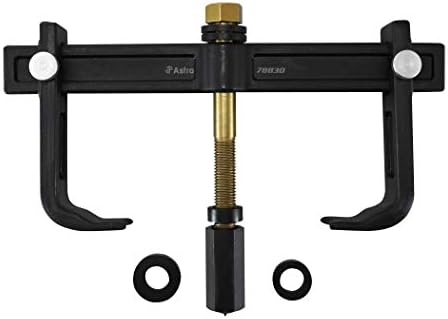
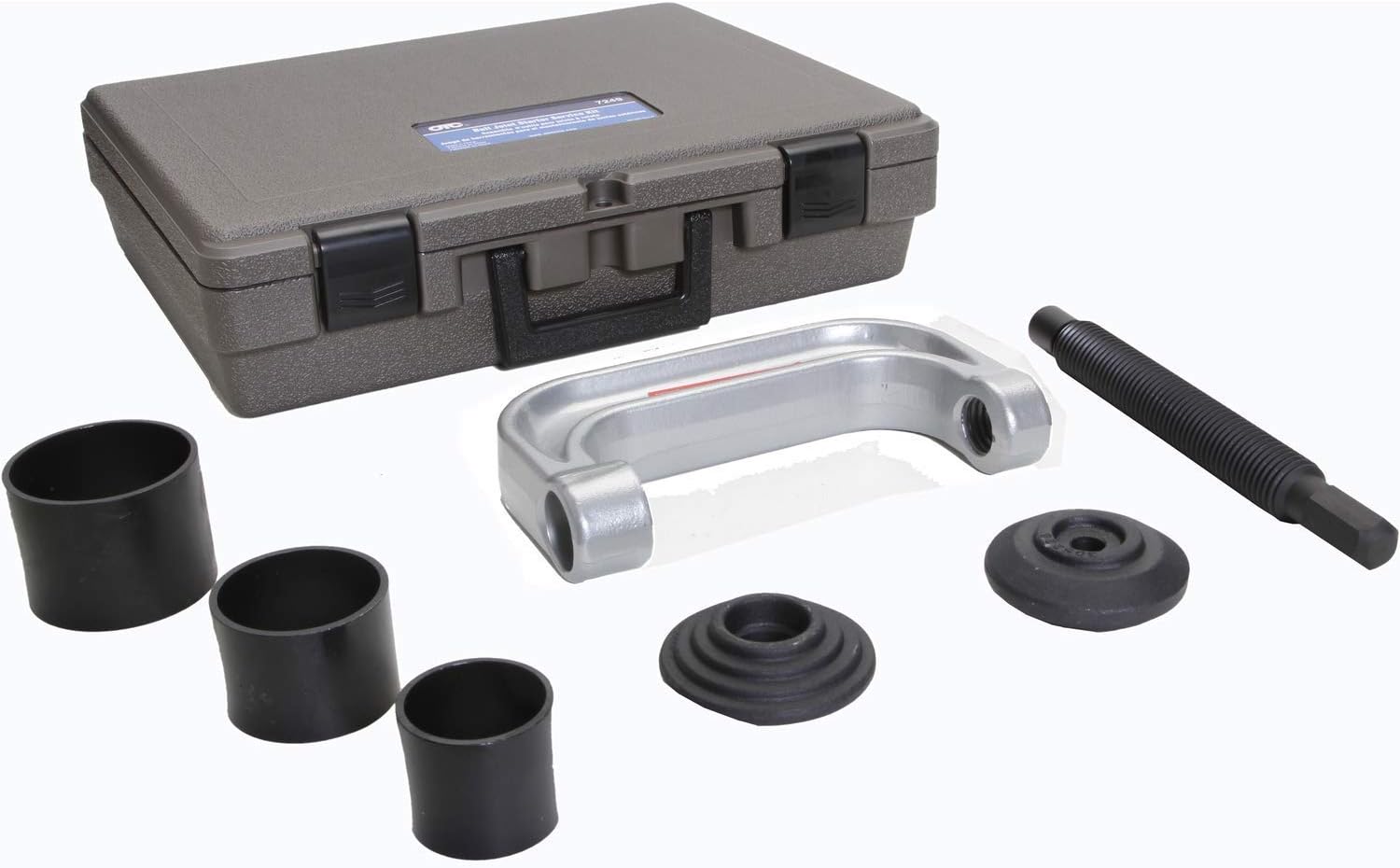
If you are pulling a front axle shaft, a transfer case output or a rear axle and the wheel hub will not come off the knuckle, or a brake drum has rusted itself to the axle flange, this is the tool that ends the fight. This 8.5-ton forged puller (Astro Pneumatic 78830) removes seized wheel hubs, brake drums and rotors on cars, SUVs, light trucks and vans, and it does it with steady screw pressure instead of a slide hammer and a lot of swinging.
What this puller does and how it works
The kit is two pullers in one frame. The hub side uses a forged T-bar, hub puller arms and a set of small, medium and large hub adapters that seat on the hub face, so the load goes straight down the axle centerline. The drum and rotor side swaps in long forged arms that reach behind the lip of a drum or rotor up to a 14 inch spread, roughly a 355mm rotor. Both sides are driven by a 1-1/4 inch (32mm) Grade 8 drive bolt on a long 7/8 inch threaded rod, so you can run it with an impact wrench and hold the body with a 1-1/4 inch or 32mm wrench. The forgings are the same alloy Astro uses on its ball joint press line.
The drum and rotor arms have a raised lip machined into them. On a drum that is really welded on, you run a ratchet strap around the arms at that lip so they cannot spread and walk off while the screw is loaded. That one detail is what keeps a stubborn job from turning into a flying arm.
Jobs where you need it
- Unit-bearing hubs rusted into the steering knuckle on 4x4 front ends, where the hub has to come out before the axle shaft or CV can be serviced
- Rear brake drums seized to the axle flange or rusted over a worn shoe ridge
- One-piece or hat-style rotors frozen to the hub face
- Pulling a hub to reach the axle seal or the spindle bearing behind it during driveline or transfer case work
How to confirm a hub or drum is seized, not held
Before you load any puller, make sure nothing is still holding the part. Remove the axle nut or spindle nut and any retaining clips, take out every hub-to-knuckle bolt, and on drums back the parking brake shoes off through the adjuster slot. A drum that rocks but will not slide is usually caught on a lip worn into the inside of the drum, not rust. Pulling against a bolt you missed is how knuckles crack. If you are about to pull a hub to get at a driveline component, our guide on 2WD versus 4WD tailhousing differences helps confirm which parts you are actually dealing with before teardown.
Fitment
This is a universal tool for passenger cars, SUVs, light trucks and vans. The three hub adapters cover the common hub face sizes, and the arms open to 14 inches. Some hub jobs on vehicles with a caliper bracket in the way need a separate caliper bridge brace bar (Astro 78830CBA, sold separately) so the screw has something solid to push against. If you are not sure the adapters suit your hub, measure the hub face and the arm clearance first. Browse the rest of our transmission and driveline tools for the presses and sockets that pair with it.
Install and use notes
- Soak the hub-to-knuckle joint or the drum pilot with penetrating oil the night before. Heat around the knuckle bore helps on badly rusted hubs; keep heat away from seals and ABS sensors you plan to reuse.
- Leave the axle nut threaded on a few turns so the hub cannot drop when it lets go.
- Seat the correct adapter flat on the hub face and center the screw on the axle stub. An off-center screw loads one side and can bend the flange.
- Run the impact in short bursts. Shock plus preload breaks the rust bond; continuous hammering just heats the threads. Grease the drive bolt threads before every job.
- On drums, snug the screw, then rap the drum face with a dead blow to crack the corrosion ring before you load it further.
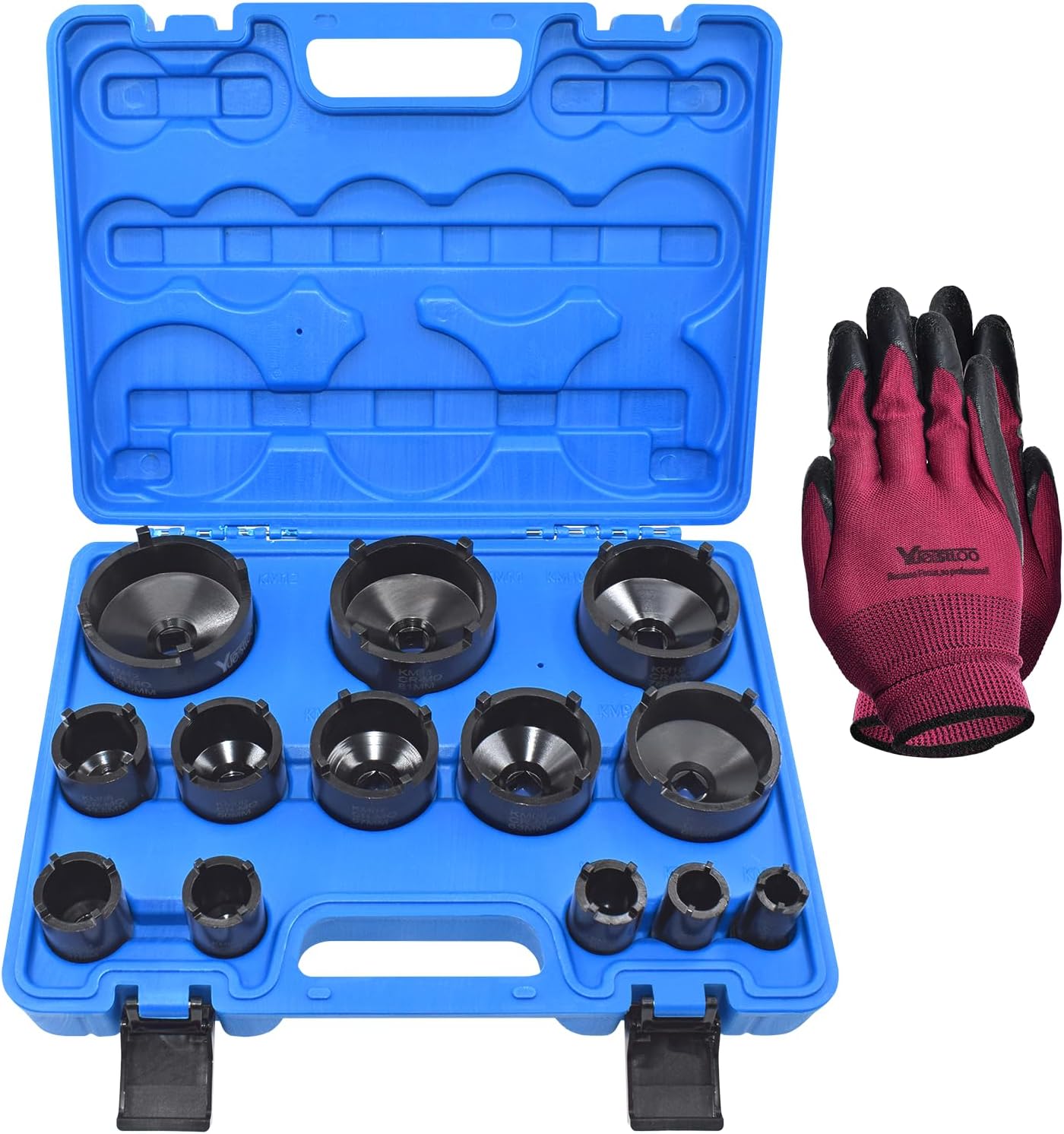
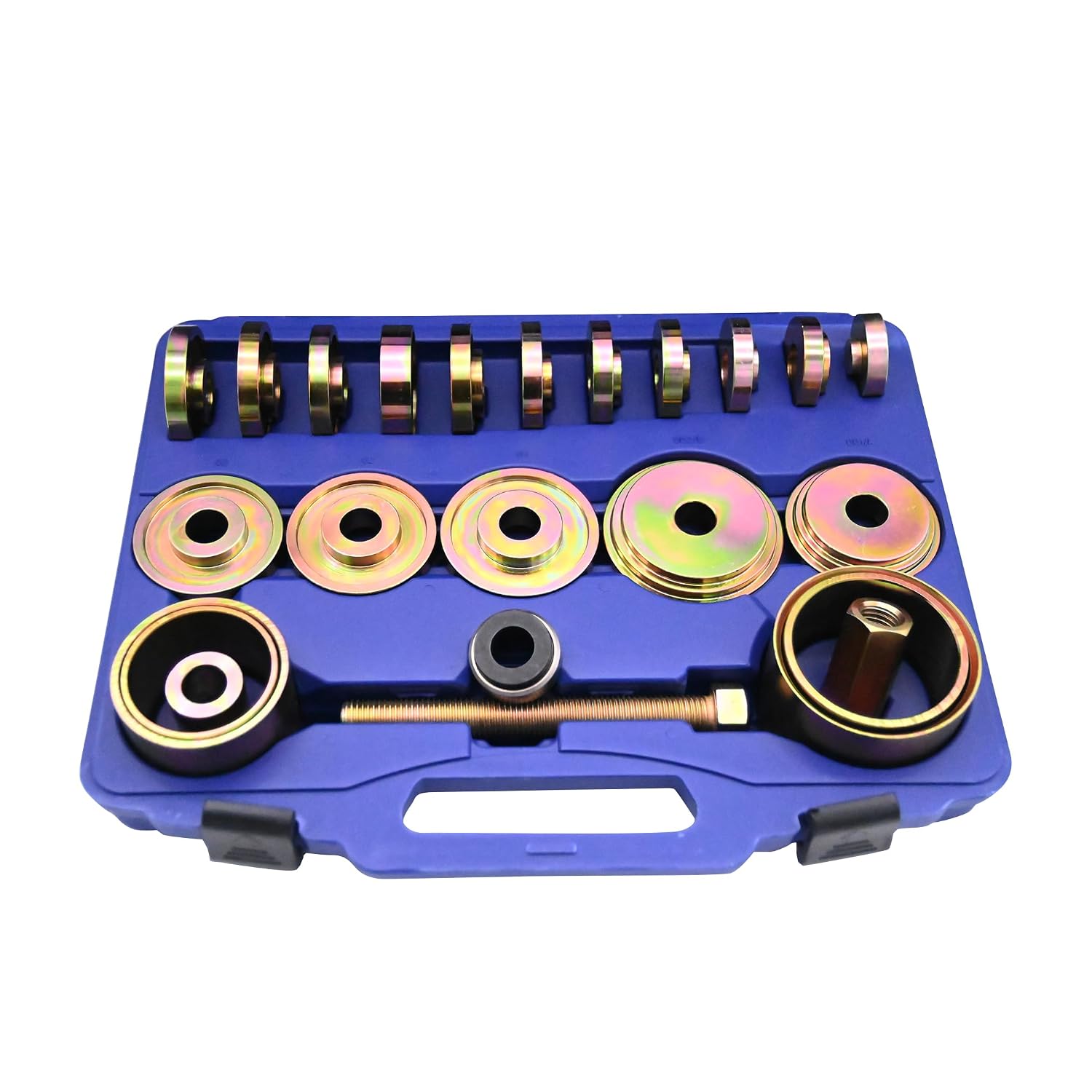
Once the hub is out, you usually need the next tool in line: a spindle nut socket set for the locknuts on 4x4 spindles, and a ball joint and U-joint press kit if the knuckle is coming apart anyway. For bearings that stay in the hub, a FWD wheel bearing press adapter kit handles pressing them out and back in without damaging the new race. Building a full bench setup? See our list of tools needed for a bench rebuild.