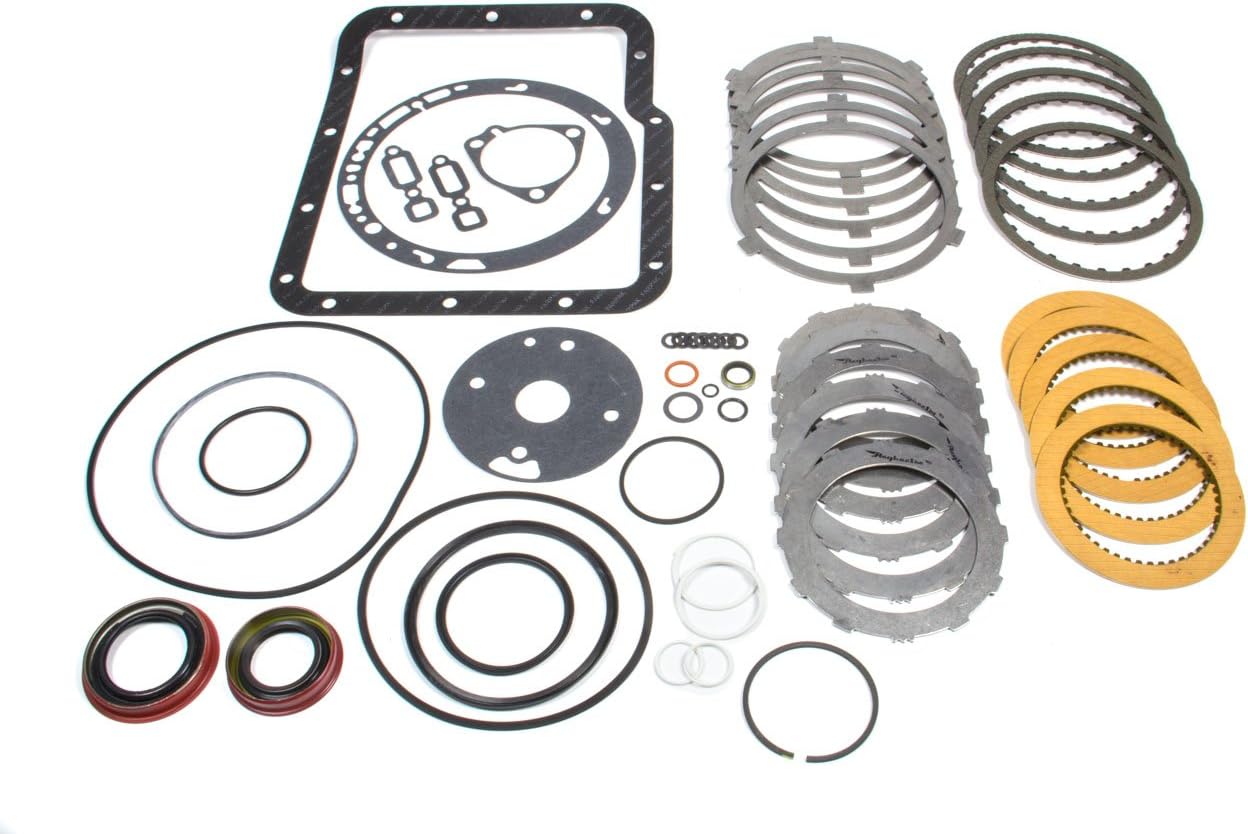
Rebuilding a Powerglide for a bracket car, a gasser or a classic Chevy that has started slipping into high gear? The Coan Racing 12107 master overhaul kit puts every wear item for a stock-style aluminum Powerglide in one box: five direct (high) clutch frictions, five reverse clutch frictions, the matching steels, gaskets and sealing rings. The band and the filter are not included, which lets you pick the band that suits your build.
What the overhaul kit does in a Powerglide
The Powerglide is a two-speed with one planetary set, a low band and two clutch packs. In Low, the band clamps the drum and the planetary gives the reduction. For the shift to High, the band releases and the direct clutch pack applies to lock the gearset at 1:1. Reverse uses the reverse clutch pack, and on a race car the transbrake applies the reverse clutch against Low to hold the car on the line. Every apply depends on the sealing rings and piston seals holding pressure, and the frictions are what actually wear out. When either goes, the high gear shift flares or slips, the car creeps on the transbrake, or the trans leaks. This kit renews both halves of that system at once.
Symptoms that call for a Powerglide overhaul
- RPM flare or slip on the 1-2 shift into High, worse with power
- Car rolls or creeps while the transbrake is applied, a sign of worn reverse clutches
- Slipping or no Reverse
- Burnt-smelling or dark fluid with friction material in the pan
- Leaks at the front pump seal, the tail housing or the pan gasket
How to confirm before buying
A shift flare is not always clutches. BTE points out that a band adjustment that is off causes slow or flared shifts between Low and High and rolling on the transbrake, so check and reset the band first: torque the adjuster to 72 in-lb, back it out three and a half turns and lock the nut. If the problem stays, drop the pan and look at the fluid and debris. Our ATF color and smell chart shows what burnt clutch fluid looks like, and the flare versus slip guide explains how to tell a timing problem from a clutch that is failing.
Fitment
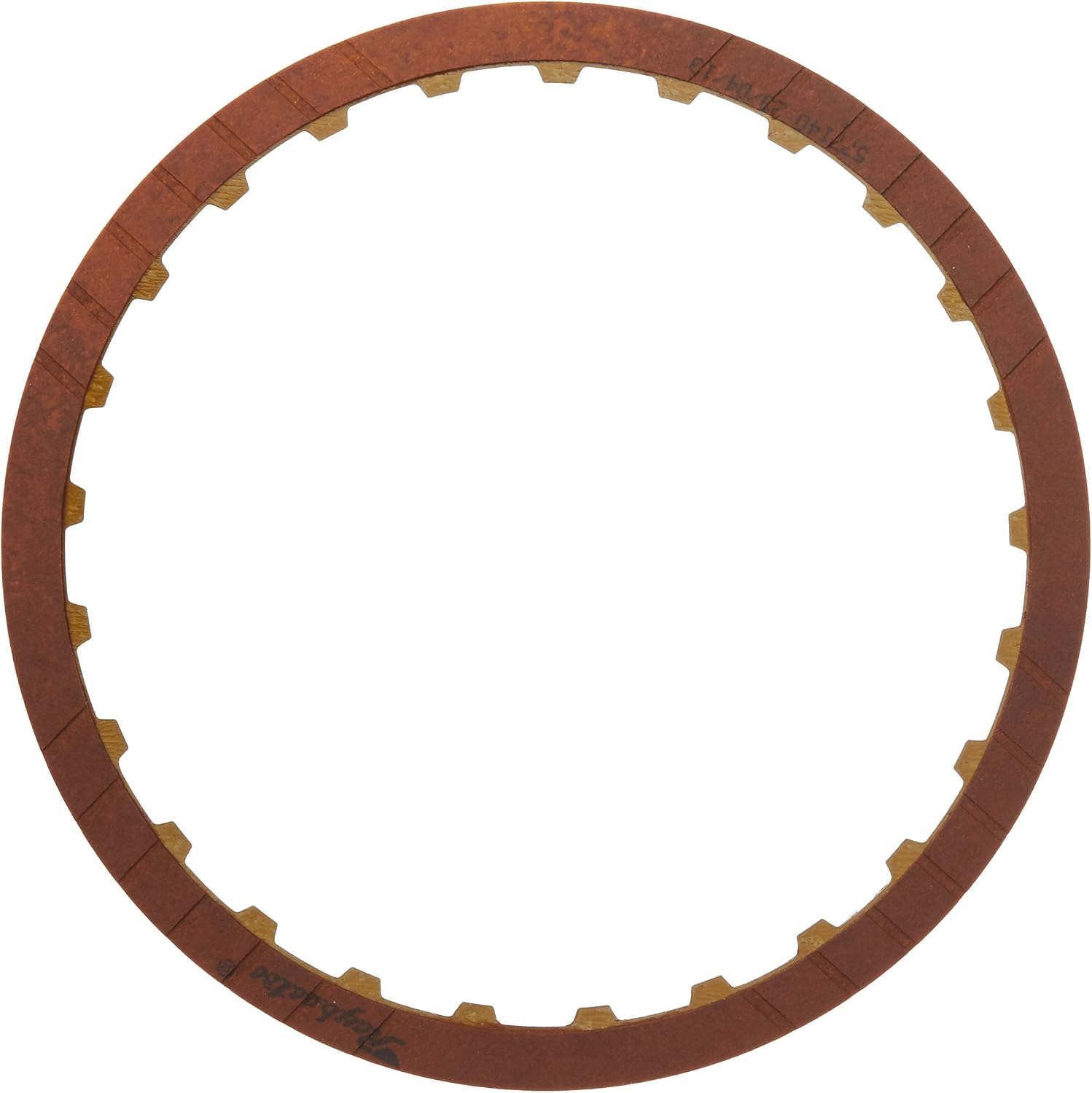
This kit is built for the GM aluminum-case Powerglide two-speed found behind Chevrolet passenger cars into the early 1970s and the aftermarket race cases that use the same internal layout. The clutch count matters: this is the 5-direct version. Coan sells separate overhaul kits for its 9-clutch Super Drum (12107D) and 10-clutch Big Dog units (12107E-R), so count the frictions in your direct drum before ordering. Early cast-iron Powerglides are a different design; if yours is an iron case, send us the details first. If your reverse pack sees heavy transbrake use, consider upgrading it with the heavy duty Powerglide reverse frictions in place of the stock-style reverse plates. Browse more transmission rebuild kits for other units.
Install notes
- Soak the new frictions in fresh ATF until fully saturated before stacking the packs.
- Use a Powerglide clutch spring compressor to get the return springs and snap rings out of the drums safely.
- Replace every sealing ring and piston seal; lube them with assembly gel so they stay centered during assembly.
- Check direct and reverse clutch pack clearance against the spec for your drum and steels before closing up.
- Install your band and a new filter, set the band to 72 in-lb and back out three and a half turns, then fill with the ATF your converter and clutch builder specify. Our ATF types guide covers the options.
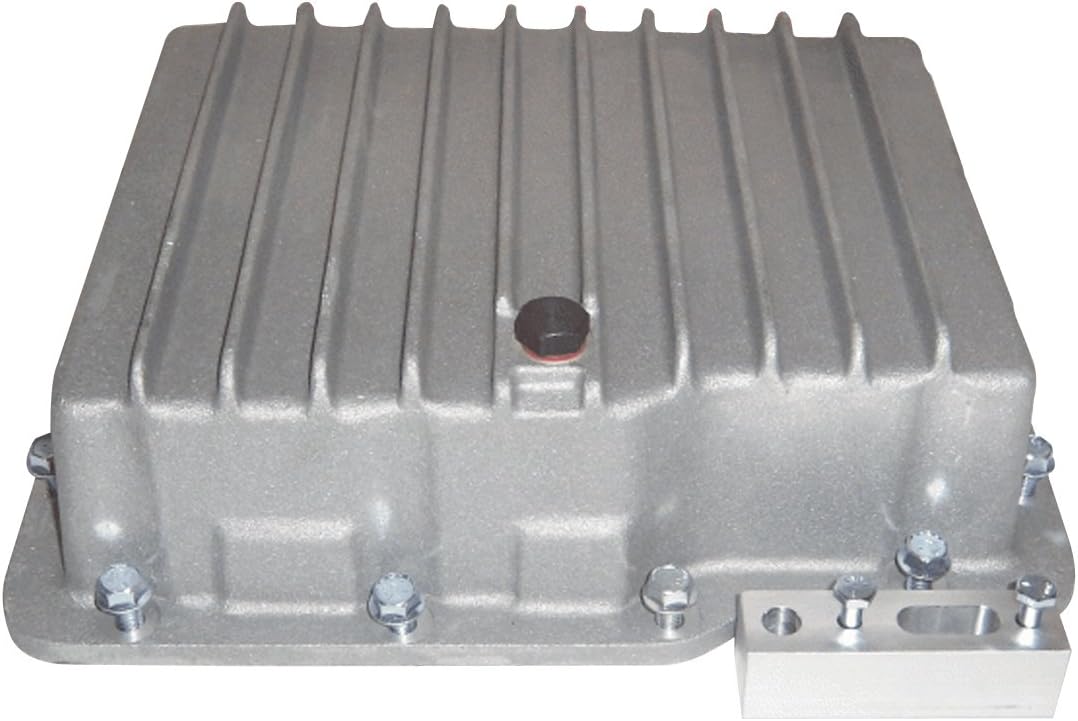
- Racers adding a deeper pan can pair this with the deep sump Powerglide pan.