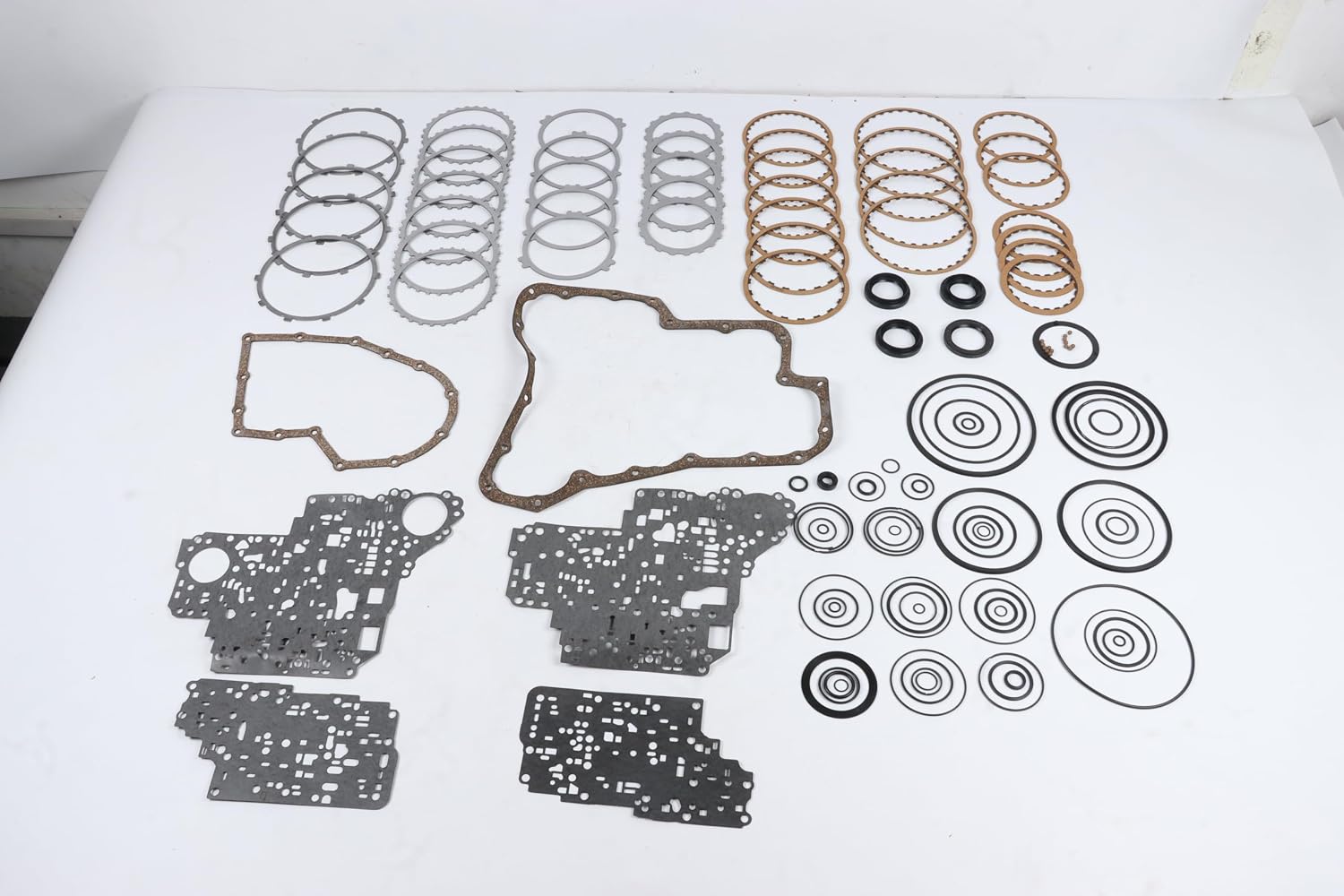
If your Sentra, 200SX or 4-speed Versa slips on the shifts, loses third and fourth once it gets hot, or drops out of third after you floor it and let off, the small Nissan four-speed is usually telling you a clutch seal or a clutch pack is finished. This master rebuild kit is built for the RE4F03A and its earlier cable-controlled cousin, the RL4F03A, with frictions, steels, a complete gasket set including the valve body separator gaskets, lip seals and piston seals for a full teardown.
What the master rebuild kit does in an RE4F03A
The RE4F03A is Nissan's small-case front-drive four-speed. Unlike Honda's parallel-shaft units it is a conventional planetary design: clutch packs and a 2-4 band hold different members of the gearsets to make each ratio, and an accumulator cushions the 1-2 shift. The early RL4F03A version used a throttle cable to the valve body, while the RE version is electronically controlled with a line-pressure solenoid. The kit renews the parts that actually wear on these: the friction and steel plates in each clutch pack and the rubber that holds apply pressure, so the rebuilt unit gets full clutch capacity back instead of one fixed pack and several worn ones.
Symptoms that point to a rebuild
- No third or fourth gear when hot, or no third after a 3-2 or 4-2 kickdown; TransGo traces this to a poorly designed 3-4 (direct) clutch inner piston seal
- Slipping or a long, mushy 2-3 shift at heavy throttle
- Soft or slipping 1-2 shift that gets worse over time
- Dark, burnt fluid with friction material in the pan
- Leaks at the axle seals or pan after years of heat cycles
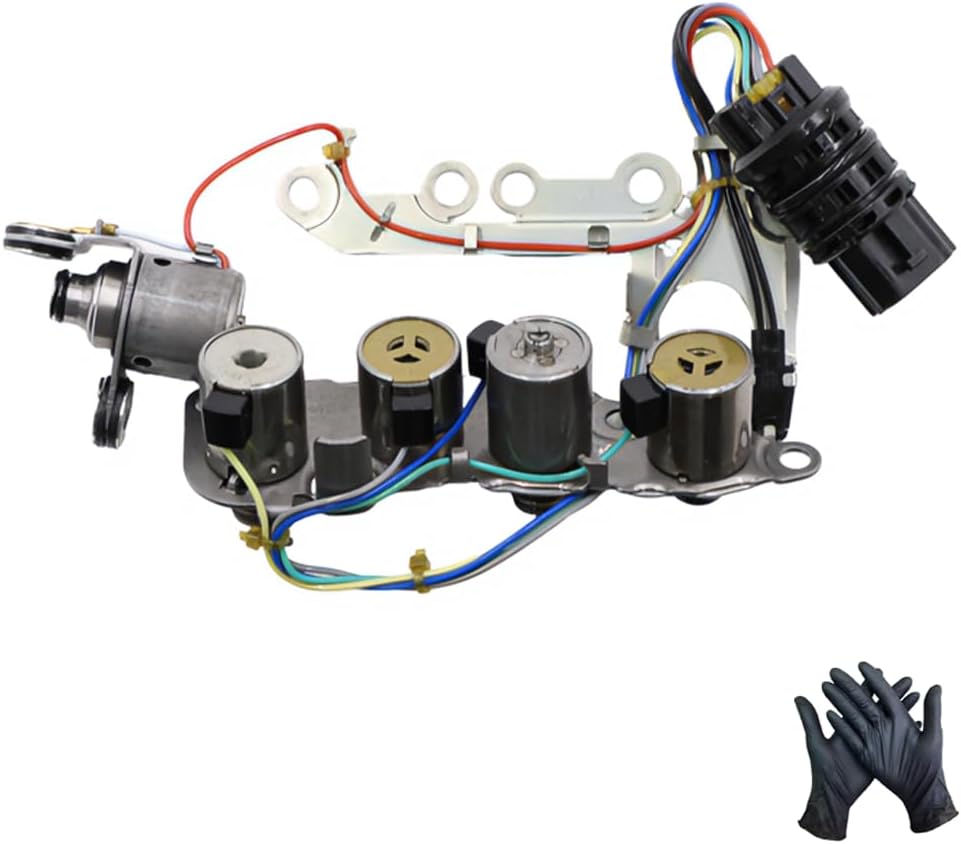
A hard 1-2 shift is a different story. On the RE4F03 and RE4F04B, Transmission Digest and ATSG tie it to uncontrolled line pressure, sometimes with code P0745 stored, and the fix is often the pressure-control solenoid or a loose ground crimp at its eyelet rather than a rebuild.
How to confirm before you buy
Pull the pan and look at the fluid and debris. Clutch material and a burnt smell mean the packs are worn. Clean fluid with a harsh shift points toward the solenoids or valve body, and our guide on testing a solenoid with a multimeter shows how to check them. A gauge on the line pressure port settles most arguments; see our pressure testing guide.
Fitment
This kit is listed for the RE4F03A and RL4F03A, with applications including the Nissan Sentra, 200SX and Versa plus overseas models such as the Note, March/Micra and Tsuru. TransGo lists the cable-controlled RL4F03A in the 1991-1999 Sentra, 1995-1998 200SX, 1992-1993 NX and 1991-1993 Infiniti G20. Nissan also built close variants such as the RE4F03B, and many later Versa and Cube models in the US use a CVT instead, which this kit does not fit. Read the code on the transmission ID tag before ordering, or send us your year and VIN. Versa owners can also compare our RE4F03A Versa master kit.
Install notes
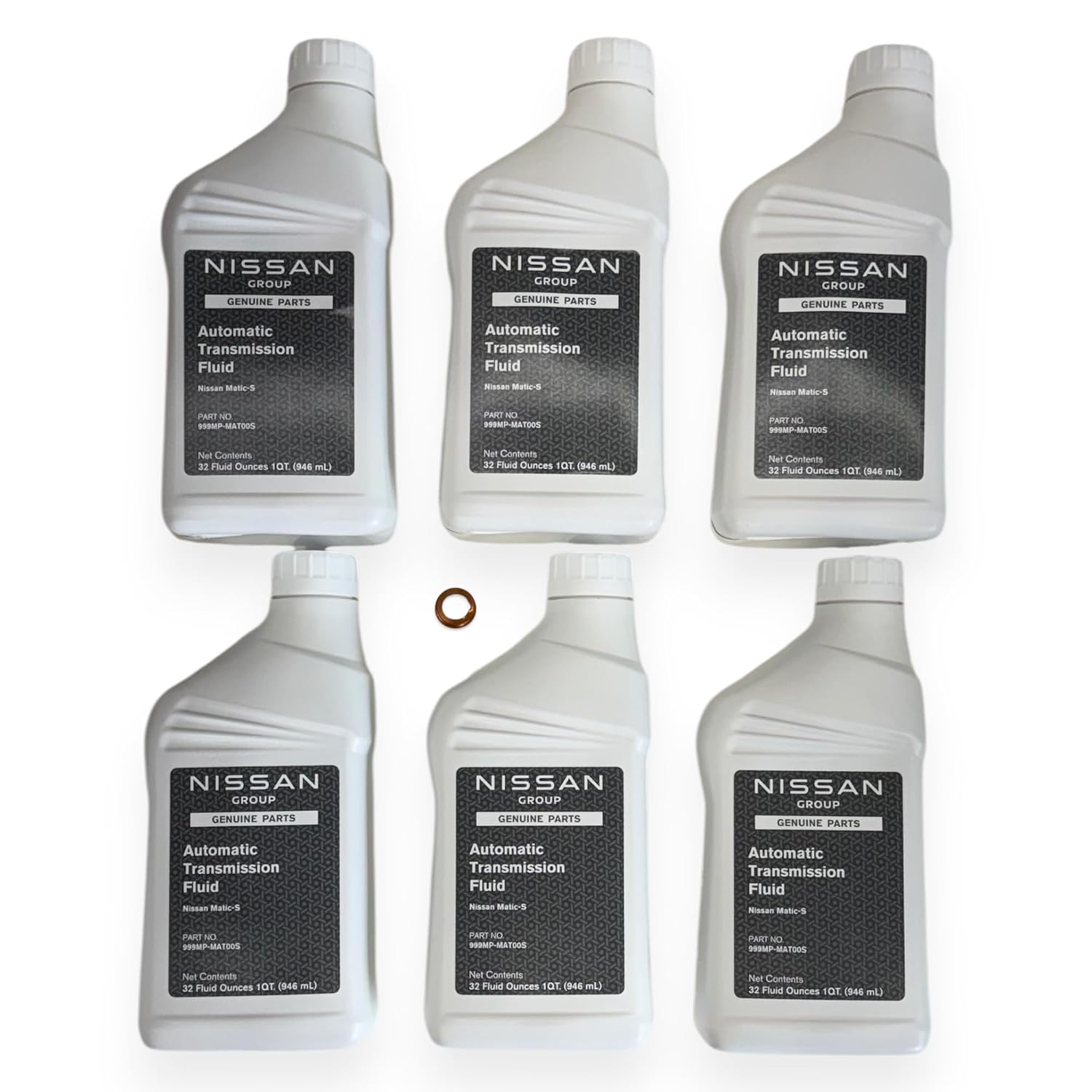
Soak the frictions before assembly. Replace the 3-4 clutch inner piston seal carefully, since it is the one that causes most lost-gear complaints. Set each clutch clearance as you stack it and air-check the drums. TransGo's procedure for the 2nd band is to snug the adjuster, back it off two to two and a half turns and lock it (14mm wrench and T30 Torx). If the unit had a harsh 1-2 or a P0745, renew the solenoid assembly on Versa models. Fill with the Nissan fluid your owner's manual calls for; the 4-speed Versa specifies Matic S, which we stock as a 6-quart Matic S kit. Flush the cooler lines before the rebuilt unit goes back in.