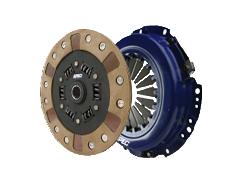
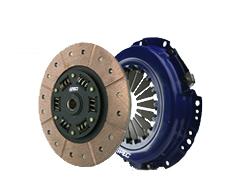
The SPEC SF33A-4 is the billet aluminum flywheel that SPEC's non-ratcheting Focus ST clutch kits are built around. If you are shopping for a Focus ST 2.0L EcoBoost six-speed and you have already picked a SPEC dash 4 clutch, this is the flywheel the kit requires, because the factory dual-mass unit and the self-adjusting OE pressure plate do not work with those kits. Owners usually arrive here after the stock clutch started slipping on a tune, or after the dual-mass flywheel began to rattle and shudder at low rpm.
What the SF33A-4 does in a Focus ST
From the factory the ST runs a dual-mass flywheel: a primary and secondary mass linked by internal springs, paired with a pressure plate that adjusts itself for wear. That design is quiet but does not like extra boost or hard launches. The SF33A-4 swaps the whole arrangement for a single-mass aluminum flywheel with a replaceable steel friction surface. SPEC lists it at 11 lb. The face height and bolt pattern are machined to match SPEC's conventional, non-ratcheting covers, so the clutch clamps consistently without relying on an adjuster mechanism.
The dash 4 kits that need it, per SPEC's application chart, are the SF331-4 Stage 1 (430 ft-lb), SF332-4 Stage 2 (485), SF333H-4 Stage 2+ (545), SF333-4 Stage 3 (580), SF333F-4 Stage 3+ (671), SF334-4 Stage 4 (580) and SF335-4 Stage 5 (820). The same chart lists an SF33S-4 steel flywheel as the heavier alternative for the identical kits. Expect the light aluminum flywheel to make the engine rev up and fall faster between shifts, and expect more gear rattle at idle than a dual-mass car ever had.
Symptoms that lead owners to this flywheel
- Revs flaring under boost in third, fourth or fifth while the car stops pulling, a sign the stock clutch has reached its limit
- Knocking or clatter at idle that quiets when the clutch pedal is pressed, typical of worn dual-mass springs
- Shudder pulling away from a stop, especially uphill or with a load
- A clunk on throttle tip-in or lift-off at low speed
- Hot spots, cracks or a scored face on the old flywheel when the transaxle comes out
A slipping clutch or tired flywheel does not set a trouble code by itself. If the car feels down on power, scan for boost and misfire codes first so you do not misread an engine fault as clutch slip.
How to confirm before you buy
Do a logged pull in fourth gear from low rpm. If boost hits its target and engine speed runs away from road speed, the clutch is slipping, and a dash 4 kit plus this flywheel is a sound fix. Our slipping diagnosis guide covers that road test, and flare vs. slip helps sort a clutch problem from something else. If the only complaint is idle rattle with no slip, decide first whether you want a dual-mass replacement or a single-mass conversion; our dual-mass vs. single-mass comparison lays out the trade-offs.
Fitment
This listing is titled for the 2012-2013 Ford Focus ST 2.0T EcoBoost. SPEC's own catalog lists the SF33A-4 for Focus ST non-ratcheting clutch kits across 2012-2018. It is for the six-speed manual ST only; it is not for the non-turbo Focus, the Focus RS, the Fiesta ST or PowerShift automatics. The key rule is pairing: SF33A-4 goes with SPEC dash 4 clutches only. If you plan to keep a ratcheting OE-pattern clutch, SPEC's dash 3 flywheel is the matching part. Not sure which clutch is going in? Send us the year, VIN and clutch part number and we will confirm. Browse more drivetrain parts in our hard parts category.
Install notes
- Order the flywheel and the dash 4 clutch together so the friction surfaces break in as a set.
- While the crank flange is exposed, check the rear main seal for weeping; oil on a new disc causes slip and chatter.
- Use new flywheel bolts and follow the torque and thread locker callout in SPEC's instructions, tightening in a cross pattern with a calibrated wrench such as the 3-piece click torque wrench set.
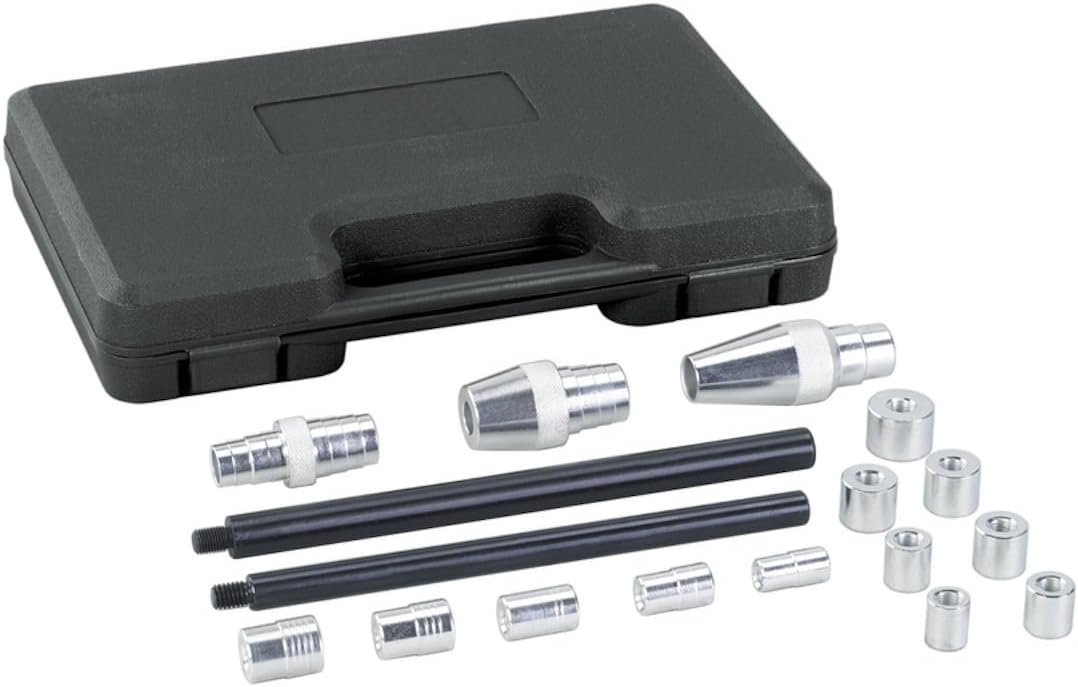
- Wipe the friction face with brake cleaner, center the disc with an alignment tool kit, and pull the cover down evenly.
- Bleed the clutch hydraulics with the fluid shown on the reservoir cap and refill the transaxle with the manual transmission fluid Ford specifies for the ST.
- When the wear surface is eventually used up, SPEC sells a diamond-ground replacement friction plate with fasteners for its billet aluminum flywheels, so the aluminum body can be reused.