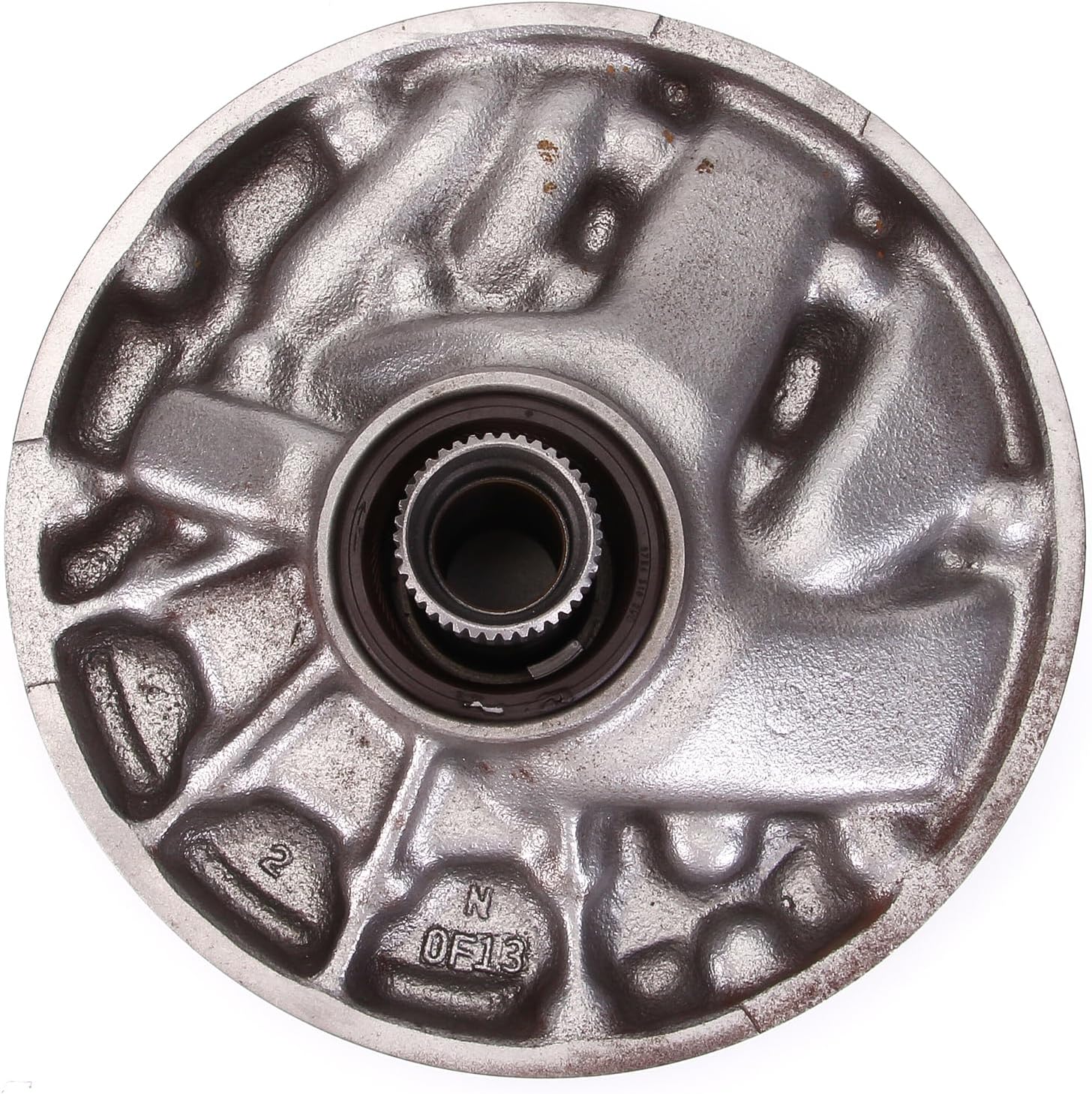
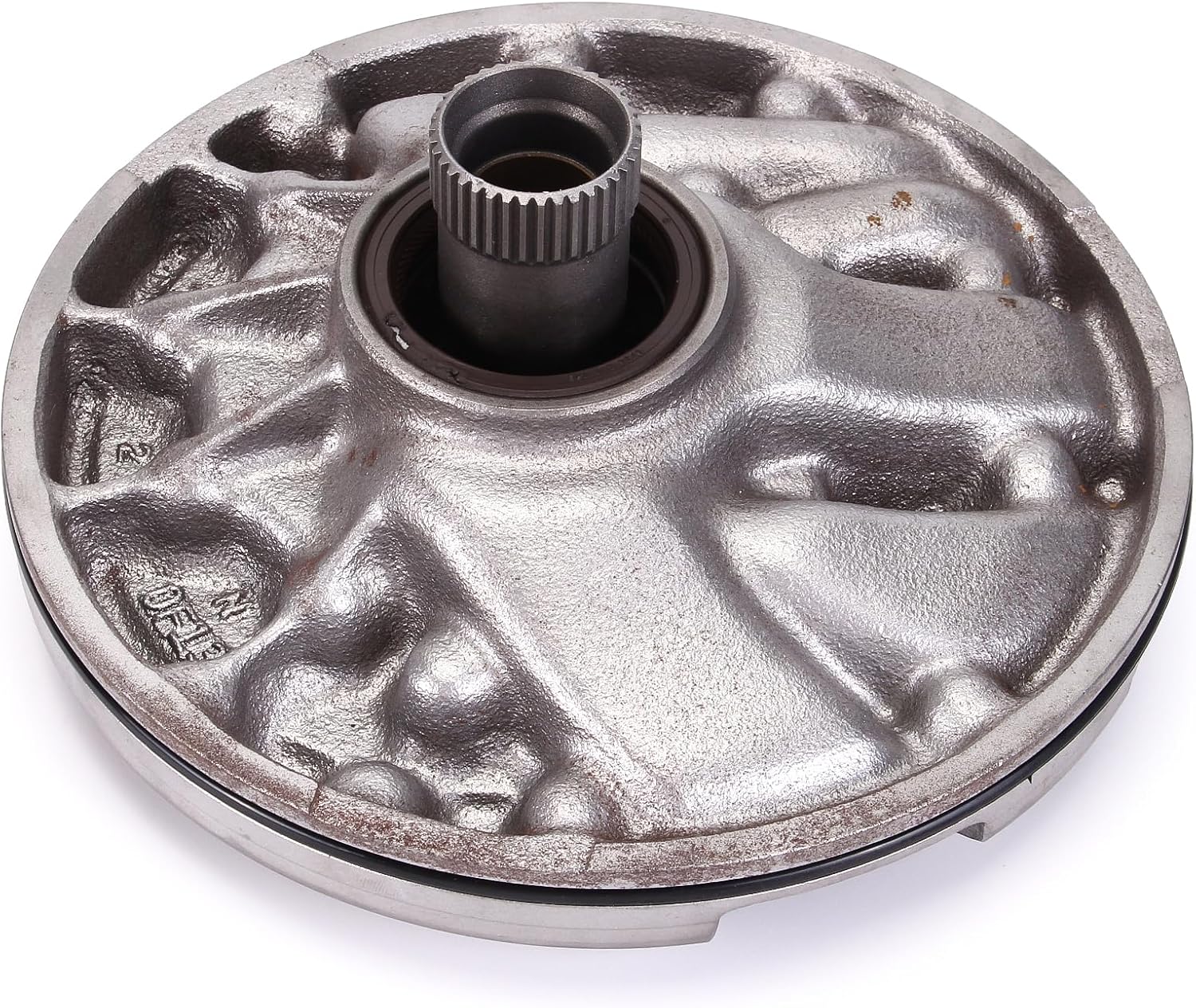
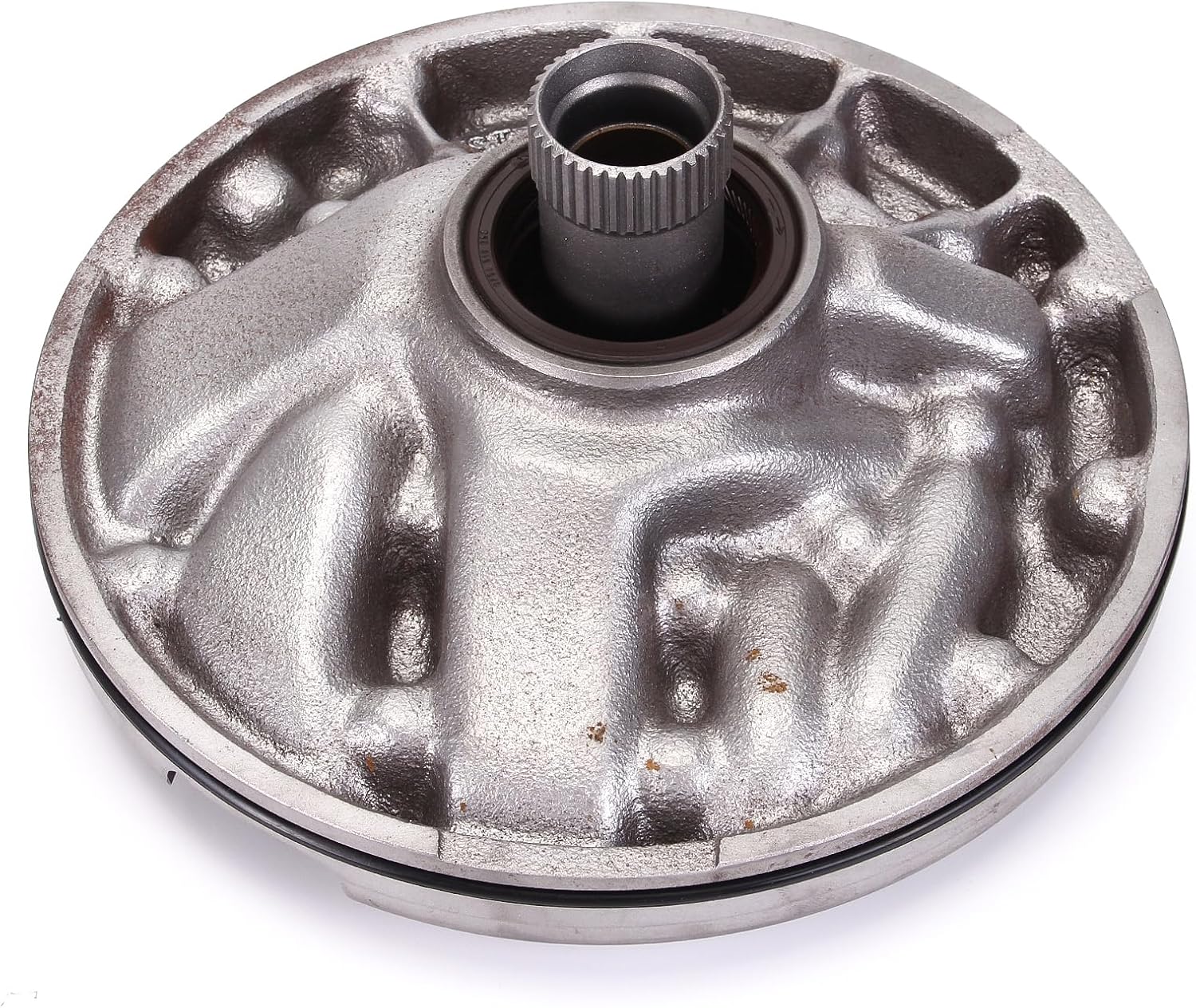
If your Suzuki Forenza, Suzuki Reno, Chevrolet Optra or Epica takes a long breath before it drops into Drive or Reverse, slips once it is warm, or whines in step with the engine, the front pump in its ZF 4HP16 is one of the first places to look. This is a complete 4HP16 front oil pump assembly, reference number 189500, sold as a finished unit so you are not piecing together a body, cover and gears from separate sources.
What the front pump does in a 4HP16
The 4HP16 is a four-speed front-wheel-drive automatic that ZF developed with Daewoo around 2000, after which Daewoo took over production and support. GM and Suzuki then used it in the Forenza, Reno, Verona, Optra, Epica and several Daewoo and Buick models. It has five friction elements, two rotating clutches and three stationary brakes, and no one-way clutches or bands. That means every shift is a clutch-to-clutch handoff controlled by the valve body and its six solenoids, and every one of those handoffs depends on steady line pressure from this pump.
The pump itself is a gear-type unit driven directly by the torque converter hub at the bellhousing end of the case. Two details set it apart from most pumps: the cover is nearly flat because there is no sealing-ring tower, and the seal and bushing bore is offset from the pump outside diameter, with a spacer washer under the front seal. Directly behind it sits the output-gear support, which also houses the F-clutch piston.
Symptoms of a worn 4HP16 pump
- Long delay engaging Drive or Reverse, worst at idle with hot fluid
- Flare or slip on the 2-3 shift, since a clutch-to-clutch shift has no one-way clutch to hold it
- Slipping in every gear after the car reaches operating temperature
- A whine that rises and falls with engine RPM rather than road speed
- Front seal leak at the converter hub, often from a worn bushing or a hub that has been riding on it
- Scored pump body and gears after a clutch failure has sent debris through the system
How to confirm it before you buy
Check the fluid level and condition first, because a low or burnt fill causes the same delay and slip. Our ATF color and smell chart helps you read what comes out. If the fluid is right, put a gauge on the line pressure tap and compare idle and stall readings; low pressure in every range points at the pump or the regulator side rather than one clutch. The line pressure testing guide walks through the hookup. A pump whine that changes with RPM in Park and Neutral is another strong pointer, and a worn hub on the converter tells you to look at the bushing too; see converter hub and pump bushing wear.
Fitment
This assembly is for the ZF 4HP16 four-speed only. Known 4HP16 applications include the Suzuki Forenza, Reno and Verona, the Chevrolet Optra, Epica and Orlando, the Buick Excelle, and the Daewoo Lacetti, Leganza, Magnus and Rezzo. The listing does not break fitment down by model year, so confirm your unit is a 4HP16 by the tag on the case, and compare the old pump with this one before installing: stator splines, bolt pattern and the seal ring lands. Similar-looking compact cars from other brands use Aisin or Hyundai four-speeds that this pump will not fit. If you are not sure, send us your year and VIN before ordering. Browse other internal parts in our hard parts category.
Install notes
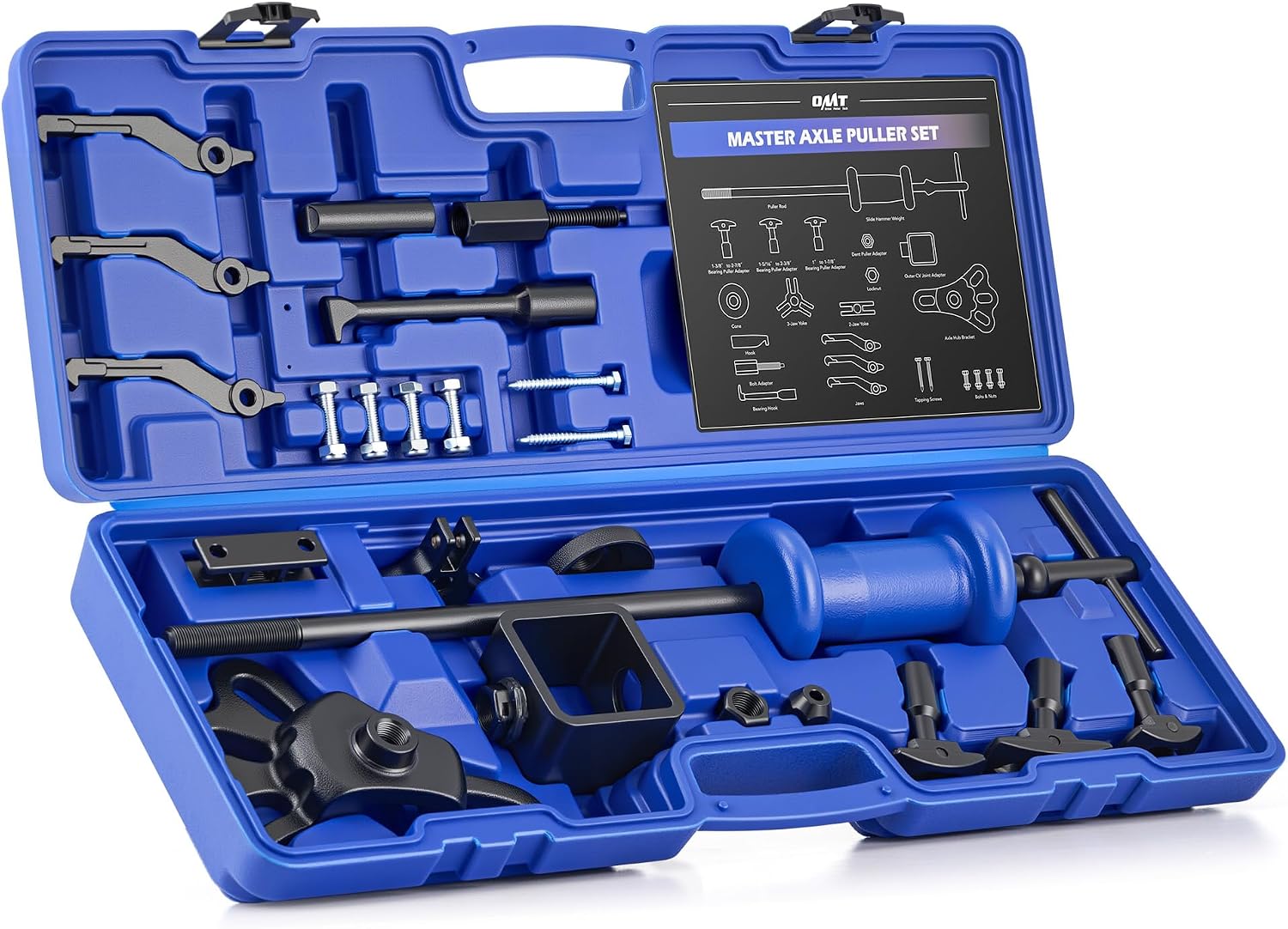
- Pull the converter, remove the pump bolts and draw the pump out evenly with slide hammers in the threaded holes. A set like the 22-piece slide hammer and puller set covers it.
- Lube the outer O-ring and front seal with fluid, and remember the spacer washer that sits under the 4HP16 front seal.
- Draw the pump in with the bolts in a cross pattern, then confirm the input shaft still turns by hand before the converter goes back on. Use a click torque wrench to bring the bolts up evenly.
- Inspect the converter hub for grooves; a scored hub will chew up the new bushing and seal.
- If the old pump died from clutch material, flush the cooler and lines before the car goes back on the road, as covered in flushing the cooler after a failure.
- Refill with the fluid your owner manual lists. The Forenza manual calls for ESSO LT 71141 or TOTAL ATF H50235 and warns against other fluids.