Customers do not say "my F clutch control valve bore is worn." They say it slips or flares going from third to fourth, or it hangs there for a beat before it grabs. Shops have shorthanded that complaint into "the 3-4 clutch" for forty years, back when a Simpson-gear 4-speed really did have one physical clutch doing that one job. The 10L80 does not work that way, and knowing why changes what you actually test before you order parts.
There is no single 3-4 clutch -- there are six lettered packs
Per Sonnax, the 10L80 and the rest of the 10L family run six clutch packs (lettered A through F) and four planetary gearsets to produce ten forward ratios. Every gear is made by applying some combination of those six packs, not by one clutch doing one job the way a 3-4 clutch did on a 4L60E. Sonnax has published the actual application chart, and it is worth copying onto the wall of any bay that sees these trucks regularly.
| Clutch | Gen. 1 10L60/80/90 (2019 and earlier) | 10L1000, Gen. 2 10L60/80/90 (2020 and later) |
|---|---|---|
| A | 1, 2, 3, 5, 6, R | 1, 2, 3, 4, 5, 6, R |
| B | 2, 8, 9, 10, R | 1, 2, 8, 9, 10, R |
| C | 2, 3, 4, 6, 7, 9, 10 | 2, 3, 4, 5, 7, 9, 10 |
| D | 2, 3, 4, 6, 7, 8, 10, R | 1, 2, 3, 4, 6, 7, 8, 10, R |
| E | 1, 3, 5, 6, 7, 8, 9 | 1, 3, 5, 6, 7, 8, 9 |
| F | 1, 4, 5, 7, 8, 9, 10, R | 1, 4, 5, 7, 8, 9, 10, R |
Read that chart for 3rd and 4th specifically and the "3-4 clutch" question answers itself. Third gear applies A, C, D and E. Fourth gear applies C, D and F. C and D carry straight through the shift on both generations and are not the story here.
On Gen. 1 trucks (2017-2019), the 3-4 upshift releases both A and E while F comes on. On Gen. 2 units, GM's late-2019 redesign changed clutch A's application range so it now holds through 4th gear too -- per the chart above, Gen. 2's A clutch covers 1 through 6, not just 1, 2, 3, 5 and 6. That leaves the 3-4 shift on Gen. 2 trucks as a clean single swap: E releases, F applies, nothing else moves. Either generation, F is the clutch doing new work on this shift, and Sonnax's own hydraulic documentation backs that up directly: the feed limit high valve, part of the circuit GM added when it deleted the Gen. 1 latch valves, controls the C and F clutch circuits. A pack that slips specifically on the 3-4 upshift and nowhere else is very often the F clutch not getting full apply pressure fast enough, or already worn thin enough that it cannot hold the 10th planetary member it locks.
What the failure actually looks like
The complaint is narrow by definition: a flare, bump or delayed engagement that happens specifically between 3rd and 4th, not on every shift. ATRA documents that the TCM overlaps the oncoming and off-going clutch for roughly 0.3 seconds on these units, and everything that goes wrong with this particular shift happens inside that short window. That is also why a worn-out F clutch (slow or weak apply) and a sticky E clutch (slow release) can feel almost identical from the driver's seat -- one is a flare, the other is closer to a bind -- even though the fix is different.
- Flare or RPM flare on the 3-4 upshift only. Engine revs up before the next gear catches. Points at the F clutch not building apply pressure fast enough, or friction material worn enough that it is slipping under load before it locks up.
- Delayed or soft engagement into 4th. Same root cause, less severe. Often shows up first under load -- towing, merging, WOT -- before it is noticeable in light driving.
- Transmission ratio error code. Once the TCM can no longer confirm the commanded gear against actual input/output speed, it sets a ratio code and may limit shifts to protect the hardware.
- A bind, flare-then-clunk, or momentary hesitation around the 3-4/4-3 range, worse hot, worse towing. This is the pattern tied to GM's feed limit low valve recall below -- it is the off-going E clutch failing to release rather than F slipping, and it is worth ruling in or out early because the fix is different.
What actually burns a 10L80 clutch pack
Sonnax technical specialist Caleb Perham is specific about where these units lose their grip. Wear on the sealing ring and hub bushing is one of the biggest causes of charge pressure loss inside a 10-speed clutch pack, and lost charge pressure means the pack cannot hold full apply force under load -- it slips, generates heat, and the friction material cooks. Sonnax built the CDF drum saver kit specifically because this wear pattern is common enough to need a dedicated fix, and lists the symptoms it addresses as slipping, slide bumps, neutral conditions and transmission ratio error codes -- which lines up closely with the 3-4 complaint list above.
Four other factors stack on top of that root cause:
- Excessive clutch clearance. ATRA is explicit that clutch clearances have to be within spec for the unit to shift correctly, and that out-of-spec clearance from normal wear is a documented root cause of harsh or binding shifts the TCM's strategy cannot compensate for.
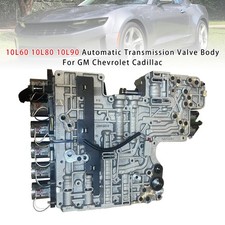
- Worn feed limit high valve bore (Gen. 2) or latch valve (Gen. 1). These are the hydraulic circuits that actually regulate how fast the F clutch comes up to full apply pressure. A worn bore means inconsistent, slow, or partial apply -- which reads on the road as an intermittent 3-4 flare rather than a constant one.
- Weak or damaged solenoid retainer clips. ATRA lists this first among root causes of intermittent shift-quality problems generally: a loose solenoid wobbles in its bore and hangs up the clutch control valve behind it, which affects whichever clutch that valve regulates.
- Wrong or worn-out fluid. Covered on its own below, because it is the most common and most avoidable cause.
The related recall: when the off-going clutch does not let go
There is a documented, more severe version of this same hydraulic circuit failing. GM issued Safety Recall N242480630 in March 2025 for the 10L1000 and Gen. 2 10L60/80/90, covering wear in the feed limit low valve. Per Sonnax, that wear drops solenoid feed pressure to the default disable solenoid, which positions the default enable and default select valves and can let the transmission apply more clutches than commanded -- a bind-up or momentary wheel lock-up condition at highway speed, sometimes with a downshift back to 2nd. The telltale code is DTC P0747, which flags the E clutch applied when it should be off. Translate that back to the chart above: E is exactly the clutch that is supposed to release on the 3-4 upshift. If it sticks instead of letting go, you get a bind, not a slip -- and Sonnax has documented this wear showing up in as few as 35,000 miles on trucks that tow or haul for a living. It is a different valve than the one that feeds F, but it is the same family of hydraulics, and a truck already showing early 3-4 flare symptoms is a reasonable one to check against this recall by VIN before you do anything else.
Fluid: the cheapest thing that kills a clutch pack
GM's TechLink capacity reference lists DEXRON ULV as the only approved fluid for every 10L80 application (RPO codes MQB, MQC, MHT, MI2 and MHS), with a fluid-change capacity of 7.7 liters (8.1 quarts). Sonnax does not hedge on substitutes: ULV is engineered specifically to cut friction and pump workload compared to older DEXRON specs, and using universal or previous-generation fluid "will result in shift complaints and premature failure." If a 10L80 in front of you has ever been serviced with anything other than DEXRON ULV, put that at the top of the suspect list before you pull a pan.
How to work the diagnosis
- Pull codes from every module, not just the TCM. A ratio code or P0747 narrows this immediately. DTC P175E means the TCM already has shift limiting active to protect the hardware -- that is a symptom of something else, not a second fault to chase.
- Confirm the complaint is isolated to 3-4/4-3. If every shift is affected, you are looking at something upstream -- line pressure, fluid condition, battery/charging -- not a single clutch pack. The harsh-shift and slipping guides linked below cover that broader diagnosis.
- Check fluid type, level and condition. Confirm DEXRON ULV, confirm the 7.7 L / 8.1 qt capacity was actually used, and look for the burnt-friction smell or dark, debris-laden fluid that points at a pack that has already been cooking.
- VIN-check the feed limit low recall. Rule the N242480630 condition in or out before you commit to a clutch pack repair, especially on a Gen. 2 unit with any bind-type complaint.
- Vacuum test the feed limit valve bores once the valve body is out. A low reading confirms the hydraulic circuit feeding the F clutch is the actual problem, not just a symptom of a worn pack.
- Air check the clutch drums before reassembly. Sonnax recommends air checking each drum individually, then the complete rotating assembly through the pump before it goes in the case, to catch a leaking apply circuit or a leaking shaft plug before the unit is buttoned up.
The fix
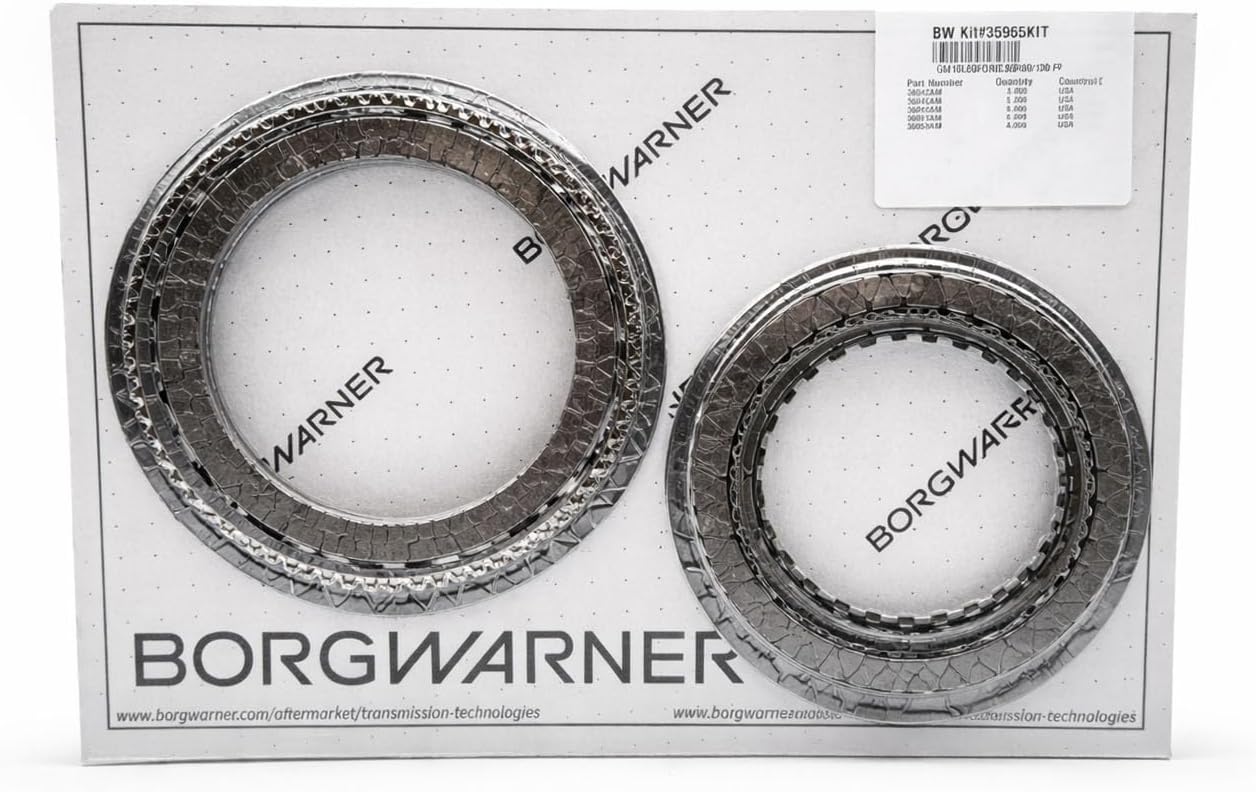
Most 3-4 clutch complaints do not require a full transmission assembly. A friction clutch module kit replaces the worn friction and steel plates in the affected pack directly. If charge-pressure loss from sealing ring and hub bushing wear is the root cause, Sonnax's CDF drum saver kit addresses that wear pattern at the source rather than letting a fresh friction kit slip again inside a few thousand miles. If the feed limit valve bore itself is worn past spec, that is a valve body repair or replacement, not a clutch problem at all -- vacuum test it before you commit to either.
One step gets skipped more than it should: GM's own bulletins require the TCM to be reprogrammed with solenoid performance data any time the transmission assembly, the valve body with solenoids, the TCM, or individual solenoids are replaced. Every solenoid is flow-tested at the factory and its current-versus-pressure curve is stored on GM's Techline Information System; skip the reprogram and the new part is being commanded against somebody else's calibration data, which is its own shift complaint waiting to happen.
A steel clutch pack built for the 2018-and-later 10L80
If the friction and steel plates in the pack are already cooked -- not just the sealing rings or valve body feeding it -- a direct steel clutch pack replacement is the straight fix. Raybestos builds one specifically for 2018-on 10L80 applications.
10L80 Raybestos Steel Clutch Pack (STMGM31) at CoreTransmissionParts →Also there: the full 10L80 parts collection, including Sonnax feed limit valve kits and solenoid stabilization retainers.
FAQ
Does the 10L80 actually have a dedicated 3-4 clutch?
No. Sonnax's published clutch application chart shows the 10L80 runs six lettered clutch packs, A through F, through a planetary gearset. Third gear applies clutches A, C, D and E; fourth gear applies C, D and F. On 2019-and-earlier Gen. 1 units, the 3-4 upshift releases A and E while F comes on. On late-2019-and-later Gen. 2 units, GM's redesign leaves A, C and D applied through both gears and the shift comes down to one swap: E releases, F applies. Either way, the F clutch is the one doing new work on this shift, which is why shops default to calling it the 3-4 clutch.
What does a failing 3-4 clutch pack feel like on a 10L80?
A flare or slip specifically on the 3-4 upshift, sometimes with a delayed or soft engagement into 4th, and a transmission ratio error code once the TCM can no longer confirm the commanded gear. ATRA notes the oncoming and off-going clutch overlap on this unit runs about 0.3 seconds, so the same complaint can also look like a bind or a bump depending on whether the off-going clutch (E) is slow to release or the oncoming clutch (F) is slow to apply.
What actually burns out a 10L80 clutch pack?
Per Sonnax, sealing ring and hub bushing wear is one of the biggest causes of charge pressure loss in these 10-speed clutch packs, which lets the pack slip under load and cook the friction material. Excessive clutch clearance from normal wear, a worn feed limit valve bore controlling the C and F clutch circuits, and the wrong fluid all compound it. GM's TechLink capacity chart specifies DEXRON ULV only, and Sonnax is direct that universal or previous-generation fluid causes premature clutch failure in these units.
Is the 10L80 clutch problem connected to a GM recall?
There is a related but distinct issue. GM issued Safety Recall N242480630 for the 10L1000 and Gen. 2 10L60/80/90 covering feed limit low valve wear that can drop solenoid feed pressure and put the transmission into a partial default mode, letting more clutches apply than commanded and causing a momentary bind or wheel lock-up, sometimes with DTC P0747 showing the E clutch applied when it should be off. That is the off-going clutch for the 3-4 shift failing to release rather than the oncoming F clutch slipping, but both point back to the same feed limit valve hardware.
Can a 10L80 clutch pack be repaired without replacing the whole transmission?
Usually, yes. A friction clutch module kit replaces the worn friction and steel plates in the affected pack, and Sonnax's CDF drum saver kit addresses sealing ring and hub bushing wear that is feeding the slip in the first place. If the feed limit or clutch control valve bores in the valve body are worn, those get vacuum tested and repaired or replaced before the clutch pack goes back in. Full transmission assembly replacement is a last resort, and GM's own bulletins require solenoid data to be reprogrammed into the TCM any time the valve body, solenoids or transmission assembly are replaced.
Sources
- Sonnax — "GM 10L1000 Casting Identification & Clutch Application," Caleb Perham, September 9, 2025. Backs the six lettered clutch packs (A through F) and four planetary gearsets; the published clutch application chart for Gen. 1 10L60/80/90 (2019 and earlier) versus the 10L1000 and Gen. 2 10L60/80/90 (2020 and later); the feed limit low and feed limit high valve pressure specs of 95–119 psi and 145–181 psi; the feed limit high circuit controlling the C and F clutch circuits and feed limit low controlling A and B; and the default solenoid/default enable/default select valve relationship that also feeds the F clutch circuit. sonnax.com
- Sonnax — "Understanding '19-Later GM 10-Speed Clutch Regulating Changes," Jim Dial, May 6, 2025. Backs the Gen. 1 latch-valve clutch apply sequence using a linear-force solenoid with an individual pin contacting the regulating valve directly; GM's late-2019 Gen. 2 change deleting the latch valves in favor of feed limit low/high valves and boost checkballs; and the #5 boost ball seating against the separator plate below 120 psi and unseating above the 119 psi feed limit spec. sonnax.com
- Sonnax — "Troubleshooting Pressure Loss in 10-Speed Clutch Packs," Caleb Perham, April 7, 2025. Backs sealing ring and hub bushing wear as one of the biggest causes of charge pressure loss in 10-speed clutch packs, leading to slip, lockup and overheat concerns; the CDF drum saver kit 129910-01K addressing slipping, slide bumps, neutral conditions and ratio error codes; the recommendation to air check each clutch drum individually and the complete rotating assembly through the pump before final assembly; and the requirement to use DEXRON ULV or MERCON ULV fluid specifically, with universal or previous-generation fluid causing shift complaints and premature failure. sonnax.com
- Sonnax — "Understanding the '19-Later GM 10-Speed Safety Recall," Jim Dial, May 16, 2025. Backs GM Safety Recall N242480630 issued March 2025 for the 10L1000 and Gen. 2 10L60/10L80/10L90; feed limit low valve wear dropping solenoid feed pressure to the default disable solenoid and causing a partial default mode with momentary wheel lock-up or a downshift to 2nd gear; DTC P0747 indicating the E clutch applied when it should be off; and wear appearing in as few as 35,000 miles on tow trucks and heavy haulers. sonnax.com
- ATRA / GEARS Magazine — "Diagnosing The 10L Series Transmission," Keith Clark, June 2024. Backs the approximately 0.3 second oncoming/off-going clutch overlap controlled by the TCM; clutch clearances needing to be within spec for correct shifting, with excessive clearance from wear listed as a documented root cause of harsh or binding shifts; weak or broken solenoid retainer clips listed first among root causes of intermittent shift-quality problems; and DTC P175E indicating the TCM has shift limiting active. gearsmagazine.com
- General Motors — GM TechLink "2026 Transmission Capacities & Fluids" reference chart (U.S. and Canada). Backs the DEXRON ULV fluid specification and 7.7 liter (8.1 quart) fluid change capacity for all 10L80 applications across RPO codes MQB, MQC, MHT, MI2 and MHS on Silverado, Sierra, Tahoe, Suburban, Yukon, Escalade and related platforms. gm-techlink.com (PDF)
- General Motors — Preliminary Information Bulletin PIP5477K, "10L90 10L80 10 Speed Automatic Transmission Restriction," published June 18, 2019 (NHTSA-hosted). Backs the requirement that solenoid valves be characterized/reprogrammed with performance data after transmission assembly, valve body or solenoid replacement, and documents GM's Product Quality Center review process for 10L80/10L90 transmission assembly replacements. nhtsa.gov (PDF)