Both of these get sold at the counter as "a transmission fluid service," and on most vehicles that loose language doesn't cost you much. On a 10L80 it does. This unit has no dipstick, fills from underneath against gravity, runs on a fluid spec that is not backward compatible with anything you'd find at a parts store ten years ago, and carries an internal thermal bypass valve that will hand you a wrong level reading if you check it at the wrong temperature. A pan drop and a cooler-line fluid exchange are not two versions of the same job on this transmission. They replace different amounts of fluid, they carry different risks, and picking the wrong one for the truck in front of you is a real way to turn a routine service into a comeback.
What a drain-and-fill actually replaces
A drain-and-fill on this unit means dropping the pan, pulling the filter, and refilling through the pan's fill tube. Chevrolet Performance's own installation sheet for the 10-speed RWD platform (part no. 19420481) lists the capacity for exactly this job: 7.7 liters, 8.1 quarts for pan removal and filter replacement. GM's 2026 TechLink Transmission Capacities & Fluids chart backs the same number model-by-model, listing 7.7 L / 8.1 qt as the fluid change capacity for the 10L80 across RPO codes MQB, MQC, MHT, MI2 and MHS in the Silverado, Sierra, Tahoe, Suburban and Yukon.
That 8.1 quarts is not the whole system. The same Chevrolet Performance sheet lists the complete system volume, including the cooler, at 12.52 liters, 13.23 quarts. Divide it out and a pan-and-filter service replaces roughly 61 percent of the total fluid in one visit. The rest stays inside the torque converter, the valve body feed channels and the external cooler lines, because none of that fluid passes through the pan when the truck is sitting still with the engine off.
What a drain-and-fill buys you that a flush can't is a look at the pan itself. This transmission has no dipstick, so the only direct visual read on its internal condition is what's sitting in the bottom of that pan when you pull it: metal flake, friction material, or a clean magnet. GM's own restriction bulletin PIP5593B lists the oil pan as a serviceable component on the 10L80, marked with an "X" in the table of parts that can be removed and serviced without triggering a transmission exchange through the Product Quality Center. In other words, GM itself treats pulling this pan as routine, sanctioned maintenance, not a step toward a teardown. A flush machine never gives you that look.
What a flush or fluid-exchange machine actually does
A cooler-line fluid exchange hooks into the external cooler circuit, and with the engine running, alternates pulling old fluid out while pushing new fluid in, cycling it through the parts of the system a pan drop can't reach: the converter and the internal feed channels. Done correctly, with the right fluid and a clean machine, it can replace a higher percentage of total system fluid in a single visit than a pan drop alone.
What it does not do is touch the pan or the filter. Unless a flush is paired with a pan drop, whatever has settled in the bottom of that pan stays exactly where it was, and the filter keeps running on whatever condition it was in before the service started.
GM's own record on cooler-circuit flush procedures is worth knowing before anyone pays extra for one. A GM TechLink notice confirms that effective December 1, 2018, GM stopped requiring a mandatory oil cooler flush-and-flow test on every transmission or torque converter replacement. GM's stated reason, quoted directly: "Recent GM studies have shown that automatic transmission oil cooler flush requirements have limited benefit" on many current transmission repairs. That notice is specifically about the DT-45096 TransFlow tool and the cooler-circuit diagnostic test tied to warranty replacements, not a blanket statement against aftermarket ATF exchange machines. But it is GM's own documented position that a mandatory flush-style procedure didn't carry the benefit the word implies on modern transmissions, which is a useful data point before assuming more expensive automatically means more thorough.
The ULV fluid risk a flush raises that a drain-and-fill doesn't
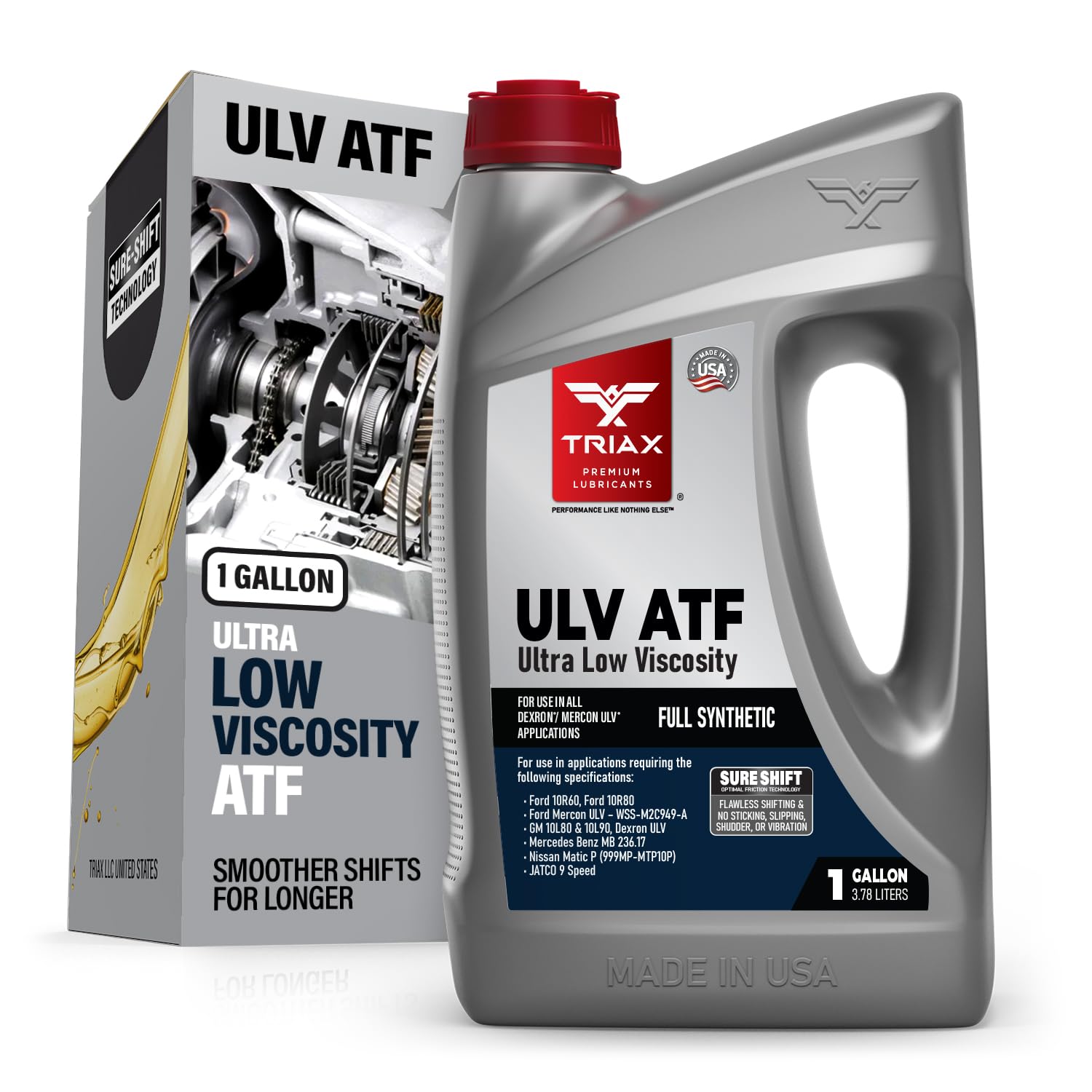
The 10L80 takes DEXRON ULV only. Chevrolet Performance's sheet states it without room for interpretation: use DEXRON ULV, part number 19352619 in the US, and do not use DEXRON VI or DEXRON HP. Motul's ATF ULV technical data sheet, built around the same GM-licensed part numbers (19352619, 19352620, 9986396), backs the reason with real numbers: the fluid runs 20.1 mm²/s at 40°C and 4.5 mm²/s at 100°C, a noticeably thinner fluid than conventional DEXRON VI, and the sheet states plainly it is not suitable for older transmissions, torque converters, or hydraulic systems where DEXRON VI, DEXRON III or DEXRON II is specified. The incompatibility runs both directions: put the old fluid in this unit and the pump, clutch fill volumes and TCM adapts, all designed around ULV's thinner viscosity, start working against a fluid they weren't calibrated for.
That matters more for a flush than for a drain-and-fill. A pan-and-filter service with the wrong fluid poured in contaminates roughly 8 quarts, in a system you can still correct before it has fully migrated through the converter. A cooler-line exchange pushes whatever is in the machine's reservoir through the entire circuit, including the torque converter, in one continuous pass. If the shop running it doesn't stock dedicated ULV, or the machine's lines still carry residue from a DEXRON VI vehicle serviced earlier that day, the mistake doesn't stay contained to a drainable 8 quarts. It goes everywhere the fluid goes, in one shot, and you can't un-mix fluid once it's been through a converter. The risk isn't the exchange machine itself. It's whether the fluid going into it is actually the fluid this transmission is built around.
The overfill trap that doesn't care which method you used
Neither service is finished until the level is set correctly, and this unit is unusually intolerant of getting that step wrong. Chevrolet Performance's fill procedure requires transmission fluid temperature (TFT) to sit between 75-80°C (167-176°F) with the engine running, the vehicle level and the shifter in Park. Check it above 80°C and the result reads as underfilled; check it below 75°C and the result reads as overfilled. Because the unit carries an internal thermal bypass valve, the level should not be checked at all until TFT reaches 70°C (158°F), and the engine must be running when the level plug comes out or fluid drains out well past the correct level.
Sonnax puts a real number on how little margin that window leaves. On this 10-speed family, overfilling by as little as one quart causes both overheating and venting, and the common path to that extra quart is someone topping off cold near a fill mark, not accounting for the fluid expanding once it reaches the 96-101°C (206-215°F) normal operating range Sonnax lists for these units in service. A cooler-line exchange machine's programmed fill target has no idea this transmission's level has to be set at a specific hot, running, five-degree window through a plug in the pan. Whoever runs either service still has to finish with that manual check by hand, or the printout says "serviced" while the transmission is sitting a quart over or under what it needs.
Which one to actually run
- Known service history, fluid already confirmed ULV, no symptoms: a drain-and-fill with filter replacement is the lower-risk, GM-aligned move, and it's the only method that lets you see what's actually in the pan.
- Unknown history, high mileage, or a truck that's never had the fluid touched: drain-and-fill first. Don't run a full exchange through fluid and debris nobody has looked at yet. Repeat the drain-and-fill at the next interval if it still comes out dark.
- Cooler-line exchange machine: reasonable as a supplement between pan drops on a transmission with confirmed good history, run through a machine the shop can confirm is dedicated to ULV. Not the right call as a first service on a neglected unit, and never a substitute for actually pulling the pan at some point.
- Either way: the job isn't done until someone sets the level hot, running, through the pan plug, inside the 75-80°C window. That step is the service. Everything before it is just moving fluid around.
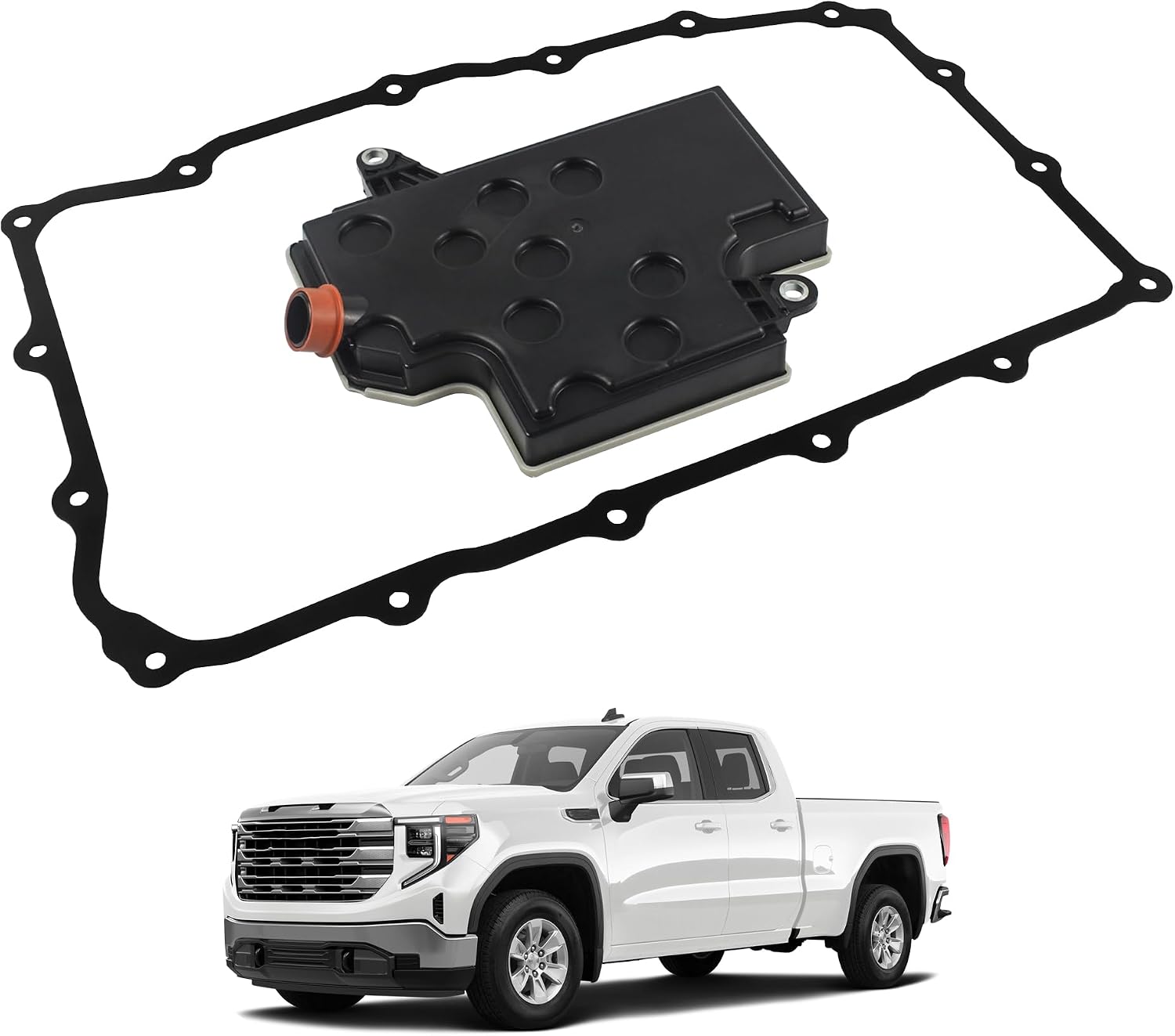
10L80 Transmission Filter, 2018-Up
The filter for a correct pan-and-filter drain-and-fill on the 10L80. Shop the part for this fix at our sister store, CoreTransmissionParts.
View the 10L80 transmission filter →Need parts for this job?
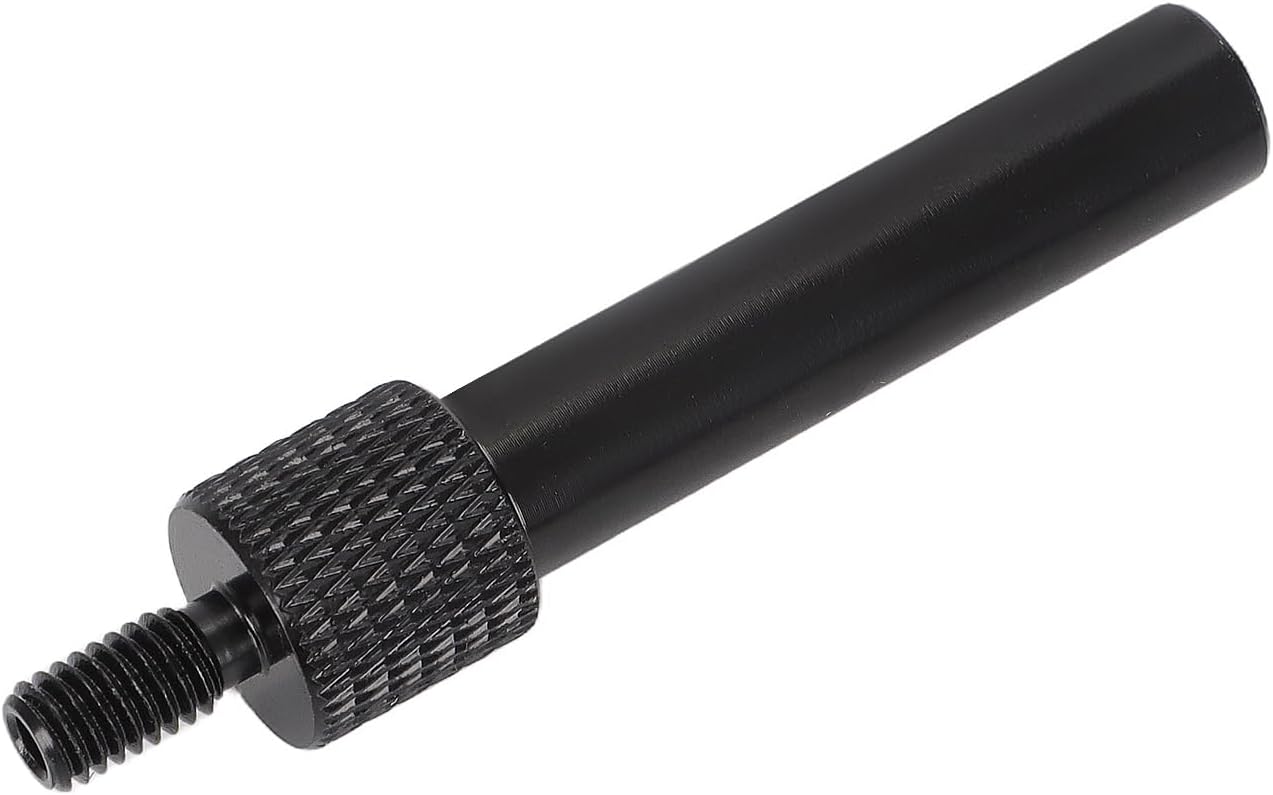
DEXRON ULV, filter and pan gasket kits, fill adapters, solenoids and rebuild kits for the GM 10L80, on our own checkout.
Shop 10L80 parts →FAQ
Does a drain-and-fill replace all the fluid in a 10L80?
No. Chevrolet Performance's own installation sheet for the 10-speed RWD platform lists a pan-removal-and-filter-replacement capacity of 7.7 liters, 8.1 quarts, against a complete-system capacity of 12.52 liters, 13.23 quarts, including the cooler volume. That is roughly 61 percent of the total fluid. The remainder stays inside the torque converter, the valve body feed channels and the cooler lines, which a pan drop cannot reach.
Is a transmission flush bad for a 10L80?
Not inherently, but it carries a different risk than a pan drop. A cooler-line fluid exchange machine replaces more total fluid in one visit, but it never touches the pan or the filter, so it does not let anyone see what has actually been wearing. It is also a single pass of fluid through the entire circuit, including the torque converter, so if the machine's reservoir has the wrong ATF or carries residue from a prior vehicle, the mistake gets pushed through the whole transmission at once rather than contained to roughly 8 quarts the way a bad drain-and-fill would be.
What fluid does a 10L80 need for either service?
DEXRON ULV only. Chevrolet Performance's sheet states it directly: use DEXRON ULV, part number 19352619 in the US, and do not use DEXRON VI or DEXRON HP. GM's TechLink transmission capacities chart lists DEXRON ULV for every 10L80 application. Motul's ATF ULV data sheet, built around the same GM part numbers, states the fluid is not suitable where DEXRON VI, DEXRON III, or DEXRON II is specified, because the viscosity families are not interchangeable in either direction.
Can a flush machine overfill a 10L80?
Yes, and this transmission is unusually sensitive to it. Sonnax documents that overfilling this 10-speed family by as little as one quart causes both overheating and venting, and that units commonly arrive overfilled because someone topped off cold near a fill mark, then the fluid expanded once it reached the 96-101°C normal operating range. A flush machine's programmed fill target does not know this unit's temperature-gated level procedure, so the finishing level check at the pan plug still has to happen by hand regardless of which service method was used.
How do I know if my shop ran a flush or a drain-and-fill on my 10L80?
Ask whether the pan came off and whether the filter was replaced. A drain-and-fill always involves removing the pan, which is listed as a GM-serviceable component on this transmission under bulletin PIP5593B, separate from any transmission replacement. A cooler-line flush connects at the external cooler lines and does not require pulling the pan at all, so if the filter was not mentioned and the invoice does not list a new filter and pan gasket, fluid was exchanged but nothing was inspected or filtered.
Related guides
- 10L80 Fluid Type and Capacity: DEXRON ULV & 8.1 Quarts
- 10L80 Filter and Pan Service: The Full Job, Start to Fill
- 10L80 Overheating: Causes, Diagnosis and Prevention
- 10L80 Torque Converter Shudder: Reading the Scan Data First
- GM 10L80 Problems and the Valve Body Recall
Sources
- Chevrolet Performance — Supermatic 10L90 Transmission Kit Installation Instructions, part no. 19420481 (Rev 08SE22). Backs the fluid capacities (7.7 L / 8.1 qt pan-and-filter, 12.52 L / 13.23 qt complete system), the DEXRON ULV-only fluid requirement with the explicit "do not use DEXRON VI or DEXRON HP" instruction, the 75-80°C TFT fill window and its over/underfill consequences, the 70°C thermal bypass valve floor, and the engine-running requirement at the level plug. chevrolet.com (PDF)
- General Motors TechLink — 2026 Transmission Capacities & Fluids chart (U.S. and Canada). Backs the model-by-model fluid call and capacity for the production 10L80: DEXRON ULV, 7.7 L / 8.1 qt fluid change capacity, across RPO codes MQB, MQC, MHT, MI2 and MHS in the Silverado 1500, Sierra 1500, Tahoe/Suburban and Yukon/XL. gm-techlink.com (PDF)
- General Motors — Preliminary Information Bulletin PIP5593B, "10L80 10 Speed Automatic Transmission Restriction Program" (NHTSA-hosted). Backs the claim that the oil pan is a GM-recognized serviceable component on the 10L80, listed with an "X" in the serviceable-components table, separate from any transmission exchange through the Product Quality Center. static.nhtsa.gov (PDF)
- General Motors TechLink — "Changes in Transmission Oil Cooler Flush Requirements." Backs the December 1, 2018 policy change ending the mandatory oil cooler flush-and-flow test on transmission and torque converter replacements, the continued diagnostic role of the DT-45096 TransFlow tool, and GM's quoted statement that cooler flush requirements have "limited benefit" on many current transmission repairs. gm-techlink.com
- Motul — ATF ULV Technical Data Sheet. Backs the GM part number references (19352619, 19352620, 9986396), the viscosity figures (20.1 mm²/s at 40°C, 4.5 mm²/s at 100°C), and the explicit statement that the fluid is not suitable for older transmissions, torque converters or hydraulic systems requiring DEXRON VI, DEXRON III or DEXRON II. motul.com (PDF)
- Sonnax — "Tips for Troubleshooting 10-Speed ATF Venting & Overheating." Backs the overfill consequence specific to this 10-speed family: overfilling by as little as one quart causing both overheating and venting, the cold-fill path that produces that extra quart, and the 96-101°C (206-215°F) normal operating temperature range. sonnax.com
Keep the fluid specs on your bench
Every major transmission, the exact fluid it takes and the capacity, on one printable sheet. Free, no fluff.
Get the spec chart →