Every 10R80 owner eventually runs into the same online argument: "never flush a 10-speed, it'll ruin it" versus "a flush is the only way to get all the old fluid out." Both sides usually skip the part that actually settles it — what Ford's own workshop manual says. It turns out Ford documents two separate factory procedures for this transmission: a machine-based Transmission Fluid Exchange and a pan-drop Transmission Fluid Drain and Refill. Neither one is "the flush is banned" and neither one is "always do a full exchange." They do different things, and on a transmission with a couple of well-documented internal failure modes, which one you pick actually matters.
The short version: Ford's workshop manual (section 307-01, 10R80) documents a Transmission Fluid Exchange — a machine connected to the cooler return line, run per the equipment maker's instructions, intended in part to clear debris out of the coolers — and a separate Transmission Fluid Drain and Refill, which drops the pan, requires a measured initial fill (5 or 6 quarts depending on what was serviced), and finishes with a temperature-controlled top-off. Only the pan-drop service lets you see the filter and whatever is sitting in the pan. Fluid is Motorcraft MERCON ULV (XT-12-QULV, WSS-M2C949-A) either way — never a supplemental additive or a different ATF.
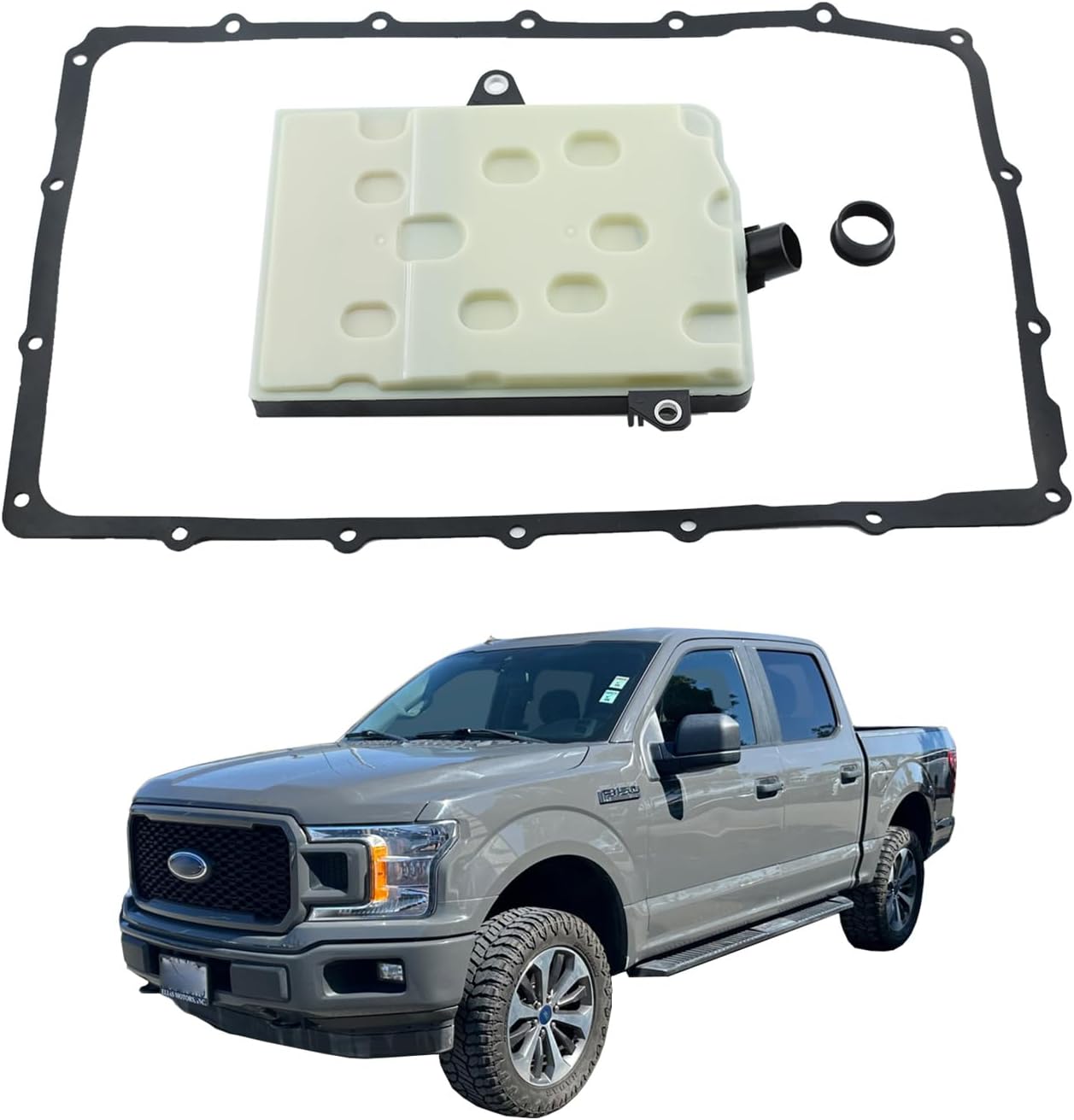
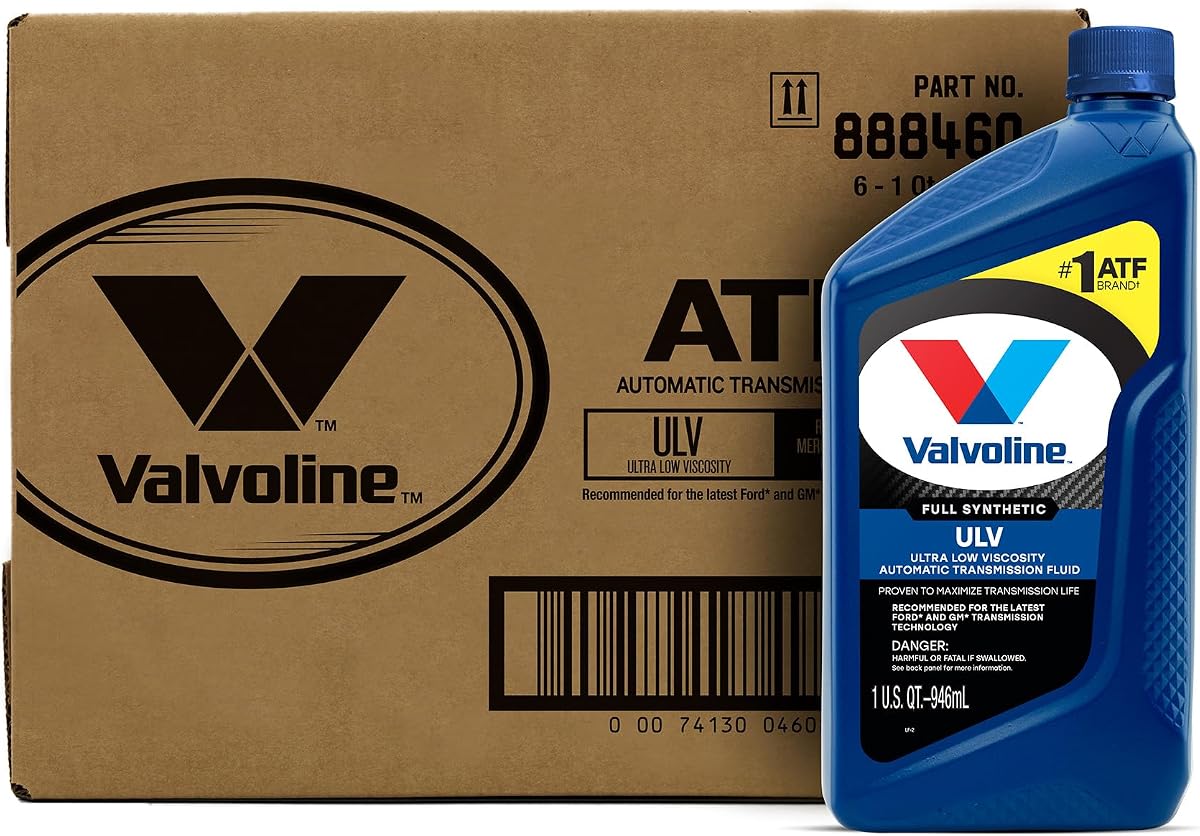
Ford's Manual Actually Documents Both Services
The 10R80 section of Ford's workshop literature (307-01, General Procedures) lists the Transmission Fluid Exchange as its own numbered procedure. It connects a Fluid Exchanger to the transmission fluid cooler tube on the return side, runs the exchange per the machine manufacturer's instructions, and Ford's own text states the reason for hooking into the cooler line specifically: "this helps remove any foreign material trapped in the transmission fluid coolers" [1]. After the exchange, the procedure sends you straight to the Fluid Level Check. That is a documented, factory-sanctioned service — the "never flush it" claim you see repeated online isn't backed by Ford's own procedure library.
The separate Transmission Fluid Drain and Refill procedure works completely differently. It starts by removing the transmission fluid pan to drain the fluid — Ford notes you don't have to pull the filter just to drain it, but dropping the pan is how you'd normally service the filter at the same time. The fill side is a measured, staged process, not a top-off: add 4.8 liters (5 quarts) as an initial fill if the pan, filter, or main control was removed, or 5.7 liters (6 quarts) if the transmission was fully overhauled, using special tool 307-570 (a dedicated transmission fill tube) and a pressurized fluid dispenser [2]. Ford's text is explicit that this staged fill procedure is not the same thing as a routine level check: "This procedure is NOT intended for use with the transmission fluid level check." [2]
The Difference That Actually Matters: What Each One Lets You See
Both procedures end with the same fluid in the pan — Motorcraft MERCON ULV. The practical difference is what happens along the way. A fluid exchange machine moves fluid through the cooler lines, the torque converter, and the valve body circuit without ever opening the pan. A drain and refill opens the pan, which means you're looking at the fluid and the magnet (if the pan has one) before a drop of new fluid goes in, and you're replacing the filter in the same step.
That inspection step matters more on a 10R80 than on a lot of older transmissions, because this unit has a well-documented internal failure mode: axial movement of the CDF clutch cylinder (7H351) sleeve, which Ford's own Technical Service Bulletin ties to hydraulic circuit leaks and a long list of harsh/delayed engagement and shift codes [3]. Sonnax built a dedicated repair kit for exactly this sleeve movement because of how often it shows up [4]. A pan drop is the service where a tech is actually looking at the fluid and filter and has a chance to catch early signs of wear before deciding what's next. Running a full machine exchange through the cooler circuit on a unit that's already shedding internal wear material doesn't give you that same look, and it moves fluid through clearances in the valve body that a pan drop wouldn't touch at all. That's the practical reasoning most shops use for choosing between the two — it isn't a rule written in Ford's manual, but it's why a tech who sees a stored code or a slipping complaint reaches for a wrench before a machine.
Neither procedure is a substitute for diagnosis. If the truck is already shifting harsh, delayed, or slipping, or has a stored transmission code, fluid service alone — by either method — isn't the fix. Figure out what's actually wrong first.
The Specs You Actually Need
| Item | Spec |
|---|---|
| Fluid | Motorcraft MERCON ULV, part XT-12-QULV, Ford spec WSS-M2C949-A |
| Total capacity — dry transmission and converter | 11.8 L (12.5 qt) [7] |
| Initial fill — pan/filter/main control removed | 4.8 L (5 qt) |
| Initial fill — full overhaul | 5.7 L (6 qt) |
| Fill/check temperature window | 96–101°C (206–215°F), read on a scan tool |
| Level indicator reading (2019 Ranger scale) | Between 4 and 5 of 6 — the numbered range differs by model, so match it to your vehicle's own procedure |
| Fill plug torque | 52 lb-ft (70 Nm) |
| Special tool | 307-570 transmission fill tube, plus a pressurized fluid dispenser (8–12 qt capacity) |
All figures above are Ford's own 10R80 workshop manual values [2][5]. Ford's own notices on this procedure are worth repeating word for word: don't use supplemental transmission fluid additives or cleaning agents, because they "can cause internal transmission components to fail," and don't drive the truck if the fluid level is already low [1].
Why You Can't Just Pull a Dipstick and Eyeball It
There's no top-mounted dipstick on this transmission that you check cold in the driveway. Ford's level-check procedure requires the vehicle on a hoist, the engine running, the selector cycled through every gear for about five seconds each, and a scan tool connected to confirm the fluid has actually reached 96–101°C before the reading on the level indicator means anything [5]. Guess at the temperature and you'll misread the level — overfill a 10R80 and you get aerated fluid and shift complaints that mimic a real internal fault; underfill it and the manual's own warning is blunt: "internal failure could result." That's also why both factory procedures end with the same check, regardless of which fluid service you started with.
Overfill is not a small error on this unit, either. Sonnax found that as little as 1 qt (1 L) over full causes both overheating and ATF venting on Ford's 10-speeds [6]. Their example is a truck back from a CDF drum repair: the level gets set cold on the lift, filled to the top mark, and once the fluid reaches operating temperature it sits about a quart over full. Some units also have a thermal valve, which is one more reason the final check has to be done hot. For scale, Ford lists 12.5 qt for a completely dry transmission and converter [7], and Sonnax quotes 13.0 qt (12.3 L) dry for a 2020 F-150 4x4 [6]. A drain-and-fill or an exchange never takes that much, so set the level by the hot check, not by how many quarts went in.
Which One Should You Actually Choose
- No symptoms, no stored codes, routine interval: a fluid exchange through the cooler circuit is a documented factory procedure and gets a fuller volume of fresh fluid through the system, including the coolers, without disturbing the pan gasket.
- Any harsh/delayed engagement, slipping, a stored transmission code, or you're simply overdue and don't know the fluid's history: drop the pan first. You'll see the filter, see what's sitting in the bottom of the pan, and catch early signs of the CDF drum sleeve issue or clutch wear before committing to a full-volume exchange.
- Either way: MERCON ULV only, no additives, and respect the 96–101°C fill window. A fluid service done at the wrong temperature or with the wrong ATF can produce the same shift complaints as a real mechanical fault — which then gets misdiagnosed as a failing transmission instead of a bad fluid service.
If the truck is already showing a ratio code or a harsh/delayed shift, read our 10R80 limp mode causes guide before you spend money on a fluid service that won't touch the real problem.
FAQ
Does Ford recommend flushing a 10R80 transmission?
Ford's own workshop manual documents a machine-based Transmission Fluid Exchange as a factory procedure for the 10R80, connected to the fluid cooler return line specifically to clear foreign material out of the coolers. It is not banned or off-label. The manual also documents a separate pan-drop Transmission Fluid Drain and Refill procedure. Ford supports both; they are not interchangeable and they are used for different situations.
What's the real difference between a fluid exchange and a drain-and-refill on a 10R80?
A fluid exchange hooks a machine to the transmission cooler return line and cycles fluid through the full cooler circuit without opening the pan, per Ford's procedure. A drain-and-refill removes the pan to drain the fluid, which also gives access to the filter, and requires a measured initial fill (5 or 6 quarts depending on what was serviced) followed by a temperature-controlled top-off. Only the pan-drop service lets you see what's actually in the pan and replace the filter.
How much fluid does a 10R80 take for a fluid service?
Ford's drain-and-refill procedure calls for a 4.8-liter (5-quart) initial fill if the pan, filter, or main control was removed, or 5.7 liters (6 quarts) if the transmission was fully overhauled, followed by a temperature-controlled top-off to the correct mark on the fluid level indicator. The fluid exchange machine's total volume depends on the machine and is set to match the transmission's full running capacity per the manufacturer's instructions.
Can a transmission flush make a 10R80 shifting problem worse?
If the unit already has a known internal issue, such as the CDF clutch cylinder sleeve movement covered in Ford TSB 22-2428, a pan drop lets a tech see wear material in the pan before deciding how to proceed. A machine exchange moves fluid through the full cooler and valve body circuit without that inspection step, which is why most shops reserve the fluid exchange for a transmission with no slipping complaints or stored codes, and drop the pan first on anything already showing a problem.
What fluid does the 10R80 require, and can I substitute another ATF?
The 10R80 requires Motorcraft MERCON ULV, Ford spec WSS-M2C949-A, part number XT-12-QULV — an ultra-low-viscosity fluid. Ford's own procedure documents warn against supplemental additives or cleaning agents, and MERCON ULV is not interchangeable with MERCON V, MERCON SP, or MERCON LV; the wrong fluid changes clutch apply feel and can produce the same symptoms as an internal fault.
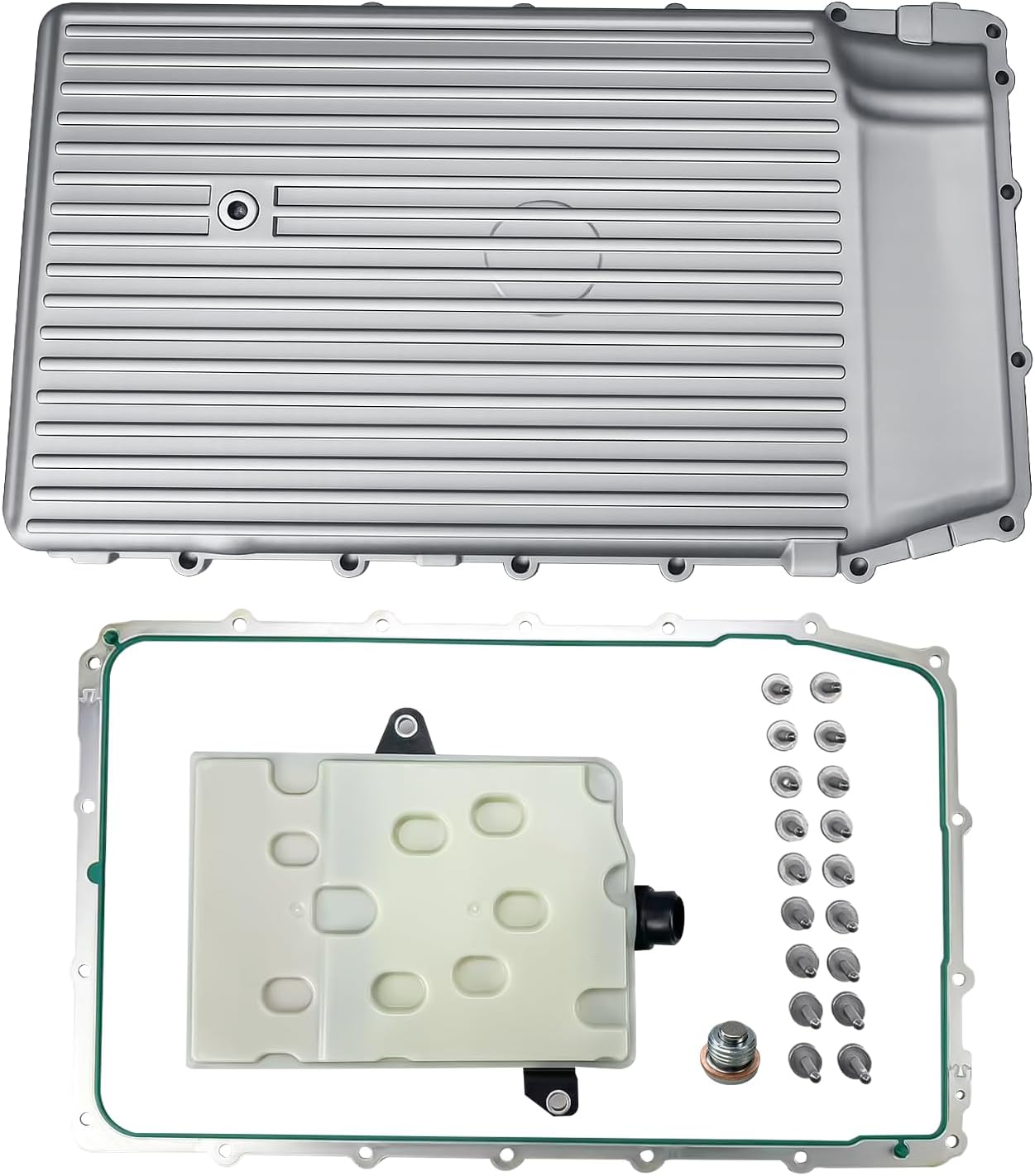
10R80 Cast Aluminum Transmission Pan + Filter (Mishimoto)
If you're doing the pan-drop service, this is the upgrade that gives you the inspection window Ford's procedure calls for: a drain plug and a magnet for checking wear material at every service, plus the filter in one box.
Shop the 10R80 Mishimoto Pan Kit →Sources
- Ford Motor Company, Workshop Manual, "Transmission Fluid Exchange" (307-01 Automatic Transmission — 10-Speed Automatic Transmission — 10R80, General Procedures), 2019 Ranger, procedure revision date 24 Aug 2017. Backs the Fluid Exchanger procedure, its stated purpose of clearing foreign material from the coolers, the MERCON ULV material spec, and the no-additives notice. Ford Workshop Manual — Transmission Fluid Exchange (PDF)
- Ford Motor Company, Workshop Manual, "Transmission Fluid Drain and Refill" (307-01 Automatic Transmission — 10-Speed Automatic Transmission — 10R80, General Procedures), 2019 Ranger, procedure revision date 11 Dec 2018. Backs the pan-drop draining step, the 4.8 L/5.7 L initial fill quantities, special tool 307-570, the 96–101°C fill/purge temperature, and the 52 lb-ft (70 Nm) fill plug torque. Ford Workshop Manual — Transmission Fluid Drain and Refill (PDF)
- Ford Motor Company, Technical Service Bulletin 22-2428, "10R60/10R80/10R80 MHT Automatic Transmission — Harsh/Delayed Engagement And/Or Harsh/Delayed Shift," 26 May 2023, via NHTSA. Backs the axial movement of the CDF clutch cylinder (7H351) sleeve as a documented root cause of hydraulic circuit leaks and the associated DTC list. static.nhtsa.gov/odi/tsbs/2023/MC-10236680-0001.pdf
- Sonnax, "Troubleshooting Pressure Loss in 10-Speed Clutch Packs." Backs the CDF Drum Saver Kit (129910-01K) developed for this sleeve-movement failure on the 10R80/10L80/10L90 family, and the requirement for ultra-low-viscosity ATF (Mercon ULV/Dexron ULV) in these units. sonnax.com/tech_resources/1481
- Ford Motor Company, Workshop Manual, "Transmission Fluid Level Check" (307-01 Automatic Transmission — 10-Speed Automatic Transmission — 10R80, General Procedures), 2019 Ranger, procedure revision date 11 Dec 2018. Backs the hoist/scan-tool level-check method, the gear-cycling step, the 96–101°C read temperature, and the fill plug torque spec. Ford Workshop Manual — Transmission Fluid Level Check (PDF)
- Sonnax, "Tips for Troubleshooting Ford 10-Speed ATF Venting and Overheating." Backs overfill of as little as 1 qt causing overheating and venting, the cold-fill-after-CDF-repair trap, the thermal valve note, and the 13.0 qt (12.3 L) dry fill for a 2020 F-150 4x4. sonnax.com/tech_resources/1255
- Ford Motor Company, Workshop Manual, "Specifications" (307-01 Automatic Transmission — 10-Speed Automatic Transmission — 10R80), 2019 Ranger, procedure revision date 11 Dec 2018. Backs the 11.8 L (12.5 qt) dry capacity, the MERCON ULV WSS-M2C949-A requirement and the note that transmission fluids are not interchangeable. Ford Workshop Manual — Specifications (PDF)