"It's stuck in limp mode" covers a lot of ground on a 10R80. One truck holds a single gear and revs its head off on the highway. Another pulls away in a high gear like a stick-shift left in third. A third goes to neutral a hundred feet down the road, or will not move at all. They get lumped together at the counter, but on this transmission they are different failures that come from different places.
The reason is that Ford's ten-speed does not have one limp gear. The module chooses a strategy based on the fault it sees, and some faults leave it no strategy at all. Once you understand that, the scan tool tells you most of what you need. Here is how I work a 10R80 limp complaint, with every fact sourced at the bottom from Ford's bulletins, ATRA's GEARS Magazine, Transmission Digest and Sonnax.
How the 10R80 decides what "limp" looks like
Plenty of older units had one fixed limp gear. The 10R80 does not. Mike Souza writes in Transmission Digest that its failsafe gear command can be anywhere from 2nd gear and reverse up to 8th gear and reverse, depending on which electrical solenoid or hydraulic code set in the TCM, and that there are several failsafe command strategies depending on the code category. Ford calls this failure mode effects management, or FMEM.
That range explains the complaints. A low failsafe gear gives a truck that launches normally and then screams at 50 mph. A high one gives a truck that lugs away from a light. Both are the module keeping the vehicle drivable while it avoids the clutch or circuit it no longer trusts. GEARS Magazine puts it plainly: the engineers tried to allow partial operation under most failure conditions, and the failure management program itself may be the customer's drivability complaint.
GEARS groups the transmission codes into three failure management types. A Type A code turns on the MIL after one drive cycle with the fault present. A Type B code has to be present on two consecutive ignition cycles before the MIL comes on, though it stores a pending code the first time. Both store a freeze frame when the MIL lights. That is worth knowing when a customer says it went into limp mode yesterday and the light is not on today.
The exception: a power fault has no failsafe
This is the part that trips people up. The six shift solenoids on the 10R80, SSA through SSF, are casting integrated direct-acting solenoids (CIDAS), and every one of them is normally low. Souza's layout adds a normally low TCC solenoid and a normally high line pressure solenoid. GEARS explains that the shift solenoids are directly proportional: zero current equals zero pressure. If the power circuit to the solenoids fails open, all of them are off, no clutch pack can engage, and there is no fail-safe operation.
Sonnax's Jim Mobley says the same thing from the bench side in Transmission Digest: these solenoids only produce clutch pressure with current, so a 10-speed has no movement when unplugged. So when a 10R80 will not move in any range with good fluid, do not start with the clutches. Start with the solenoid power feed, the connector at the case and the internal harness. A truck that holds one gear has a module that is working. A truck with no movement often has a module that cannot reach its solenoids.
Step 1: Scan every module, not just the TCM
GEARS is emphatic here: scan all modules and address those codes first. Faults elsewhere in the vehicle trigger their own failure management, and the drivability that results is easy to mistake for a transmission problem. An engine, network or voltage fault can change shift behavior without a single hard transmission failure.
Then pull the transmission codes with freeze frame data and write them down before you clear anything. Group them. Solenoid circuit and performance codes point one way, ratio codes another, speed sensor codes a third. The two big Ford bulletins list the same set on covered trucks: P0751/P0752, P0756/P0757, P0761/P0762, P0766/P0767, P0771/P0772, P2700 through P2708, P0729, P0731 through P0736, P076F, P07D9, P07F6 and P07F7.
Step 2: Read the FMEM state on the scan tool
This is the single most useful thing on a 10R80 limp complaint. In his Sonnax speed sensor article, Mobley notes that the Ford scan tool has two "Shift Type" PIDs, and the second one shows the commanded condition and the FMEM state. If the module has chosen a failure strategy, that PID tells you so. Compare it with the gear and ratio being reported. If the module is commanding a failsafe gear, you are hunting a code. If it is commanding normal operation and the truck still acts limp, the fault is mechanical or hydraulic and the module does not know about it yet.
Step 3: Rule out voltage
Because clutch pressure follows solenoid current, voltage matters more on this unit than on older transmissions. Mobley reports that 10R80 and 10R140 work trucks often come back after a few days in the shop with harsh engagements and erratic upshifts and downshifts, which seem to settle once the unit is at operating temperature. Techs start blaming the valve body. The real cause is a failing battery, and he notes batteries in these trucks last about three years. Load-test every battery and check the charging system before going further.
Step 4: Speed sensors and "neutral" limp
The 10R80 has four internal speed sensors: TSS, ISSA, ISSB and OSS. Mobley describes them as two-wire Hall-effect sensors supplied 9 volts by the PCM or TCM. When the module cannot trust them, its protective move is often neutral rather than a gear. His article documents three patterns:
- TSS and ISSA swapped in the case: P0716 appears as soon as a gear is selected and the unit usually sits in a commanded Neutral with the MIL on.
- OSS and ISSB swapped: the truck drives at first, then sets multiple gear ratio codes and turns on the MIL.
- P2 planet magnets breaking up: the magnets that trigger the TSS deteriorate, the TSS reading goes bad, and the unit goes to Neutral to protect itself.
The connectors are different for each sensor, so only the physical location can be swapped. That makes the first two a rebuild mistake, not a road failure. If a truck went into limp or neutral right after someone had it apart, check sensor placement before anything else.
Step 5: Hydraulic leaks the module reacts to
The CDF clutch cylinder
Ford TSB 24-2254 covers 2020-2022 Explorer, 2020-2023 Transit, 2021-2022 F-150 and Mustang, and 2022 Expedition and Navigator with the 10R80 built on or before 15 August 2022. It ties the code list above to axial movement of the CDF clutch cylinder (7H351) sleeve, which opens hydraulic leaks between circuits. A leaking circuit means the module sees a clutch that will not apply on time or a ratio that will not hold, and it moves to its failure strategy.
The bulletin's test is precise. Install a transducer at the line pressure port, which is an M10 x 1.0 thread (Ford warns that an NPT fitting will damage the case). With the truck in Park and TFT at 50 C (122 F) or above, command all six SSx_AMP PIDs to 0 mA, drop RPM_DSD to 500-600 rpm, raise LINEDSD to 1900-2000 kPa (275-290 psi), then pulse the solenoids and record. Ford's calculator decides whether the drum is leaking.
On the bench, Sonnax's Caleb Perham lists worn sealing rings, hub bushings and leaking shaft plugs as causes of slipping, slide bumps, neutral conditions and ratio error codes in 10-speed clutch packs. His advice is to air check each drum through the pump before assembly, and he points to the Sonnax CDF drum saver kit, 129910-01K, for the drum.
The main control and keep alive memory
TSB 23-2152 covers 2017-2020 F-150, 2018-2021 Expedition, Navigator and Mustang, and 2019-2023 Ranger. It lists the same codes and says they may come from the keep alive memory in the PCM or TCM, or from the main control valve body. The fix path is an adaptive learning drive cycle, a main control overhaul, or both, and the parts list includes six HL3Z-7G007-A solenoid retaining clips.
Step 6: Check for programming before parts
GEARS reports that about 80 percent of erratic shift and shift quality complaints on these units are cured by updating the TCM strategy and then performing the Adaptive Learning Drive Cycle. Ford's early TSB 18-2079 is a good example: 2017 F-150 and Raptor trucks built on or before 1 August 2017 with harsh or delayed shifts and P0711 were fixed with a PCM reprogram, not hardware. Check for a newer calibration before you pull the unit.
After the repair
Clear codes, reset the adaptives and run the Adaptive Learning Drive Cycle. Ford warns in its bulletins that shifts may be firmer than normal for several days while the module relearns, so tell the customer. If you opened the case, confirm the steel and rubber pump seal between the valve body and case is in place. Mobley notes that leaving it out or mispositioned causes no movement and no line pressure, which looks exactly like the power-loss condition above. If the main control or a solenoid was replaced, verify the solenoid body strategy against the tag before the drive cycle.
The short version
- Decide which complaint you have: stuck in a gear, neutral, or no movement.
- Scan every module and record every code and freeze frame.
- Read the second Shift Type PID for the FMEM state.
- Load-test the batteries.
- No movement in any range: check solenoid power, the case connector and the internal harness first.
- Neutral with P0716 or ratio codes: check speed sensor placement and the P2 magnets.
- Solenoid and ratio codes on a covered build: run TSB 24-2254's CDF test and check TSB 23-2152.
- Check for a calibration update, then relearn.
Sonnax Zip Kit, 10R80 Gen 1 valve body
When the main control is part of the problem, this kit covers the common wear points in the 10R80 valve body in one box, from our sister store CoreTransmissionParts. Worth installing any time the main control is off for a limp or harsh-shift complaint.
Shop the part for this fix →Need more for the 10-speed? The 10-speed parts collection covers solenoid kits, valve body kits, clutches and hard parts.
Need parts for this job?
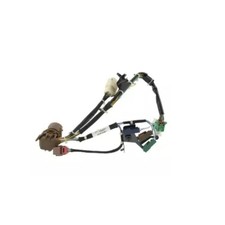
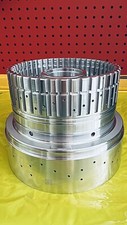
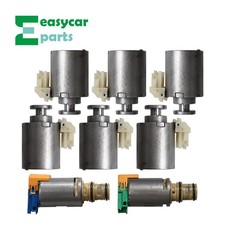
10R80 internal harnesses, clutch drums, solenoid kits and complete main controls are on our 10R80 parts page, with checkout on site. Find the code behind the limp mode before you order.
FAQ
What gear does a 10R80 go into in limp mode?
There is no single limp gear. Transmission Digest's Mike Souza notes the 10R80 failsafe gear command can be anywhere from 2nd gear and reverse up to 8th gear and reverse, depending on which solenoid or hydraulic code set. Read the second Shift Type PID on the scan tool to see the commanded condition and the FMEM state the module chose.
Why does my 10R80 have no movement at all instead of limp mode?
The 10R80 shift solenoids are normally low, so zero current means zero clutch pressure. GEARS Magazine points out that if the solenoid power circuit fails open, no clutch pack can engage and there is no fail-safe operation. A no-move truck needs the power feed, connector and lead frame checked before anyone condemns the clutches.
Can a weak battery put a 10R80 in limp mode?
It can cause the symptoms that lead there. Sonnax's Jim Mobley reports that 10-speed work trucks with a failing battery show harsh engagements and erratic upshifts and downshifts that seem to clear up once warm, and that batteries in these trucks last about three years. Load-test the batteries before any internal diagnosis.
Will clearing the codes get a 10R80 out of limp mode?
Clearing codes and cycling the key may restore normal shifting for a while, but the module will drop back into its failure strategy when the fault returns. Record every code and freeze frame first. Ford's bulletins also warn that shifts may be firmer than normal for several days after the adaptive strategy is reset.
Is 10R80 limp mode covered by a Ford bulletin?
Several bulletins cover the faults behind it. TSB 23-2152 ties a long list of solenoid and ratio codes on 2017-2023 applications to keep alive memory or the main control, and TSB 24-2254 ties the same codes on vehicles built through 15 August 2022 to a moving CDF clutch cylinder sleeve. Check the build date and code list against your truck.
Related guides
- 10R80 P0716 Turbine Speed Sensor Fix
- 10R80 P0730 Incorrect Gear Ratio
- 10R80 Shift Solenoid Symptoms and Replacement
- 10R80 Harsh and Delayed Shifts
- 10R80 Common Problems and Fixes
Sources
- Transmission Digest, Mike Souza, "Quick Peek at New Ford / GM 10 Speed," August 2018. Backs the failsafe gear command ranging from 2nd and reverse to 8th and reverse depending on the solenoid or hydraulic code, the multiple failsafe command strategies by code category, and the solenoid complement: six normally low linear shift solenoids, a normally low TCC variable force solenoid and a normally high line pressure variable force solenoid. transmissiondigest.com
- GEARS Magazine (ATRA), "The More You Know About The 10R80... The Better Off You Are!" September 2020. Backs the normally low CIDAS solenoids with zero current equal to zero pressure, no fail-safe operation when the solenoid power circuit fails open, the Type A and Type B failure management code groups and their MIL logic, scanning all modules first, and about 80 percent of erratic shift complaints being cured by programming followed by the Adaptive Learning Drive Cycle. gearsmagazine.com
- Ford Motor Company, Technical Service Bulletin 24-2254, "10R80 Transmission - Harsh/Delayed Engagement And/Or Harsh/Delayed Shift - Built On Or Before 15-Aug-2022," 23 August 2024, via NHTSA. Backs the covered 2020-2023 models, the CDF clutch cylinder (7H351) sleeve movement causing hydraulic leaks, the full code list, the LINEDSD, RPM_DSD, SSA_AMP through SSF_AMP, TR_Corrected and TFT PIDs, the 50 C (122 F) TFT minimum, the 500-600 rpm and 1900-2000 kPa (275-290 psi) commands, and the M10 x 1.0 line pressure port warning. static.nhtsa.gov (PDF)
- Ford Motor Company, Technical Service Bulletin 23-2152, "10R80 - Harsh Engagement And/Or Harsh/Delayed Shift," 22 May 2023 (supersedes 23-2123), via NHTSA. Backs the 2017-2020 F-150, 2018-2021 Expedition, Navigator and Mustang, and 2019-2023 Ranger coverage, the keep alive memory and main control valve body as causes, the six HL3Z-7G007-A solenoid retaining clips and the adaptive learning drive cycle. static.nhtsa.gov (PDF)
- Ford Motor Company, Technical Service Bulletin 18-2079, "10R80 Automatic Transmission - Harsh Or Delayed Shift Concerns And/Or Illuminated MIL - DTC P0711," 2 March 2018, via NHTSA. Backs the P0711 fix on 2017 F-150 and Raptor built on or before 1 August 2017 being a PCM reprogram, and the firmer-than-normal shifts for several days after an adaptive reset. static.nhtsa.gov (PDF)
- Sonnax, Jim Mobley, "Diagnosing Ford 10R60, 10R80 & 10R140 Series Speed Sensor Issues," 8 February 2024. Backs the four two-wire Hall-effect sensors on a 9-volt supply, the second Shift Type PID showing commanded condition and FMEM state, the commanded Neutral with MIL and P0716 from a TSS/ISSA swap, the drives-then-sets-ratio-codes OSS/ISSB swap, and the P2 planet magnet failure that drops the unit into Neutral to protect itself. sonnax.com
- Transmission Digest, Jim Mobley (Sonnax TASC Force), "Tips for common issues with Ford, GM 10-speeds." Backs the solenoids producing clutch pressure only with current and no movement when unplugged, the missing or mispositioned pump seal causing no movement and no line pressure, and the failing battery symptoms with a roughly three-year battery life. transmissiondigest.com
- Sonnax, Caleb Perham, "Troubleshooting Pressure Loss in 10-Speed Clutch Packs," 7 April 2025. Backs sealing ring, bushing and shaft plug leaks causing slipping, slide bumps, neutral conditions and ratio error codes, the CDF drum saver kit 129910-01K, air checking each drum before assembly, and the Mercon ULV requirement. sonnax.com