"It won't go into overdrive" is one of the vaguer complaints a 10R80 comes in with, and on a ten-speed it can mean three different things. The truck may be topping out in 7th and never reaching 8th, 9th or 10th. It may be climbing into the top gears and then kicking back out. Or the customer may be looking at a tach that sits higher on the highway than it used to, which is not always a transmission fault at all.
The good news is that the 10R80 tells you a lot if you know what to look at. The top four gears share a very specific set of clutches, and that turns "no overdrive" into a short list of circuits. Below is how I work it, with every fact sourced at the bottom from Ford's bulletin, ATRA's GEARS Magazine, Transmission Digest and Sonnax.
What the 10R80 needs to make 8th, 9th and 10th
The 10R80 uses six clutches, lettered A through F, and each one has its own shift solenoid with the same letter. Four elements have to be applied for power to reach the output, as GEARS Magazine points out. Seventh is direct drive: Transmission Digest's Wayne Colonna notes that in 7th the whole gear train turns one to one, so every speed sensor should read the same rpm. Eighth, ninth and tenth are the overdrive ratios, all below 1:1.
Here is the top of the apply chart. Colonna's 7-8 bind case gives the two groups that matter most: SSB feeds the B clutch in 2nd, 8th, 9th, 10th and Reverse, and SSC feeds the C clutch in 2nd, 3rd, 4th, 5th, 7th, 9th and 10th. His speed sensor article adds that the A clutch releases in 7th.
| Gear | Clutches applied | What changes on the upshift into it |
|---|---|---|
| 6th | A, D, E, F | - |
| 7th (1:1) | C, D, E, F | A off, C on |
| 8th | B, D, E, F | C off, B on |
| 9th | B, C, E, F | D off, C on |
| 10th | B, C, D, F | E off, D on |
Read down the columns and the diagnosis writes itself. B is applied in 8th, 9th and 10th and is not applied in 7th. F is applied in every gear from 4th up, so an F problem shows up long before 8th. That means a truck that shifts cleanly through 7th and simply will not take 8th, 9th or 10th is pointing at the B clutch circuit: the SSB solenoid, the valve that feeds B, or the B clutch itself. If it reaches 8th but not 9th, look at the C circuit returning. If it reaches 9th but not 10th, look at D returning and E letting go.
First, rule out the driver and the calibration
Before you scan anything, rule out the three things that take away overdrive with nothing wrong in the transmission.
Progressive Range Select is holding the top gear
On F-150s and the other SelectShift trucks, pressing the minus button with the lever in Drive turns on Progressive Range Select. Each press locks out the next gear down from the top, and the cluster shows the gears still available. A driver who bumped the button while towing, or a kid who played with it in the lot, can leave the truck capped at 6th or 7th indefinitely. Look at the cluster first. In full manual mode it will not upshift on its own at all.
Tow/Haul or a sport drive mode
Tow/Haul moves the upshift points to higher engine speeds and gives engine braking in every forward gear. At moderate highway speed with Tow/Haul on, a truck can sit a gear or two below where it normally would. Sport modes do the same thing.
Road speed and load
Tenth is a cruise gear. At low highway speeds, on a grade or with a trailer behind it, a healthy 10R80 will stay in 7th or 8th and that is the calibration doing its job. If the complaint is only on a loaded truck at 50 mph, reproduce it empty and at steady cruise before calling it a failure.
Pull codes and pay attention to which ones
The code list narrows this fast. The ratio codes for the top gears are P076F (gear 7 incorrect ratio), P07D9 (gear 8), P07F6 (gear 9) and P07F7 (gear 10). Colonna warns that the 7th and 9th gear ratio codes are easy to transpose when you are reading them off a screen, so read them twice. The B circuit also has its own solenoid and apply-time codes: P0756 (SSB performance or stuck off), P0757 (SSB stuck on) and P2701 (B clutch apply time).
When the module sees a ratio or clutch fault, it protects the unit. GEARS lists degraded speed sensor exciter strips and misplaced speed sensors among the causes of failsafe operation and gear ratio codes, and a unit in failsafe will not give you the full range of gears. So a truck that "lost overdrive" after throwing a ratio code may not have a B clutch problem at all. It may be protecting itself from something else. Record every code and freeze frame before clearing anything.
Scan data: is it hydraulic or is it a sensor?
The 10R80 uses four speed sensors, and knowing what each one reads is the fastest way to split a hydraulic problem from an electrical one. From Colonna's two Transmission Digest articles and the Ford descriptions he quotes:
- TSS reads magnets on the No. 2 carrier, which is splined to the turbine shaft.
- OSS reads the lugs on the output shaft (the No. 4 carrier). Dividing TSS rpm by OSS rpm gives the overall gear ratio.
- ISSA reads the outer lugs of the No. 1 ring gear, which the A clutch holds. It reads 0 rpm from 1st through 6th and only starts reporting once A releases for 7th.
- ISSB reads the window on the clutch cylinder, lugged to the front carrier. It reads 0 rpm in 1st and 2nd and starts reporting in 3rd.
That gives you a useful check. If ISSA never comes off zero, the module does not believe A has released, and it has a reason not to go past 6th. If ISSA comes alive in 7th but 8th never commands, the problem is further down the chain. And in 7th every sensor should read the same speed. If one does not, suspect that sensor, its exciter or its wiring before you suspect a clutch.
Colonna's advice on reading this data is worth repeating: the PIDs lag behind real time during a shift. If you are chasing slip, put it in manual mode and hold each gear, then compare TSS divided by OSS against the ratio in the workshop manual for that gear. A gear that commands but will not hold its ratio is a clutch or circuit leak. A gear that never commands at all is the module choosing not to go there, and you need to find out why.
One rebuild-specific trap belongs here. Colonna also wrote up a 2018 F-150 Raptor that threw gear ratio codes immediately after a repair for a rear case needle bearing. The tech had installed the OSS in the ISSB bore and ISSB in the OSS bore, cross-connecting the harness. With the sensors in their correct bores the connectors cannot be crossed. If a truck lost its upper gears right after someone had it apart, check sensor placement first.
The hydraulic causes, in the order I check them
1. Battery and charging system
This sounds too simple, but it belongs at the top. The 10R80's shift solenoids are direct-acting: zero current is zero clutch pressure. Sonnax's Jim Mobley points out in Transmission Digest that 10-speed work trucks often come back with harsh engagements and erratic upshifts and downshifts when a battery is failing, that it tends to improve once the unit warms up, and that batteries in these trucks last about three years. Load-test it before you drop the pan.
2. The latch valves
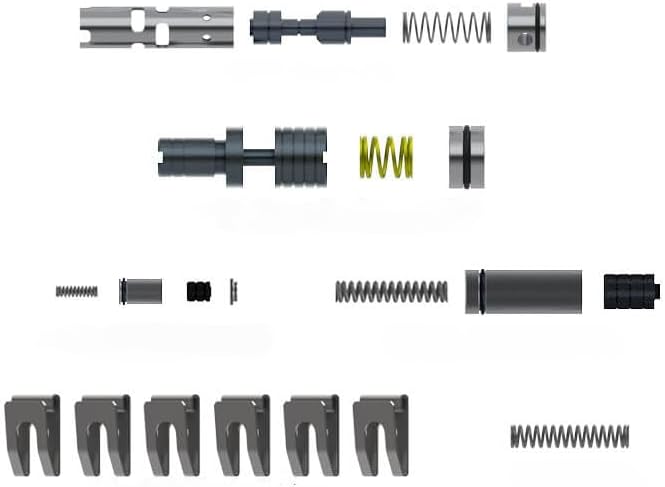
This is the one most people miss. The 10R60 and 10R80 main control has four latch valves that pass line pressure to the clutch packs. Chris Leach explains in Transmission Digest that the valve's stem gets forced into its retaining clip over and over, burring the stem, and the spring can buckle and wear the bore. Leakage past a worn bore exhausts regulated pressure, which he ties to erratic shifts, delayed engagement, solenoid codes and burnt clutches. A valve stuck in the latched position does the opposite and gives extremely harsh shifts and bind-up.
Sonnax describes the same wear on its 105740-47K kit page: raised edges and burrs on the stem, spring tangling and improper stroking of the valve. If a clutch circuit cannot get or hold full pressure, the module cannot complete the shift that needs it. Leach's vacuum spec is 16 in-Hg or higher at all three test locations on each latch valve, with the bore sealed by your thumb. Do a visual check with a flashlight too, because spring buckling damage can hide from the vacuum test.
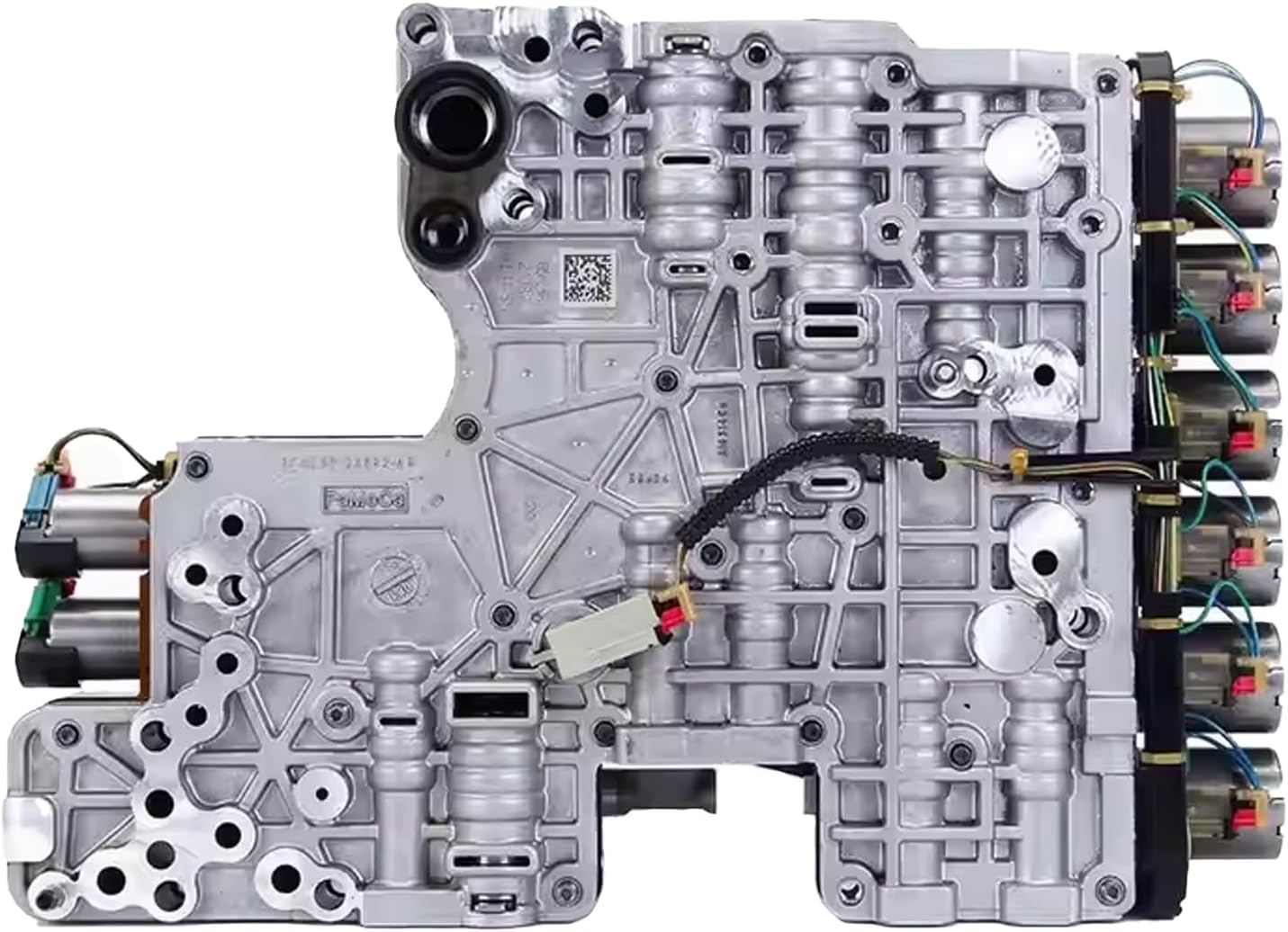
3. The rest of the valve body, and SSB itself
Mobley's list of 10-speed valve body wear points includes the main pressure regulator valve, TCC priority valve, TCC regulator valve and boost valve, along with the latch valves. He also notes the impregnated separator plate filters come loose and stick valves. Solenoids rarely fail, but they do. If you do replace SSB or SSC, match the band number. In Colonna's 7-8 bind case, two new Ford valve bodies both bound up on the 7-8 and 8-7 shifts. Replacing SSB and SSC with good used solenoids carrying matching band numbers fixed it on the first drive cycle. The B-on, C-off overlap is exactly the shift that takes you into overdrive, and the module times it from those band numbers. Our 10R80 shift solenoid guide covers the band number and strategy steps.
4. The CDF clutch cylinder
Ford TSB 24-2254 covers 2020-2022 Explorer, 2020-2023 Transit, 2021-2022 F-150 and Mustang, and 2022 Expedition and Navigator with the 10R80 built on or before 15 August 2022. It blames axial movement of the CDF clutch cylinder (7H351) sleeve for hydraulic circuit leaks. The code list includes all four top-gear ratio codes, P076F, P07D9, P07F6 and P07F7, along with the B circuit's P0756, P0757 and P2701. Ford's procedure verifies the leak with a transducer on the line pressure port while commanding each shift solenoid to 1.0 A for 2 seconds, then replaces the cylinder if it fails. The port is M10 x 1.0, and Ford warns that an NPT fitting will damage the case. Our 10R80 slipping under load post walks through that test.
5. Clutch pack condition
If the circuit tests tight and the solenoid is proven good, and the unit commands 8th but will not hold the ratio, the clutch itself is burnt or its piston seal is leaking. That is a teardown. Check clearances, and inspect the input shaft sealing ring lands and cross-drilled feed holes, which GEARS says have to be perfect on this unit.
After the repair: relearn it
Whatever you fix, the module has adaptive shift data built around the old condition. Ford's CDF bulletin warns that shifts may feel firmer than normal while the unit relearns. Reset the adaptives if your tool supports it, then drive it through every shift at light and moderate throttle until the upper gears come in clean. If you replaced the main control or any solenoid, confirm the solenoid body strategy matches the tag before that drive, or the relearn will never settle.
The short version
- Check the cluster for a Progressive Range Select limit and the drive mode for Tow/Haul or Sport.
- Load-test the batteries.
- Record every code. Top-gear ratio codes are P076F, P07D9, P07F6 and P07F7. B-circuit codes are P0756, P0757 and P2701.
- Watch TSS, OSS, ISSA and ISSB. Everything should match in 7th. Hold each gear in manual mode to check ratio.
- If it tops out in 7th, focus on the B circuit: SSB, its latch valve and bore, then the B clutch.
- On TSB-covered builds, run Ford's CDF cylinder leak test.
- Vacuum test the latch valves at 16 in-Hg minimum, match solenoid band numbers, verify strategy and relearn.
Sonnax latch valve stem repair kit, 105740-47K
Reinforces the four 10-speed latch valve stems that get burred by the retaining clip, with a new spring. Sonnax lists the 10R60, 10R80 and 10R90 among its applications. Cheap to install any time the main control is apart for a no-upshift or burnt-clutch complaint. From our sister store CoreTransmissionParts.
Shop the part for this fix →Need more for the 10-speed? The 10-speed parts collection covers solenoid kits, valve body kits, clutches and hard parts.
Need parts for this job?
10R80 shift solenoid kits, complete main controls and Sonnax valve body repair kits are on our 10R80 parts page, with checkout on site. Pin down which circuit is failing before you order.
FAQ
Why won't my 10R80 shift into 10th gear?
First check that Progressive Range Select is not limiting the top gear and that Tow/Haul or a sport mode is off, then confirm the speed and load actually call for 10th. If it still will not go, 10th needs the B, C, D and F clutches, so pull codes and look for a ratio code such as P07F7 or a clutch circuit code before replacing parts.
What clutch controls overdrive on a 10R80?
The B clutch is applied in 8th, 9th and 10th and is released in 7th, which is direct drive. A 10R80 that shifts cleanly to 7th but never reaches 8th, 9th or 10th usually has a problem in the B clutch circuit: the SSB solenoid, the valve feeding B, or the B clutch itself.
Can a bad battery stop a 10R80 from upshifting?
Yes. The 10R80's shift solenoids are direct-acting, so clutch pressure follows solenoid current. Sonnax notes that failing batteries on 10-speed trucks cause harsh engagements and erratic shifts that improve once the unit is warm, and that the batteries typically last about three years. Load-test them before any internal diagnosis.
What are the 10R80 ratio codes for 7th through 10th gear?
P076F is gear 7 incorrect ratio, P07D9 is gear 8, P07F6 is gear 9 and P07F7 is gear 10. Ford TSB 24-2254 lists all four among the codes a leaking CDF clutch cylinder can set on covered 2020-2023 vehicles.
Does a 10R80 need a relearn after an overdrive repair?
Yes. The module keeps adaptive data built around the old fault, and Ford warns that shifts may be firmer than normal while it relearns. If the main control or a solenoid was replaced, verify the solenoid body strategy against the tag first, then drive it through every shift until the upper gears come in clean.
Related guides
- 10R80 Shift Solenoid Symptoms and Replacement
- 10R80 Valve Body Problems and Testing
- 10R80 Slipping Under Load
- 10R80 P0730 Incorrect Gear Ratio
- 10R80 Common Problems and Fixes
Sources
- Ford Motor Company, Technical Service Bulletin 24-2254, "10R80 Transmission - Harsh/Delayed Engagement And/Or Harsh/Delayed Shift," 23 August 2024, via NHTSA. Backs the covered vehicles and 15 August 2022 build cutoff, CDF clutch cylinder (7H351) sleeve movement, the code list including P076F, P07D9, P07F6, P07F7, P0756, P0757 and P2701, the 1.0 A / 2 second circuit test, the M10 x 1.0 port warning and the relearn note. static.nhtsa.gov (PDF)
- Transmission Digest, Wayne Colonna, "10R80 caught in a bind on the seventh to eighth shift." Backs the SSB (2-8-9-10-R) and SSC (2-3-4-5-7-9-10) apply groups, B on and C off on the 7-8 shift, and the band-number fix after two new valve bodies. transmissiondigest.com
- Transmission Digest, Wayne Colonna, "10R80 Speed Sensors: ISSA and ISSB." Backs what each speed sensor reads, the A clutch releasing in 7th, ISSA at 0 rpm through 6th, ISSB at 0 rpm in 1st and 2nd, 7th as direct drive, the PID lag and the manual-mode ratio check. transmissiondigest.com
- Transmission Digest, Wayne Colonna, "10R80 gear ratio errors after rebuild." Backs Ford's TSS/OSS/ISSA/ISSB descriptions, the swapped OSS and ISSB sensors on a 2018 Raptor, and the 7th/9th ratio code warning. transmissiondigest.com
- Transmission Digest, Chris Leach (Sonnax TASC Force), "Why every 10-speed rebuild needs latch valve attention." Backs the four latch valves in the 10R60/80, the stem and retainer damage, spring buckling, the leakage and stuck-valve symptoms, and the 16 in-Hg vacuum spec. transmissiondigest.com
- Transmission Digest, Jim Mobley (Sonnax), "Tips for common issues with Ford, GM 10-speeds." Backs the valve body wear points, loose separator plate filters, solenoids producing pressure only with current, and the failing battery symptoms and three-year life. transmissiondigest.com
- GEARS Magazine (ATRA), Keith Clark, "Ford's 10R Series Transmission: More Need-to-Know Information Inside the Unit." Backs the four applied components, input shaft feed hole and sealing ring land condition, and exciter strip and speed sensor causes of failsafe and ratio codes. gearsmagazine.com
- Sonnax, Latch Valve Stem Repair Kit 105740-47K. Backs the 10R60/10R80/10R90 application and the stem burring, spring tangling and improper valve stroking. sonnax.com