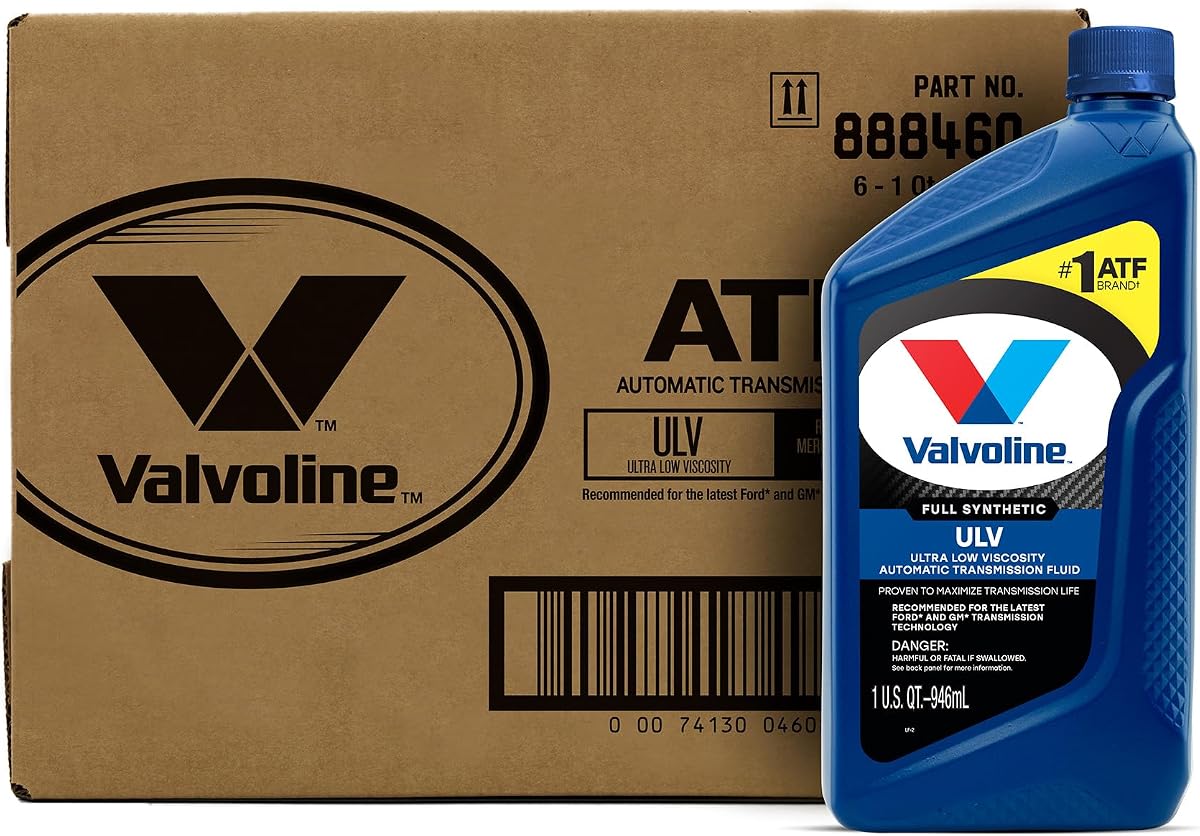
Doing a fluid service on a 2017-up F-150, Expedition, Navigator or Ranger with the Ford 10R80, or on a GM 10L80 truck that calls for an ultra-low-viscosity fluid? This is a case of six one-quart bottles of Valvoline ULV, a full synthetic ATF built for the thin-fluid ten-speeds. Quarts are the practical package for these units: you are pumping fluid in from underneath, and a quart bottle lets you count exactly how much went in, which matters on a transmission that overheats and vents when it is overfilled by as little as one quart.
What the fluid does in a 10R80 or 10L80
Ford and GM developed the ten-speed together, and both versions shift clutch-to-clutch with no bands. The fluid applies every clutch, controls the converter clutch, lubricates the planetary sets and carries heat to the cooler. Both companies calibrated their shift timing around a ULV fluid. The TCM learns how long each clutch takes to fill, and a thicker fluid like Mercon LV makes those fills slow. The result is delayed engagement, a harsh 1-2 and a converter clutch that shudders once the fluid is warm. Valvoline formulates this fluid with anti-shudder friction modifiers aimed at that converter clutch apply and release cycle.
Symptoms that bring these trucks in for fluid
- Converter clutch shudder at steady light-throttle cruise
- Delayed or harsh engagement into Drive or Reverse when cold
- Busy, hunting shifts or a harsh 1-2 or 2-3 that adaptive relearn does not cure
- Fluid pushed out of the vent and high temperature readings after a service, the classic overfill sign
- Dark, burnt-smelling fluid at the fill plug on a unit that was never serviced
How to confirm before you buy
Check for codes first. Solenoid, pressure or ratio codes point to hardware, and the ten-speed shift solenoid guide covers how to test them. If the unit is venting after a recent repair, Sonnax's advice is to check the level before anything else, because a unit filled cold on the lift often ends up about a quart high once it gets hot. Our 10-speed fluid and capacity guide explains the pan-tube level system both versions share.
Fitment
This case is for the ULV-spec ten-speeds: Ford 10R60 and 10R80 and GM 10L80 and 10L90. It is not for the Ford 6R80 or GM 6L80 and 8L90, which take Mercon LV or DEXRON VI or HP. Model year alone is not enough, since several trucks offered more than one transmission in the same year. Confirm your owner's manual calls for MERCON ULV or DEXRON ULV, or send us the year and VIN and we will check it for you. GM and Ford each name their own licensed ULV fluid, so if your truck is under a powertrain warranty, keep your receipt. Ten-speed parts are listed on our 10L80 and ten-speed parts page.
Install notes
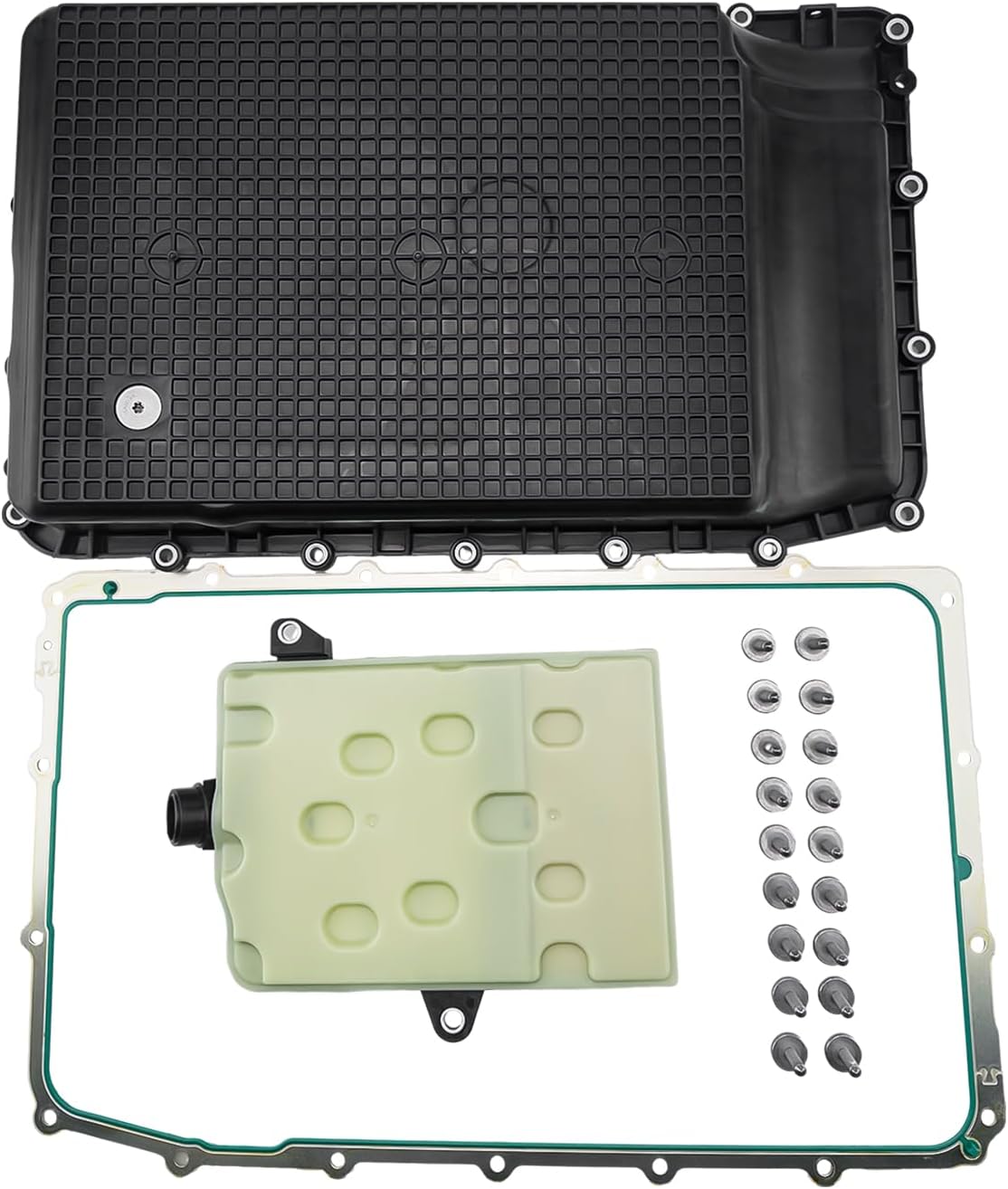
Six quarts is enough for a drain-and-fill, not a dry fill. A pan drop leaves fluid in the converter and cooler, so most techs drain and refill once, drive, then repeat a few thousand miles later to dilute the rest. For a rebuilt unit, Sonnax gives 13.0 quarts for a 2020 F-150 10R80 filled dry, so buy three cases. Fill through the pan plug with a pump. On the Ford side, check the level at normal operating temperature, which Sonnax lists as 96-101 C (206-215 F), with the truck level. GM's procedure for the 10L80 uses its own window, so follow your service information. If the old fluid shows clutch material, plan for internal parts like the 10R80 friction clutch module kit. If the unit has been running hot, inspect the ten-speed transmission cooler for restriction before you blame the new fluid.