A 10R80 that pulls through all ten forward gears and then sits there revving when you pull the lever into Reverse is a strange-feeling failure. The truck seems healthy until the customer tries to back out of the driveway. The opposite case shows up too, usually after a rebuild: good reverse, nothing in Drive. Either way, the fastest path to the fault is knowing which clutches reverse actually uses, because the forward gears that still work tell you which of them are fine.
This is how I work a 10R80 no-reverse or reverse-slip complaint. The clutch logic comes from Transmission Digest's Wayne Colonna and Mike Souza, the hydraulic side from Ford's CDF cylinder bulletins and Sonnax's valve body guide, and the scan tool checks from Sonnax and ATRA's GEARS Magazine. All of it is listed at the bottom.
What you have and where to look first
| Symptom | Most likely area | First check |
|---|---|---|
| No reverse, and no 8th, 9th or 10th | B clutch or its circuit | Manual-low engine braking, B clutch latch valve, B pack |
| No reverse, and will not shift past 3rd | F clutch or its circuit | CDF drum leak test, F clutch latch valve |
| No reverse and no forward | A or D clutch, pump, or solenoid power | Line pressure, solenoid power feed, pump |
| Delayed or harsh reverse, ratio codes including P0736 | CDF cylinder sleeve leak | Ford TSB 25-2126 or 24-2254 pressure test |
| Good reverse, no forward, right after a rebuild | E clutch or low one-way clutch | E piston height versus the friction count |
| No reverse, or moves forward in Reverse or Neutral, MIL and wrench light, 2024-2025 build | Recall valve body (E clutch solenoid stuck on) | Run the VIN for NHTSA recall 25V-164 (Ford 25S19) |
What reverse needs on a 10R80
The 10R80 has four planetary gearsets and six clutches, four rotating and two holding. Souza describes the solenoid side in Transmission Digest: six normally low shift solenoids, with four "on" and two "off" in reverse and in each forward gear. So reverse is a four-element range, just like every forward gear, and most of those elements are shared with forward gears.
Colonna names them. In his 10R80 no-forward case he writes that the A and D clutches are applied in both reverse and first. In a separate article on the low roller clutch, he calls the B clutch the 8-9-10-R-M1-M2 clutch: it applies in 8th, 9th and 10th, in Reverse, and in manual 1st and 2nd. In Drive 1st, the low one-way roller clutch does the holding instead. The fourth element is the F clutch. Sonnax's vacuum test guide lists a worn F clutch latch valve as causing delayed or harsh reverse along with no 4th through 10th, which tells you F carries reverse and the upper gears.
That layout is the whole diagnosis. Reverse only fails alone when the element it needs is one the working forward gears can do without. Here is how that plays out:
- A and D: both are in 1st. If the truck launches normally in Drive, A and D are applying. A fault here usually costs you forward and reverse together.
- B: Drive 1st does not need it, because the one-way clutch holds. A B clutch or B circuit fault can leave a truck that drives through 7th and has no reverse. The giveaways are no 8th through 10th and no engine braking in manual 1st or 2nd.
- F: F also carries 4th and up. An F fault gives no reverse and a truck that will not shift past 3rd, which the customer usually describes as "stuck in a low gear."
So before the pan comes off, road test it. Note the highest gear it reaches in Drive, and select manual 1st at low speed to check for engine braking. Those two answers usually narrow a no-reverse down to one clutch.
Late-build trucks: check recall 25V-164 first
One no-reverse case runs the other way: an element applied that should not be. In NHTSA recall 25V-164 (Ford 25S19, filed 14 March 2025), Ford reported 10R80 main control valve bodies with two outer valve body bores machined out of print for diameter and circularity. Ford's teardown found the E clutch shift solenoid stuck on. E is released in reverse, so with E stuck applied the truck can refuse reverse or creep forward with the selector in Reverse or Neutral, with the MIL and wrench light on. The population is small, 269 vehicles across the 2024-2025 F-150, 2024 Ranger, 2025 Mustang, Explorer, Bronco and Aviator, built roughly mid-November 2024 through early February 2025. The remedy is a new main control valve body at no charge. On a truck from that window, run the VIN before you scope a single circuit. The Ranger side of this is covered in our 10R80 Ranger common problems guide.
Step 1: Scan, then watch the PIDs in Reverse
Pull codes from every module and save the freeze frames. P0736 is the reverse gear ratio error, and it appears on the list Colonna published alongside P0731 through P0735, P0729, P076F, P07D9, P07F6 and P07F7. A stored P0736 means the module commanded reverse and saw a ratio it did not like, which points you at slip rather than a shifter or range problem.
Then check the data with the truck stopped in Reverse and your foot on the brake:
- Range and gear: the range PID should read R and the commanded gear should be reverse. If the module never sees R, you have a shifter, cable or range sensor problem, not a clutch problem.
- Solenoid current: SSA_AMP through SSF_AMP show which solenoids are commanded. Four should be on.
- Turbine speed: Sonnax's Jim Mobley notes that on these units the TSS shows rpm in Park and Neutral and zero rpm in Reverse or Drive with the vehicle stationary. If TSS keeps turning in Reverse with the brake held, the reverse elements are not holding.
- Shift Type: Mobley also points out there are two Shift Type PIDs. The second shows the commanded condition and the FMEM state, so you can see whether the module has already moved into a failure strategy.
Step 2: Rule out solenoid power and line pressure
GEARS explains that the six shift solenoids are casting-integrated direct-acting solenoids, and that zero current equals zero pressure. The line pressure solenoid works the other way, giving full pressure at low current (50 mA) and very low pressure at high current (850 mA). A lost power feed kills every clutch. That is a no-move complaint, not a no-reverse complaint, but check it if reverse and forward are both weak.
The same goes for the pump. On Transmission Digest's Builder's Bench, Rino Partipilo described a shop call to ATSG about a 10R80 that barely moved in forward or reverse with zero pressure on the gauge. The pump slide pivot pin had pushed out the back of the pump, which lives in the pan on this unit. If the pan is off anyway, look at it.
Step 3: Test the CDF drum before you condemn a pack
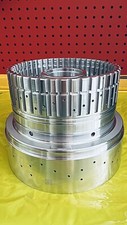
The D and F clutches both live in the CDF drum, which is why Ford's CDF bulletins matter here. Ford TSB 25-2126 (31 March 2025) covers 2017-2020 F-150 and 2018-2020 Mustang. It lists harsh or delayed engagement and a long code set that includes P0736, and blames axial movement of the CDF clutch cylinder sleeve opening hydraulic leaks between circuits. TSB 24-2254 covers the same failure on 2020-2023 applications built on or before 15 August 2022.
The test in 25-2126 is worth doing exactly as written:
- Install a gauge or pressure transducer at the line pressure port. It is an M10 x 1.0 thread. Ford warns that an NPT fitting will damage the case. With no Ford transducer, use a vibration-dampened gauge that reads at least 300 psi.
- If the symptom only shows up cold, run the test at or below 49 C (120 F) TFT. Otherwise run it at 50 C (122 F) or above.
- Command SSA_AMP through SSF_AMP to 0 mA and raise line pressure by grounding the LPC circuit, as the bulletin describes.
- Pulse SSA to 1.0 A for two seconds and back, then do the same with SSC, recording pressure through both.
- Enter the peaks and valleys into Ford's CDF calculator. If the A clutch leakage rate is red, the bulletin sends you to normal A clutch diagnosis. If A is green and "C-Clutch vs A-Clutch" is red, the CDF cylinder is leaking.
The repair replaces the CDF cylinder (JL3Z-7H351-B for all F-150 and the 5.0L Mustang, JR3Z-7H351-B for the 2.3L Mustang) and the clutch and planetary container cylinder (PC3Z-7B177-A), with a full set of C, D and F piston and balance dam seals. Ford pays 11.7 to 13.2 hours on a gas F-150, which tells your customer this is a transmission-out job. A passing test pays 1.0 hour.
On the bench, Sonnax's Caleb Perham lists worn sealing rings, hub bushings and leaking shaft plugs as causes of slipping, neutral conditions and ratio error codes in 10-speed clutch packs. He recommends air checking each drum, then the whole assembly through the pump, before it goes in the case. Sonnax's CDF drum saver kit is 129910-01K.
Step 4: Vacuum test the valve body
If the drum passes and the pack is not burned, the valve body is next. Sonnax's vacuum test guide for the Ford 10R60/10R80 and GM Gen 1 10-speeds lists a surprising number of valves whose wear shows up as a reverse problem. It shows several lower valve body clutch control valves with "No Reverse" or "Reverse slip" as a symptom, one with "No Forward/Reverse," and in the upper body the B clutch latch valve for poor reverse engagement with no 8th through 10th and the F clutch latch valve for delayed or harsh reverse.
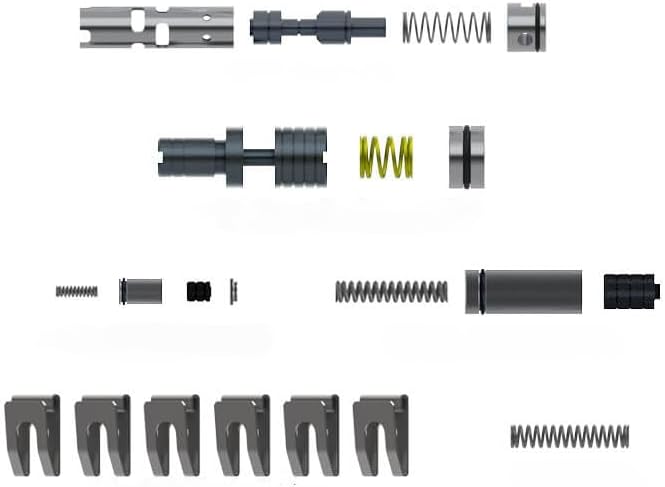
Test each bore at the location Sonnax marks, with the valve at rest. On the A, B, C and F latch valves you have to seal the bore with your thumb to get a real reading. A low vacuum reading means the bore is worn. The guide notes Sonnax's 10L80-G1-10R80-ZIP kit covers these wear points in one box.
My own habit: when I have the main control off for a reverse complaint, I vacuum test every bore on Sonnax's sheet, not just the one I suspect. On a unit that has lived with a worn bore for a while, the next one is usually not far behind.
Step 5: If it just came out of a rebuild
Reverse and forward problems after a rebuild are usually assembly problems. Three worth checking:
- Piston height. In Colonna's no-forward case on a 2021 Ranger, reverse was good, which cleared A and D. That left the E clutch and the low one-way clutch. The E piston from the kit was built for a five-friction stack-up, while the original was made for four. It touched the pack but never clamped it. The shop added a fifth friction and steel. Compare every new piston against the old one before you stack a pack.
- Speed sensor placement. Colonna and Mobley both document the OSS and ISSB, or TSS and ISSA, going into each other's holes. The connectors only fit one way, so only the location can be swapped. The result is ratio codes or a commanded Neutral that looks like a lost range.
- Fluid. Perham stresses using Mercon ULV. A universal or older fluid causes shift complaints on these units.
After the repair: relearn
Clear codes and run the Adaptive Learning Drive Cycle. The GEARS version ends with seven rounds of this from a gentle stop: Neutral for 1 second, Reverse for 2 seconds, Neutral for 1 second, then Drive for 2 seconds. After that, park, key off, and wait 3 to 5 minutes before driving. That garage-shift sequence is what teaches the module the new reverse apply, so do not skip it after replacing a drum or valve body. Both CDF bulletins also tell you to warn the customer that shifts can feel firmer than normal for several days while it relearns.
Sonnax Zip Kit, 10R80 Gen 1 valve body
If the vacuum test finds worn reverse circuit bores, this kit covers the common wear points on the 10R80 main control in one box. It comes from our sister store, CoreTransmissionParts.
Shop the part for this fix →Need more for the 10-speed? The 10-speed parts collection has clutch packs, steels, solenoid kits and valve body parts.
Need parts for this job?
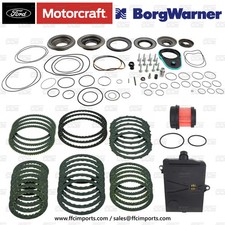
We sell 10R80 CDF clutch drums, valve bodies, Zip kits, clutch modules and full rebuild kits on our 10R80 parts page, with checkout on site. Road test it and run the CDF test before you order, so you only buy the part that failed.
FAQ
Why does my 10R80 drive forward but have no reverse?
Reverse uses four clutches: A, B, D and F. A and D also apply in 1st, so a truck that launches normally in Drive has working A and D clutches. That leaves the B clutch, which Drive 1st does not need because the one-way clutch holds, and the F clutch, which also runs 4th and up. Check whether the truck reaches 8th through 10th and whether it goes past 3rd to tell the two apart.
What code does a 10R80 set for no reverse?
The reverse ratio code is P0736. It is on the code list in Ford TSBs 25-2126 and 24-2254, which blame a moving CDF clutch cylinder sleeve on covered trucks. A reverse that does not engage at all may set no code if the module never sees the range, so check the range PID reads R with the lever in Reverse.
Is 10R80 no reverse covered by a Ford bulletin?
TSB 25-2126 covers 2017-2020 F-150 and 2018-2020 Mustang, and TSB 24-2254 covers 2020-2023 applications built on or before 15 August 2022. Both list harsh or delayed engagement and P0736 among other codes. Each has a line pressure test and Ford's CDF calculator to confirm the leak before the CDF cylinder is replaced.
Can a valve body cause no reverse on a 10R80?
Yes. Sonnax's vacuum test guide lists several 10R80 clutch control valves with no reverse or reverse slip as a symptom. It also lists the B clutch latch valve for poor reverse engagement and the F clutch latch valve for delayed or harsh reverse. Vacuum test every bore before you replace the whole main control.
Do I need to relearn after fixing a 10R80 reverse problem?
Yes. Clear codes and run the Adaptive Learning Drive Cycle, which includes seven rounds of Neutral, Reverse for 2 seconds, Neutral and Drive from a stop. Expect firmer shifts for a few days while the module relearns.
Related guides
- 10R80 Limp Mode Causes and Fix
- 10R80 P0730 Incorrect Gear Ratio
- 10R80 Valve Body Problems and Testing
- 10R80 Slipping Under Load
- 10R80 Harsh and Delayed Shifts
Sources
- Transmission Digest, Wayne Colonna, "10R80 No Forward After Rebuild: A Difference in Height," 5 June 2026. Backs the A and D clutches applying in both reverse and first, the use of reverse to eliminate A and D on a no-forward, the E clutch and low one-way clutch as the remaining suspects, and the four-friction versus five-friction E piston mismatch on a 2021 Ranger. transmissiondigest.com
- Transmission Digest, Wayne Colonna, "The root cause of 10R80 low roller clutch failure," 11 April 2025. Backs the B clutch being the 8-9-10-R-M1-M2 clutch and the low one-way roller clutch freewheeling from 3rd and being held in 9th and 10th by the B clutch. transmissiondigest.com
- Transmission Digest, Mike Souza, "Quick Peek at New Ford / GM 10 Speed," 1 August 2018. Backs the four planetary gearsets and six clutches (four rotating, two braking), the six normally low shift solenoids, and four solenoids on and two off in reverse and each forward gear. transmissiondigest.com
- Transmission Digest, Wayne Colonna, "10R80 gear ratio errors after rebuild," 16 May 2022. Backs P0736 as the reverse gear ratio code, the full ratio code list, and the OSS and ISSB sensor swap after a rebuild. transmissiondigest.com
- Ford Motor Company, Technical Service Bulletin 25-2126, "Harsh/Delayed Engagement And/Or Harsh/Delayed Shift," 31 March 2025 (supersedes 25-2018), via NHTSA. Backs the 2017-2020 F-150 and 2018-2020 Mustang coverage, the code list including P0736, the CDF clutch cylinder sleeve movement, the M10 x 1.0 port warning, the 49 C / 50 C test branches, the SSA and SSC pulse test and CDF calculator logic, parts JL3Z-7H351-B, JR3Z-7H351-B and PC3Z-7B177-A, and the 1.0 and 11.7-13.2 hour labor times, and the firmer-than-normal shifts for several days after an adaptive reset. static.nhtsa.gov (PDF)
- Ford Motor Company, Technical Service Bulletin 24-2254, "10R80 Transmission - Harsh/Delayed Engagement And/Or Harsh/Delayed Shift - Built On Or Before 15-Aug-2022," August 2024, via NHTSA. Backs the same CDF sleeve failure on 2020-2023 applications built through 15 August 2022. static.nhtsa.gov (PDF)
- Sonnax, "Ford 10R60, 10R80 & GM 10L60/80/90 Gen. 1 Vacuum Test Guide." Backs the clutch control valves listing no reverse and reverse slip, the B clutch latch valve for poor reverse engagement with no 8th through 10th, the F clutch latch valve for delayed or harsh reverse with no 4th through 10th, sealing the latch valve bores to test, and the 10L80-G1-10R80-ZIP kit. sonnax.com
- Sonnax, Jim Mobley, "Diagnosing Ford 10R60, 10R80 & 10R140 Series Speed Sensor Issues," 8 February 2024. Backs TSS showing rpm in Park and Neutral and zero rpm in Reverse or Drive when stationary, the second Shift Type PID showing FMEM state, and speed sensor location swaps. sonnax.com
- Sonnax, Caleb Perham, "Troubleshooting Pressure Loss in 10-Speed Clutch Packs," 7 April 2025. Backs sealing ring, hub bushing and shaft plug leaks causing slipping, neutral conditions and ratio codes, air checking each drum and the assembly through the pump, the CDF drum saver kit 129910-01K, and the Mercon ULV requirement. sonnax.com
- GEARS Magazine (ATRA), "Direct Connection: 10R60, 10R80, and 10R140 Solenoids Make Shifts Happen!" 11 January 2024. Backs the six CIDAS shift solenoids with zero current equal to zero pressure, and the inversely proportional line pressure solenoid at 50 mA and 850 mA. gearsmagazine.com
- GEARS Magazine (ATRA), "The More You Know About The 10R80... The Better Off You Are!" Backs the Adaptive Learning Drive Cycle steps, including the Neutral-Reverse-Neutral-Drive garage shift sequence repeated six additional times and the 3-5 minute key-off wait. gearsmagazine.com
- Transmission Digest, Alex Crissey, "Ford 10R80 No-Move Pump Issue," 5 December 2025. Backs the ATSG case of a 10R80 barely moving in forward or reverse with no pressure, caused by the pump slide pivot pin pushing out of the in-pan pump. transmissiondigest.com
- NHTSA, Ford Part 573 Safety Recall Report 25V-164 (Ford recall 25S19), filed 14 March 2025. Backs the out-of-spec outer valve body bores, the E clutch shift solenoid stuck on, no reverse or forward motion in Reverse/Neutral, the MIL and wrench light, the 269-vehicle population and production windows, and the valve body replacement remedy. static.nhtsa.gov (PDF)