Noise complaints on a 48RE are some of the easiest jobs to get wrong. The customer says "the transmission is whining" or "it clunks when I let off," and half the time the noise is a U-joint, a transfer case, a cooler line touching the frame, or a rear axle. The other half, it really is inside the box, and the type of noise and when it shows up tells you roughly which section of the unit to tear into before you ever pull it.
This guide covers how to sort 48RE whine, buzz, growl and clunk complaints into the part that is actually making them. It applies to the 48RE behind the 5.9L Cummins and 8.0L V10 in 2003-2007 Ram 2500/3500 trucks. The same diagnostic logic carries over to the 46RE and 47RE, since all three share the same layout.
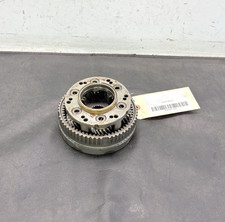
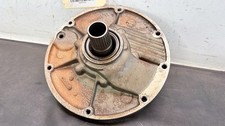
Know the Layout Before You Chase the Noise
The 48RE is a four-speed with two distinct sections, and that layout is the key to noise diagnosis. Per ATSG's 46RE/47RE/48RE technical manual, first through third come from the front section: the front (direct) and rear (forward) clutches, the kickdown and low/reverse bands, the low roller clutch, and the front and rear planetary gearsets. Fourth gear comes entirely from the overdrive unit bolted to the back of the case, which contains its own overdrive clutch, OD/direct clutch, overrun roller clutch and planetary gearset. The oil pump sits at the front of the case and is driven directly by the torque converter hub.
That gives you three noise zones to separate:
- Front of the unit: converter, flexplate (drive plate), converter bolts, pump. These make noise tied to engine speed, even in Park and Neutral.
- Main geartrain: front and rear planetaries, low roller clutch, output shaft bushing and bearings. These make noise tied to vehicle speed or a specific range.
- Overdrive unit: OD planetary, overrun roller clutch, thrust bearings, OD clutch pack. A noise that only shows up in fourth, or only in direct when the OD planetary is locked, points here.
The 48RE also runs higher clamping pressure than its ancestors. Sonnax's Jim Dial documented that the 48RE valve body exhausts two of the pressure regulator's four reducing points in fourth and in third with the converter clutch on, raising line pressure about 22-28 psi in those ranges versus roughly 10-15 psi on a 46/47RE. More pressure through a worn pump or a restricted cooler circuit means more chance of a hydraulic whine or buzz, which comes up below.
Step One: Fluid Level and Condition
Every factory-derived 46RE/47RE/48RE diagnosis chart starts with the dipstick, and noise is no exception. A low level lets the pump pull air through the filter, and an aerated pump makes a whine that rises with RPM. An overfill lets the geartrain churn the fluid into foam, which does the same thing plus pushes fluid out the vent.
Check it the way the procedure calls for: level ground, engine idling, selector in Neutral, fluid at operating temperature for the HOT marks. The 48RE takes ATF+4 only. Any substitute should list Chrysler MS-9602 on the label; Amalie's ATF+4 data sheet, for example, lists MS-9602 and MS-7176E/D with a typical kinematic viscosity of 7.5 cSt at 100°C. Chrysler's 2006 Ram fluid capacity sheet lists a 48RE service fill of 3.8 L (8 pints) and an overhaul fill of 14-16 L (29-33 pints), which tells you how far off a "just topped it off" truck can be.
While the pan is down, read it. Fine gray paste is normal wear. Bright steel flakes, chunks of roller, bits of bronze bushing, or brass thrust washer material change the job from "find the noise" to "it is coming apart." Heavy black friction material with a growl usually means the noise is a side effect of clutch or band damage, not the root cause.
Whine That Follows Engine RPM
If the whine is present in Park and Neutral and climbs with the throttle with the truck sitting still, the output side of the unit is not turning, so you can rule out the planetaries, output bearing and overdrive. That leaves the front of the unit, the hydraulic circuit, and things bolted to the outside.
Likely causes, in the order I check them:
- Low fluid or a sucking filter. A cracked filter, missing filter O-ring or unseated pickup lets the pump draw air. The whine often comes with a gauge needle that bounces instead of holding steady.
- Shift cable or cooler lines touching the engine or bellhousing. The factory diagnosis charts in Chrysler's 1998 Ram service manual (pp. 21-227 and 21-230) list a misrouted shift cable as a cause of both a buzzing noise and a whine tied to engine speed. Pump whine travels down anything metal touching the case. Pull the cable and lines away by hand and listen again before condemning anything.
- Cooler circuit restriction. Sonnax's Bob Warnke documented on the 46/47 RH/RE that a restricted cooler pushes the switch valve toward its spring and can stage it mid-circuit, cutting converter and cooler flow further. He lists "hydraulic noise" alongside 740/1740 codes, TCC slip and delayed engagement as symptoms, and flags trouble as head pressure approaches 80 psi or more. The test is simple: temporarily bypass the cooler and retest. If the noise drops, the restriction is in the cooler circuit.
- Worn or scored pump. A pump with excess rotor clearance or a scored pocket will whine, run low pressure hot, and usually show up as delayed engagement first. The 48RE pump failure guide covers the gauge test in detail.
A good confirmation for a cooler restriction is flow. GEARS Magazine's ATRA tech coverage of the Chrysler heavy-duty units calls for at least one gallon per minute of cooler flow, measured with a flow meter or into a bucket. A truck that whines and runs hot with a trailer and only moves half that through the cooler has its answer.
Buzzing Noise
A buzz is a high-frequency vibration, often a valve or a check ball oscillating in its bore. The factory buzzing-noise chart (1998 Ram service manual, p. 21-227) lists these causes for a 46/47/48RE buzz:
- Shift cable touching the engine or bellhousing
- Valve body misassembled, a damaged valve or spring, or loose valve body bolts
- Pump passages leaking: porous casting, scored mating surfaces, excess rotor clearance, or loose pump bolts
- Plugged cooler
- Damaged overrunning clutch
A buzz that shows up right after a valve body job is almost always a valve body assembly problem. Pull the pan, check the valve body bolts and the springs you touched. A buzz that comes and goes with temperature, with a pressure gauge that vibrates at the same time, points at the pressure regulator side of the circuit or the cooler.
Growl, Grind or Scrape
This is the "something is coming apart" category. The chart groups these causes together:
- Broken drive plate (flexplate). Usually a rhythmic knock or scrape at idle that changes as you load the engine. Cracks start around the converter bolt holes and the crank hub. Look through the inspection opening with a light and bar the engine over by hand.
- Converter bolts hitting the dust shield. A bent shield gives a scrape at engine speed. Straighten or replace it.
- Planetary gearset broken or seized. Debris in the pan, and noise in specific ranges.
- Overrunning clutch worn or broken. Again, check the pan for roller pieces.
- Pump components scored or binding.
- Output shaft bearing or bushing damaged. Tied to road speed, not engine speed.
- Misadjusted bands or a faulty clutch application. Verify with an air check.
The way to split engine-speed from vehicle-speed growl: hold the truck at a steady road speed, then slip it into Neutral and let it coast. If the growl stays the same with the engine at idle, it is on the output side (main geartrain, output bushing, overdrive, transfer case or axle). If it fades with engine RPM, it is on the input side.
Noise in Fourth Gear Only
Because fourth is produced entirely by the overdrive unit, a noise that only exists in fourth is a gift. Toggle the overdrive off (or use Tow/Haul, which also locks out the fourth upshift) at the same road speed. If the noise disappears in third, it lives in the overdrive section. The factory-derived chart lists:
- OD clutch discs, plates or snap rings damaged
- Overdrive piston or planetary thrust bearing damaged
- Output shaft bearings scored or damaged
- OD planetary gears worn or chipped
- OD overrunning clutch rollers worn or scored
Every item on that list is an overdrive unit teardown. The good news is that on a 48RE the overdrive unit comes off the back of the case as an assembly, so you can inspect the planetary, thrust bearings and roller clutch without fully tearing down the front section if the pan is clean. On high-torque Cummins trucks, a chipped or galled OD planetary is a common find. Replace the planetary rather than reusing a gearset with pitted pinion teeth, and replace every thrust bearing in the overdrive unit while it is apart.
The Clunk on a Closed-Throttle 4-3 Downshift
This is the classic 47RE/48RE complaint. The truck coasts down, the transmission drops out of fourth into third, and you get a driveline bang. The chart lists two transmission causes:
- Throttle valve adjustment off. On cable-equipped units, a misadjusted throttle cable changes shift timing and quality. Per ATSG, 2005-up 5.9L diesel trucks replaced the cable with an electronic Transmission Throttle Valve Actuator (TTVA), so on those trucks check for TTVA codes and calibration instead of hunting for a cable.
- Wrong overdrive clutch select spacer. The OD piston thrust plate spacer is a selective part. If the last rebuilder did not measure and select it correctly, OD clutch clearance is wrong and the 4-3 release is harsh. The fix is the correct spacer, chosen by measurement.
Before you go inside the transmission for a clunk, rule out the driveline. Grab each U-joint and twist it, check the slip yoke, check the transfer case and both axles for excessive lash, and check the transmission and transfer case mounts. A worn rear U-joint on a 3/4-ton Cummins makes a clunk on decel that sounds exactly like a transmission problem. Shops have pulled more than one good 48RE because nobody spent five minutes under the truck first.
A Quick Diagnostic Sequence
- Interview. Whine, buzz, growl or clunk? Hot or cold? Which gear or speed? Since a rebuild or valve body job?
- Fluid. Level hot in Neutral, ATF+4 only, smell and look at it. Pull the pan if there is any doubt.
- Stationary test. Park and Neutral, raise RPM. Noise here = front of the unit, pump, hydraulics or something touching the case.
- Coast test. At road speed, shift to Neutral and coast. Noise that stays = output side.
- Overdrive toggle. Same speed, third vs fourth. Noise only in fourth = overdrive unit.
- Gauge and flow. Line pressure gauge for a bouncing or low reading; cooler flow at least one gallon per minute; bypass the cooler to rule out a restriction.
- Driveline. U-joints, yoke, mounts, transfer case and axles before calling it internal.
Preventing the Noise from Coming Back
- Keep it cool. GEARS Magazine puts the ideal maximum fluid temperature at 200°F, with expected fluid life cut in half for every 20°F above that. Heat kills bushings and thrust bearings, and those are what turn into noise.
- Flush or replace the cooler after any failure that left metal in the pan. Debris in the cooler goes straight back into the lube circuit, which feeds the bushings and planetaries.
- Do not interchange valve bodies. Sonnax warns that rebuilders who install a 46/47RE valve body in a 48RE can see a later TCC or overdrive clutch failure, because the 48RE pressure calibration is different.
- Measure the selectives. OD clutch spacer and end play, every time.
- Use the right fluid at the right level. ATF+4 to MS-9602, checked hot in Neutral.
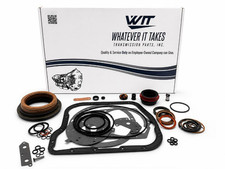
48RE Sonnax Bearing Kit SBK-C16
Noise in fourth or on the output side usually means thrust bearings. This Sonnax kit replaces the bearings you should never reuse once the overdrive unit is apart.
View the Sonnax 48RE bearing kit →Shop 48RE transmission parts →
Frequently Asked Questions
Why does my 48RE whine in Park and Neutral?
If the whine follows engine RPM with the truck sitting still, the output side is not turning, so the noise is at the front of the unit or in the hydraulics. Check fluid level hot in Neutral first, then the filter and its seal, then cables or cooler lines touching the case, then cooler flow. A worn pump is the last item on the list, not the first.
What causes a clunk on a 48RE 4-3 downshift?
The factory diagnosis chart lists a misadjusted throttle valve setting and the wrong overdrive clutch select spacer. On 2005-up 5.9L diesel trucks the throttle cable was replaced by the electronic TTVA, so check its codes and calibration instead. Rule out U-joints, the slip yoke, mounts and axle lash before going inside the transmission.
How do I tell if a 48RE noise is in the overdrive unit?
Fourth gear comes entirely from the overdrive unit, so turn overdrive off or use Tow/Haul at the same road speed. If the noise goes away in third, it is in the overdrive section: OD planetary, overrun roller clutch, thrust bearings, OD clutch pack or the output bearings.
Can a restricted transmission cooler make a 48RE noisy?
Yes. Sonnax documents that a cooler restriction on the RE family can stage the switch valve mid-circuit and lists hydraulic noise among the symptoms, with trouble as head pressure nears 80 psi. Bypass the cooler temporarily and retest, and confirm at least one gallon per minute of cooler flow.
What fluid should a noisy 48RE be checked and filled with?
ATF+4 only, or a fluid that lists Chrysler MS-9602 on the label. Check it hot, idling in Neutral, on level ground. Chrysler lists a 3.8 L (8 pint) service fill and a 14-16 L (29-33 pint) overhaul fill, so a truck that was only topped off can be well off the mark.
Sources
- ATSG — 46RE, 47RE, 48RE Technical Service Manual (introduction and general description), 2011. Backs the two-section layout (first through third from the front clutches, bands, low roller clutch and planetaries; fourth from the overdrive unit with its OD clutch, OD/direct clutch, overrun roller clutch and planetary), the pump being driven by the converter hub, the 2005-up 5.9L diesel switch to the electronic TTVA, and the 2002 push-in range sensor. atsg.biz (PDF)
- Sonnax — "Dodge 48RE Hydraulic Features Revealed," Jim Dial, October 27, 2015. Backs the 48RE exhausting reducing points A and D in fourth and third with TCC on, the 22-28 psi line rise versus 10-15 psi on the 46/47RE, and the TCC or overdrive clutch failures that follow a 46/47RE valve body installed in a 48RE. sonnax.com
- Sonnax — "46-47RH/RE Cooler and Converter Flow," Bob Warnke, December 22, 2005. Backs the switch valve staging mid-circuit with a cooler restriction, hydraulic noise listed among the symptoms with 740/1740 codes and TCC slip, the roughly 80 psi head pressure threshold, and the cooler-bypass retest. sonnax.com
- GEARS Magazine (ATRA) — Chrysler 48RE/68RFE/AS68RC transmission overheating. Backs the minimum cooler flow of about one gallon per minute, the 200°F ideal maximum fluid temperature, and fluid life halving for every 20°F above it. gearsmagazine.com
- Chrysler / Ram Body Builder — 2006 Ram Fluid Capacities. Backs the 48RE service fill of 3.8 L (8 pints) and overhaul fill of 14-16 L (29-33 pints). rambodybuilder.com (PDF)
- Amalie Oil Company — Full Synthetic ATF+4 product data sheet (2/2024). Backs the Chrysler MS-9602 and MS-7176E/D specifications an ATF+4 fluid must meet and the typical 7.5 cSt at 100°C viscosity. amalie.com (PDF)
- Chrysler Corporation — 1998 Dodge Ram Truck Service Manual, Group 21 Transmission and Transfer Case, 46RE/47RE diagnosis charts, pp. 21-227 to 21-234. Backs the buzzing-noise causes (p. 21-227), the growling, grating or scraping causes (p. 21-228), the closed-throttle 4-3 clunk causes including low fluid, throttle cable adjustment and the OD clutch select spacer (p. 21-229), the engine-speed whine causes including low fluid and shift cable routing (p. 21-230), and the fourth-gear-only noise causes (p. 21-234). The 48RE shares this geartrain and diagnosis logic. archive.org