A 48RE with a tired front pump rarely comes in with "my pump is bad" written on the repair order. It comes in as a truck that takes a few seconds to go into gear on a cold morning, a whine that follows engine RPM, a 3-4 flare with a trailer behind it, or a converter that will not stay locked once the fluid is hot. Every one of those can come from elsewhere in the box, which is why pumps get missed.
This guide covers what the 48RE pump does, how it wears, the symptoms that point at it, how to prove it with a gauge before you pull the transmission, and what to replace when it comes apart. It applies to the 48RE in 2003-2007 Ram 2500/3500 trucks with the 5.9L Cummins and the 8.0L V10. Most of the diagnostic logic carries over to the 46RE and 47RE, which share the same basic pump design.
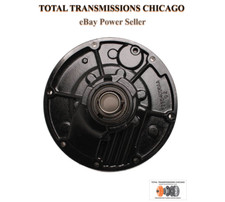
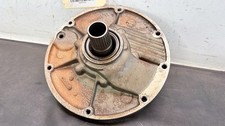
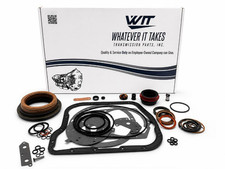
What the 48RE Pump Actually Does
The 48RE pump is a gerotor-style gear pump bolted to the front of the case. The torque converter hub drives the inner gear, which turns the outer gear inside an eccentric pocket in the pump body. Every bit of hydraulic work in the transmission starts there: line pressure for the bands and clutches, converter charge, cooler flow, and lube to the gear train and bushings. If the pump comes up short on volume, everything downstream gets less than it was designed for, and the parts that need the most pressure fail first.
On the 48RE that matters more than it did on the 46RE and 47RE. Sonnax's breakdown of 48RE hydraulics shows that in third with the converter clutch applied, and in fourth, the boost valve exhausts two of the pressure regulator's reducing points (A and D) instead of one. The result is a line pressure rise of roughly 22-28 psi in those ranges, versus about 10-15 psi on a 46/47RE. Chrysler did that to clamp the converter clutch and overdrive clutch harder against diesel torque. A pump that has lost volume cannot support that rise once the fluid is hot and thin, and the first casualties are the TCC and the overdrive clutch.
The pump also carries the stator support, also called the reaction shaft. Sonnax points out in its cooler and converter flow article that the stator support aligns the turbine shaft with the center of the converter cover. Wear at the pump bushing or the stator support does not just leak oil; it lets the turbine shaft wander, which lets the turbine shaft sealing rings cross-leak between converter apply and release circuits.
How the Pump Wears Out
Gear and pocket wear
The inner and outer gears and the pocket they ride in are machined to very tight side and tip clearances. Fine debris from burned frictions, band material, or a failed converter goes straight through the pump on its way to the filter and scores those faces. As clearances open up, oil slips back from the pressure side to the suction side. At cold idle the fluid is thick enough to seal the gap and you may not notice; at 180-200°F and low engine speed the leak-back becomes a real loss of output.
Gear failure is common enough on the 48RE that Sonnax released a dedicated replacement, the #22530-D pump gear set. Per the GEARS Magazine (ATRA) product report, both gears are machined from 4340 billet steel in the OE 10/11 lobe configuration, held to tight tolerances to keep pressure and volume loss down.
Bushing wear and converter hub problems
The pump bushing supports the converter hub. A worn bushing lets the hub run off center, which chews the front seal, wears the bushing further, and eventually lets the inner gear ride against the pocket. That is the classic source of a pump that whines, leaks at the front seal, and loses output all at the same time. A converter hub with a burr, a groove, or a damaged drive tang does the same thing faster.
Installation damage
A converter that was not fully engaged in the pump gear before the transmission was bolted to the engine will crack the inner gear or push the converter hub into the pump the first time it is started. If you are looking at a pump failure shortly after a transmission or converter swap, that is the first thing to suspect.
Suction-side air leaks
Not every "weak pump" is a pump problem. A cracked filter, a filter that is not fully seated, or a damaged filter O-ring lets the pump draw air. Sonnax's guide to diagnosing with pressure gauges notes that a cracked filter or a suction-side air leak makes the gauge bounce wildly, because the pump compresses the air but not the fluid, and that it is usually accompanied by a whine. Check the filter before you condemn the pump.
48RE Pump Failure Symptoms
- Delayed engagement into Drive and Reverse, worst after the truck sits overnight or when the fluid is hot at idle. The pump has to refill the converter and apply circuits before the clutch or band can hold.
- A whine that changes with engine RPM, not with road speed. It is present in Park and Neutral, which separates it from a gear-train or bearing noise that only shows up while driving.
- Slipping or flaring that gets worse as the fluid heats up, especially the 3-4 shift and the converter clutch apply under a load.
- TCC slip or shudder on a truck where the converter and valve body check out. Low pump output reduces apply pressure and converter charge.
- Overheating and dark fluid, because low pump volume means low cooler flow. Low flow means less heat removed, which thins the fluid, which increases leak-back in the pump. It feeds itself.
- Friction material or bright metal in the pan, and on a failed pump, gear material in the filter.
None of those is proof on its own. A restricted cooler, a worn line pressure sleeve, a bad governor pressure sensor or a wrong valve body can produce several of the same complaints. That is why the gauge test comes next.
How to Diagnose a Weak 48RE Pump
1. Check the fluid and the filter
Check the level hot, in Neutral, on the dipstick. Low fluid starves the pump and mimics every symptom above. The 48RE takes ATF+4 only; Chrysler's 2006 Ram fluid capacity sheet lists a service fill of 3.8 liters (8 pints) and an overhaul fill of 14 to 16 liters (29 to 33 pints), depending on cooler and line size. Drop the pan and look at the filter. Gear material, aluminum from the pump body, or a cracked filter changes the whole plan.
2. Put a gauge on it
Tee a pressure gauge rated well above maximum expected pressure into the line pressure tap. Sonnax's method for checking pump capability is simple: read minimum line pressure, then force the transmission to maximum line pressure at fast idle and read it again. On a 48RE the throttle valve circuit controls line rise, so take the reading with the throttle input at its maximum position. A healthy pump reaches maximum line at fast idle. A worn pump gets there slowly, falls short, or drops off as the fluid warms.
For reference numbers, Chrysler's factory service manual for the 46RE/47RE, the units the 48RE was developed from, gives the hydraulic pressure test specs on pages 21-217 and 21-218 (1998 Ram Truck Service Manual, Group 21). In 1, 2 and D at 1000 rpm, accumulator and line readings should start at 54-60 psi with the throttle lever closed and rise to 90-96 psi as the lever is moved to wide-open. In Reverse at 1600 rpm, the rear servo port should read 145-175 psi, rising to 230-280 psi. The 48RE adds a larger line rise for converter clutch and overdrive clamping, as Sonnax documents, so treat these as the family baseline and confirm against the service information for the truck's model year. What you are really looking for is how the numbers behave:
- Low at idle, recovers with RPM: classic worn pump or internal leak. Output is short until the gears spin fast enough to overcome leak-back.
- Good cold, falls off hot: worn pump clearances or a leaking circuit that only shows up when the fluid thins.
- Needle bouncing: air in the pump. Filter, filter seal, or a crack on the suction side, per Sonnax.
- Low in one range only: not the pump. A leak in that range's apply circuit, a seal or a servo. The pump feeds every range the same.
3. Check cooler flow
Disconnect the cooler return line, route it into a container, and run the engine at idle in Neutral for a measured time. The GEARS Magazine article on 48RE/68RFE overheating sets the bar at no less than about one gallon per minute. Low flow with a clear cooler points back at the pump. Low flow that comes back to normal with the cooler bypassed means the restriction is in the cooler circuit; Sonnax notes cooler restriction becomes a problem as head pressure approaches 80 psi or more. Do not condemn a pump until you have ruled the cooler out.
4. Watch temperature and lockup on a road test
Log transmission temperature, engine RPM, output speed and TCC state. GEARS puts the ideal maximum at 200°F and notes that every 20°F above that roughly halves transmission life. A truck that climbs past that on a modest load, with TCC slip codes or RPM wandering in lockup, has a flow or pressure problem. Combined with low gauge readings, it is the pump.
The Fix: Rebuild or Replace the Pump
The pump comes out only with the transmission and converter out of the truck, so plan for a transmission-out job.
- Measure before you reuse anything. Check gear side clearance with a straightedge and feeler gauge, and gear tip and outer gear to pocket clearance, against the service manual specification for the unit. Scoring on the pocket floor or the gear faces means replacement, not cleanup.
- Replace the gears with the bushing. A worn bushing ruins new gears, and new gears in a worn pocket do not fix the leak-back. A remanufactured pump assembly that comes with new gears and bushing is usually the faster, safer repair.
- Inspect the stator support. Check the turbine shaft sealing ring lands and bushings. Cross-leak here looks like a pump problem on the gauge.
- Inspect the converter hub. If the hub is grooved, burred or out of round, the converter goes with the pump. Putting a damaged hub in a fresh pump destroys the new bushing.
- Install the converter correctly. Make sure it drops fully into the pump gear before the transmission meets the engine, so you are not right back here after the first start.
- Flush the cooler and lines and fit a new filter. Pump debris lives in the cooler and will go straight back through the new gears.
If the pan shows friction debris from the clutch packs too, or the truck has been running hot for a while, do the whole transmission. Burned bands and frictions are often the reason the pump was eating debris in the first place, and a 48RE rebuild costs less than doing the job twice.
Preventing a Repeat
- Keep it full of ATF+4. Low fluid aerates and starves the pump.
- Keep the cooler circuit clean and unrestricted. Flow removes heat; heat thins the fluid; thin fluid increases pump leak-back.
- Watch temperature when towing. A gauge that lives above 200°F is costing pump and clutch life.
48RE Sonnax Pump Gear Set 22530-D
Worn or broken pump gears on a 2003-up 48RE: billet 4340 replacement gears in the OE 10/11 lobe pattern, built to cut pressure and volume loss.
View the Sonnax 48RE pump gear set →Shop 48RE transmission parts →
Frequently Asked Questions
What are the first signs of a failing 48RE pump?
Delayed engagement into Drive or Reverse, especially hot at idle or after the truck sits, and a whine that rises and falls with engine RPM in Park and Neutral. As it gets worse you see slipping or flaring that gets worse with heat, converter clutch slip, and rising fluid temperature from reduced cooler flow.
How do you test a 48RE pump without removing it?
Put a pressure gauge on the line pressure tap and read minimum line, then maximum line at fast idle. A healthy pump reaches maximum line quickly and holds it hot; a worn pump reads low at idle, recovers with RPM, or falls off as the fluid warms. Also measure cooler return flow, which should be at least about one gallon per minute.
Can a bad filter make a 48RE pump whine?
Yes. A cracked filter, an unseated filter or a bad filter seal lets the pump pull air. Sonnax notes this makes the pressure gauge bounce wildly and usually comes with a whine, so check the filter before condemning the pump.
Does the transmission have to come out to replace a 48RE pump?
Yes. The pump bolts to the front of the case behind the torque converter, so the transmission and converter have to come out. While it is apart, replace the bushing with the gears, inspect the stator support and converter hub, and flush the cooler.
What fluid does a 48RE use after a pump replacement?
ATF+4 only. Chrysler lists a 48RE service fill of 3.8 liters (8 pints) and an overhaul fill of 14 to 16 liters (29 to 33 pints), depending on cooler and line size. Set the final level hot in Neutral on the dipstick.
Sources
- Sonnax — "Dodge 48RE Hydraulic Features Revealed." Backs the 2003 production start of the 48RE, the boost valve exhausting reducing points A and D in third with TCC on and in fourth, and the 22-28 psi line rise on the 48RE versus 10-15 psi on the 46/47RE for converter clutch and overdrive clutch clamping. sonnax.com
- GEARS Magazine (ATRA) — "Sonnax Chrysler 48RE Pump Gear Set." Backs the #22530-D replacement gear set for 48RE pump gear failure, the 4340 billet steel inner and outer gears, the OE 10/11 lobe configuration, and the tight tolerances to limit pressure and volume loss. gearsmagazine.com
- Sonnax — Bob Warnke, "46-47RH/RE Cooler and Converter Flow." Backs the stator support aligning the turbine shaft with the converter cover, turbine shaft sealing ring cross-leak from bushing wear, cooler restriction sources, the 80 psi head pressure threshold, and bypassing the cooler to isolate a restriction. sonnax.com
- Sonnax — "Transmission Diagnostics Using Pressure Gauges." Backs the pump capability test (minimum line, then maximum line at fast idle), forcing maximum line pressure by control type, the bouncing gauge from a cracked filter or suction-side air leak, the accompanying whine, and using a gauge rated above maximum expected pressure. sonnax.com
- GEARS Magazine (ATRA) — "48RE, 68RFE, AS68RC Transmission Overheating." Backs the minimum cooler flow of about one gallon per minute, the flow-meter or bucket test, the 200°F ideal maximum temperature, and transmission life halving for every 20°F above it. gearsmagazine.com
- Chrysler / Ram Body Builder — 2006 Ram Fluid Capacities. Backs the 48RE service fill of 3.80 L (8 pints) and overhaul fill of 14.0-16.0 L (29-33 pints), varying with cooler and line size. rambodybuilder.com (PDF)
- Chrysler Corporation — 1998 Dodge Ram Truck Service Manual, Group 21, 46RE/47RE hydraulic pressure tests (pp. 21-217 to 21-218), full text at the Internet Archive. Backs the 54-60 psi rising to 90-96 psi line and accumulator readings in 1, 2 and D at 1000 rpm, and the 145-175 psi rising to 230-280 psi rear servo reading in Reverse at 1600 rpm. archive.org