A Camaro with a slipping 4L60E rarely gets there the way a truck does. Nobody towed a camper with it. What it did see was launches. Full-throttle starts, a 1-2 shift with the tires still spinning, a 2-3 at the top of 2nd with the engine at the limiter. Add a tune and gears to an LS1 and the same band and 3-4 pack carry more torque than GM sized them for.
The short version: Check the fluid exactly as GM's Camaro manual describes it, hot at 180-200°F. On a V6 car, rule out the Second-Gear Start button. On a 1998-and-later car, know that 20-40 RPM of converter slip at cruise is normal. Then identify which gear slips, because on a 4L60E that names the part: 2nd and 4th is the 2-4 band and servo, the classic hard-launch failure; 3rd and 4th is the 3-4 clutch, which Sonnax says is usually burned by low line pressure or 3rd-gear oil leaks, not by "worn clutches."

Which Camaros Have a 4L60E
Every automatic fourth-generation Camaro and Firebird, 1993 through 2002, uses the 4L60E four-speed. That covers the V6 cars and both V8 eras, the LT1 (1993-1997) and the LS1 (1998-2002). GM's 2000 Camaro owner manual lists a 5.0-quart (4.7 L) drain and refill, and overhaul capacities of 8.8 quarts (8.3 L) for the 3800 V6 and 10.8 quarts (10.2 L) for the 5.7L V8. The gear ratios are 3.06, 1.63, 1.00, and 0.70, which you will want for the scan tool math below.
A used truck unit is not a drop-in on 1998-and-later cars (see our Camaro common problems guide), so on a swapped car, confirm what is in it first.
Step 1: Check the Fluid the Way GM Wrote It
A 4L60E a quart low slips on hard launches and in fast corners, because the pump draws air at the filter. GM's Camaro procedure differs a little from the truck manuals:
- Get the fluid to 180-200°F (82-93°C) by driving about 15 miles (24 km) when it is above 50°F outside. Below 50°F, the Camaro manual says to drive in AUTOMATIC OVERDRIVE until the engine temperature gauge moves and stays steady for 10 minutes.
- If the car was just driven hard, in heat over 90°F, in heavy traffic, or at high speed for a long time, wait at least 30 minutes before checking. Hot-lapped fluid reads high.
- Park on level ground, engine running, parking brake on. With your foot on the brake, move the shifter through every range, pausing about three seconds in each, then return to PARK and let it idle for three minutes or more.
- Pull the red dipstick near the back of the engine, wipe it, push it fully in, wait three seconds, and pull it again. Check both sides and read the lower level. It belongs in the HOT or cross-hatched area.
GM notes a low unit "generally" needs less than one pint (0.5 L) to reach the HOT area, and warns against overfilling. If it takes a quart, there is a leak to find. A cold check is a reference only; GM says to confirm a low cold reading hot before adding fluid. The manual specifies DEXRON-III, which has been superseded; use a current GM-licensed fluid that is backward-compatible with it.
The same manual lists "high performance operation" among the conditions that call for a fluid and filter change every 15,000 miles instead of 50,000. A Camaro that sees the drag strip or road course is on the 15,000-mile schedule, whatever its odometer says about the rest of its life.
Clean red fluid with a slip points at pressure or a circuit leak. Burnt fluid with friction material on the pan magnet means the damage is done.
Step 2: Rule Out the Things That Are Not Slipping
Second-Gear Start on V6 cars
Many V6 automatic Camaros have a Second-Gear Start (SGS) button on the instrument panel. With it on, the light in the button is lit and the transmission starts out in 2nd, then upshifts normally. A 2nd-gear launch on a V6 feels like slipping. Check the button light. GM's manual also says the transmission returns to normal mode every time the car is started, so if the car still pulls away in 2nd after a restart, the button is not the cause. That is a real fault: look at the shift solenoids and their circuit.
Normal converter slip on 1998-and-later cars
Hook a scan tool to an LS1 car and you will often see engine speed running a little ahead of turbine speed in 4th with the converter clutch commanded on. Per Sonnax, 1998-and-later 4L60-E units use EC3 converter clutch control, which normally runs 20-40 RPM of TCC slip and rarely reaches full lockup. That is by design. Slip well above that range, an RPM flare at steady cruise, or a P0894 or P1870 code is a different story; see Step 4.
Step 3: Match the Slip to the Gear
Drive it and note exactly where the engine flares. The 4L60E apply chart does most of the work:
| What the Camaro does | Element | Where to look |
|---|---|---|
| Flares on the 1-2 shift under throttle, slips in 2nd and 4th, 3rd is fine | 2-4 band and servo | Band, reverse input drum surface, servo seals and travel, #7 checkball |
| Flares on the 2-3 shift, slips in 3rd and 4th, 1st and 2nd are fine | 3-4 clutch | 3-4 pack, input housing checkball, pump and stator, line pressure, #7 checkball |
| Slips or sits in neutral in every Drive gear, Reverse is fine | Forward clutch | Forward piston seals, input housing sealing rings, line pressure |
| Slips in Drive 1st only, holds in manual 1 | Forward sprag or low roller clutch | One-way clutches (manual 1 applies the overrun and low/reverse clutches around them) |
| RPM creeps up at steady cruise, no shift involved, P0894 or P1870 | Converter clutch | TCC regulator and isolator bores, converter |
Back it up with scan data. In 3rd, input (turbine) speed should equal output speed. In 2nd it should run 1.63 times output, and in 4th, 0.70 times output. Input speed running ahead of those numbers while the computer reports the gear is a slip in that gear's holding element. Then put a gauge on the line pressure tap. Low pressure in every range points at the pump, the pressure regulator, or the pressure control solenoid. Normal pressure with a one-gear slip is a leak in that circuit. Per Sonnax, a bouncing needle means pressure regulator pulsation.
Step 4: The Common Mechanical Causes
2-4 band and servo: the launch failure
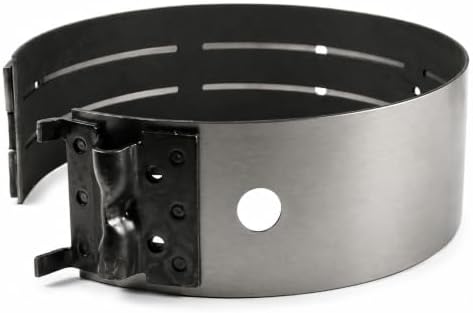
The 1-2 shift is a band apply. On a hard launch the band must grab a fast-spinning reverse input drum under full torque. Once it slips, band and drum glaze, and the car flares on every 1-2 and slips in 4th.
The usual upgrade is more servo apply area. Sonnax's 2nd gear "Corvette" ratio servo kit (77701-04K) is a .74 ratio servo that increases apply area to improve holding in 2nd, and it uses Viton D-rings instead of the OE seal rings for better sealing during apply and release. Three rules from Sonnax's 4L60-E build guide:
- Set servo travel between .075 and .125 inch with a dial indicator, using pin length.
- Never shim the servo. Shimming moves the piston deeper into the bore, where it can bottom out.
- Never install a wider band on a used drum. The old band can leave a dish in the drum, and the result is 2nd-gear slip and glazing all over again.
A servo upgrade will not save a burnt band or a glazed or dished drum. Replace those first, then upgrade the servo so it does not happen again.
The #7 checkball: why the band and the 3-4 clutch burn together
If you pull a Camaro transmission with a burnt band and a burnt 3-4 clutch, look at the 3rd accumulator checkball assembly in the case near the servo. Sonnax's Gregg Nader explains that a leaking #7 checkball there reduces 3-4 clutch apply pressure, which burns the 3-4 clutch, and reduces band release pressure, so the band drags when it should release, which burns the 2-4 band. Sonnax gives two tests: a vacuum test at the assembly's exhaust hole, where a good checkball pulls a near-perfect seal, or a solvent test with the case pan-side up, watching for solvent leaking into the case. If it leaks, tap the checkball lightly with a punch to reseat it and retest; if it still leaks, replace the assembly. Sonnax also notes new capsules can leak out of the box.
3-4 clutch: pressure, not just friction
A slip in 3rd and 4th, often first felt as a flare on the 2-3 shift at wide-open throttle, is the 3-4 clutch. Sonnax states that low line pressure and leaks of 3rd-gear oil are the root cause of most 3-4 slipping, and the 3rd circuit has a long list of places to leak. The big ones:
- Input housing checkball: vacuum test it. Sonnax treats anything below 25 in-Hg as an unacceptable leak. Air check the housing bore-to-shaft hot and empty.
- Pump and stator: a rotated stator sleeve partly blocking a feed hole, worn stator bushings, hairline cracks in the pump 3-4 and forward passages, a sticking pump slide, and a worn boost valve bore.
- AFL screens: a clogged screen feeding the pressure control solenoid drops line pressure. Replace all three.
- Engine sensors: TP, MAP, and MAF faults change the line pressure the computer commands. On a modified LS1 car, fix any engine codes first.
- Backing plate flex: Sonnax notes the OE 3-4 backing plate flexes during apply, which heats the pack unevenly. A heavy-duty plate (Sonnax 74140-01K) eliminates the flex.
Do not just stack in thinner plates: Sonnax warns that trades engaging capacity for static holding, and too little steel cannot shed heat.
TCC regulator and isolator bore wear
On 1998-and-later cars, Sonnax's Tory Royce explains, constant EC3 oscillation wears the TCC regulator and isolator valve bores until TCC apply pressure leaks to exhaust. Sonnax lists the results of that wear as codes 894 and 1870, an overheated converter, low TCC apply pressure, a burned 3-4 clutch, harsh 1-2 shifts, and low line pressure. Vacuum test the bore; the fix is the 77754-04K valve kit, plus the 77754-ISO sleeve when the isolator end is worn.
The Fix, and Keeping It Fixed
If the slip went away with the level corrected and the fluid was clean, find the leak and you are done. If a band or a clutch is burnt, the transmission needs to come out, and the rebuild has to fix whatever burned it:
- Replace the burnt band or pack and any glazed or dished drum.
- Vacuum test the input housing checkball, the #7 checkball assembly, and the valve body bores, including the TCC regulator and isolator bore on 1998-and-later cars.
- Upgrade for how the car is driven: a Corvette ratio servo with correct travel, a 3-4 power pack, and a heavy-duty 3-4 backing plate.
- Flush the cooler and lines so debris from the old failure does not end up in the new parts.
- Fill, then check hot at 180-200°F using GM's procedure.
For prevention: if it sees launches, change the fluid and filter every 15,000 miles per GM's high-performance schedule. The manual also says to use DRIVE instead of AUTOMATIC OVERDRIVE when towing, on hilly, winding roads, and on steep downgrades, and not to run in SECOND for more than 25 miles or above 55 mph.
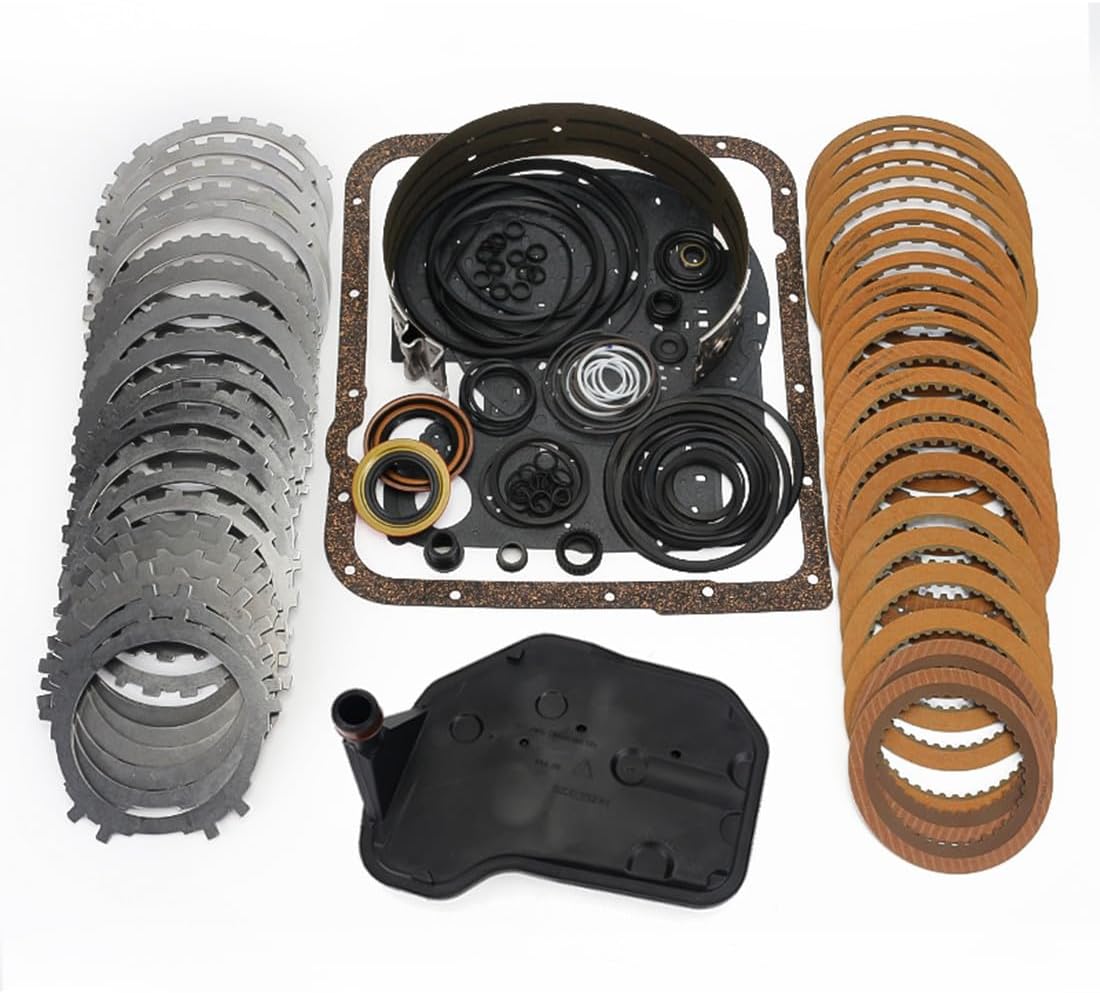
Heavy-Duty 4L60E Rebuild Kit with 3-4 Power Pack (1993-2008)
Seals, gaskets, and a heavy-duty friction setup with the 3-4 power pack for the fourth-gen Camaro and Firebird 4L60E. For single parts like bands, servos, and backing plates, the full 4L60E lineup is here.
See the heavy-duty kit →FAQ
Why is my Camaro transmission slipping?
Check the fluid first, hot at 180-200 degrees F after about 15 miles, because a low 4L60E slips in turns and on hard launches. Then note which gear slips: 2nd and 4th points at the 2-4 band and servo, 3rd and 4th points at the 3-4 clutch, and every Drive gear with good Reverse points at the forward clutch or sprag.
How much transmission fluid does a Camaro 4L60E take?
GM's 2000 Camaro owner manual lists 5.0 quarts (4.7 L) for a drain and refill. A dry unit after an overhaul takes 8.8 quarts with the 3800 V6 and 10.8 quarts with the 5.7L V8. Always finish with a hot check; a low unit usually needs less than one pint to reach the HOT mark.
Is some converter slip normal on an LS1 Camaro?
Yes. Sonnax notes that 1998-and-later 4L60-E units use EC3 converter clutch control, which normally runs 20-40 RPM of TCC slip and rarely reaches full lockup. Slip well beyond that, or a P0894 or P1870 code, points at TCC regulator and isolator valve bore wear in the valve body.
Why does my V6 Camaro feel like it starts in second gear?
Many V6 automatic Camaros have a Second-Gear Start button. With it on, the light on the button is lit and the car pulls away in 2nd, which feels soft. GM's manual says the transmission returns to normal mode every time the car is started, so a car that still launches in 2nd after a restart has a real fault.
Keep the numbers at the bench. Our free transmission fluid spec chart lists the correct ATF type for the 4L60E and dozens of other units, so you never top off with the wrong fluid.
Sources
- General Motors — 2000 Chevrolet Camaro Owner Manual. Backs: the 5.0 qt drain and refill and 8.8 qt (3800 V6) / 10.8 qt (5.7L V8) overhaul capacities; the 180-200°F hot check, 15-mile warm-up, cold-weather procedure, 30-minute wait, three-minute idle, and lower-level reading; the less-than-one-pint note and DEXRON-III; the 15,000-mile interval for high performance operation; the Second-Gear Start feature; and the DRIVE and SECOND operating instructions. GM: 2000 Camaro owner manual (PDF)
- Sonnax — All Over the Map: Attacking 4L60/E Burnt 3-4 Clutches with Confidence (Brian Wing, June 2018). Backs: low line pressure and 3rd-gear oil leaks as the root cause of most 3-4 slipping, the 25 in-Hg input housing checkball limit, the pump, stator, and AFL screen checks, engine sensor effects on line pressure, new capsules leaking out of the box, and backing plate flex. sonnax.com/tech_resources/659
- Sonnax — Guard Against 4L60/E Band and 3-4 Clutch Failure: Test the 3rd Accumulator Checkball Assembly for Leakage (Gregg Nader, March 2016). Backs: the #7 checkball burning both the 3-4 clutch and the 2-4 band, and the vacuum, solvent, reseat, and replace procedure. sonnax.com/tech_resources/323
- Sonnax — Building the Killer 4L60E: Top Tips for Optimizing Your Transmission Upgrades (March 2016). Backs: the .075-.125 in. servo travel setting, never shimming the servo, never fitting a wider band to a used drum, the plate-count tradeoff, and pressure regulator pulsation shown by needle bounce. sonnax.com/tech_resources/293
- Sonnax — 2nd Gear "Corvette" Ratio Servo Kit 77701-04K. Backs: the .74 ratio, increased apply area for 2nd gear holding, Viton D-rings, and the high-performance and heavy-duty application. sonnax.com/parts/2430
- Sonnax — Understanding 4L60-E Series Isolator Bore Wear and How to Address It (Tory Royce, January 2025). Backs: EC3 controls on 1998-and-later units, the normal 20-40 RPM TCC slip, regulator and isolator bore wear, and the 894/1870 codes, burned 3-4 clutch, harsh 1-2, and low line pressure it causes, plus the 77754-04K and 77754-ISO fixes. sonnax.com/tech_resources/1440