The Camaro is the 4L60E's hardest daily job. In a fourth-generation F-body it gets launched from a stop and banged through 1-2 at wide-open throttle. GM put the same four-speed (RPO M30) behind the 3800 V6 and the 5.7L V8 in the 1993-2002 Camaro and Firebird,. The failure list reads like the truck list, only louder.
This is the Camaro list I work from, roughly in the order the cars show up. It applies to the Firebird too. Every spec here is sourced at the bottom.
The short version: On a 1996-2000 Camaro, a harsh 1-2 shift with P1870 is GM bulletin 01-07-30-023B: a worn TCC regulator/isolator bore in the valve body, usually after 20,000 miles. After that, the big three are a burnt 3-4 clutch (low line pressure or a 3rd-oil leak), a failed reaction sun shell (no 2nd, 4th or reverse), and lube and cooler-flow problems. 1998-up V8 cars use a 300mm converter with their own bellhousing, pump stator and turbine shaft. Fluid is DEXRON-III (or a current licensed replacement), 5.0 qt drain and refill, checked hot at 180-200°F.
What Ships in a Camaro and Why It Matters
GM's 2000 Camaro owner manual lists two engines: the 3800 V6 (VIN code K) and the 5.7L V8 (VIN code G). Both use the 4L60E, and the capacity chart shows where they differ. A drain and refill is 5.0 quarts (4.7 L) for either engine. An overhaul fill is 8.8 quarts (8.3 L) on the V6 but 10.8 quarts (10.2 L) on the V8. That two-quart gap is mostly converter. Fill a fresh unit to the dipstick, not to a number.
The converter difference has a history. Transmission Digest's June 2001 issue reports that for the 1998 model year GM gave the Camaro and Firebird a new bolt-on bellhousing about 1/2 inch deeper, identified by an extra bolt hole at the top, to fit a new 300mm torque converter. In 1998 only the F-body got it. Every other 4L60E that year used the 298mm converter. The change also brought a pump cover with a stator shaft about 1/2 inch longer and a longer turbine shaft with its O-ring behind the splines. Transmission Digest is blunt about it: none of those parts interchange with the previous design.
On a Camaro that came in with a used unit, check this first. If you are sourcing a core for an LS1 car, match the bellhousing, converter, stator shaft and turbine shaft as a set. Our 4L60E case changes guide covers the rest of the case and sensor differences.
One V6 detail catches people. GM's 2000 manual describes a Second-Gear Start (SGS) button on some V6 automatics. With it on, the car launches in 2nd for traction on ice, and the light on the button stays lit. A V6 Camaro that "won't take off in first" needs that button checked before anyone pulls the pan.
1. Harsh 1-2 and P1870: GM Bulletin 01-07-30-023B
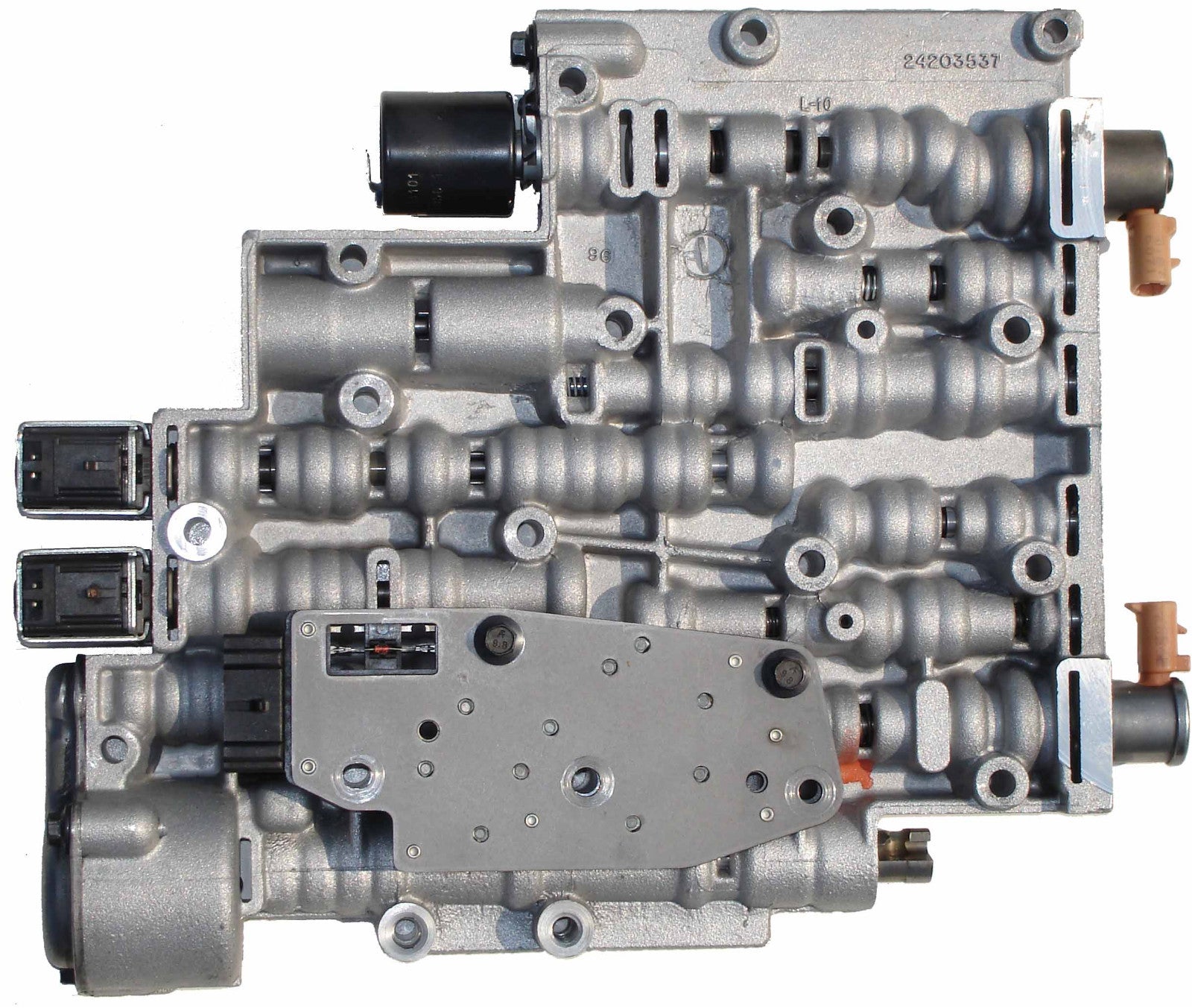
This is the most common Camaro complaint that has a GM bulletin behind it. The car bangs the 1-2 shift, the check engine light is on, and the scan tool shows P1870 (transmission component slipping), often as a history code. GM bulletin 01-07-30-023B covers 1996-2000 Camaro, Firebird and Corvette with the 4L60-E (M30), along with the trucks, and lists the 1996 LT1 and 1997-2000 LS1 cars. It says the condition typically shows up after 20,000 miles (32,000 km).
GM's cause is wear in the valve body bore that holds the TCC isolator and regulator valves, which leads to poor or no converter clutch apply. The condition can be hard to duplicate with fluid below 200°F (93°C), so a cold test drive proves nothing. P1870 is also a type B code: it has to fail on two consecutive trips before it stores. On the first trip the car can shift hard with no code and no light.
GM's correction is a valve body with revised TCC regulator and isolator valves. For the F-body and Corvette the bulletin lists service valve body 24217857 for 1996 LT1, 24217870 for 1997 LS1, and 24221158 for 1998-2000 LS1, for transmissions built before January 15, 2000 (Julian date 0015). The bulletin also says a full rebuild is not required if the unit worked normally before it warmed up and before the code set, the converter isn't blue, the fluid isn't burnt, and the pan has no clutch material, bronze, brass or metal.
Sonnax's independent write-up on the same failure (Tech Resource 1440) explains the mechanism: the constant oscillation of the TCC regulator and isolator valves wears the aluminum casting until apply pressure exhausts past them. Sonnax lists the result as low TCC apply pressure, an overheated converter, low line pressure, 1-2 harsh shifts and a burned 3-4 clutch, and notes that 20-40 RPM of TCC slip is normal operation. Anything well beyond that with the clutch commanded on points at the bore. The wear is detectable by vacuum testing the bore, and the repair-without-a-new-valve-body route is to ream it for a sleeved regulator and isolator valve kit (Sonnax 77754-04K), with an optional isolator sleeve (77754-ISO) for high-mileage castings.
Pick the kit by valve body, not by year alone. Sonnax's product listing for 77754-04K lists it for 4L60-E, 4L65-E and 4L70-E units, all years including 1998-later EC3 units, and lists codes 894 and 1870, low TCC apply pressure and low line pressure among the problems it targets. Per Sonnax Tech Resource 1440, the 04K is the OE apply rate kit and the 77754-03K is the increased apply rate version, and the bore has to be reamed before either valve kit goes in.
On the scan tool, warm the fluid past 200°F and watch TCC slip RPM in 4th with TCC commanded on. Our P1870 guide walks through the full code logic.
2. Burnt 3-4 Clutch
A Camaro that flares on the 3-4 shift, then loses 4th, nearly always has a burnt 3-4 pack. You'll find black frictions and a backing plate that is dished or blued.
The pack is the casualty, not the cause. In Sonnax's 2018 article on 4L60-E 3-4 burnup, Brian Wing names low line pressure and 3rd-gear oil leaks as the root of most 3-4 slipping. These are the checks I run before I trust a new pack in a Camaro:
- Input housing checkball. Vacuum test it. Sonnax treats anything under 25 in-Hg as a leak you can't accept. Reseat it if it fails.
- 3rd accumulator checkball capsule. Test it even if it's new, because Sonnax says some leak out of the box. Don't swap it for a cup plug, which blocks the venting the circuit needs.
- AFL screens. Replace the screen feeding the pressure control solenoid and the two others on the separator plate. A plugged screen starves EPC and drops line pressure.
- Pump and valve body bores. A worn boost valve, pressure regulator bore or sticking slide pulls line pressure down. Wet-air test the 3-4 and forward passages with the stator installed.
- Backing plate. Sonnax calls OE backing plate flex a leading cause of 3-4 failure. Use a thicker heavy-duty plate and new load release springs every time.
On a Camaro that has lived with P1870 for a while, expect a cooked 3-4 pack too. Gauge line pressure across the EPC range before teardown using our line pressure guide, and see the 3-4 clutch pack guide for pack clearance and friction count.
3. No 2nd, No 4th, No Reverse: The Reaction Sun Shell
If the car pulls in 1st and grabs 3rd but 2nd, 4th and reverse are gone, and the pan has metal in it, the reaction sun shell has let go. The 2-4 band and the reverse input clutch both react through that shell, so when its splines strip or the hub cracks, all three ranges go at once. First and 3rd don't use it, so they keep working.
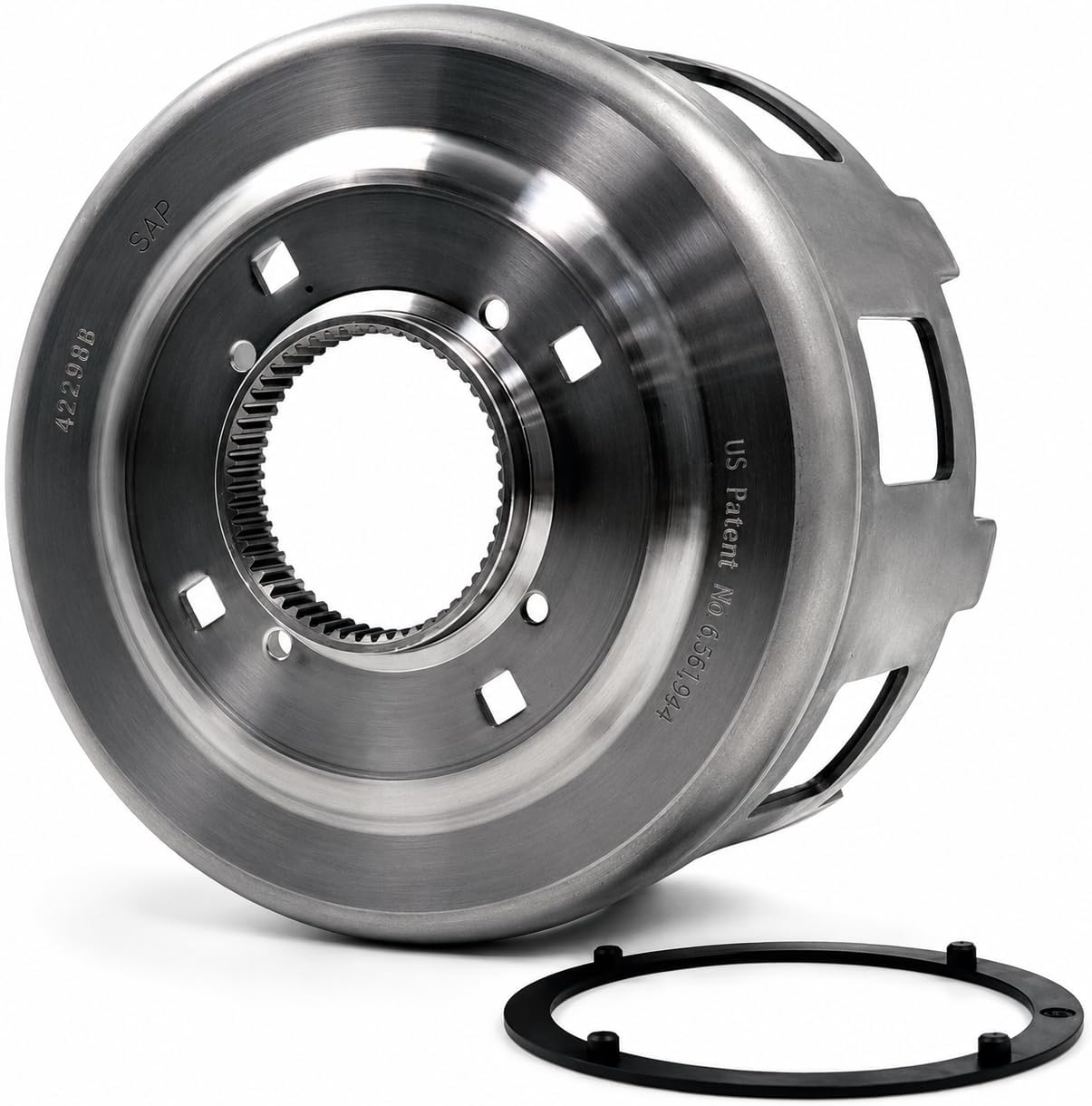
Sonnax's Gregg Nader ranked the reaction shell and rear planet bearing as the 4L60-E's most common durability complaints, and pointed at run-out as a cause most rebuilders never measure. In Sonnax's bench checks, most shells ran about 0.010 in. of run-out and some wobbled as much as 0.050 in. On a V8 Camaro I don't reuse an OE shell. Fit a heavy-duty shell, replace the rear planet bearing, and check the sun gear bushing in the same job. Our sun gear guide covers the gear side, and the high horsepower build guide lists the rest of the parts I upgrade on a modified car.
4. Lube Failure and Cooler Flow
A Camaro that comes back with the rear of the unit burnt after a "good" rebuild has a lube problem until proven otherwise. Transmission Digest's June 2001 issue documents one sneaky cause: OE pump covers where the lube-from-cooler passage was drilled only deep enough to take the cup plug, not all the way through. Every lube drop for the rear of the unit passes through the pump cover, so a blind passage starves it. All the defective covers they saw were the 13-vane type.
The other half is flow. GM bulletin 02-07-30-052J, which covers all 2011 and earlier GM cars and light trucks, says insufficient flow through the ATF cooling system causes premature transmission failure. GM's J-45096 TransFlow tool checks flow against a temperature-based minimum and won't test with supply oil below 65°F. The same bulletin gives the 4L60-E cooler line direction: feed exits the bottom fitting, return enters the top. After a 3-4 burnup or a shell failure, back-flush the cooler and confirm a strong, steady stream from the return line with the engine running. The full process is in our cooler flush guide.
Quick Reference: Camaro Symptom to Cause
| Symptom | Most likely cause | First check |
|---|---|---|
| Harsh 1-2, P1870 (1996-2000) | Worn TCC regulator/isolator bore, GM 01-07-30-023B | Retest with fluid over 200°F; TCC slip RPM in 4th; pan and fluid condition |
| 3-4 flare, then no 4th | Burnt 3-4 clutch from low line pressure or a 3rd-oil leak | Line pressure test; input housing checkball (25 in-Hg); 3rd accumulator capsule |
| No 2nd, 4th or reverse; 1st and 3rd OK | Stripped or cracked reaction sun shell | Pan debris; shell splines and run-out; rear planet bearing |
| Rear of unit burnt after a rebuild | Lube starvation: undrilled 13-vane pump cover passage or poor cooler flow | Inspect pump cover lube passage; cooler flow test |
| V6 launches in 2nd | Second-Gear Start button on | Check the SGS button light |
| Converter won't seat after a swap (1998-up) | Mixed 298mm/300mm converter, bellhousing, stator or turbine shaft | Match all four parts to the car |
Fluid, Level Check and Service Interval
GM's Camaro manuals call for fluid labeled DEXRON-III. That spec has been superseded, so use a currently licensed GM fluid that's backward-compatible with it. The interval is where Camaro owners get caught. The 2000 manual calls for fluid and filter every 15,000 miles if the car is driven in heavy city traffic at 90°F or higher, in hilly or mountainous terrain, with frequent trailer towing, or for "high performance operation." Otherwise it's every 50,000 miles. Any Camaro that sees launches, drag strip passes or track days is on the 15,000-mile schedule.
Check the level hot, at 180-200°F. That's about 15 miles of driving above 50°F. In colder weather, drive in overdrive until the engine temperature gauge has held steady for 10 minutes, and wait 30 minutes after hard driving in heat. Park level with the engine idling and the brake set, pause about three seconds in every range, return to PARK and idle three minutes. GM's red dipstick sits near the back of the engine. Read the lower level on both sides. GM says it generally takes less than one pint to go from low to the HOT range, and warns that overfilling can push fluid onto hot exhaust parts and start a fire.
4L60E TCC Regulator Valve & Isolator Sleeve Kit (1993-2008)
This kit fixes the worn TCC regulator bore behind the Camaro's P1870 and harsh 1-2 shift, the same failure GM's bulletin addresses with a whole valve body. For the rest of the job, browse the full 4L60E lineup here.
See the TCC regulator kit →FAQ
What transmission is in an automatic Camaro?
Fourth-generation Camaros and Firebirds from 1993 to 2002 with an automatic use the GM 4L60E four-speed (RPO M30), behind both the V6 and the V8. GM's 2000 Camaro owner manual lists a 5.0-quart drain and refill for either engine, with an overhaul fill of 8.8 quarts for the 3800 V6 and 10.8 quarts for the 5.7L V8.
Why does my Camaro shift hard from 1st to 2nd with a P1870 code?
On 1996-2000 Camaros and Firebirds, GM bulletin 01-07-30-023B traces it to wear in the valve body bore that holds the TCC isolator and regulator valves, which causes poor or no converter clutch apply. GM's fix is a valve body with revised valves, and the bulletin says a full rebuild isn't needed if the unit shifts normally when cold, the fluid isn't burnt and the pan is clean.
How much transmission fluid does a Camaro 4L60E take?
A pan drop takes about 5.0 quarts (4.7 L), per GM's 2000 Camaro manual. A dry unit after an overhaul takes 8.8 quarts on the 3800 V6 and 10.8 quarts on the 5.7L V8. Always finish with a hot check at 180-200 degrees F, because GM warns that overfilling can push fluid onto hot exhaust parts.
How often should a Camaro's transmission fluid be changed?
GM's 2000 Camaro manual calls for fluid and filter every 15,000 miles if the car sees hot city traffic, hilly terrain, frequent towing, or high performance operation. Otherwise the interval is 50,000 miles. A Camaro that sees launches or track days belongs on the 15,000-mile schedule.
Will a 4L60E from a truck bolt into a 1998-2002 Camaro?
Not without care. Transmission Digest reports that in 1998 GM gave the Camaro and Firebird a bolt-on bellhousing about half an inch deeper to fit a new 300mm converter, with a longer stator shaft and a longer turbine shaft. None of those parts interchange with the earlier design, so the converter, bellhousing, pump and turbine shaft have to match.
Keep the numbers at the bench. Our free transmission fluid spec chart lists the correct ATF type for the 4L60E and dozens of other units, so you never top off with the wrong fluid.
Sources
- General Motors — 2000 Chevrolet Camaro Owner Manual. Backs: the 3800 V6 (VIN K) and 5.7L V8 (VIN G) engines; the 5.0 qt drain and refill and 8.8 qt / 10.8 qt overhaul capacities; the Second-Gear Start feature on V6 automatics; the 15,000/50,000-mile fluid and filter intervals including "high performance operation"; the 180-200°F hot check procedure, dipstick location, less-than-one-pint range and overfill warning; and DEXRON-III. GM: 2000 Chevrolet Camaro owner manual (PDF)
- General Motors Bulletin 01-07-30-023B, Harsh 1-2 Upshift, SES, MIL or CEL Illuminated, DTC P1870 Set (Replace Valve Body) (GM Service Information, Section 07 Transmission/Transaxle; available through GM dealer service information and ACDelco TDS). Backs: coverage of 1996-2000 Camaro, Firebird and Corvette with the 4L60-E (M30); the 20,000-mile onset; the TCC isolator/regulator bore cause; the 200°F duplication note and type B code logic; service valve bodies 24217857, 24217870 and 24221158; the January 15, 2000 build cutoff; and the no-rebuild criteria.
- Transmission Digest — TECH/TALK, June 2001 Issue. Backs: the 1998 Camaro/Firebird bolt-on bellhousing about 1/2 in. deeper with an added top bolt hole; the 300mm vs. 298mm converter; the longer stator shaft and turbine shaft; non-interchangeability; and the undrilled lube-from-cooler passage in 13-vane pump covers. transmissiondigest.com/june-2001-issue
- General Motors Bulletin 02-07-30-052J (May 2015), Automatic Transmission Oil Cooler Flow Test Essential Tool J-45096 TransFlow, hosted by NHTSA. Backs: insufficient cooler flow causing premature transmission failure; the temperature-based minimum flow and 65°F supply oil minimum; and 4L60-E cooler line direction (feed bottom, return top). NHTSA: GM 02-07-30-052J (PDF)
- Sonnax — All Over the Map: Attacking 4L60/E Burnt 3-4 Clutches with Confidence (Brian Wing, June 2018). Backs: low line pressure and 3rd-gear oil leaks as the root cause of most 3-4 slipping; the input housing checkball 25 in-Hg vacuum limit; the 3rd accumulator capsule test and cup plug warning; the AFL screens; pump and valve body bore wear; and backing plate flex. sonnax.com/tech_resources/659
- Sonnax — Do Not Let Run-Out Make Problems for Your 4L60-E (Gregg Nader, May 2006). Backs: the reaction shell and rear planet bearing as the unit's most common durability complaints, and the 0.010 in. typical and up to 0.050 in. shell run-out figures. sonnax.com/tech_resources/107
- Sonnax — Understanding 4L60-E Series Isolator Bore Wear & How to Address It (Tech Resource 1440). Backs: TCC regulator/isolator valve oscillation wearing the casting and exhausting apply pressure; the symptom list (low TCC apply, overheated converter, low line pressure, harsh 1-2, burned 3-4 clutch, code 1870); 20-40 RPM normal TCC slip; vacuum-test detection; and the 77754-04K and 77754-ISO repair. sonnax.com
- Sonnax — TCC Regulator & Isolator Valve Kit 77754-04K (product listing). Backs: 4L60-E/4L65-E/4L70-E fitment including 1998-later EC3 units, the code 894/1870 and low TCC apply symptom list, and the ream-before-install requirement. sonnax.com