The 4L60E has two sun gears, and most people only ever hear about one of them. The reaction sun gear — the one splined into that stamped steel drive shell everybody calls the sun shell — is the part that strips out and leaves a truck with no 2nd, no 4th and no Reverse. The input sun gear at the front rarely fails outright, but it sets the ratio and it is the part you change when you want a softer 1-2 split.
GM built the 4L60-E from 1993 to 2014 across more than 11 million vehicles and 60-plus models, so there is no shortage of these on the bench. Here is what actually kills the reaction sun gear, why the failure pattern is so distinctive, and the two bench measurements — run-out and endplay — that separate a rebuild that lasts from one that comes back.
The short version: The reaction sun gear is splined into the reaction sun shell, and the shell is tanged into the reverse input drum. Because the 2-4 band holds that stack in 2nd and 4th, and because Reverse drives through it, stripping the shell splines costs you 2nd, 4th and Reverse while 1st and 3rd still work. The root causes are not just soft metal: Sonnax measures roughly .010 in. of run-out on a typical shell and as much as.050 in. on some, and wrong gear-train endplay loads the rear planet bearing until it fails and takes the shell with it. Check both on the bench before the case ever closes.
Where the Two Sun Gears Live and What They Do
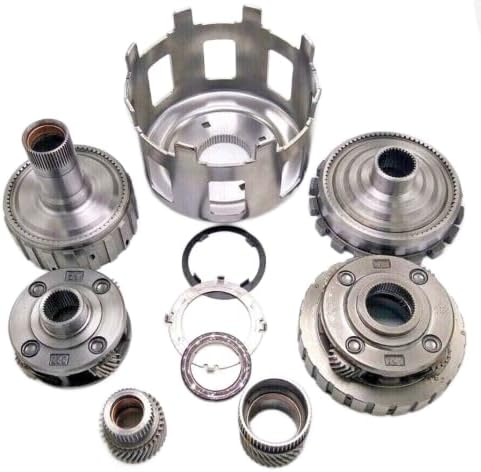
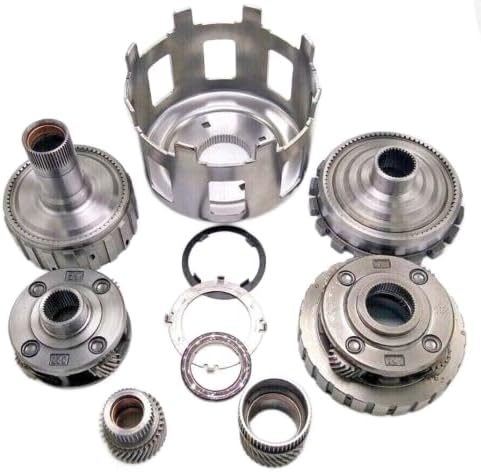
The 4L60/4L60E runs two planetary sets — the input (front) carrier and the reaction (rear) carrier — and each has its own sun gear doing a completely different job.
The input sun gear is the last piece of the input housing assembly — per Sonnax, that housing holds the forward clutch housing and piston, plates, outer race, roller assembly, clutch cam, and then the input sun gear. Torque runs turbine shaft to input housing to forward clutches and out through that sun gear into the input planetary.
The reaction sun gear sits at the rear, splined into the reaction sun shell, and the shell is tanged into the reverse input drum. Once the 2-4 band applies, band, drum, shell and reaction sun gear behave as one member. That drives the whole failure pattern:
| Gear | Ratio | Needs the reaction sun gear? |
|---|---|---|
| 1st | 3.06:1 | No — low/reverse one-way clutch holds the reaction carrier |
| 2nd | 1.63:1 | Yes — held by the 2-4 band as the reaction member |
| 3rd | 1.00:1 | No — 3-4 clutches, input carrier drives the output direct |
| 4th | 0.70:1 | Yes — same held stack, 3-4 clutches drive the carrier |
| Reverse | 2.30:1 | Yes, as the driving member, fed through the sun shell |
Strip the splines where the shell engages the reaction sun gear and you lose exactly the three gears that need it. The customer describes it as "it drives, but it feels like it skips a gear and it won't back up." That symptom set alone is close to a positive ID before you pull the pan.
What the Failure Looks Like in the Field
This is not a niche complaint. NHTSA's Office of Defects Investigation database carries multiple 4L60E sun shell reports against the GMT360 platform alone. Three that show the range:
- ODI 10166090 — 2003 Trailblazer at 71,770 miles: forward gears with little power and a high whine, no Reverse. The dealer found the reaction sun shell stripped and said they had repaired it before.
- ODI 10279890 — 2003 Trailblazer at 76,000 miles: the shell came apart and put debris through the pan and cooler circuit.
- ODI 10483157 — 2003 Trailblazer at roughly 150,000 miles: sun shell gear fractured.
The mileage spread matters: some strip before 80,000 and some go past 150,000, which says the failure is driven by build variables, not service life. And a shell that lets go violently circulates steel through the cooler and converter, so replacing it without a cooler flush and a converter decision is a comeback waiting to happen.
Run-Out: The Cause Nobody Measures
Soft metal gets blamed for every stripped shell, but Sonnax technical specialist Gregg Nader documented a cause shops can actually measure. The common durability complaints here — reaction shell and rear planet bearing — trace to poor stampings, soft metal, poorly supported bearings, endplay, shaft thrust, and run-out. Checking run-out in the case is not practical, so build a stack on the bench out of spares most shops already have:
- Clamp an output shaft in a vise — pick one whose splines hold the front planet up instead of letting it slide down.
- Stack on the front planet, the front planet to reaction carrier shaft bearing, the reaction carrier shaft (late bearing style, GM# 24222756), and the shaft-to-shell bearing.
- Drop the reaction shell and rear sun gear over that, then top it with the rear planet inner bearing and a rear planet with the pinions removed.
The shell and sun gear are now sandwiched between bearings and free to spin. Check three things:
- Shell run-out. Most check around .010 in.; Sonnax has found as much as .050 in. of wobble. That run-out feeds shell breakage, spline wear, and the rare 2nd gear shudder these units are known for.
- Tooth contact pattern on a used sun gear. A pattern that wanders across the tooth face means a poorly manufactured gear. Set it aside.
- Planet rock. Watch the planet sitting on top as the stack spins. A wobbling sun gear rocks it back and forth — usually a sun gear bushing out of position, or again a badly made gear.
Once you have watched a shell wobble.050 in., the link to rear planet bearing failure and stripped splines stops being theoretical. That wobble is a cyclic side load hammering the splines every revolution.
Endplay: The Other Half of the Problem
The reaction sun gear sits in the middle of a stack-up that has to be shimmed correctly, and the 4L60/E is a total endplay transmission — one number measured front to back, not separate front and rear plays. Sonnax's Randall Schroeder walked the procedure through in Transmission Digest. There are two checks.
Check 1: gear set endplay, on the bench
Assemble the gear set, hubs and (where applicable) the inner one-way clutch race from the rear hub up to the snap ring on top of the front planetary. There is no published GM spec, but you want no more than.030 in. of movement between output shaft and rear hub. This matters most when you have changed something inside the gear set — planetaries, or the drive shell, which Schroeder calls the number-one changed component in the assembly.
Check 2: transmission endplay, in the case
Do this before you open the rebuild kit, no clutch packs installed. Case on the bench, stack from the bottom up:
- Output shaft and rear hub, bearing on the bottom of the hub
- Rear planetary, bearing facing the rear hub
- Sun gear in the rear planetary
- Drive shell, sitting on the sun gear snap ring (running a modified shell that sits on a bearing over the low/reverse roller clutch inner race? Install that race on the rear planetary first)
- Front planetary hub to shell, separated by a four-tab washer (early) or a bearing (late)
- Front planetary, bearing facing the hub
- Input sprag assembly, bearing facing the input drum
- Input drum with selective shim and bearing facing the pump cover
- Pump cover: with a new gasket subtract.005 in. from the reading, with no gasket add.005 in.
Read it with a dial indicator. Target is .005 to.036 in., and Schroeder prefers .020 to.025 in. If the factory selective shim is not on the shelf, stack shim stock under the factory shim in the input drum in roughly.015 in. increments, or under the rear-hub-to-case bearing in roughly.010 in. increments. An H-gauge keeps you from building it too tight but is not as accurate as an indicator.
The March 2007 Trap That Ruins Stack-Up
If endplay will not come into range, or the output shaft snap ring will not seat, stop blaming your assembly work and look at the parts. Sonnax specialist Steve Garrett documented this one clearly: in March 2007 GM thickened the reaction carrier bearing and changed the reaction carrier and shaft to suit it, across both the four-pinion and five-pinion carrier designs.
Mix an early carrier with a late shaft or bearing and endplay lands out of range and the snap ring will not install. All three have to be matched as a set. Garrett's fast verification: build the planetary components and bearings onto the output shaft in order, install the snap ring inside the front planet to retain them, stand the assembly sun shell face-down, and check bench endplay. .020 to.030 in. means the stack-up is right; the in-case input shaft endplay spec is .005 to.035 in. If the number is off, reinstall the original parts one at a time and re-measure until the offender shows itself.
Measurements worth having on the bench when you chase stack-up on late units:
| Part | Application | Dimensions |
|---|---|---|
| Front planet to reaction shaft thrust bearing (74238-01) | '07-later units | ID 1.660 in., OD 2.500 in., 0.170 in. thick |
| Captured front planetary bearing (77747-01) | '99-later captured front planetary | ID 1.346 in., OD 2.155 in., 0.195 in. thick |
| Rear bearing shim (77406-10) | 4L60 / 4L60-E / 4L65-E / 4L70-E | ID 1.725 in., OD 2.310 in., 0.010 in. thick |
| Front bearing shim (77409-15) | 4L60 / 4L60-E / 4L65-E / 4L70-E | ID 1.240 in., OD 1.815 in., 0.015 in. thick |
Why a Thicker Shell Alone Does Not Solve It
The aftermarket answer to a stripped shell has traditionally been to make it heavier, which addresses one of three failure modes. Sonnax is direct about the limits: in 4L60, 4L60-E, 4L65-E and 4L70-E units, bulky aftermarket shells fall short because splines keep stripping and shells keep breaking under stress — and rear planetary bearing failure is a chronic problem with both OE and thicker aftermarket shells.
The mechanism is thrust path. In the OE shell, thrust load passes from the shell through the sun gear and lands on the small captured planetary bearing, which was never sized for it. A heavier shell does not change that, which is why a "beast" style shell can survive while the bearing behind it comes apart.
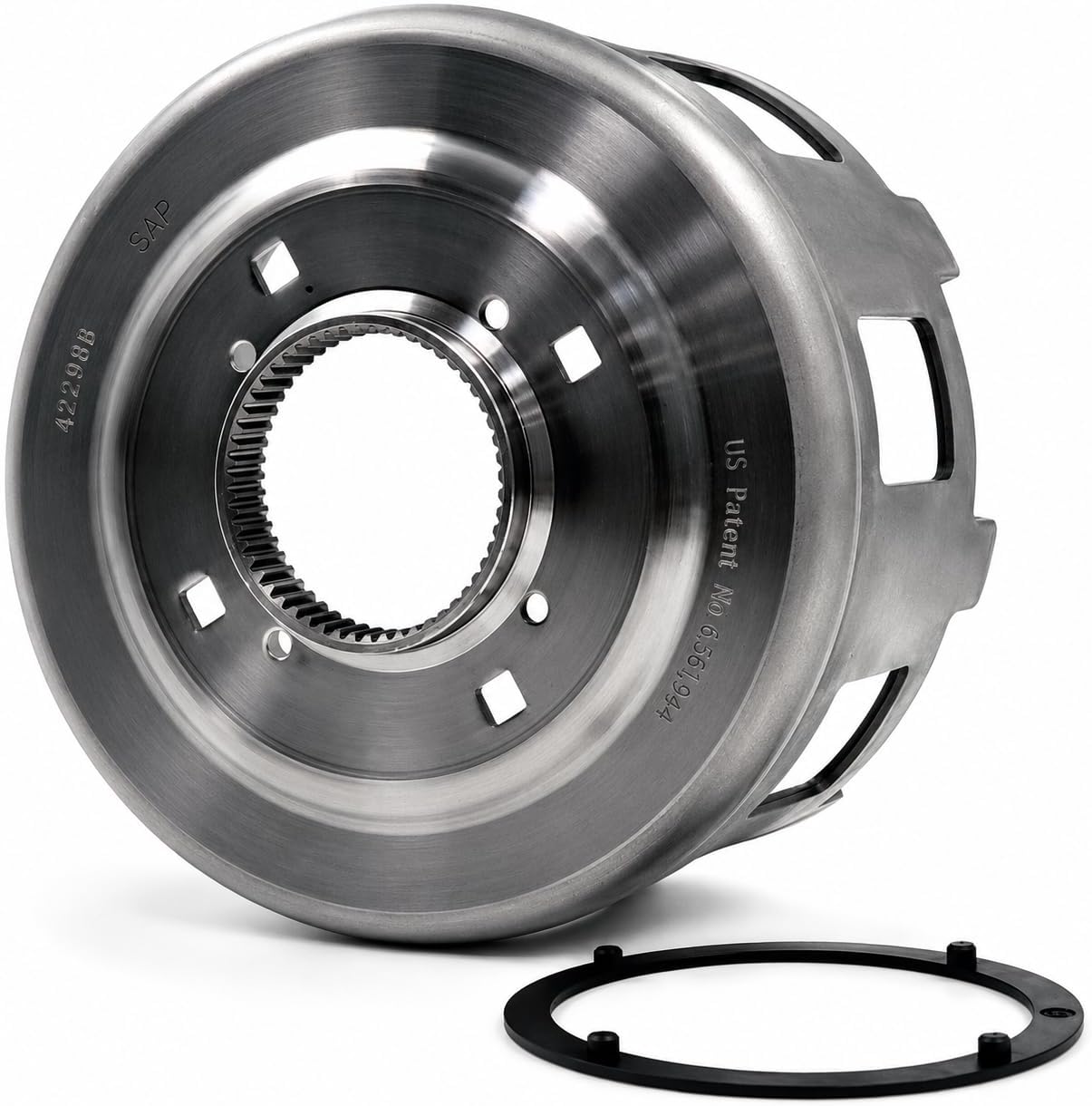
The Sonnax SmartShell kit 77749-02K (US Patent 8,377,356) attacks all three: heat-treated and precision-machined splines, heat-treated drum lugs that will not flare, a laser-beam-welded collar reinforcing the hub, and a larger enclosed thrust bearing plus custom roller clutch race that re-route thrust through the carrier and bypass the captured bearing entirely. Install a shell without correcting that thrust path and you have fixed the part that broke while leaving the part that broke it.
Sonnax SmartShell Heavy Duty Reaction Shell Kit 77749-02K
The shell, enclosed thrust bearing and custom roller clutch race as a set — heat-treated splines and lugs, laser-welded hub collar, and a thrust path that bypasses the small captured planetary bearing. Fits 4L60, 4L60-E, 4L65-E and 4L70-E. Available at our sister store CoreTransmissionParts, along with the full 4L60E parts collection.
Shop the SmartShell 77749-02K →The Input Sun Gear Side
The input sun gear does not typically strip, but it is the part you change when the 1-2 shift is beating the unit up. The OE 4L60/E carries the steepest 1st gear of any four-speed automatic at 3.06:1, and the drop from 3.06 to 1.63 is a large ratio change to absorb — energy that goes into the band, sprag, shafts and clutches on every shift.
Sonnax's 2.84 ratio input carrier kit 77284-K ships a carrier assembly and an input sun gear together, converting the unit from the OE wide-ratio 3.06/1.63 to a close-ratio 2.84/1.55. Shrinking that ratio change lowers stress on the band and clutches. The carrier is a six-pinion with precision-ground gears, PTFE-coated thrust washers, lube channels feeding the pinion pins, and the thicker late-design captured bearing.
One compatibility note that will cost you a teardown if you miss it: the 77284-K cannot be used with a '07-later reaction shaft. On those applications, source an '06-or-earlier reaction shaft or run Sonnax's universal heavy duty reaction shaft kit 74602-01K, which fits all years and all input carrier styles.
Bench Checklist Before You Close the Case
- Inspect the sun gear splines and the shell hub splines together. Rounded tips on either half scraps both parts, not just the shell.
- Check the reaction sun gear bushing. Out of position, it rocks the planet.
- Run the run-out stack. Reject a shell wobbling well past.010 in., and any used sun gear with a wandering contact pattern.
- Verify carrier, shaft and bearing are a matched set — pre- or post-March-2007, not mixed.
- Measure all three plays: gear set.030 in. max between output shaft and rear hub; bench endplay shell-face-down.020–.030 in.; total endplay in the case.005–.036 in., shimmed to.020–.025 in. with the gasket correction applied.
- Flush the cooler and address the converter on any unit that sent steel downstream.
The reaction sun gear has a reputation as a cheap-metal problem, and there is truth in that. But every one of these units has a shell and most of them never strip. The survivors are the ones where run-out was low, the bearing behind the sun gear was not being overloaded, and endplay was set inside spec. All three are things you control on the bench with a dial indicator and twenty minutes.
Related bench work: our 4L60E endplay check and shim selection guide covers the shim math in more detail, and the input housing and sprag failure walkthrough covers the front-half component that takes the beating on the 1-2 shift.
Shop 4L60E reaction sun shells and SmartShell kits, reaction and input sun gears, front and rear planetary sets, thrust bearing and selective shim kits, reaction shafts, and the tools to measure it all — shipped fast from the USA.
Shop 4L60E parts →Sources
- Sonnax — "Do Not Let Run-Out Make Problems for your 4L60-E," Gregg Nader, TASC Force. Backs the bench run-out stack-up procedure, the.010 in. typical /.050 in. worst-case shell run-out figures, the sun gear tooth contact pattern and bushing checks, and reaction carrier shaft GM# 24222756. sonnax.com/tech_resources/107-do-not-let-run-out-make-problems-for-your-4l60-e
- Sonnax — SmartShell Heavy Duty Reaction Shell Kit 77749-02K product page. Backs the three OE failure modes (spline stripping, hub breakage, captured planetary bearing failure), the thrust-path explanation, the kit contents, and US Patent 8,377,356. sonnax.com/parts/2454-smartshell-heavy-duty-reaction-shell-kit
- Sonnax — "The Evolution of Automatic Transmissions Part 2: Inner Workings of Hydraulic Planetary Transmissions," Jason Larochelle. Backs the 4L60 power flow in every gear, the input housing component list ending in the input sun gear, the 2-4 band / reverse input drum / sun shell / reaction sun gear relationship, and the 3.06, 1.00, 0.70 and 2.30 Reverse ratios. sonnax.com/tech_resources/983-the-evolution-of-automatic-transmissions-part-2
- Transmission Digest — "Setting Endplay to Prevent 4L60/E Gear Train Failure," Randall Schroeder, Sonnax TASC Force, August 4, 2026. Backs the total-endplay concept, the.030 in. maximum gear set movement, the full case stack-up order, the.005–.036 in. spec and.020–.025 in. preference, the.005 in. gasket correction, and the shim-stock increments. transmissiondigest.com/all-work-and-no-play-setting-endplay-to-prevent-4l60-e-gear-train-failure
- Transmission Digest — "Too Close For Comfort: Pinpointing 4L60E Gear Train Assembly Problems," Steve Garrett, Sonnax TASC Force. Backs the March 2007 reaction carrier bearing, carrier and shaft design change, the four- and five-pinion applicability, the.005–.035 in. input shaft endplay spec, and the.020–.030 in. shell-face-down bench endplay target. transmissiondigest.com/too-close-for-comfort-pinpointing-4l60e-gear-train-assembly-problems
- NHTSA Office of Defects Investigation — complaint records for the 2003 Chevrolet Trailblazer. Backs the real-world sun shell failure mileages cited above: ODI 10166090 (71,770 mi, reaction sun shell stripped, no Reverse), ODI 10279890 (76,000 mi, shell shredded into the pan), and ODI 10483157 (approx. 150,000 mi, sun shell gear fractured). api.nhtsa.gov/complaints/complaintsByVehicle
- Sonnax — 2.84 Ratio Input Carrier Kit 77284-K product page. Backs the OE 3.06/1.63 wide-ratio figures, the 2.84/1.55 close-ratio conversion, the kit's carrier-plus-input-sun-gear contents and construction, and the '07-later reaction shaft incompatibility with kit 74602-01K as the fix. sonnax.com/parts/3734-2-84-ratio-input-carrier-kit